How to Clean a Suede Couch
A suede couch can't be stuffed, hung, or stood upright to dry, and its cushion foam holds water long after the surface looks fine. Here's how to clean it section by section without soaking the padding underneath.
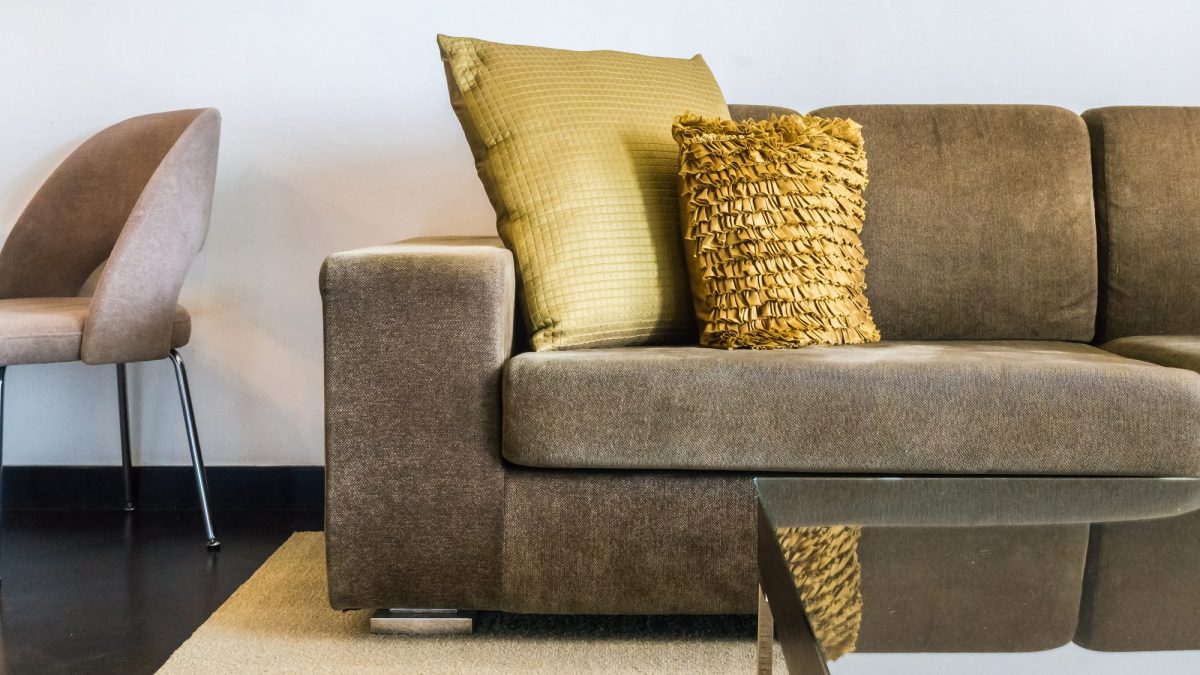
Quick answer · care label Suede — LS
-
1 · Wash
Do not wash -
2 · Bleach
No bleach -
3 · Dry
Dry in shade -
4 · Iron
Do not iron -
5 · Pro care
Pro clean P
In one line Vacuum, brush the surface, spot-treat one section at a time with a barely damp vinegar cloth, pull moisture out with a wet-dry vacuum, dry propped and ventilated for 48-72 hours, then brush and protect. Total hands-on time: 35 minutes.
Why you can’t treat a couch like a shoe
Every suede item covered so far can be picked up, stuffed, hung or stood on end to dry. A couch can’t. It’s the one suede item where the piece stays exactly where it is for the entire process, sits under its own weight the whole time, and often has cushions filled with foam that hold water long after the suede surface looks dry. That last part is the real trap: a suede couch that looks fine after four hours can still have a damp cushion core two days later.
Work small sections at a time, never soak a whole cushion or panel, and give it far longer to dry than instinct suggests. There’s no way to stand a couch on end to speed things up, so the only lever you have is patience.
What you’ll need
The core suede kit, plus a wet-dry vacuum or a stack of dry towels. Upholstery holds more liquid than a shoe or jacket ever will, and pulling that moisture back out matters as much as applying it did.
| Item | Why | Substitute |
|---|---|---|
| Suede brush | Brass or nylon bristles lift the nap without cutting the fibre | A clean, dry toothbrush |
| White vinegar | Dissolves salt and water rings at a pH suede tolerates | Rubbing alcohol, mixed 1:1 with water |
| Microfibre cloths, several | Upholstery needs repeated blotting, not one pass | Old, colour-safe cotton towels |
| Wet-dry shop vacuum | Pulls moisture out of the cushion foam instead of leaving it to evaporate on its own | Pressing dry towels firmly against the spot, repeated often |
The method, step by step
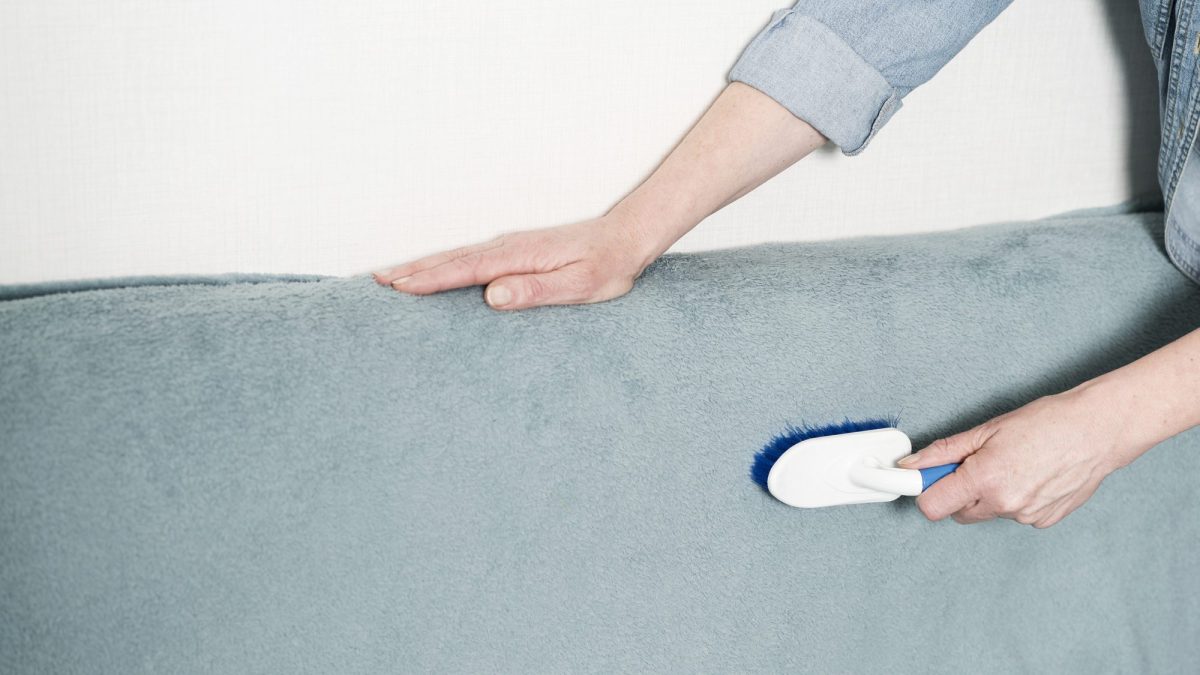
Test a hidden section first, the underside of a cushion or the back of an armrest, before working on a visible panel. Some suede upholstery is treated with a factory protector that changes how it reacts to vinegar.
Vacuum with a soft brush attachment
Loose dust and crumbs get worked into damp suede the moment liquid touches them, so clear the surface dry first, including the seams and the gap where the cushion meets the frame.
Brush the whole surface, one direction
Short strokes with the nap, section by section. On a couch, this step does more work than it does on any other suede item, since regular use flattens the nap across seat cushions faster than anywhere else.
Spot-treat one section at a time
Dampen a cloth with a 1:1 vinegar and water mix. Work a single stain or panel fully before moving to the next, rather than dampening the whole cushion at once. A smaller wet area dries faster and more evenly.
Pull the moisture back out
Run the wet-dry vacuum slowly over the treated section, or press dry towels firmly against it and hold for thirty seconds, repeated three or four times. This step is what keeps water from soaking into the foam underneath, where a brush and open air can’t reach it.
Prop cushions upright, away from the frame
Stand seat and back cushions on an edge rather than leaving them flat in place, so air reaches both sides. A cushion left flat on a damp frame just traps moisture between the two.
Dry in a ventilated room, away from direct sun
Open a window or run a fan pointed at the piece rather than closing it in. Give it 48 to 72 hours before sitting on it again: cushion foam holds water far longer than a solid piece of suede does, and sitting on it too soon compresses that moisture back into the fibre.
Brush the nap back up, then protect
Brush every panel once genuinely dry, including the seams. Finish with a silicone-free suede or upholstery protector spray, tested on the same hidden section first, since some fabric protectants darken suede slightly on contact.
Interactive
Label decoder
Tap a symbol from your care label. No guessing, no scrolling.
19 symbols. Pick one.
Suede couches vs. other suede items
The general suede method covers dust, dirt and water marks the same way everywhere. What changes with a couch is that it can’t be moved, stuffed or hung, and it’s usually padded with foam that behaves nothing like suede.
| Item | Can it be repositioned to dry? | Main risk |
|---|---|---|
| Suede shoes, bags, jackets | Yes, stuffed, hung or stood upright | Losing shape or drying unevenly |
| Suede couch | No, stays in place under its own weight | Moisture trapped in the cushion foam long after the surface looks dry |
Common suede couch marks, treated individually
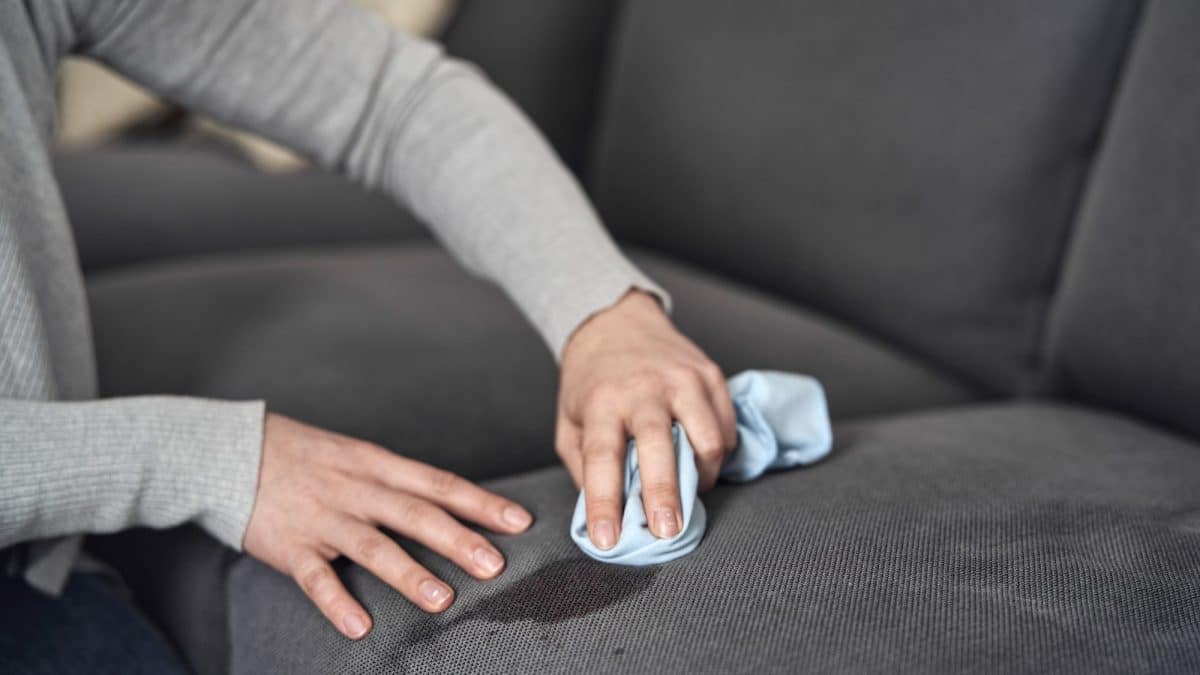
The step-by-step method above handles dust, dirt and general water marks. A few marks specific to upholstery need something different.
| Mark | Treatment | Recoverable |
|---|---|---|
| Fresh drink or food spill | Blot immediately with a dry cloth, lifting rather than pressing the liquid outward, then follow the vinegar spot method once it’s no longer wet on the surface | Usually |
| Pet accidents | Blot as much liquid as possible first, then treat with vinegar solution and pull moisture out with the wet-dry vacuum; foam that’s absorbed a large amount may need professional extraction | Sometimes |
| General shine on the seat cushions from daily use | Steam from a handheld garment steamer held a few centimetres above the surface, then brushed firmly while still warm, worked in small sections | Usually |
| Grease from food or hands | Cornflour pressed onto the mark, left overnight to draw the oil out, then brushed and vacuumed away | Usually |
Steam cleaners set to a wet-injection mode, upholstery shampoo, saddle soap, or any cleaner containing wax or silicone. A wet-injection steam cleaner pushes far more water into the cushion than blotting or spot-treating ever does, and there’s no way to extract it as thoroughly as the machine put it in.
Three mistakes that ruin suede upholstery
- Soaking a whole cushion to treat one stain. The stain lifts, but now the entire cushion holds water that takes days to clear instead of hours.
- Sitting on it before it’s actually dry. A surface that looks and feels dry can still have damp foam underneath, and sitting on it compresses that moisture straight back into the suede.
- Using a household steam cleaner on the injection setting. It’s built for washable fabric upholstery, not suede, and it puts in more water than any drying method here can safely pull back out.
Related guides
The moisture-trapped-in-foam risk covered here is the same one facing any couch cushion, suede or not, once it’s off the frame and zipped back into a cover. See how to clean couch cushions for what changes once a cushion has its own separate care tag. For a couch that looks similar but is a synthetic weave rather than real hide, how to clean a microfiber couch covers why water leaves a ring on that fabric even though the never-soak caution is the same.
Questions
How do I know if the cushion foam is still damp after cleaning?
Press firmly on the cushion with a dry, clean towel and check whether any moisture transfers to the towel. If nothing shows after a firm press held for ten seconds, the foam is dry enough to use again.
Should I call a professional upholstery cleaner instead of doing this myself?
For a large spill, pet accident, or a couch that’s never been cleaned, yes, especially if the stain covers more than one cushion. This method works well for routine maintenance and smaller marks, but professional extraction removes far more moisture than home tools can.
Can I vacuum a suede couch regularly, or does that damage the nap?
Regular vacuuming with a soft brush attachment is safe and actually protects the nap, since it removes the grit that grinds into the fibre from normal sitting and standing up.
My suede couch has a factory-applied stain protector. Does the vinegar method still work?
Test the hidden section first. Some factory protectors resist water spotting well enough that plain water lifts most marks without vinegar at all, while others react unpredictably to acid. The hidden-panel test in step one exists specifically for this.