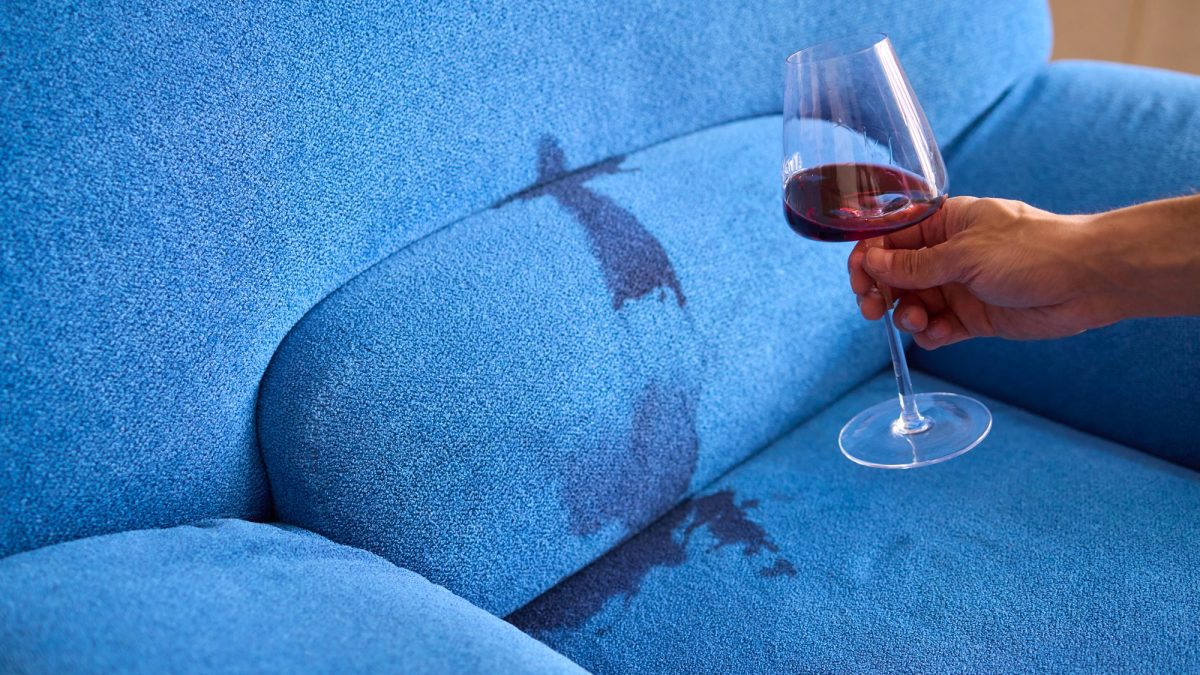
How to Clean Couch Cushions
The couch's care tag and the cushion cover's zip tag aren't the same instruction. Here's what to do with each, and why zipping a damp cover back over dry foam traps more moisture than never cleaning it at all.

Quick answer · care label Foam, fiberfill & down-wrapped cushion inserts — check the zip tag separately
-
1 · Wash
Wash 30° gentle -
2 · Bleach
No bleach -
3 · Dry
Dry in shade -
4 · Iron
Do not iron -
5 · Pro care
Pro clean P
In one line Check the cushion's own zip tag, not just the couch's. If the cover is removable and washable, protect the bare foam, wash the cover alone on a gentle cold cycle, and let it dry fully before re-zipping. If the tag says spot-clean, treat it like the rest of the couch: barely damp cloth, no soaking. Total hands-on time: about 40 minutes per cushion.
Two care tags on one cushion, not one
The fabric couch and suede couch guides both cover a fixed piece: the fabric stays stretched over the frame the whole time, and one tag under a cushion or on the back panel tells you everything. A couch cushion breaks that assumption the moment it comes off the frame. Most zippered cushions carry a second tag, sewn into the seam or hanging off the zip pull, that gives instructions for the cover alone, separate from whatever the main couch tag says about the piece as a whole. Follow only the couch tag and you can end up hand-washing a cover that was rated for a machine, or worse, machine-washing a cover while the foam it was wrapped around never should have gotten near water in the first place.
Check the main upholstery tag first, same place as on a fixed couch. Then unzip the cushion and look for a second tag inside the seam or on the zip pull itself. If there’s no second tag, treat the cover as spot-clean only until a test says otherwise.
What’s actually inside the cover
The cover and the insert are not one material, and washing instructions for the outside almost never apply to what’s underneath it. Four fill types cover most cushions sold today. One of them is also why a cushion can still smell days after it looks clean, as how to clean a couch that smells explains.
| Fill | What it feels like | Can it get wet? |
|---|---|---|
| High-resiliency foam block | Dense, springs back fast when pressed | Never |
| Foam core wrapped in polyester batting | Softer edge over a firmer center | The wrap alone can tolerate light dampness in spots; treat the whole cushion as spot-clean only |
| Foam core wrapped in feather or down | Softest edge, compresses fully under a hand | Never |
| Loose fiberfill, no foam core | Uniformly soft, no firm center, common on outdoor and older indoor cushions | Usually, in a large-capacity machine |
What you’ll need
| Item | For which case | Substitute |
|---|---|---|
| A spare pillowcase or plastic wrap | Any cover you’re removing | A clean garbage bag, cut open and taped around the foam |
| Mesh laundry bag | Machine-washable covers | Zip the cover closed on itself before it goes in |
| Mild detergent, cold water | Machine-washable covers | The same soap-and-water mix from the fabric couch guide, for a hand wash |
| Upholstery vacuum attachment | Foam and down-wrapped cushions | A soft hand brush |
| Silicone-free zipper lubricant | Any cushion with a sticking zip | A dry bar of soap, rubbed lightly along the teeth |
The method, step by step (cover removable and the zip tag says washable)
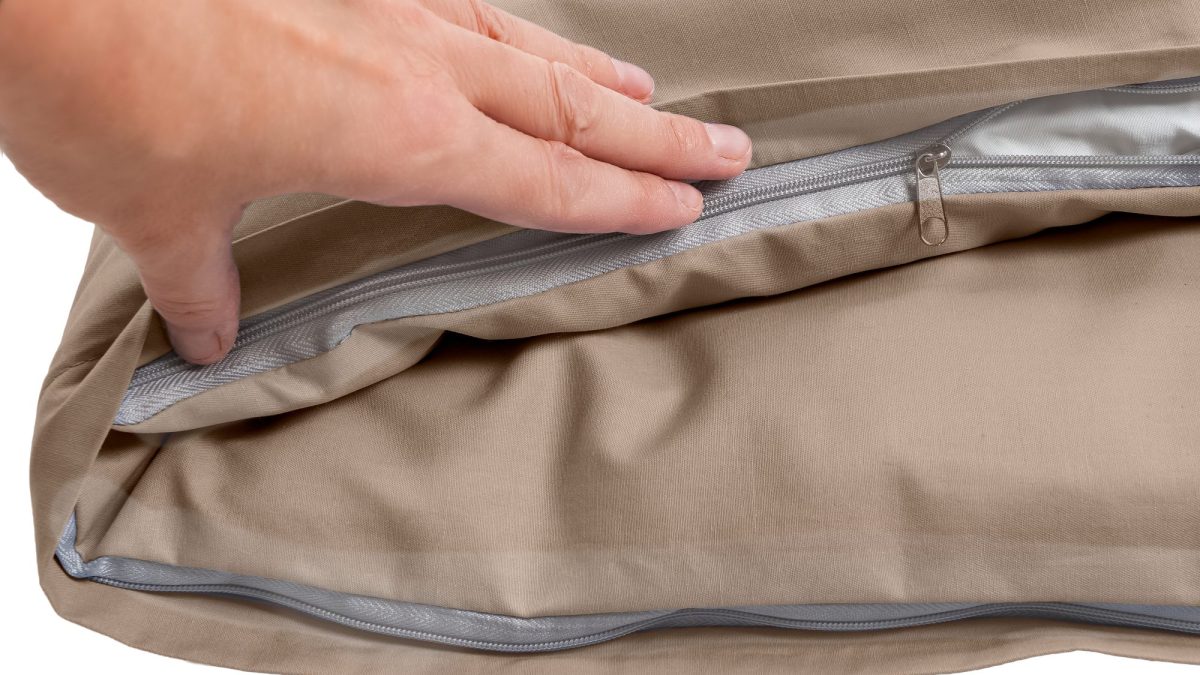
This is the version for a foam-wrapped or fiberfill cushion where the second tag clears the cover, but not the insert, for water.
Wrap the bare insert before you unzip
Slide a spare pillowcase over the foam or fill the moment the cover comes off, or tape a cut-open bag around it. An insert left sitting out picks up dust, pet hair and room odor, which then transfers straight back into the freshly washed cover the moment it goes back on.
Close the zipper on the cover before washing
Zip it shut on itself, then place it in a mesh bag. An open zip drags metal teeth against the drum and against the piping on other items in the load, which is how a welted seam wears thin and starts to fray at the corner first.
Wash cold, on a gentle cycle, with like colors
Cold water and a mild detergent, the same combination that works on a W-code fabric couch. Skip the temptation to use hot water on a heavily soiled cover: heat sets any oil-based stain permanently before the wash cycle gets a chance to lift it.
Dry the cover completely before it goes anywhere near the foam again
Air dry flat or on a hanger rather than a radiator, and check the seams and piping specifically, since thicker double-stitched edges hold moisture longer than the flat panels do. This is the step most guides skip entirely, and it matters more here than almost anywhere else on the site.
Re-zip only once the cover is bone dry, not just cool to the touch
A cover that feels dry but is still slightly damp inside the seam, zipped back over a foam insert, creates a sealed, airless pocket exactly where mold grows fastest. Unlike a couch cushion left out in the open, there’s no airflow inside a closed zip to dry out a mistake once it’s sealed in.
Wash the whole matching set together, even if only one cushion is stained
Detergent, water hardness and sun exposure all fade fabric slightly with every wash. A single cushion washed on its own, cleaned repeatedly while its neighbors are only spot-treated, ends up visibly lighter than the rest of the set within a year.
The method, step by step (cover fixed in place, or the tag says spot-clean only)
No second tag, or a tag that rules out water: treat the cushion the same way the fabric and suede couch guides treat the rest of the piece, just working the cushion on its own rather than as part of the frame.
Vacuum with a soft brush attachment
Both sides, including the piped edge where crumbs and grit collect and grind into the seam thread over time.
Test a hidden section
The underside, which never faces up when the cushion is in use. A barely damp cloth, pressed for ten seconds, checked for color change once dry.
Blot, don’t scrub, working small sections
Overlapping passes with a just-damp cloth, the same rule that keeps a ring from forming on a fixed fabric couch. Scrubbing back and forth spreads a stain outward faster than it lifts it.
Dry with airflow, cushion propped upright
Standing a cushion on its edge, rather than laying it flat on the couch frame, lets air reach both sides at once. A cushion dried flat traps moisture against the frame underneath it, the same trap that leaves a fixed suede couch cushion damp for days after the surface looks fine.
Interactive
Label decoder
Tap a symbol from your care label. No guessing, no scrolling.
19 symbols. Pick one.
Flattened, lumpy or lopsided cushions
Cushions get more compression than any other part of a couch, and they’re the one part you can actually do something about, since they come off. What fixes a flat cushion depends entirely on what’s inside it.
| Fill | What works | What doesn’t |
|---|---|---|
| Foam-wrapped in fiberfill or down | No-heat tumble with two or three tennis balls, 15-20 minutes, then hand-fluff the edges | Any heat setting, which can soften or warp the foam core underneath the wrap |
| Solid foam block | Flipping and rotating the cushion weekly so wear spreads evenly, since a compressed foam core doesn’t re-inflate on its own | Tumble drying of any kind; a flattened block needs a foam insert replacement, not a wash cycle |
| Loose fiberfill, no foam | Hand-fluffing after every wash, redistributing fill toward flattened corners | Leaving it compressed in storage between uses, which sets the flattening in faster than daily sitting does |
Rotating and flipping is worth doing on a schedule specifically because cushions are removable. A fixed couch back, the kind covered in the fabric and suede couch guides, wears wherever it’s touched most and there’s no way to even that out. A seat cushion can be turned a quarter turn every week, which a fixed panel never can.
Even in an oversized, front-load machine. Foam soaks up water in minutes and can take several days to fully purge it, and inside a zipped cover there’s no airflow at all to speed that along. A washed-whole cushion often feels dry on the outside within a day while the foam core stays wet and starts to smell within a week.
Common cushion problems, treated individually
| Problem | Cause | Fix |
|---|---|---|
| Zipper won’t budge | Thread or lint jammed between the teeth | Silicone-free lubricant worked in with a soft brush, then eased open slowly rather than forced |
| Zip pull came off in your hand | Metal fatigue at the pull’s crimp point | Needle-nose pliers can often reset a pull that slipped off; a fully snapped zip usually needs a replacement, a job for an upholsterer rather than a home fix |
| One cushion visibly lighter than the rest | Washed alone and more often than its matching set | Not reversible on the faded piece; wash the full set together going forward so fading stays even |
| Musty smell after storage | Packed away before fully dry, or stored in a sealed plastic bin | Full re-dry with airflow, then store with a cedar block rather than a dryer sheet, whose residue attracts dirt the same way leftover detergent does on a couch |
Three mistakes that ruin couch cushions
- Machine-washing the whole cushion, foam included, because the tag only mentioned the cover. A tag that clears a removable cover for washing says nothing about the insert stitched or wrapped inside it.
- Zipping a cover back on while it’s still faintly damp in the seams. It creates a sealed, airless pocket around the foam, exactly the conditions mold needs, and it’s hidden from view until the smell shows up.
- Washing only the stained cushion, over and over, while the rest of the set is only ever spot-cleaned. The mismatch in fading is gradual and easy to miss wash by wash, and hard to reverse once it’s visible.
Related guides
For the fixed fabric and frame the cushions sit against, how to clean a fabric couch and how to clean a suede couch cover the piece as a whole, including the same trapped-moisture risk in foam that applies here. For a feather or down wrap specifically, the redistribution technique that keeps a comforter’s baffle boxes from felting into lumps, see how to clean a down comforter: the same hand-fluffing habit works on a down-wrapped cushion insert. If the couch itself is microfiber, how to clean a microfiber couch covers the alcohol-based method that replaces soap and water on that fabric’s S code. The same cover-versus-insert question comes up outdoors, where the insert may be quick-dry foam that drains rather than a standard foam that holds water: see how to clean outdoor cushions. The decorative pillows sitting on top of the seat cushions follow a different rule again, because many of them are sewn shut with no zip at all and the cover cannot be separated from the fill without a seam ripper: how to clean throw pillows.
Questions
Can I put a cushion cover in the dryer?
Low heat only, and only if the cover’s own tag allows tumble drying. Air drying is safer for covers with piping or welting, since the stitched edge holds heat longer than the flat panel and can shrink unevenly against it.
How do I know if my cushion has foam or fiberfill inside without cutting it open?
Press down firmly in the center. Foam springs back within a second or two and feels uniformly firm through the whole cushion. Loose fiberfill compresses unevenly and takes longer to recover, with soft spots where the fill has shifted.
My cushion cover shrank slightly after washing. Can I fix it?
A cover that’s shrunk by a small amount can sometimes be stretched back over the insert while still damp from a rewash, then left to dry in place on the cushion. Significant shrinkage, more than about an inch, usually isn’t reversible.
Is it safe to wash outdoor cushion covers the same way as indoor ones?
Outdoor covers are usually treated with a water-repellent finish that a hot wash or high-heat dryer cycle can strip away faster than indoor fabric loses its own finish. Cold water, air drying, and skipping fabric softener all help the coating last longer.