How to Clean a Microfiber Couch
Water is the one thing a microfiber couch's S code is warning you about, and it's also the mistake almost every guide makes by suggesting a soap-and-water spray anyway. Here's the alcohol method that actually works, and the brush trick that erases a water ring after the fact.
Quick answer · care label Microfiber — S code
-
1 · Wash
Do not wash -
2 · Bleach
No bleach -
3 · Dry
Dry in shade -
4 · Iron
Do not iron -
5 · Pro care
Pro clean P
In one line Skip water entirely: it beads and dries into a harder ring on microfiber's dense synthetic weave. Rubbing alcohol dissolves oil-based stains cleanly, and once the spot is fully dry, brushing the nap in one direction erases the faint texture mark that even a correct treatment can leave behind.
Microfiber’s S code isn’t a formality, it’s the whole method
The general fabric couch guide covers the W/S/WS/X code system across woven fabrics like cotton and linen blends, where water-based cleaning is often the right call. Microfiber upholstery is almost always coded S for a reason specific to the fiber itself: it’s an ultra-fine synthetic weave, usually polyester, packed so densely that water doesn’t pass through it evenly. Instead of soaking in and drying flat the way cotton canvas does, water beads, spreads unevenly along the weave, and dries into a visible ring with a harder edge than the stain it was supposed to remove. A soap-and-water spray, the first instinct for almost any fabric stain, is the one thing that makes a microfiber stain worse instead of better.
The fix runs on rubbing alcohol instead of water, which dissolves oil-based marks without triggering the ring problem. And unlike woven fabric or real suede, microfiber’s synthetic nap can be brushed back into an even texture after it dries, which is the second half of the method most guides skip entirely: even a stain that’s treated correctly can leave a faint watermark from drying alone, and that mark comes out with a dry brush, not another round of cleaning.
Some dyed or treated microfiber can lighten slightly with repeated alcohol contact. Spot test on the underside of a cushion or the back of the couch, let it dry fully, and check for color change before treating anything visible.
What you’ll need
| Item | Why | Substitute |
|---|---|---|
| Rubbing alcohol, in a spray bottle | Dissolves oil-based stains without the water-ring problem microfiber gets from soap and water | A clear, colorless vodka works the same way in a pinch |
| White microfiber or terry cloth | Non-abrasive on the synthetic nap; a colored cloth risks transferring dye onto a damp spot | A clean white sock, turned inside out |
| Soft-bristle brush | Restores the nap’s texture after drying, which is what actually erases a faint water ring | A dry, clean sponge, rubbed in the same circular motion |
| Vacuum with upholstery attachment | Clears surface dust and crumbs before any liquid touches the fabric, so grit doesn’t grind in during treatment | A lint roller for light surface dust between full cleanings |
| Baking soda | Lifts odor from the weave without introducing moisture | None that works dry; skip if odor isn’t a problem |
Removing a fresh stain
Vacuum the area first
Use the upholstery attachment to clear loose dust and crumbs. Treating a dusty surface with alcohol just turns dry grit into a paste that grinds into the weave.
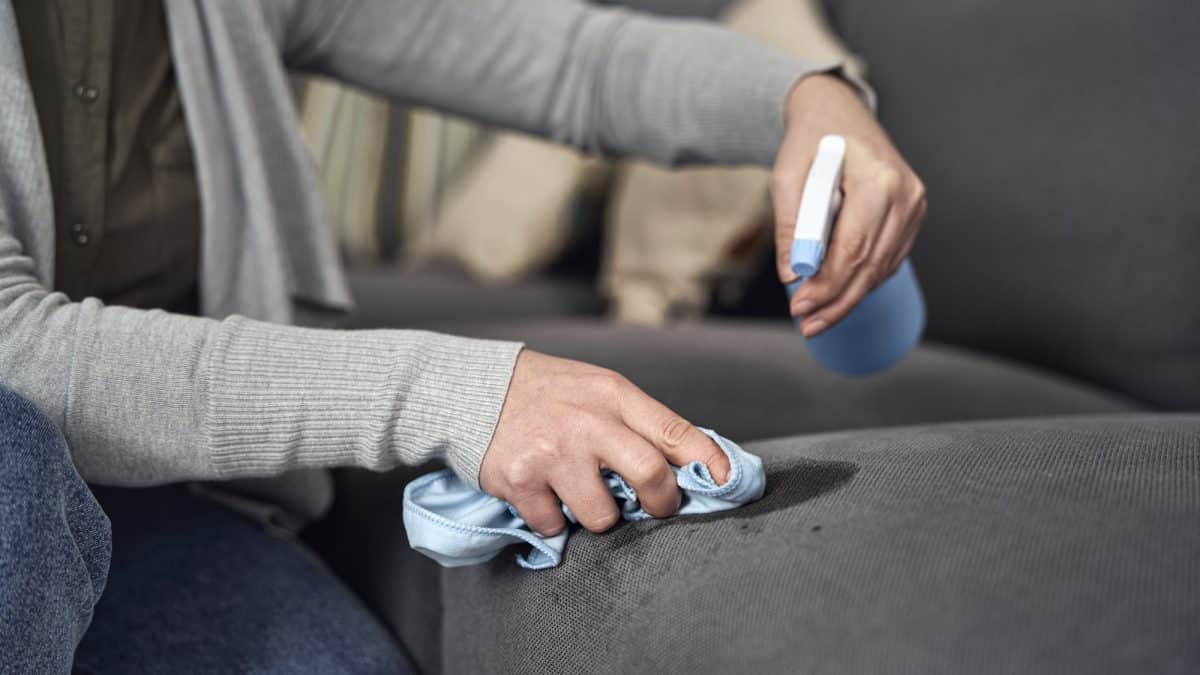
Spray rubbing alcohol directly onto the stain
Enough to dampen the spot without soaking through to the cushion foam underneath. Microfiber’s tight weave means a little alcohol goes further than it would on a looser fabric.
Rub gently in a circular motion with a white cloth
The alcohol dissolves the oil-based stain almost immediately, and the friction lifts it into the cloth. Switch to a clean section of cloth as soon as it picks up color, so the fabric never sits against the stain it just released.
Let it air dry completely
Alcohol evaporates faster than water, usually within 10-15 minutes. Don’t press or blot the spot again while it’s drying; that’s what turns an even damp patch into a ring with a hard edge.
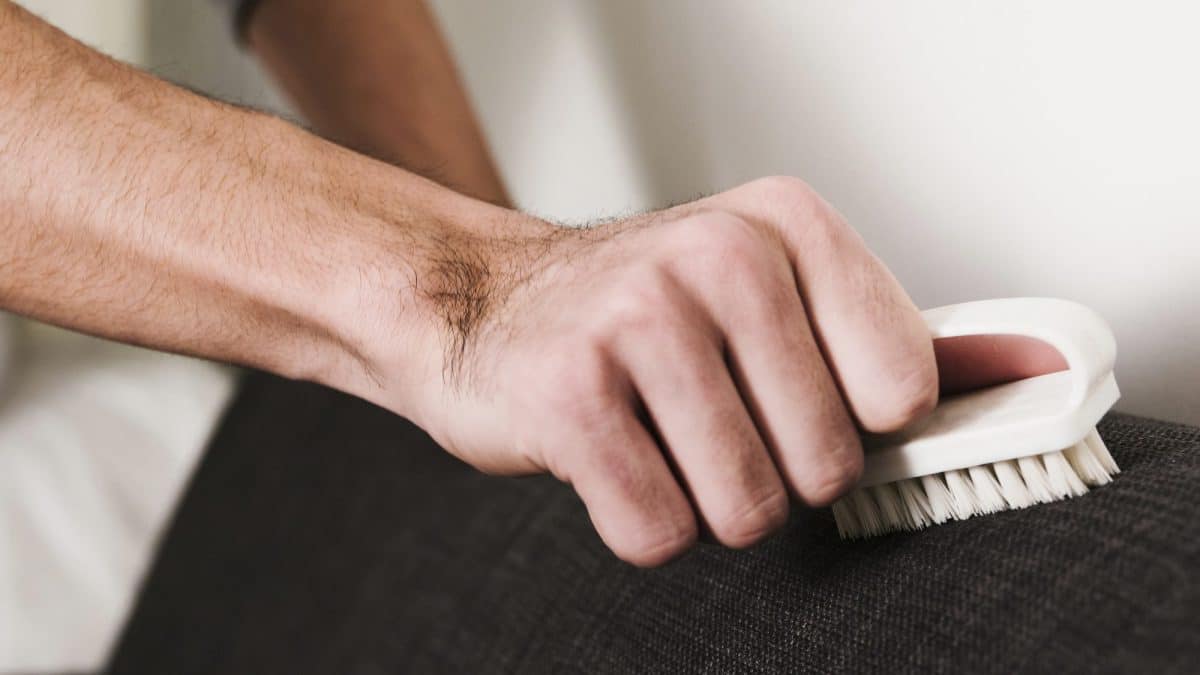
Brush the dried spot in one direction
Once fully dry, a soft-bristle brush restores the nap’s even texture. This step is what separates a clean spot from a faintly visible one, even after a correct alcohol treatment.
Fixing a water ring that’s already there
This is the fix that doesn’t exist for woven fabric or real suede, and it’s specific to microfiber’s synthetic nap. A water ring on microfiber is mostly a texture problem, not a color problem: the fibers dried compressed or flattened unevenly, and light catches the flattened area differently than the surrounding nap. Brushing restores the texture rather than removing a stain.
Confirm the couch is fully dry
Press a dry hand flat against the ring; there should be no coolness or dampness at all. Brushing a still-damp ring just rearranges wet fibers instead of fixing them.
Brush the ring and the surrounding area together
Use short, even strokes in one consistent direction, working slightly past the ring’s edge so there’s no visible line between treated and untreated nap.
Check from an angle under direct light
Rings are most visible from a low angle, which is also the best way to check if brushing evened out the texture. Repeat the brushing pass if any flattened patch is still visible.
Sprinkle baking soda over the area, leave it for at least an hour (longer for a stronger odor), then vacuum it off with the upholstery attachment. This addresses odor from trapped skin oils and pet dander without introducing the moisture a water-based deodorizer spray would.
Interactive
Label decoder
Tap a symbol from your care label. No guessing, no scrolling.
19 symbols. Pick one.
What ruins a microfiber couch
| Mistake | What happens | Fix |
|---|---|---|
| Using a soap-and-water spray, the default for most fabric stains | Water beads and dries unevenly in the dense weave, leaving a harder-edged ring than the original stain | Rubbing alcohol dissolves oil-based stains without triggering the ring problem |
| Pressing or blotting the spot while it’s still drying | Turns an even damp patch into a ring with a defined edge as it dries | Let alcohol air dry undisturbed, then brush once it’s fully dry |
| Skipping the brush step after a stain is gone | The stain lifts but a faint texture mark from drying stays visible under angled light | Brush the dried spot in one direction to restore the even nap |
| Treating a dusty surface directly with alcohol | Turns loose dust and grit into a paste that grinds into the weave instead of lifting away | Vacuum with the upholstery attachment before any liquid treatment |
| Using a water-based deodorizer spray for odor | Reintroduces the exact moisture the S code is warning against, risking a new ring for an odor problem that doesn’t need liquid at all | Baking soda, left dry and then vacuumed off |
Related guides
For a couch coded W or WS rather than S, how to clean a fabric couch covers the water-based method that would leave a ring on microfiber. For a couch that’s real hide rather than a synthetic weave, how to clean a suede couch shares the same never-soak caution but uses a different vinegar-based spot treatment suited to leather. If the cushions come off and carry their own tag separate from the couch, how to clean couch cushions covers the cover-versus-insert distinction that applies here too.
Questions
Can I use water on a microfiber couch at all?
A barely damp cloth for light surface dust is usually fine, but any amount of liquid applied as a spray or soak risks the uneven drying that causes rings. Rubbing alcohol is the safer default for anything beyond light dusting.
Why did my water ring get worse after I tried to clean it with more water?
Adding more water to an existing ring just expands the area of uneven drying instead of fixing it. The actual fix is letting the area dry completely, then brushing the nap back into an even texture, not additional liquid.
Is rubbing alcohol safe on all microfiber colors?
It’s safe on most, but some dyed or treated microfiber can lighten slightly with repeated contact. Spot test on a hidden section like the underside of a cushion before treating a visible stain.
Do I need a professional cleaner for a heavily stained microfiber couch?
For set-in or widespread staining that alcohol and brushing don’t fully clear, a professional upholstery cleaner using the correct solvent is safer than repeated home treatment, which can wear the nap down with too much brushing over time.