How to Clean Suede (Without Ruining It)
Suede can get wet. That's not the problem. Heat, pressure and the wrong cleaner are what actually ruins it. Here's the full method, plus a guide for every suede item you own.
Quick answer · care label Suede — LS
-
1 · Wash
Do not wash -
2 · Bleach
No bleach -
3 · Dry
Dry in shade -
4 · Iron
Do not iron -
5 · Pro care
Pro clean P
In one line Brush dry, spot-clean with a barely damp cloth and a drop of white vinegar, stuff or lay flat, dry away from heat for 24 hours, then brush the nap back up. Total hands-on time: 20 minutes.
Can suede actually get wet?
Yes, and that fact trips up most people before they even start. Suede is leather, sanded on the flesh side to raise a short nap, and leather is a wet material by origin: it was tanned in liquid. A soaked suede jacket or a rain-caught pair of shoes is not a ruined item. What ruins suede is what people reach for next.
Three things cause damage that does not come back, and only three:
- Heat. Above roughly 40 °C the collagen in the hide contracts. The piece shrinks and stiffens, and it stays that way. Radiators, hairdryers, tumble dryers and car dashboards all cross this line.
- Pressure while wet. Wet nap flattens under any weight and dries flat. It is why a soaked shoe develops shiny crease marks across the toe, or a bag develops a dark, hard patch where it rested against a table.
- Surfactants. Ordinary detergent, dish soap and most upholstery cleaners strip the natural oils out of the hide and leave a pale, chalky patch that brushing alone never fully lifts.
Water in, water out, as long as it leaves slowly, away from heat, and the nap gets brushed back up before it fully sets. Every step below exists to protect that one sentence.
What you’ll need
Four items, three of which are already in most kitchens. Suede kits sold at shoe shops contain the same four things at a higher price.
| Item | Why | Substitute |
|---|---|---|
| Suede brush | Brass or nylon bristles lift the nap without cutting the fibre | A clean, dry toothbrush |
| White vinegar | Dissolves salt and water rings at a pH the hide tolerates | Rubbing alcohol, mixed 1:1 with water |
| Microfibre cloth | Lifts residue instead of pushing it deeper into the nap | An old, colour-safe cotton T-shirt |
| Suede eraser | Removes dry scuffs and light scratches with friction alone | A clean pencil eraser, for small marks only |
The method, step by step
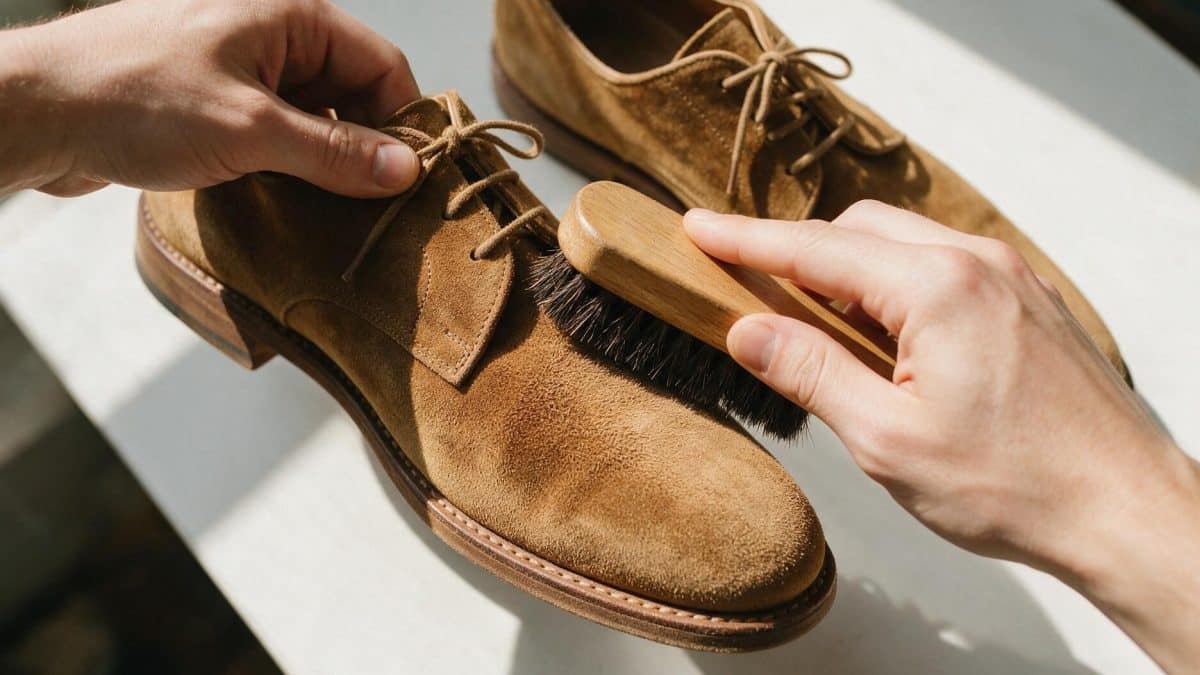
Follow this order. Steps 1 and 2 are dry work. Introducing water before the loose dirt is brushed out is what creates most of the stains people then struggle to remove.
Let it dry completely
If the item is wet or muddy, stop here and wait. Brushing wet suede drives grit into the fibre instead of lifting it out. Leave the piece away from any heat source for a full day before touching it.
Brush the whole surface, one direction
Short strokes, always the same way, following the natural lie of the nap. The goal is to remove dust and raise the fibre, not to scrub. Most light marks and dulling disappear at this step alone.
Spot-treat what’s left
Dampen a cloth with a 1:1 mix of white vinegar and water. Damp, not wet. Press onto the mark and lift; do not rub in circles. Work outward from the centre of the stain so you don’t create a new ring at its edge.
Let it dry flat or in shape
Shoes get stuffed with plain paper to hold their form; bags and jackets get laid flat or hung on a padded hanger. This keeps the nap from creasing while it dries from the inside out.
Dry in shade, at room temperature
Away from sun, radiators and airing cupboards. A draught is fine; heat is not. Give it the full 24 hours even if the surface feels dry after six. The fibres underneath are usually still damp.
Brush the nap back up, then protect
Brush again once fully dry. The colour visibly returns as the fibres stand back up. Finish with a silicone-free suede protector spray held about 25 cm away, in two light passes rather than one heavy one.
Interactive
Label decoder
Tap a symbol from your care label. No guessing, no scrolling.
19 symbols. Pick one.
Suede, nubuck and nappa are not the same thing
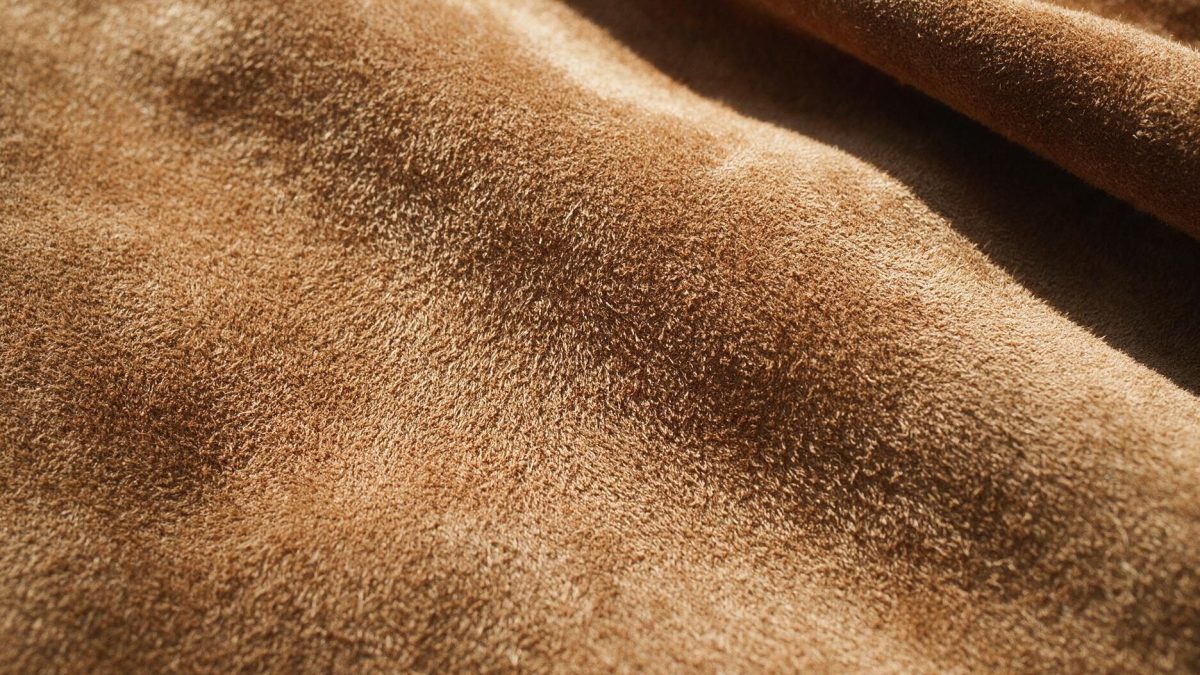
Shops use these words loosely, and the difference changes what you can safely do to a piece. Thirty seconds spent checking is worth it.
| Type | How to recognise it | Water | Brush |
|---|---|---|---|
| Suede | Long, soft nap on the flesh side of the hide. Changes colour visibly when stroked. | Tolerates | Yes |
| Nubuck | Very short, velvety nap sanded into the grain side instead. Feels like peach skin. | Tolerates | Gently |
| Nappa | Smooth, no nap at all, with a slight natural sheen. | Avoid | Never |
Common suede stains, treated individually
The general method above handles dust, dirt and water marks. These need something different.
| Stain | Treatment | Recoverable |
|---|---|---|
| Salt rings (winter footwear) | Undiluted white vinegar on a cloth, dabbed over the ring. Repeat once fully dry if a faint mark remains. | Yes |
| Grease or oil | Cornflour or talcum powder pressed onto the mark, left 8 hours to draw the oil out, then brushed away. | Usually |
| Ink | Rubbing alcohol on a cotton bud, dabbed rather than rubbed. Stop the moment any colour lifts. | Rarely |
| Old, set water ring | Dampen the entire panel evenly with a spray bottle, then dry flat. An even tone beats a clean patch on a dull background. | Yes |
Washing machine, tumble dryer, saddle soap, leather conditioner, or any cleaner containing wax or silicone. Conditioner is formulated for smooth leather; on suede it mats the nap down permanently and cannot be brushed back out.
Suede care by object
The method above is the same across every suede item. Only the drying setup and a couple of pressure points change from one object to the next, which is why each of these gets its own guide.
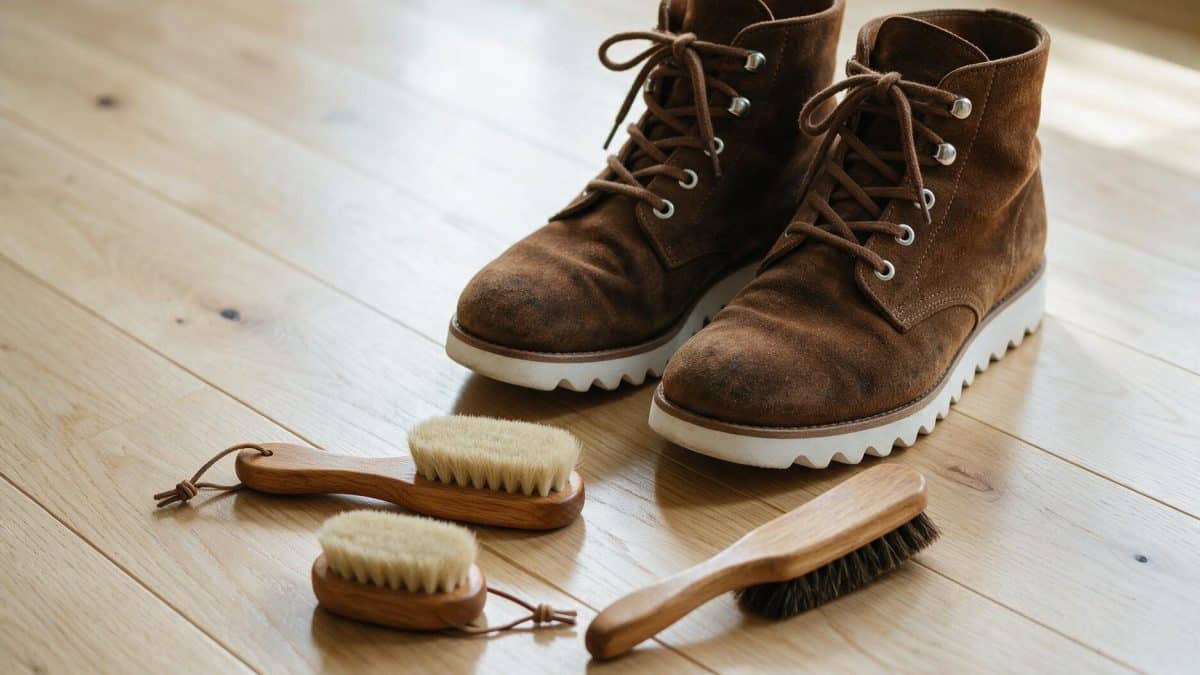
- Shoes and trainers take the most water damage per wear and need stuffing to hold their shape while they dry. See how to clean suede shoes.
- Boots add a second problem: the shaft creases at the ankle if it dries collapsed. See how to clean suede boots.
- Birkenstocks and footbed sandals have a cork sole underneath the suede strap, which reacts badly to the same water that the suede tolerates. See how to clean suede Birkenstocks.
- Sneakers mix suede panels with mesh or rubber, so spot treatment has to stop at the seam. See how to clean suede sneakers.
- Bags hold their shape from the inside and pick up colour transfer from clothing dye more than any other suede item. See how to clean a suede bag.
- Jackets are the hardest to dry evenly because of the seams and lining. See how to clean a suede jacket.
- Couches and upholstery can’t be stuffed or hung, which changes the drying method completely. See how to clean a suede couch.
Three mistakes that ruin suede for good
- Drying near heat. The single most common way a suede item is lost. The damage is instant, and it does not reverse.
- Cleaning while wet. Every minute spent waiting for the piece to dry saves several minutes of stain removal afterward. Treat a stain while the nap is still saturated and you just spread it further.
- Treating one spot instead of the panel. A clean circle on a dusty surface is more visible than the original mark. Work the treatment out to the nearest seam, not just the stain itself.
Related guides
Cashmere carries the same undeserved reputation for being unwashable, for a different reason: the label says dry clean only, and the solvent is harder on the fiber than a cool hand wash. See how to clean cashmere.
Questions
Can suede go in the washing machine on a delicate cycle?
No. The problem isn’t water temperature, it’s the agitation and spin. The drum compresses wet nap against itself for several minutes, and the fibres dry stuck in that position. The item comes out stiff, pale in patches, and often misshapen.
How often should I reapply suede protector spray?
Every six to eight wears in wet weather, or twice a season for occasional use. Reapply after every deep clean, since the vinegar in the spot-treatment step strips the previous protective coat along with the stain.
My suede has gone shiny in one spot. Can that be fixed?
Usually, yes. Shine means the nap is crushed flat, not that the fibre is gone. Hold the spot a few seconds over steam from a kettle, not touching it, just the steam, then brush firmly while it’s still warm. Repeat once more if the sheen doesn’t lift the first time.
Is a suede eraser actually worth buying?
For dry scuffs and light scratches, yes. It’s the one tool with no real household substitute that performs as well. For anything wet, oily or set-in, it does nothing and can push the mark in deeper.
Does the same method work on synthetic (faux) suede?
Mostly, but faux suede tolerates more water and a gentle machine wash on some items, since there’s no hide underneath to shrink from heat. Always check the care label first: synthetic suede is exactly where the label matters most, because the two materials look identical.