How to Clean a Suede Jacket
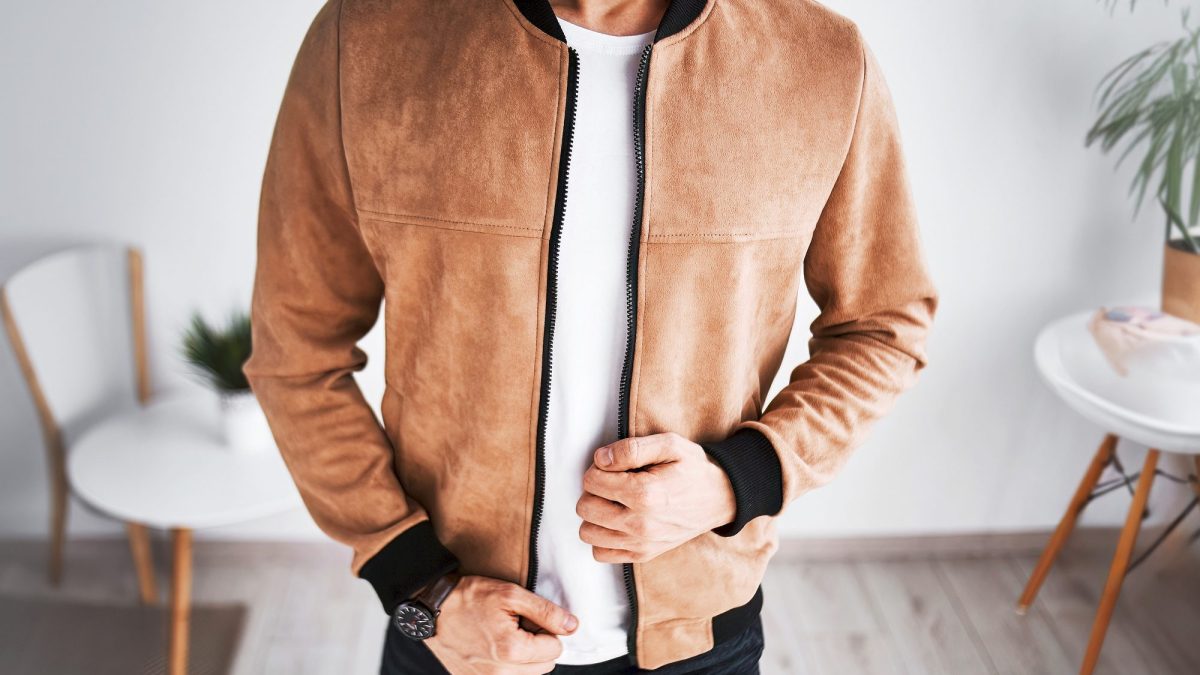
A suede jacket is a dozen panels and seams, not one piece of hide, so it dries unevenly if you let it. Here's how to hang, spot-treat, and dry it without creasing the shoulders or leaving the collar damp.
Quick answer · care label Suede — LS
-
1 · Wash
Do not wash -
2 · Bleach
No bleach -
3 · Dry
Dry in shade -
4 · Iron
Do not iron -
5 · Pro care
Pro clean P
In one line Hang on a padded hanger, brush every panel, spot-treat with a barely damp vinegar cloth working up to each seam, dry on the hanger for 48 hours away from heat, then brush and protect. Total hands-on time: 26 minutes.
Why suede jackets dry unevenly
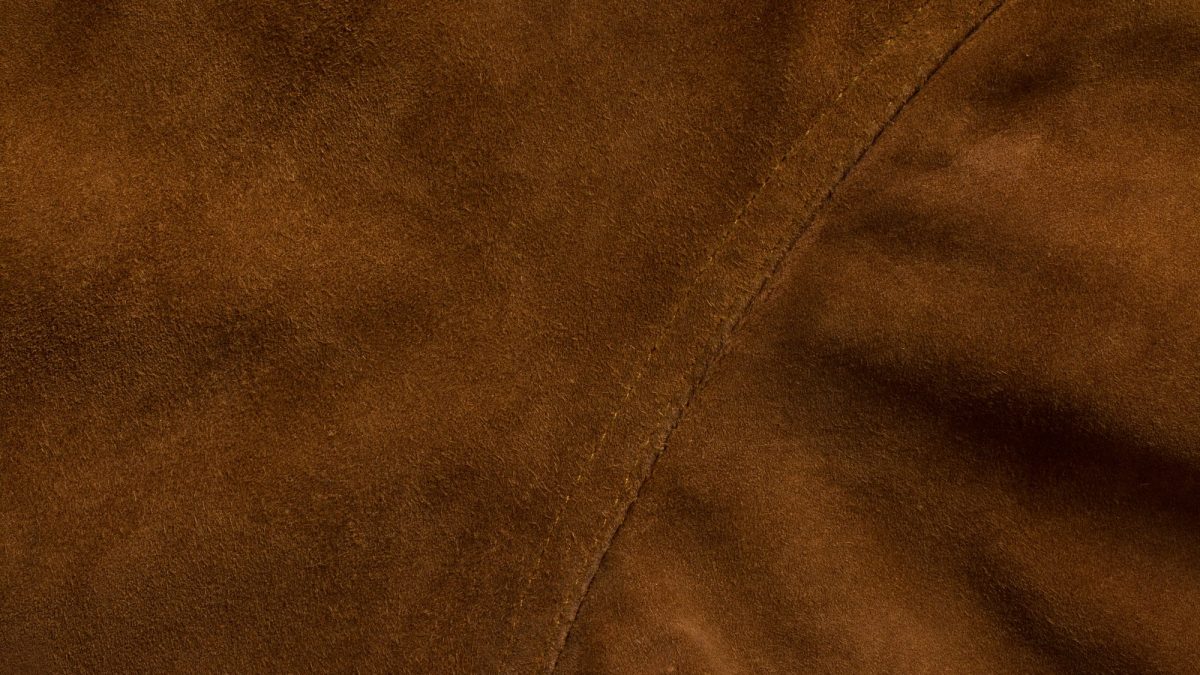
A suede jacket is built from panels stitched together, usually with a separate lining, shoulder padding, and sometimes a zip or button placket that’s a completely different material. That construction is the whole difficulty. A single suede shoe dries as one piece of hide. A jacket dries as a dozen pieces joined at seams, each one holding a slightly different amount of moisture, and the collar and cuffs, where the suede is doubled over and sewn, hold the most.
Support the shoulders while it dries, keep the lining separate from the outer suede in your head even though you can’t see it, and don’t call a jacket dry just because the front panels feel dry. The seams and the collar lag behind everything else.
What you’ll need
The core suede kit, plus a padded hanger. A jacket is the one suede item where the drying support matters almost as much as the cleaning itself.
| Item | Why | Substitute |
|---|---|---|
| Suede brush | Brass or nylon bristles lift the nap without cutting the fibre | A clean, dry toothbrush |
| White vinegar | Dissolves salt and water rings at a pH suede tolerates | Rubbing alcohol, mixed 1:1 with water |
| Microfibre cloth | Lifts residue instead of pushing it deeper into the nap | An old, colour-safe cotton T-shirt |
| Padded or wide-shouldered hanger | Holds the shoulder line while damp, so it doesn’t droop or crease | Two hangers hooked together to widen a narrow one |
The method, step by step
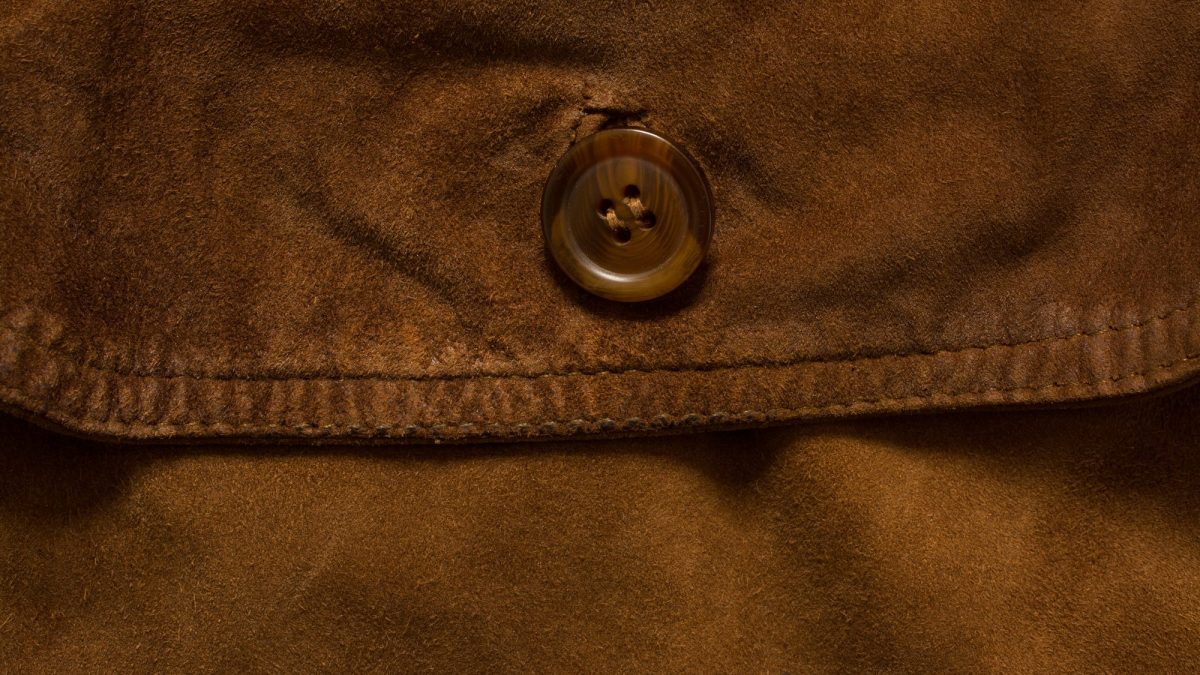
Hang the jacket before you start. Working on a flat table folds the shoulders and creates creases that set in as it dries.
Hang it on a padded hanger first
Button or zip it closed so the front panels sit flat against the body shape rather than hanging loose. Everything else happens with the jacket upright.
Brush the whole surface, one direction
Short strokes following the nap, working each panel to its seam. Pay extra attention to the collar and cuffs, where the suede is folded and dust collects in the crease.
Spot-treat marks, working outward from the centre
Dampen a cloth with a 1:1 vinegar and water mix. Press and lift rather than rub. On a seam, work each panel up to the stitching line rather than crossing it, since the two panels either side can dry at different rates if one gets wetter than the other.
Check the lining hasn’t picked up moisture
Turn a cuff or the collar inside out and feel the lining fabric. If it’s damp, the outer suede was over-wetted and needs longer to dry than usual: the lining traps that moisture against the hide from behind.
Dry on the hanger, in shade, at room temperature
Away from radiators, direct sun and airing cupboards. Leave enough space around the jacket for air to move on both sides. Give it a full 48 hours rather than the 24 a smaller item needs: seams and the collar take longer to release moisture than open panels.
Brush the nap back up, then protect
Brush every panel again once fully dry, paying attention to the seams where the nap tends to flatten from the stitching underneath. Finish with a silicone-free suede protector spray, two light passes rather than one heavy one, holding it back from any buttons or zip teeth.
Interactive
Label decoder
Tap a symbol from your care label. No guessing, no scrolling.
19 symbols. Pick one.
Suede jackets vs. other suede items
The general suede method covers dust, dirt and water marks the same way everywhere. What changes with jackets is the construction, not the material.
| Item | Construction | Main risk |
|---|---|---|
| Suede shoes and boots | Mostly one or two pieces of hide | Losing shape while wet |
| Suede bags | Panels over a rigid or semi-rigid frame | Colour transfer from clothing |
| Suede jackets | Multiple panels, a separate lining, seams throughout | Uneven drying between panels and at the seams |
Common suede jacket marks, treated individually
The step-by-step method above handles dust, dirt and general water marks. A few marks specific to jackets need something different.
| Mark | Treatment | Recoverable |
|---|---|---|
| Underarm sweat marks | Undiluted vinegar dabbed directly on the mark, left to sit two minutes, then blotted with a dry cloth; repeat once dry if a faint ring remains | Usually |
| Rain spotting across the shoulders | Dampen the entire panel evenly with a spray bottle rather than spot-treating each drop, then dry flat on the hanger. An even tone beats a spotted one. | Yes |
| Shine at the elbows from repeated flexing | Steam from a kettle held a few seconds over the spot without touching it, then brushed firmly while still warm | Usually |
| Cologne or perfume oil at the collar | Cornflour pressed onto the mark, left overnight to draw the oil out, then brushed away | Usually |
Washing machine, tumble dryer, saddle soap, leather conditioner, or any cleaner containing wax or silicone. A jacket has more surface area and more seams than any other suede item, so a mistake made across the whole garment is harder to fix than the same mistake on a shoe.
Three mistakes that ruin suede jackets
- Drying it flat on a table. The shoulders lose their shape and the front panels crease where they fold against each other, in a way a hanger prevents from the start.
- Calling it dry after 24 hours. The collar and cuffs, where suede folds over itself, hold moisture well past the point where the flat panels feel dry.
- Treating the whole jacket for one stain. Spot-treating a single mark on a large garment can leave a visible clean patch. Work the treatment out to the nearest seam, not just the mark.
Related guides
A regular dry cleaner’s solvent, or a home dry-cleaning kit’s dryer heat, can both damage suede the same way water can. If you’re wondering whether a home kit is a shortcut for a “dry clean only” tag, how to dry clean at home covers what those kits actually do and why suede is one of the materials they can never touch.
Questions
Can a suede jacket go to a regular dry cleaner?
Only one that specifically handles suede and leather, not a standard dry cleaner. Standard dry-cleaning solvents are formulated for woven fabric and can strip the natural oils out of the hide the same way detergent does.
My suede jacket smells of rain even after it’s dried. What does that mean?
The lining is still damp even though the outer suede feels dry. Hang it somewhere with airflow for another 24 hours rather than assuming it’s finished, since a lining that dries trapped against damp suede is what causes a lingering smell.
Is it normal for a suede jacket to feel stiff after cleaning?
A little stiffness after drying is normal and usually softens once you brush the nap and wear it a few times. Real stiffness that doesn’t ease up points to the jacket having dried too fast, near a heat source, rather than a problem with the cleaning itself.
Should I unbutton or unzip the jacket while it dries?
No, keep it closed on the hanger. A closed jacket holds its intended shape as it dries; an open one hangs unevenly and the front panels can dry with a slight outward curl.