How to Dry Clean at Home
A home dry-cleaning kit doesn't use solvent, it uses a heat-activated cloth in your dryer. Here's what that can actually clean, what still needs a professional, and the method that keeps it from going wrong.
Quick answer · care label Dry-clean-only — home kit
-
1 · Wash
Do not wash -
2 · Bleach
No bleach -
3 · Dry
Tumble low -
4 · Iron
Iron 110° -
5 · Pro care
Pro clean P
In one line A home dry-cleaning kit uses a heat-activated cloth in your dryer on medium heat for about 20-30 minutes, not liquid solvent. It safely freshens polyester, wool, and simple silk, but suede, leather, and glued tailoring still need a professional.
A home dry-cleaning kit doesn’t use solvent, and that’s the gap nobody explains
“Dry clean” is a specific process: a garment gets agitated in liquid solvent, usually perchloroethylene or a hydrocarbon blend, inside a sealed machine at a professional cleaner. No water touches the fabric, which is why wool suits and silk blouses come back without shrinking or losing shape. A home dry-cleaning kit does something different. It pairs a heat-activated cleaning cloth with your own tumble dryer: the heat releases a vapor from the cloth that penetrates the fibers, lifts light surface soil and odor, and relaxes wrinkles. There’s no solvent bath and no immersion. It’s closer to a deep refresh than to what the cleaner around the corner does.
That gap explains most of the disappointment people report with these kits. A kit can pull out a faint deodorant smudge or the smell of a smoky room. It can’t lift a set-in oil stain or replace what solvent does to grease and heavy soil, and running a glued-interfacing blazer through the dryer heat it requires can do damage a professional solvent cycle never would. Knowing which job you’re actually asking the kit to do is what decides whether it works.
The fabric name on the tag matters less than how the garment is built. A wool blazer with a fused interfacing and shoulder pads can come apart in the dryer heat a home kit needs, even though loose wool sweaters handle the same heat fine. If a garment has structure, glued layers, or beading, that’s the signal to skip the kit regardless of what the outer fabric is.
What you’ll need
| Item | Why | Substitute |
|---|---|---|
| Heat-activated cleaning cloth (from the kit box) | Releases the vapor that lifts light soil and odor once it’s heated in the dryer; this is the only part of the kit doing active cleaning | None. This is the kit’s core mechanism, not interchangeable with a dryer sheet |
| Stain-remover pen or pad (included) | Pretreats fresh, light stains before the cycle; the cloth alone won’t lift a stain it never touches directly | A small dab of dish soap and water, blotted and rinsed, for a stain you can treat immediately |
| Reusable cleaning bag | Holds the garment and cloth together so the vapor stays concentrated around the fabric instead of dispersing through the whole dryer | None recommended. An open garment loses most of the vapor’s effect |
| Tumble dryer, medium heat setting | Supplies the heat that activates the cloth; most kits specify a 20-30 minute cycle | None; a dryer is required for every kit on the market |
| Padded or wide hanger | Garments come out warm and slightly damp from residual vapor; hanging immediately while warm finishes releasing wrinkles | A chair back works for a quick reshape if no hanger is free |
What a home kit can actually handle
| Garment or fabric | Home kit verdict |
|---|---|
| Polyester blouses and dresses | Safe. Polyester tolerates the dryer heat well and this is the fabric home kits handle most reliably. |
| Loose wool sweaters, no lining | Safe. Unstructured wool without fused interfacing survives the heat cycle without shrinking, unlike a tailored wool jacket. |
| Simple silk blouses, no beading | Usually safe, but spot test on an inside seam first. Some dyed silks water-spot from the vapor’s residual moisture. |
| Cashmere, unstructured | Safe on medium heat, but check for pilling afterward; cashmere pills more easily under any tumbling motion. |
| Suede or leather, any garment | Never. The heat and residual moisture can crack leather and mat or stain suede permanently. See how to clean a suede jacket for the water-free method suede actually needs. |
| Tailored blazers with fused interfacing | Never. Dryer heat can loosen the glue holding the interfacing to the shell, causing bubbling that doesn’t reverse. |
| Sequins, beading, or glued appliqué | Never. Tumbling plus heat is exactly the combination that knocks embellishments loose or melts the adhesive underneath. |
| Anything already stained with oil or grease | Skip the kit for this stain specifically. The cleaning cloth lifts light surface soil and odor, not set-in oil; oil needs solvent, which means a professional cleaner. |
The home dry-cleaning method, step by step
Read the care label before anything else
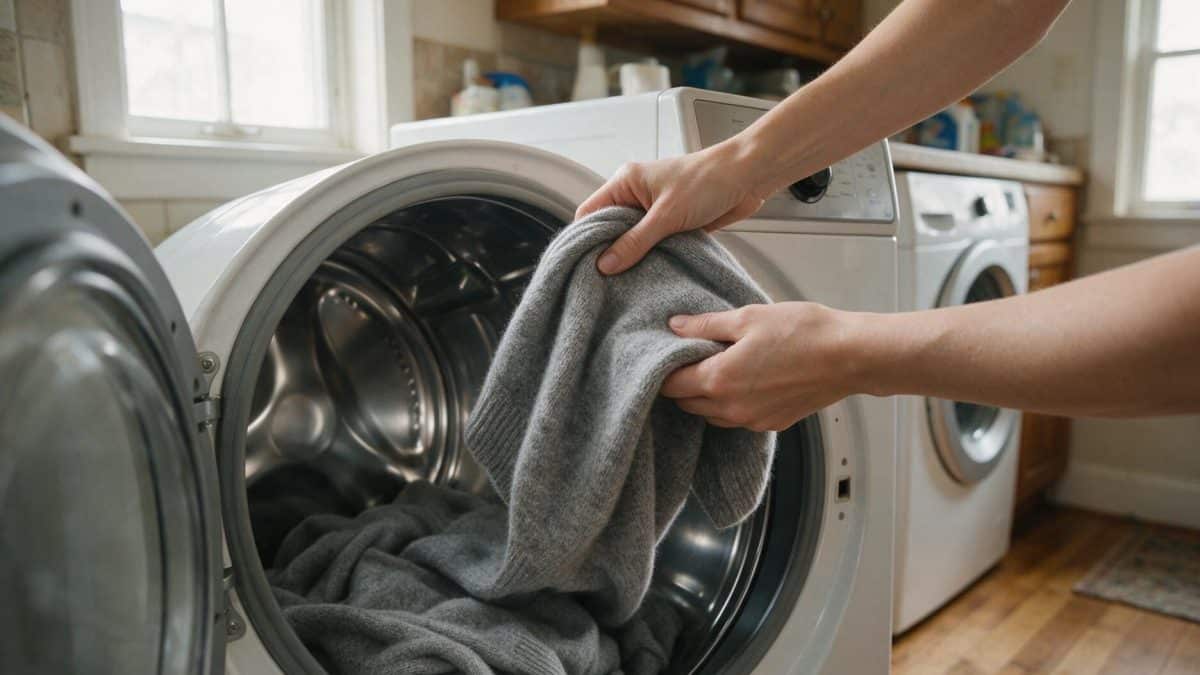
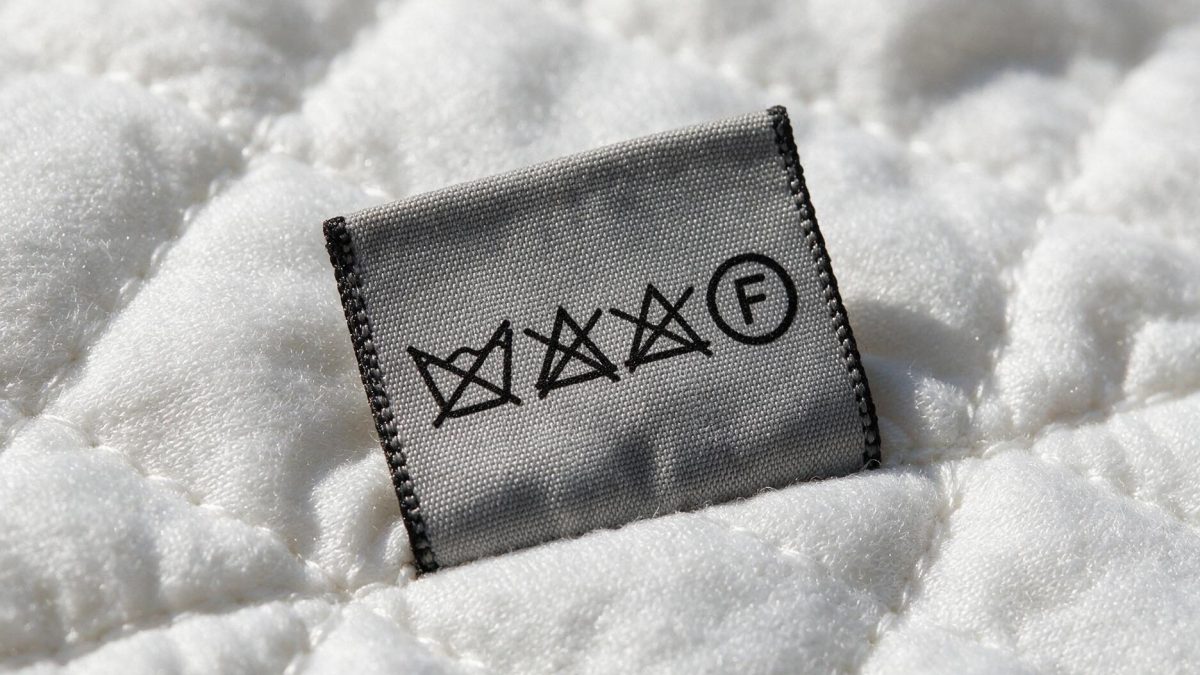
Look for the symbols that rule the kit out immediately: a crossed tub (do not wash) paired with heavy tailoring, or any garment marked exclusively P or F with no wash option at all, is telling you the fabric or construction needs true solvent, not a home cycle.
Pretreat any visible stains
Dab the stain-remover pen or pad directly onto fresh, light marks (food splatters, light makeup) and let it dwell for about 5 minutes before the cycle. The heating cloth cleans the whole garment lightly; it won’t concentrate on a spot it never makes contact with. One common mark does not belong in this step: a coffee drip with milk in it is a protein stain, and this kit ends with 20 to 30 minutes of dryer heat, which is exactly what sets it. Deal with that one cold and confirm it is gone first, following how to clean a coffee stain, or send the garment out.
Place the garment and cloth in the bag together
Follow the kit’s fold instructions. Most ask for the garment loosely folded, not crumpled, so the vapor reaches every layer instead of concentrating on the outer fold.
Run the dryer cycle on medium heat
Most kits specify 20-30 minutes. Skipping to a higher heat to “make sure it works” is the most common way people damage a garment that would otherwise have come out fine.
Hang the garment immediately while it’s still warm
A wide or padded hanger, straightened at the shoulders, lets the remaining wrinkles release as the fabric cools. Waiting until it’s fully cold to hang it locks creases back in.
Check the result before storing it
If odor or a stain is still visible after the garment has fully cooled, don’t run a second cycle back to back. Two rounds is the practical ceiling for a home kit. Beyond that, it’s a job for solvent, not repetition.
A cleaning cloth cycle removes light odor and surface soil, which covers most of what sends people to the dry cleaner between real cleanings: a worn-once blazer, a dress that picked up cigarette smoke. It’s not a substitute for professional cleaning on a garment that’s visibly dirty, sweat-through, or stained with anything oil-based.
When to skip the kit and go professional
| Situation | Why the kit falls short |
|---|---|
| Oil, grease, or makeup foundation stains | These need solvent to break the oil bond with the fiber; a heat-activated cloth lifts water-soluble soil and odor, not oil |
| Structured jackets and suits with lining | Fused interfacing and multiple bonded layers can separate or bubble under dryer heat, a risk a solvent bath at low agitation doesn’t carry |
| Suede, leather, and fur trim | These materials need water-free, heat-free care specific to the hide, covered in how to clean a suede jacket, not a dryer cycle built for woven fabric |
| Heirloom or fragile vintage pieces | Even mild heat and tumbling is more mechanical stress than a delicate, aged fiber should take; a professional can hand-treat instead |
| A garment that’s already been through two home cycles with no improvement | At that point the soil or stain is past what a surface-level vapor treatment reaches; repeating it risks fabric damage for no further benefit |
Interactive
Label decoder
Tap a symbol from your care label. No guessing, no scrolling.
19 symbols. Pick one.
Related guides
The same solvent-versus-water line shows up on upholstery tags: how to clean a fabric couch covers the W/S/WS/X code system, where an S or X code means solvent-only cleaning, the couch equivalent of a “P” garment label. For a material that never tolerates a home kit’s heat and moisture, see how to clean a suede jacket. And if you’re checking whether a specific item belongs in the washer instead of a dry-clean method at all, can you machine wash shoes? and can you machine wash pillows? use the same by-material decision approach. Heat is the same danger elsewhere too: a dishwasher’s heated dry cycle can warp a structured cap’s brim the same way a dryer’s heat can damage the wrong garment here, see how to clean hats in the dishwasher. The iron itself draws the same kind of distinction between two separate problems, not one: see how to clean a clothes iron. Cashmere is the garment most often sent to a cleaner that did not need to go: how to clean cashmere covers the hand wash that replaces it.
Questions
Is a home dry-cleaning kit the same as professional dry cleaning?
No. Professional dry cleaning immerses the garment in liquid solvent inside a sealed machine. A home kit uses a heat-activated cloth in your regular tumble dryer to release a vapor that lifts light surface soil and odor. It’s a refresh, not a solvent clean.
Can I use a home dry-cleaning kit on a suede or leather jacket?
No. The combination of dryer heat and the vapor’s residual moisture can crack leather and permanently mat or stain suede. Suede and leather need a water-free, heat-free method. See how to clean a suede jacket for the correct approach.
Will a home kit remove an oil or grease stain?
No. The cleaning cloth lifts water-soluble soil and odor, not set-in oil. Oil-based stains need solvent, which means a trip to a professional cleaner rather than another home cycle.
How many times can I run the same garment through a home kit?
Treat two cycles as the practical ceiling. If a stain or odor is still there after the second run, the garment needs solvent-based professional cleaning rather than a third round in the dryer, which only adds mechanical wear without solving the problem.