How to Clean a Coffee Stain (One Cup, Three Stains)
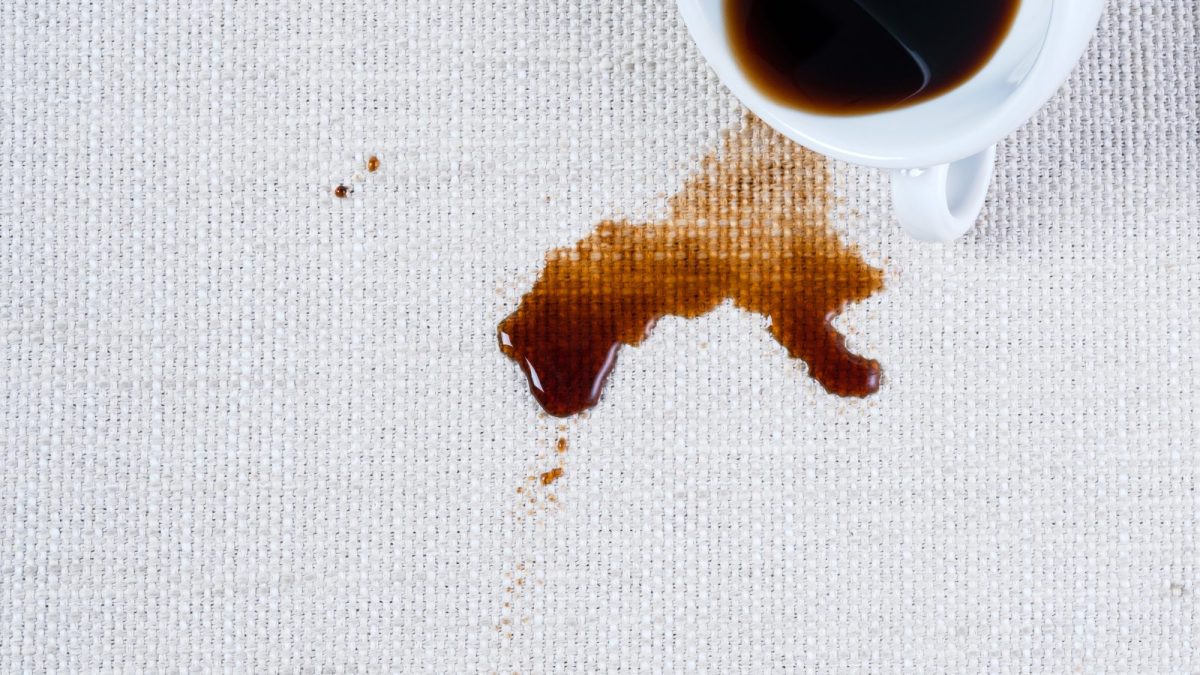
Every guide treats coffee as one stain and ends by telling you to wash it warm. A cup with milk in it is three stains with three different rules, and warm water is the one thing that makes the milk permanent. Here is the fold test that says which kind of coffee you spilled.
Quick answer · care label Cotton, linen and blends · not wool, cashmere or silk
-
1 · Wash
Wash 40° -
2 · Bleach
Oxygen bleach -
3 · Dry
No tumble dry -
4 · Iron
Do not iron -
5 · Pro care
Pro clean P
In one line A coffee spill with milk in it is three stains at once, and two of them have opposite temperature rules. Rinse cold from the back, then run a cold pass with dish soap and an enzyme to clear the milk fat and protein, and only once that is confirmed gone move to a warm oxygen bleach soak for the brown. Nothing hot touches the fabric before that check, because a dryer sets the milk protein and an iron turns leftover sugar into a scorch mark.
One cup, three stains, three different rules
Every result on the first page treats coffee as one thing. Blot it, rinse it cold, rub in a little detergent, wash it in the warmest water the fabric can take. That advice is not wrong. It just skips a question, and on most of the coffee people actually spill it ends up contradicting itself.
What lands on your shirt is rarely coffee on its own. A flat white is coffee, milk and often sugar, and those three behave nothing alike in water. The brown comes from the coffee itself and wants warmth. The milk is a protein stain, which means heat is the one thing that fixes it permanently. The sugar is invisible until something hot touches it, and then it browns on its own. So the standard instruction, wash it warm, is correct for the drink almost nobody spills and is exactly what ruins the drink everybody spills.
Knowing how to clean a coffee stain is therefore mostly a question of order. Not which product, but which of the three you deal with first, because two of them have opposite temperature rules and only one of them is visible while you work.
Was there milk or cream in it? If yes, everything cold comes first and the warm step waits until the milk is confirmed gone. If it was black, the cold step is a waste of time and the warm oxygen soak is the whole job.
Two tests, before any product
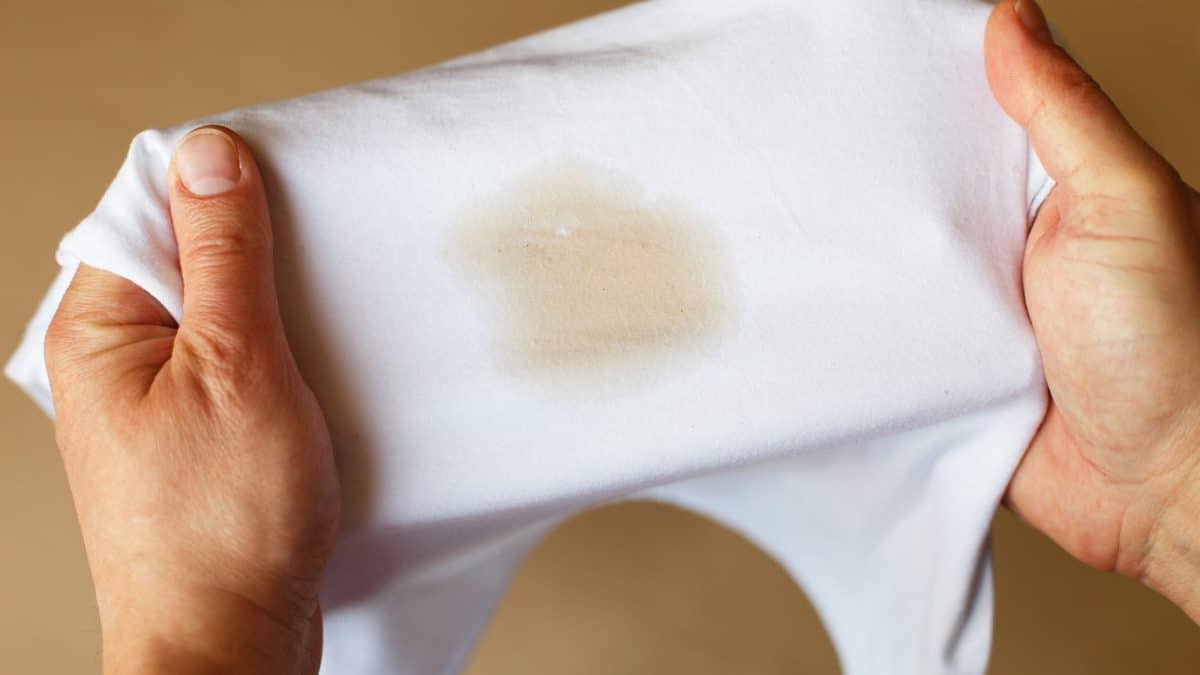
Both work on the stain as you find it, and between them they tell you which of the three components you are dealing with.
The fold test, on the dry stain. Pinch the dry stained area and fold it sharply between two fingers, then run a thumbnail across the crease. A black coffee stain folds like the fabric next to it: soft, no sound. A stain that was sweetened, or that had milk in it, folds stiff and often makes a faint crackle, and the crease line stays glossy for a second after you let go. That stiffness is sugar and milk solids sitting in the weave as a film, and it is the reason the same spill rinses out easily off one shirt and refuses on another.
The damp shadow test, after the first cold rinse. Rinse cold, blot, then look at the still-wet fabric in daylight rather than under a kitchen light. Brown means coffee color is still there, which is an oxygen bleach job. A pale gray or fawn shadow that shows only while the fabric is damp, and that feels slightly slick under a fingertip, is fat and protein from the milk. If you see both, you do both, and the protein comes first.
The white cloth trick used on stains on leather does not help here, because on an absorbent fabric everything transfers a little. The fold and the shadow tell you more.
What you’ll need
| Item | Why | Substitute |
|---|---|---|
| Cold running water | Flushes the loose coffee out through the back of the fabric before anything can bond to it, and keeps milk protein soluble | A bowl of cold water changed twice, if you are away from a tap |
| Liquid dish soap | The only thing here that touches the milk fat, which is the greasy half of a latte stain and is invisible when dry | Any liquid laundry detergent, worked in undiluted |
| Enzyme laundry detergent or stain remover | A protease digests the casein from the milk. Detergent alone leaves it in place to be cooked later | None that works. Skip the enzyme entirely on wool and silk |
| Oxygen bleach powder (sodium percarbonate) | The brown is a colored molecule, and only an oxidizer takes the color apart. Soap moves it around, acid shifts it, neither removes it | Hydrogen peroxide from the pharmacy on white cotton, tested on a seam first |
| A white towel | Blotting, and reading how much is actually transferring | Kitchen paper, changed often |
| A thermometer or a warm tap | Percarbonate barely works in cold water and works properly from around 40 C, which is why cold soaks so often fail on coffee | The hottest water the care label allows, checked on the care label decoder |
The three components, and what each one needs
This is the table the general guide to stains on clothes splits across two separate rows, tannin and protein, without saying that one spill can be in both at once.
| Component | What it is | Temperature | What removes it |
|---|---|---|---|
| The brown | Melanoidins from roasting, plus oxidized chlorogenic acids. Large colored molecules that hydrogen bond to cotton | Warm, 40 C and up | Oxygen bleach, given time. Nothing else takes the color apart |
| The milk | Casein and whey protein, plus around 4 percent fat in whole milk and far more in cream | Cold, until it is confirmed gone | Dish soap for the fat, then an enzyme for the protein |
| The sugar | Sucrose. Fully water soluble, completely invisible, and sticky as it dries | Cold or warm, it rinses out either way | Plain water, as long as nothing hot reaches it first |
The sugar looks like the harmless one on that table, and on the day of the spill it is. What it does is later, and it needs its own section further down.
The method, step by step
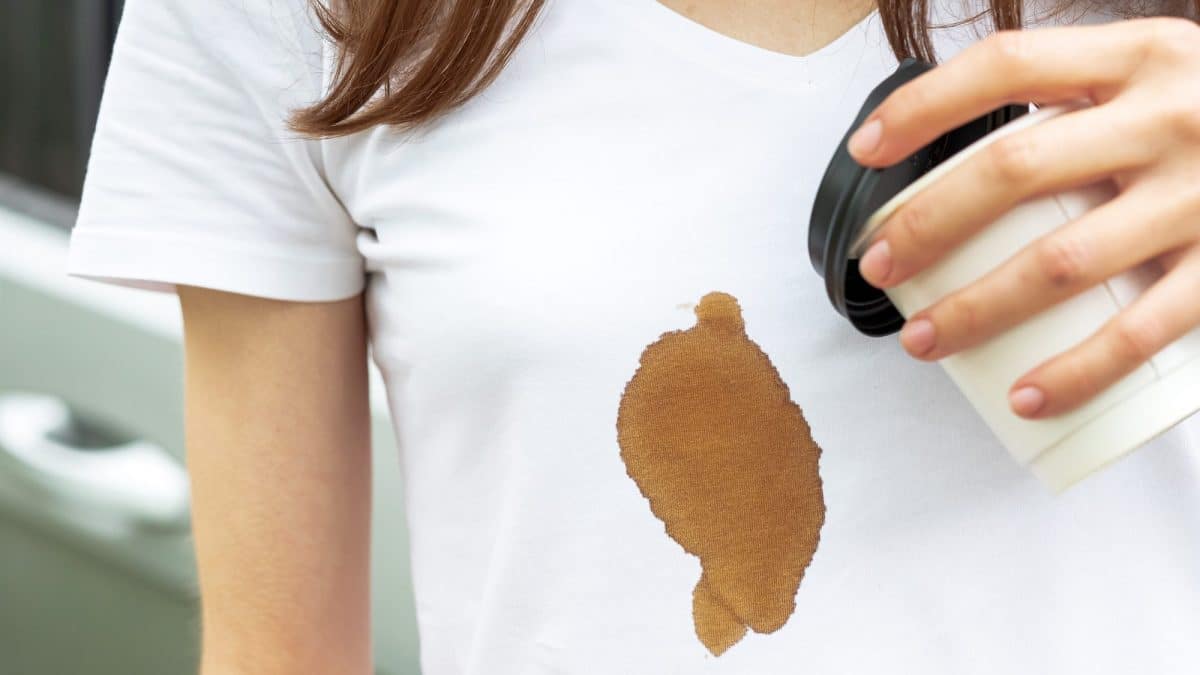
The order below is the whole point. Steps 3 and 5 are the two halves that contradict each other, which is why they are separated by an inspection rather than run together.
Blot, and do not rub
Press a white towel down on the spill and lift. Rubbing at this stage pushes coffee sideways into clean fibers and grinds it deeper into the weave, which turns a coin sized mark into a palm sized one. On upholstery this matters even more, because there is no rinse coming: see how to clean a fabric couch.
Rinse cold, from the back of the fabric
Hold the stain face down under a cold tap so the water pushes the coffee back out the way it came in, rather than through the rest of the fabric. Sixty seconds removes more coffee than any product you could apply afterward. Cold, not warm, because you do not yet know whether milk is in it.
If the fold test said milk or sugar, do the cold pass now
Work a drop of dish soap into the stain with a fingertip for the fat, then an enzyme detergent over the top, and leave it 15 to 30 minutes at room temperature. This is the step that has to happen before any warmth touches the fabric, and it is the one the standard method skips entirely.
Look at it wet, in daylight
Rinse and check before deciding anything. A gray slick shadow means the milk is still there and step 3 needs repeating. Once only a brown mark remains, the heat sensitive part is done and the rules invert.
Now use warmth, and an oxidizer
Dissolve oxygen bleach in water at around 40 C and submerge the stained area. Give it one to four hours; percarbonate is slow, and this is a soak rather than a scrub. On wool, silk or anything the label restricts, stop here and read the care label decoder before going further.
Wash, then air dry and check dry
Run a normal cycle at the warmest temperature the garment allows, then hang it up. Do not put it in the dryer and do not iron it until you have looked at the spot dry, in daylight. Fabric hides a faint stain while it is damp, and both of those appliances are hot enough to make what is left permanent.
Interactive
Label decoder
Tap a symbol from your care label. No guessing, no scrolling.
19 symbols. Pick one.
The mark that appears after the stain came out
This is the complaint behind half the forum threads on the subject, and it has two different causes that get blamed on each other.
The first is the sugar. Sucrose rinses out of fabric easily, but not if you never rinsed properly, and a sweetened coffee spill that was only dabbed leaves a sticky, colorless film in the weave. It stays invisible through the wash and through drying on a line. Then the shirt meets an iron. A soleplate runs at 150 to 200 C, which is well past the point where sugar and milk solids brown on their own, and a tan or yellow scorch mark appears on a spot that looked clean an hour earlier. It is not a coffee stain reappearing. It is caramel, and it is the reason the label on this page says no iron. The same thing happens to the protein half of a deodorant mark, for the same reason: see how to clean deodorant stains from shirts.
The second is slower. Coffee polyphenols left in the fiber keep oxidizing after the wash, the same reaction that browns a cut apple, so a faint mark that seemed acceptable on Monday is clearly visible by Friday and looks browner than the original spill. That is not the stain coming back, it is the stain finishing what it started, and it is why a coffee stain is worth soaking out fully rather than fading to something you can live with. On a rug the same oxidation is compounded by wicking, which is a separate problem covered in how to clean stains on a rug.
Three things the first page gets wrong
- Wash it in the warmest water the fabric allows. This is the closing line of nearly every result, and for black coffee it is right. For anything with milk in it, that instruction cooks the casein into the fiber, and once cooked no enzyme reaches it. The instruction is not false, it is missing the question that comes before it. Blood behaves the same way and gets the same bad advice for the same reason: see how to clean a blood stain.
- A baking soda paste. Baking soda is a mild alkali, sitting near pH 8 in solution, and coffee’s color deepens as pH rises. It is also not an oxidizer, so it has no way to break the colored molecule apart. At best it absorbs some liquid from a fresh spill. At worst you have made the brown slightly browner and given yourself a powder to rinse out of the weave.
- Equal parts vinegar, water and dish soap. This is the recipe on most of the first page, and it does something visible, which is why it keeps getting recommended. Acid shifts coffee’s color toward a lighter shade while the fabric is wet, so the stain genuinely looks better during the video. When the fabric dries and the acid is gone, the color returns. The dish soap in it is doing real work on the milk fat, and the vinegar is undoing the enzyme step if you planned one, since a protease is dead at that pH.
The one fiber where this method does not apply
Wool, cashmere and silk are protein themselves. An enzyme detergent cannot tell the difference between the casein from the milk and the fiber holding your sweater together, so it digests both and leaves a weakened patch that nothing restores. On those fibers, skip the enzyme, use cool water and a wool detergent, and accept that a faint mark is a better outcome than a thin spot. The handling rules that go with that are in how to clean cashmere.
When another guide gets you further
- Coffee on a couch cannot be rinsed, and the cleaning code on the tag decides whether water is allowed at all. See how to clean a fabric couch, or how to clean a microfiber couch if it carries an S code.
- Coffee on a rug adds the risk that the mark returns from below as the backing dries. See how to clean stains on a rug.
- Coffee on fitted carpet has no rinse and no way to lift the treatment back out, which rules out most of what gets recommended. See how to clean carpet.
- Coffee in bed goes in the machine, so the pretreat matters more than the cycle. See how to clean bed stains, and how to clean a stained mattress if it went through the sheet.
- A stain you cannot identify should be sorted into a category before anything touches it. See how to clean stains from clothes.
Related guides
This page is the drink specific version of how to clean stains from clothes, which sorts every household stain into five categories. Coffee is the awkward case there, because a cup with milk in it belongs to two of those categories at once. For the other stain that splits into parts with opposite rules, see how to clean ink stains on clothes.
Questions
Do dried coffee stains come out?
Usually, and more often than dried blood does. Coffee color bonds to cotton by hydrogen bonding rather than by any reaction with the fiber, so a week old mark still responds to a warm oxygen soak; it just needs hours instead of minutes. What makes an old coffee stain difficult is almost never the age. It is whether it has been through a dryer or under an iron since it happened, and whether there was milk in the cup.
Will Dawn remove coffee stains?
It removes the half you cannot see. Dish soap is a surfactant, so it lifts the milk fat and any oil that came with it, which is real work on a latte and is why the vinegar and dish soap recipes appear to do something. It has no effect on the brown, because that is a color problem rather than a grease problem, and only an oxidizer solves it.
Does coffee stain clothes permanently?
Black coffee on cotton rarely does, as long as it never gets hot before it is gone. What becomes permanent is the milk protein cooked in by a warm wash or a dryer, and the sugar scorched brown by an iron. In hard water there is a third case: coffee polyphenols bind dissolved iron and turn a gray yellow that behaves like a rust mark rather than a coffee one, and needs a rust remover instead of more bleach.
Is it harder to remove old coffee stains from colored clothes?
The stain is no harder; the products are more limited. Oxygen bleach is generally safe on colors, but it is still an oxidizer, so test it on an inside seam for ten minutes before soaking a whole garment. Chlorine bleach is the one to avoid outright, on white as well as colored, because it can react with the milk protein residue and leave a yellow mark of its own.
What about the brown ring inside the mug?
Different problem, same chemistry seen from the other side. That ring is coffee color deposited on a hard glazed surface with nothing to bond into, so it wipes off with anything mildly abrasive or dissolves in a warm oxygen bleach solution left in the mug for an hour. On fabric the color is inside the fiber, which is why the same soak takes so much longer.