How to Clean Deodorant Stains from Shirts
"Deodorant stain" is actually two different problems: a yellow protein-aluminum bond that heat sets permanently, and white wax residue that heat actually helps remove. Here's the right method for each, and why using one on the other makes it worse.
Quick answer · care label General clothing
-
1 · Wash
Wash 30° -
2 · Bleach
Oxygen bleach -
3 · Dry
Line dry -
4 · Iron
Do not iron -
5 · Pro care
Pro clean P
In one line Yellow pit stains and white wax residue need opposite treatments. For yellow: vinegar-baking soda paste, enzyme pretreat, cold wash, check before drying (heat sets it permanently). For white residue: rub dry first, then rubbing alcohol or dish soap, warm rinse is fine.
Deodorant leaves two different stains, not one
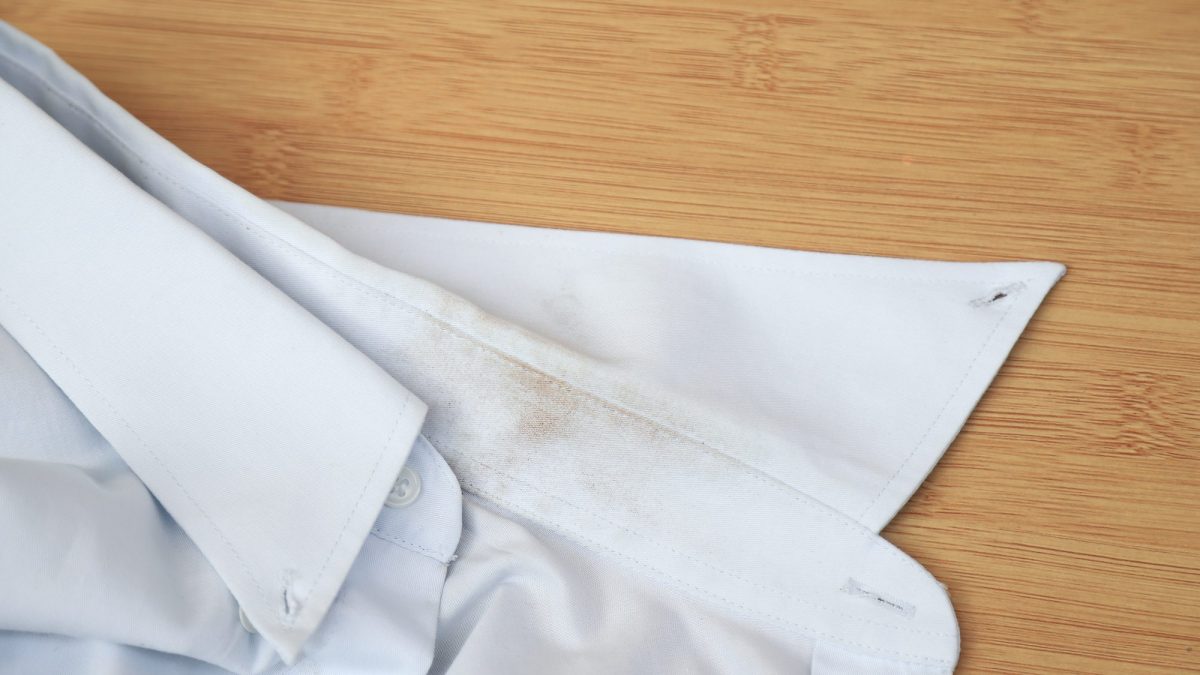
“Deodorant stain” gets used for two problems that behave nothing alike. The yellow stain under the arms is a chemical reaction: aluminum from antiperspirant bonds with proteins in sweat, and that bond darkens every time the shirt goes through a warm dryer. The white or waxy stain is just residue: a stick of deodorant rubbing off onto fabric on contact, no chemistry involved. Treat the yellow one like the white one and nothing happens. Treat the white one like the yellow one and you’ve just ironed wax into the fibers. The method has to match the stain, and most laundry advice skips straight past that split.
White or grey residue that sits on top of the fabric and rubs off with a dry cloth is wax buildup. A yellow or brownish tint baked into the weave, especially on shirts that are more than a few wears old, is the protein-aluminum reaction. Both can show up on the same shirt at once, usually the wax fresher and the yellow underneath it.
Why heat is the deciding factor
Heat is the one variable that flips depending on which stain you’re treating, which is also why the same shirt can come out of two different washes with opposite results. On a yellow protein stain, heat from an iron or a hot dryer cycle cooks the aluminum-protein bond further into the fibers, the same way heat sets an egg stain. Once that happens, the stain is close to permanent, and no amount of pretreatment afterward reaches it. On a wax residue stain, heat does the opposite: it softens the wax so it lifts more easily, and skipping heat just leaves a greasy patch that regular detergent struggles to emulsify. Checking a stain in daylight before it goes anywhere near a dryer isn’t a formality here, it’s the step that decides whether the treatment worked.
| Yellow / brownish stain | White / waxy residue | |
|---|---|---|
| Cause | Aluminum + sweat protein, oxidized | Deodorant stick residue on the surface |
| Feels like | Stiff, baked into the weave | Chalky or greasy, sits on top |
| Right tool | Acid (vinegar) + enzyme pretreat | Rubbing alcohol or dish soap, mechanical rub |
| Effect of heat | Sets it permanently | Helps lift it |
| Chlorine bleach | Can turn it darker, not lighter | Rarely needed |
Removing yellow pit stains
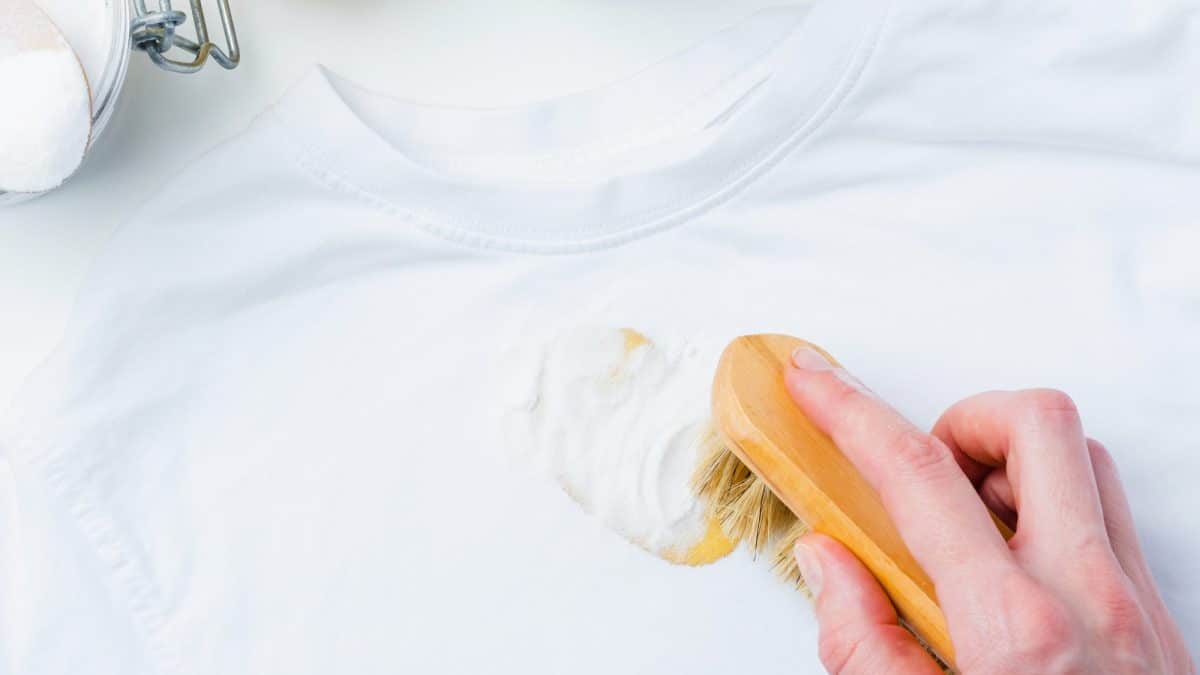
This method targets the protein bond directly instead of just bleaching the color, which is why it works on stains that have already gone through a hot wash or two without lifting.
Mix a vinegar and baking soda paste
Combine equal parts white vinegar and baking soda into a paste and work it into the stained area with an old toothbrush. The vinegar’s acidity starts breaking down the aluminum salts while the baking soda lifts loosened residue out of the weave.
Let it sit for 30 minutes
The paste needs contact time to work on a bond that’s had days or weeks to set, not a quick rinse. Keep it away from direct sun while it sits, since sunlight can pull the color out unevenly on some dyes.
Add an enzyme pretreatment before washing
A liquid detergent or stain stick with protease enzymes breaks down what the vinegar softened. Rub it directly into the stain rather than adding it to the wash water, where it gets diluted before it reaches the fabric.
Wash in the coolest water the label allows
Hot water is the one thing to avoid here: it re-sets any protein the enzyme hasn’t fully broken down. Cool or lukewarm water gives the pretreatment time to keep working during the cycle instead of cooking it in.
Check before drying, not after
Inspect the damp shirt in daylight. If any yellow tint remains, repeat the paste and enzyme steps rather than drying it. One trip through a hot dryer can undo everything the first four steps accomplished.
Removing white residue stains
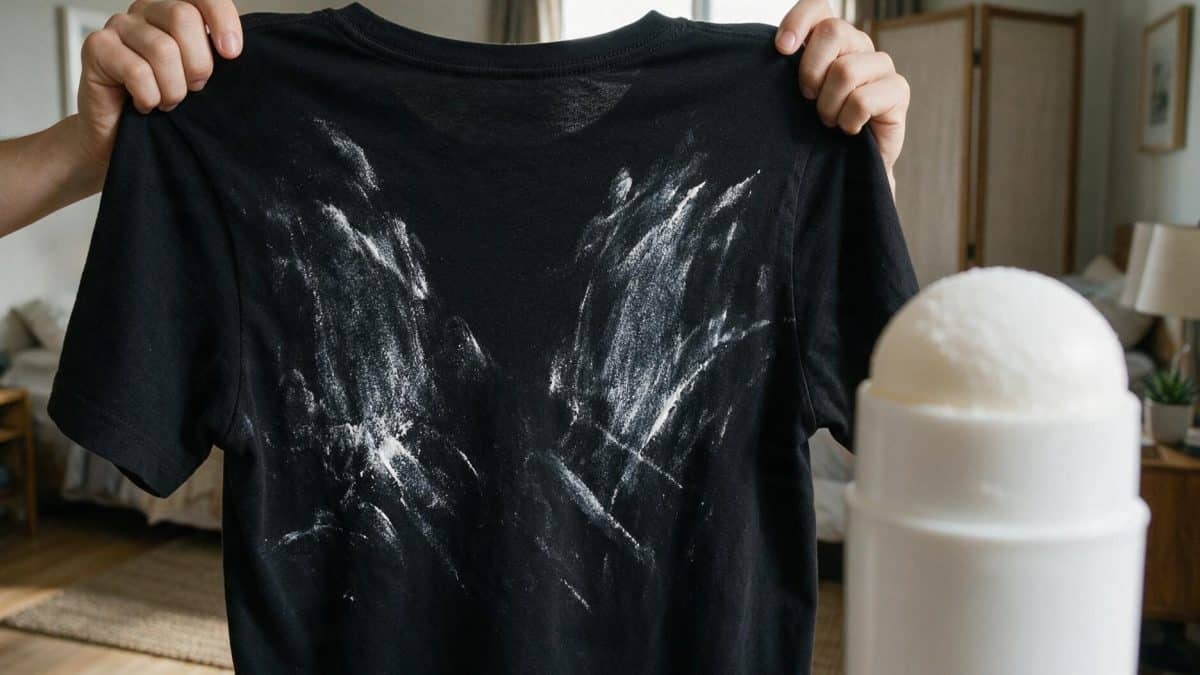
Wax residue is mechanical, not chemical, so the fix is closer to degreasing a dish than treating a stain.
Rub the dry residue with a clean cloth first
A lot of fresh residue comes off dry, before any liquid touches it. Wetting it first can spread a thin wax film across a wider area instead of lifting it clean.
Apply rubbing alcohol or dish soap to what’s left
Both cut through the waxy base that stick deodorants use. Dab it on with a cloth and work it into the fibers rather than pouring it directly onto the shirt.
Rinse with warm water
Unlike the yellow-stain method, warm water helps here: it keeps the loosened wax from re-hardening before the wash cycle finishes the job.
Wash as usual
Regular detergent and the fabric’s normal wash temperature are enough at this point. There’s no protein bond to protect against, so the usual heat rules for that garment apply.
Interactive
Label decoder
Tap a symbol from your care label. No guessing, no scrolling.
19 symbols. Pick one.
Old, set-in yellow stains
An oxygen-based bleach soak (not chlorine) is the next step up: dissolve it in warm water per the package ratio and soak the shirt for at least four hours, or overnight for stains that are months old. Chlorine bleach is worth naming explicitly here, because it’s the instinct most people reach for on a stubborn yellow mark, and it’s the wrong one: chlorine can react with any leftover aluminum salts and turn the stain a deeper yellow-brown instead of removing it.
The same principle, kill or dissolve the actual cause instead of just bleaching the surface, is what separates a real fix from a temporary one. It shows up again on a different kind of stain in how to clean mold off clothes, and again on ink stains, where ballpoint, gel, and permanent marker each need a completely different method. For the general framework behind sorting any stain into a category before treating it, see how to clean stains from clothes.
What not to do
- Reaching for chlorine bleach on a yellow stain. It’s the default move for a stubborn white shirt mark, and it’s the one product most likely to make an aluminum-protein stain darker instead of lighter.
- Ironing before checking the stain. An iron applies more concentrated heat than a dryer cycle, and it will set a partially-treated protein stain in seconds.
- Scrubbing wax residue with a dry brush only. It moves the wax around the weave instead of lifting it out; a solvent step is still needed underneath.
Fabric-specific notes
| Fabric | Adjustment |
|---|---|
| Cotton, cotton-poly blends | The method above works as written; these fabrics tolerate the vinegar soak and cool wash well. |
| Silk | Skip the baking soda paste, its abrasiveness can dull silk’s sheen. Use diluted vinegar (1:3 with water) and blot rather than scrub. |
| Wool | Cold water only, and skip the enzyme pretreatment if it isn’t labeled wool-safe; some enzyme blends can roughen wool fibers over repeated use. |
| Performance / synthetic activewear | These fabrics trap odor-causing bacteria in ways cotton doesn’t, so the yellow discoloration is often bacterial as much as it’s aluminum. An enzyme pretreat matters more here than the vinegar step. |
Questions
Does vinegar bleach or fade clothes?
Undiluted white vinegar can dull some dyes with prolonged contact, which is why a 30-minute paste application, not an hour-long soak, is the right dose for this stain. Spot-test on an inside seam first if the shirt is a saturated or dark color.
Can you remove yellow deodorant stains that are months old?
Often, yes, but it takes longer contact time than a fresh stain: an overnight oxygen bleach soak instead of the 30-minute paste. What won’t work is a single quick wash, regardless of water temperature.
Why do white shirts get worse the more you wash them?
Each hot wash or dryer cycle that touches an unresolved protein stain deepens the bond slightly, which is why the same mark can look faint after one wash and set after three. The fix isn’t washing it more, it’s treating it correctly before the heat step.
Will switching to aluminum-free deodorant stop this from happening?
It removes the yellow-stain mechanism specifically, since there’s no aluminum left to bond with sweat protein. Waxy white residue can still happen with a stick formula either way, so the two stains aren’t equally affected by that switch.