How to Clean Mold Off Clothes
Mold isn't a normal stain: it's a living colony rooted in the fibers, and washing before killing it just spreads spores through the load. Here's the kill-first method that keeps it from coming back.
Quick answer · care label General clothing
-
1 · Wash
Wash 40° -
2 · Bleach
Oxygen bleach -
3 · Dry
Line dry -
4 · Iron
Iron 150° -
5 · Pro care
Pro clean F
In one line Soak in undiluted white vinegar for at least an hour to kill the mold colony, then wash alone on the hottest safe setting with oxygen bleach. Check before drying, since heat sets any pigment left behind. Total hands-on time: about 20 minutes plus soak and wash cycles.
Why mold isn’t a normal stain
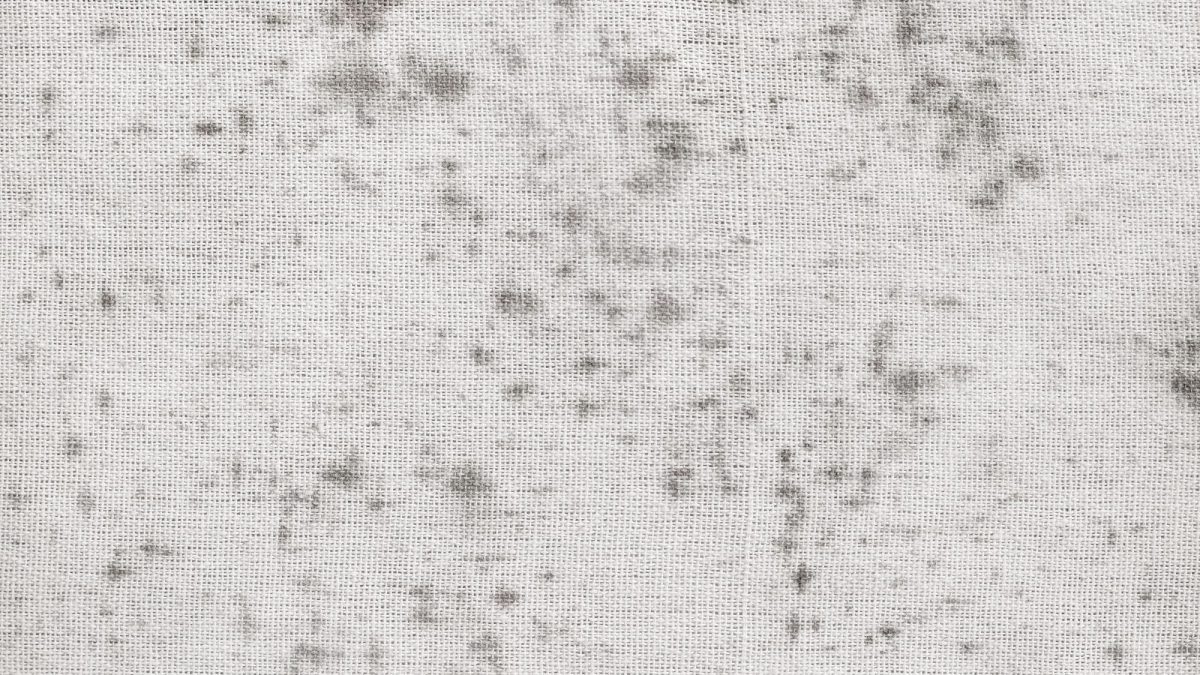
Every other stain on this site is a mark you lift off the fabric. Mold is different: it’s a living colony that has sent root-like threads (hyphae) down into the weave, and the dark spot you see is only the part growing on the surface. Wash it like a coffee spill and you’ll bleach the visible patch lighter without killing what’s underneath. That’s exactly why so many mold stains fade in the wash, then come back a few weeks later once the garment sits in a drawer again. The goal here isn’t to remove a mark. It’s to kill a colony first, then deal with what it left behind.
Mildew sits on the surface and brushes or washes off fairly easily. Mold has actually colonized the fibers, usually after the item stayed damp for more than a day or two. If the spot is fuzzy, raised, or comes in green, black, or orange rather than a flat grey haze, treat it as mold and follow every step below: mildew methods alone won’t reach it.
What you’ll need
| Item | Why | Substitute |
|---|---|---|
| White vinegar | Acidic enough to kill most household mold on contact, safe on colour | Rubbing alcohol, for a spot-test-only patch |
| Oxygen-based bleach powder | Breaks down mold pigment without stripping colour the way chlorine does | Chlorine bleach, white/colourfast items only |
| Soft-bristle brush | Knocks loose, dry mold off before it touches water and spreads | An old, clean toothbrush |
| Rubber gloves | Mold spores and their byproducts irritate skin on contact | Dish gloves |
| Outdoor space or open window | Brushing indoors puts spores into your air, not just your sink | A garage with the door up |
The method, step by step
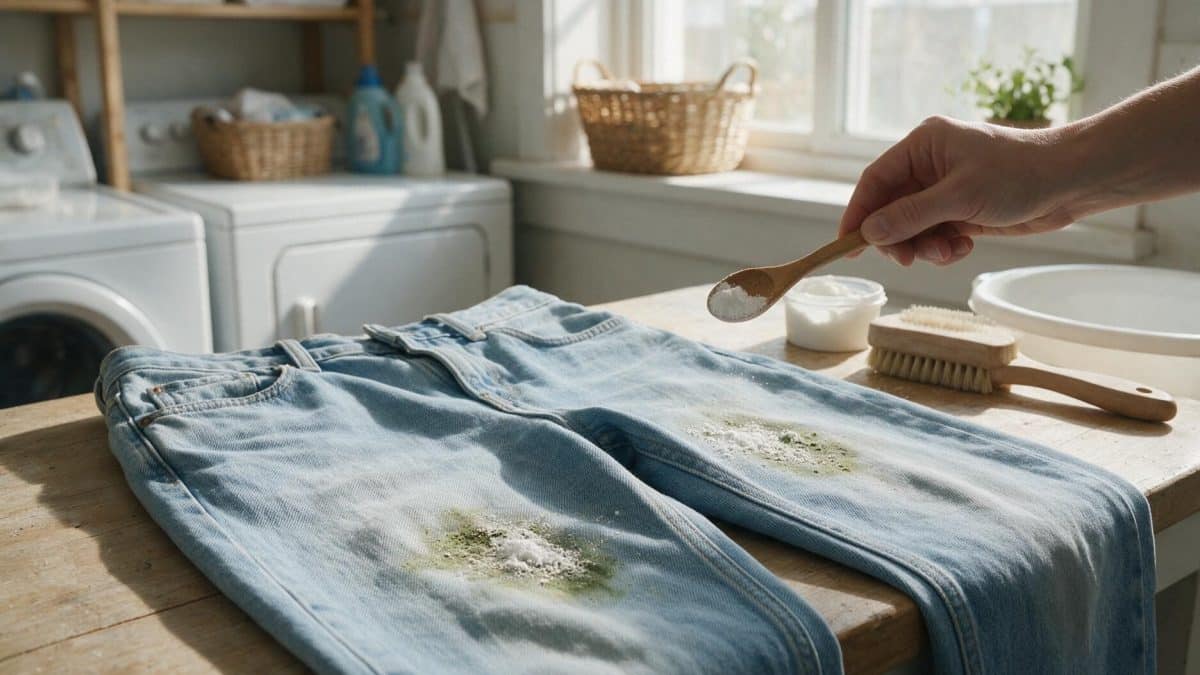
Order matters more here than with an ordinary stain. Brushing after wetting grinds spores into the weave instead of removing them, and washing before killing the colony just spreads live spores through the rest of the load.
Take it outside and brush off what’s loose
Dry mold brushes away more easily than wet mold, and doing this outdoors keeps the spores you dislodge out of your washing machine’s drum gasket and your home’s air, not just off the fabric.
Spot-test, then saturate with white vinegar
Check an inside seam for colour change first. Once clear, soak the stained area in undiluted white vinegar for at least an hour. This is the step that actually kills the colony, not just fades the mark. A quick spray-and-wipe skips the contact time mold needs to die.
Wash alone, in the hottest water the fabric label allows
Run the item by itself, not mixed into a regular load: surviving spores transfer to everything else in the drum. Add oxygen-based bleach powder to the detergent dispenser for coloured items, or chlorine bleach for whites and colourfast fabrics only.
Check before drying, not after
Inspect the damp garment in daylight before it goes anywhere near heat. If any trace of the stain remains, repeat the vinegar soak and wash rather than drying it. Heat sets whatever mold pigment is left, turning a treatable stain into a permanent one.
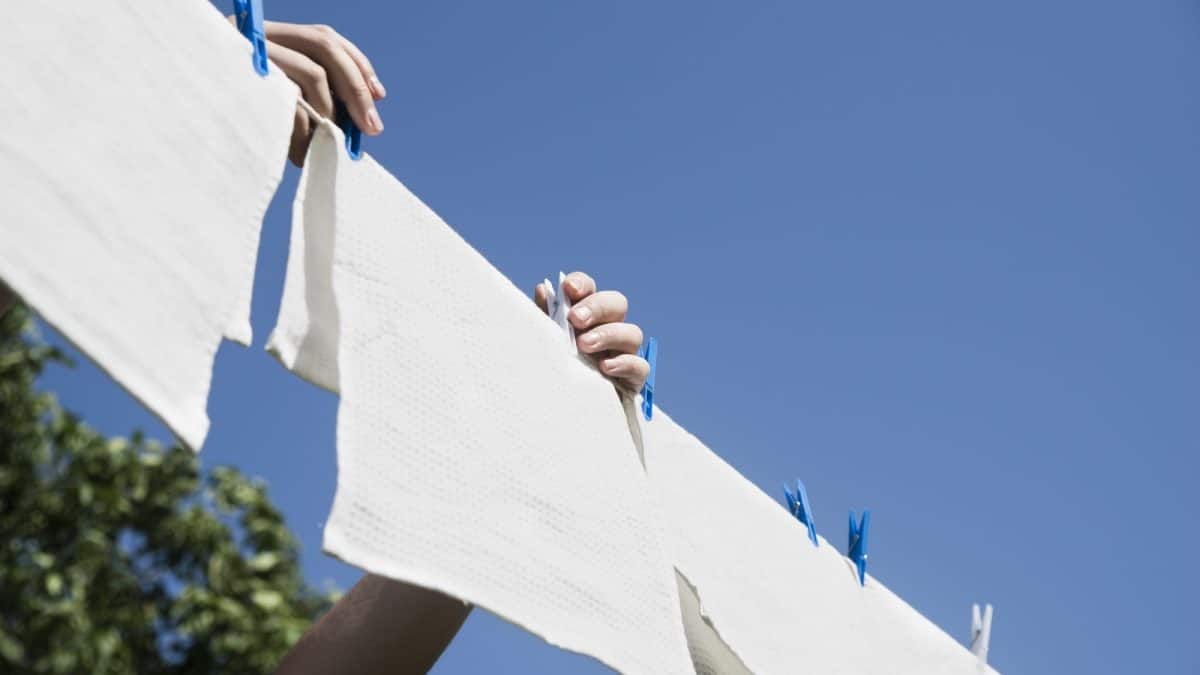
Dry in direct sun if you can, full heat if you can’t
UV light and heat both finish off any spores the wash cycle missed, which is why sun-drying works better here than it does for ordinary laundry. If sun isn’t an option, the dryer’s hottest safe setting for the fabric is the next best thing. Air-drying indoors in low light is the one option that leaves surviving spores a chance to restart.
Interactive
Label decoder
Tap a symbol from your care label. No guessing, no scrolling.
19 symbols. Pick one.
Why the usual stain-removal order fails on mold
Most laundry advice tells you to treat a stain, then wash. On mold, that order leaves live spores in the fabric right up until the wash cycle, and a cool or short wash won’t necessarily kill them, so the stain can reappear weeks later even though it looked gone on wash day. Killing the colony first, with a full vinegar soak, is what makes the wash actually final.
| Ordinary stain | Mold | |
|---|---|---|
| What you’re removing | A substance sitting on/in the fibres | A living colony rooted into the fibres |
| Can it come back after washing? | No | Yes, if spores survive the wash |
| Does heat help or hurt? | Often hurts (sets the stain) | Helps, once the stain is fully gone |
| Dry cleaning | Usually safe | Doesn’t reliably kill mold; ask the cleaner directly |
Common mistakes that let mold come back
- Washing it with the rest of the laundry. A single mold-stained item run through a normal mixed load can leave spores on everything else in that wash, not just recontaminate the one garment.
- Drying before the stain is fully gone. Heat sets whatever pigment is left, so a stain that would have come out with one more soak becomes permanent instead.
- Storing it slightly damp. Mold needs moisture more than it needs dirt. An item that goes back in a drawer even a little damp gives any surviving spores exactly what they need to start over.
Related guides
Mold is one of five stain categories covered on this site, and the one where washing before treating actively makes things worse. See how to clean stains from clothes for the wider framework that sorts a stain into the right category, protein, tannin, oil, dye, or biological, before choosing a water temperature.
Questions
Will regular laundry detergent kill mold on its own?
Not reliably. Detergent lifts dirt and some staining, but it isn’t formulated to kill a fungal colony the way vinegar or an oxidizing bleach is. Skipping the soak and going straight to a normal wash is the single most common reason a mold stain returns.
Is it safe to put a moldy item straight into the washing machine?
Brush off loose, dry mold outdoors first. Putting a heavily moldy item straight into the drum can leave spores in the door seal and detergent drawer, which then touch every load that follows until the machine itself is cleaned.
Can mold stains on clothes make you sick?
Some people react to mold spores with skin irritation, sneezing, or a musty reaction, especially with existing allergies or asthma. Wear gloves during the brushing and soaking steps, and wash the item outside of a shared or poorly ventilated space if you can.
What about mold on a rug instead of clothing?
The kill-first principle is the same, but a rug generally can’t take a full soak or a hot machine wash the way a garment can. See how to clean a rug for the material-by-material approach that applies once mold is involved.
Can a stain that was left damp cause mold on a mattress?
Yes, and it’s a common cause. A mattress that stays damp below the surface for more than a day or two, often from a urine stain that was oversaturated during cleanup, grows mold in the foam or spring core where a fan can’t reach it. See how to clean urine out of a mattress for how to treat the stain without trapping that moisture in the first place.
Is the mold on my shower curtain the same kind that grows on clothes?
Yes, when it’s genuinely mold: the same fuzzy, rooted colony described above, growing wherever the fabric stays folded and damp. A pink or orange film on a shower curtain is usually a different problem, a bacteria rather than a fungus. See how to clean a shower curtain for how to tell the two apart and treat each one.