How to Clean Wax Off Clothes (Two Stains, Not One)
Wax is two stains: the solid you lift, and the oily colour ring under it. Paraffin softens at 46-68 °C and polyester starts to give at 67 °C, so on a synthetic the usual iron is the wrong tool.
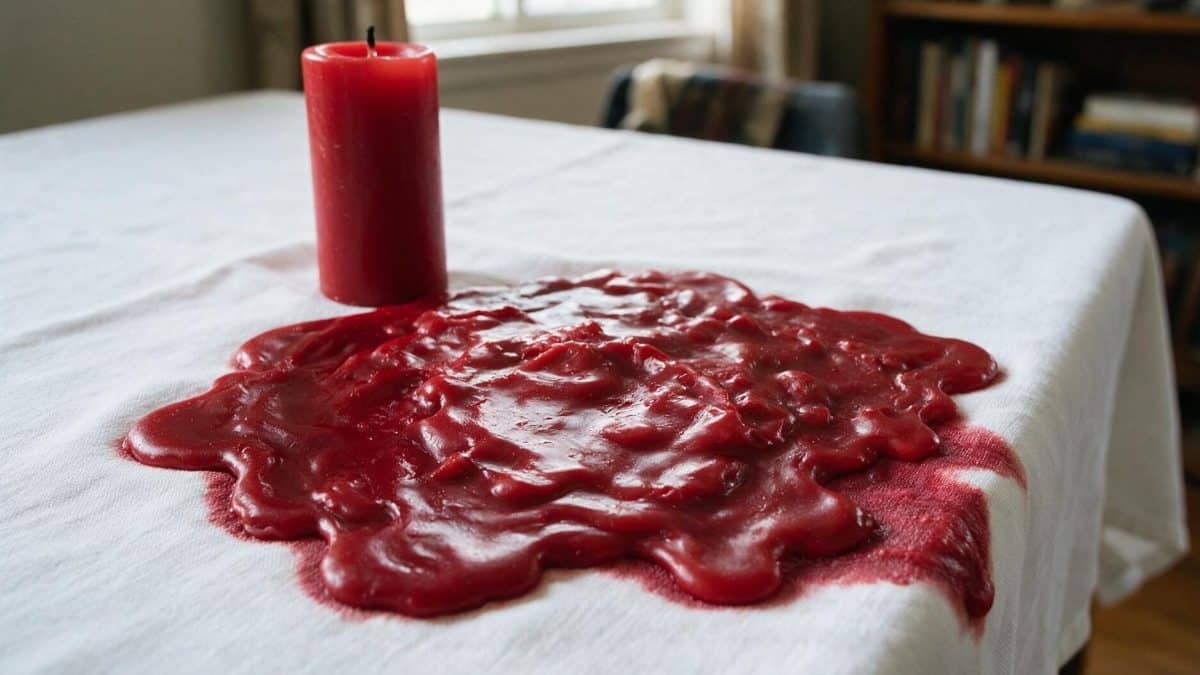
Quick answer · care label Candle wax on clothing - cotton, linen and denim take the iron; polyester, acetate, silk and wool do not
-
1 · Wash
Wash 40° -
2 · Bleach
Oxygen bleach -
3 · Dry
No tumble dry -
4 · Iron
Iron 110° -
5 · Pro care
Pro clean P
In one line Harden the wax with ice and crack the bulk off cold, then melt what is left through plain white paper towels with an iron on one dot and no steam, pressing five seconds and lifting rather than sliding. Treat the dye shadow a coloured candle leaves with rubbing alcohol from the back before any further heat reaches the garment, then work in dish soap and wash at the warmest setting the label allows. About 35 minutes hands-on plus a cycle, and nothing goes in the dryer until the damp spot reads clean in daylight.
Why does the iron trick rescue a tablecloth and wreck a shirt?
The advice on how to clean wax off clothes is the same everywhere, and most of it is right. Let the wax go hard, crack off what will come off, sandwich the rest between paper, press with a warm iron, and watch the paper drink it up. On a cotton tablecloth it works so well it looks like a trick. It looks like one because cotton does not care what temperature you used, so the instruction never had to be precise about heat.
Put the same iron on a polyester shirt and the number matters. Paraffin, the wax in most candles, melts between about 46 and 68 °C (115 and 154 °F) depending on grade. Polyester passes its glass transition somewhere between about 67 and 81 °C (152 and 178 °F), far below the temperature at which it melts but the point where the fibre stops behaving as a rigid solid. Those two bands touch. The lowest mark on a domestic iron, one dot, is 110 °C (230 °F), above both of them. One dot is also the setting care labels prescribe for synthetics, so the answer is not a lower number on the dial. There is no lower number. The answer is pressure, paper and seconds.
The second thing no page separates: candle wax is not one stain. The wax is a film. The dye that made the candle red and the fragrance oil that made it smell of fig are two more substances, and they behave like ordinary stains. Heat lifts the first and fixes the other two. That is how a shirt comes out of this with no wax on it and a pink shadow that will not shift.
Wax is not dissolved into the fabric. It is wrapped around it. The only thing that turns a solid wrapped around a yarn back into something that can leave is heat, and heat is also what makes the dye and the oil that arrived with it permanent. Every decision below is the same one again: the least heat that will melt the wax, on the smallest area, for the shortest time, never on the whole garment.
What you’ll need
| Item | Why | Substitute |
|---|---|---|
| Plain white paper towels | Draw melted wax out of the weave. They must be plain: printing transfers under a warm iron | White printer paper, or a white tea towel you can lose |
| A bag of ice | Hardens a soft blob so it snaps off instead of smearing into three times the area | The freezer, garment sealed in a bag, half an hour |
| A dull knife or spoon | Lifts the crust, so most of the wax is gone before any heat is involved | A credit card edge, less likely to catch a thread |
| An iron on one dot, no steam | The only household tool that puts controlled heat on a small area with pressure behind it | A hair dryer on low, kept moving. Cooler, slower, correct on synthetics |
| Rubbing alcohol, 70% or above | For the dye shadow a coloured candle leaves. It does nothing to the wax itself | Gel hand sanitiser, mostly the same alcohol in a carrier that stays put |
| Liquid dish soap | Wax is a grease, and the last of it leaves as a grease mark does, with a surfactant | Any grease-cutting brand, or liquid detergent worked in neat |
The method, step by step
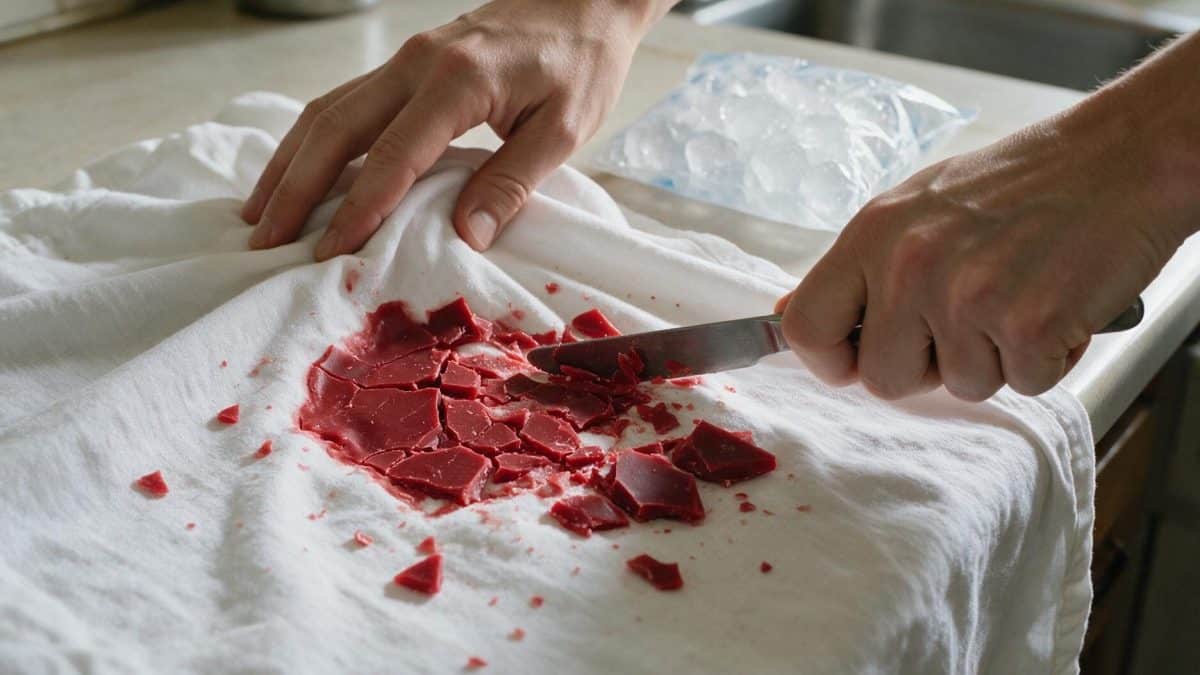
Let it set hard, and help it with ice
Soft wax smears, and smearing turns a coin-sized blob into a palm-sized one. Hold a bag of ice against it for ten minutes, or seal the garment in a bag and freeze it for half an hour.
Crack the bulk off cold
Flex the fabric so the wax fractures, then lift the pieces with a dull knife held almost flat. Every piece removed cold is wax the iron will not have to move through the weave.
Read the label before you plug anything in
This is the branch point, not a formality. Cotton, linen and denim take the iron. Polyester, acrylic, acetate, anything with elastane, anything with a printed transfer and anything showing a crossed-out iron do not, and those go to the cold route below.
Build the sandwich, plain white paper both sides
Folded paper towel on the board, stain face-down onto it, another folded towel on top. Both layers earn their place: once the wax is liquid it leaves in both directions.
Press five seconds, then lift straight up
Never slide the iron. Sliding drags liquid wax sideways into fabric that was clean a second ago, which is the commonest way this method makes a stain bigger. Steam is water, water does nothing to wax, and it turns the paper to pulp.
Move to clean paper and repeat until nothing transfers
This is the step that removes the wax, and it is repetitive rather than clever. A saturated towel stops absorbing and starts handing wax back. Shift to a dry patch after every press, and stop when a press leaves the paper clean.
Treat what is left with alcohol, while everything is cool
What remains is dye and fragrance oil, not wax. Dab rubbing alcohol from the back of the fabric with a white cloth underneath, working from outside the mark inward, as in the ink guide. Acetate and triacetate are the exception, because alcohol attacks them: let it down with two parts water and test a hidden seam before you touch the mark. Do this before any further heat.
Work in dish soap, wash warm and alone, check it damp
The soap clears the oily residue heat cannot reach. Wash the item on its own at the warmest setting the label allows, then look at the spot wet, in daylight, before it goes near a dryer.
The two temperatures that decide this
The method is easier to act on once the numbers sit side by side.
| Material | Temperature | What it means here |
|---|---|---|
| Soy wax, container blends | 43-52 °C (110-125 °F) | The softest common wax, easiest to shift with gentle heat |
| Paraffin, most candles and tealights | 46-68 °C (115-154 °F) | Container grades at the bottom, pillars and tapers at the top |
| Beeswax | 62-65 °C (144-149 °F) | Near the top of the wax range, so it asks for the most heat of the three |
| Polyester, glass transition | roughly 67-81 °C (152-178 °F) | Not a melting point: polyester melts far higher, near 250 °C (482 °F). This is where held pressure can set a permanent shine into the weave |
| An iron on one dot | 110 °C (230 °F) | Above every wax listed, and the lowest number the dial offers |
Read the last two rows together and the risk stops being vague. “Use low heat” is not really an instruction, it is the best a dial can manage, because the lowest setting is roughly double what the wax needs. What keeps the method safe is duration and paper: five seconds, then lift.
The same table settles a question people ask afterwards. A warm wash at 40 °C (104 °F) sits below the melting point of every wax above, so a cycle will not remove wax you left behind. Finish the paper stage before the machine is involved.
It is two stains, and the second one is the one that stays
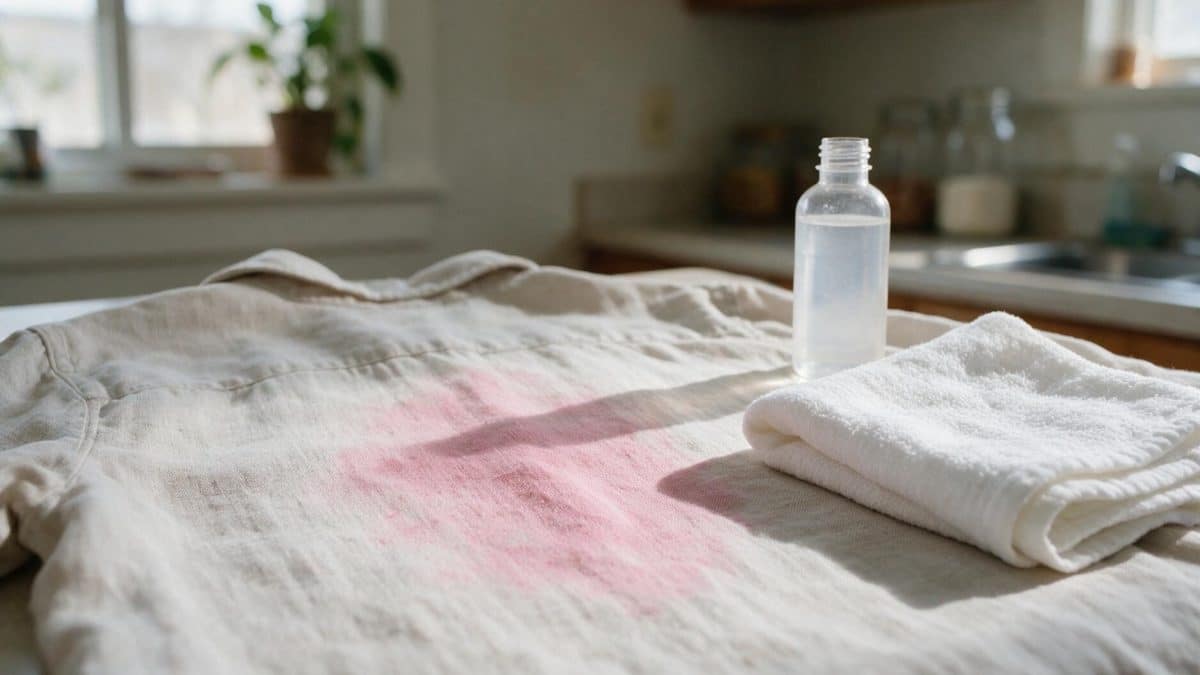
Pull a blob of candle wax apart and three things arrive together, then leave separately.
| Component | Where it ends up | Recoverable |
|---|---|---|
| The wax film | Wrapped around the yarns, bridging the gaps between them | Yes, with heat and absorbent paper |
| Dye from a coloured candle | In the fibre, behaving like any dye stain, and set by heat | Not reliably, and only if treated before heat |
| Fragrance oil | An ordinary oil mark, invisible until the wax has gone | Yes, with detergent and a warm wash |
This is why the usual order of operations is upside down for a coloured candle. Most versions end with “then launder it”, and the alcohol step for the shadow is an afterthought or missing. Where the dye does get a step of its own, the usual form is alcohol let down with two parts water, placed after laundering. Before the wash is better, because a wash is heat.
The range of outcomes is worth stating plainly. A white unscented tealight on a cotton napkin usually comes out with nothing left to see. A red scented pillar on a pale linen shirt usually leaves a faint tint even when everything above is done properly.
Never put the garment in a tumble dryer while any mark is still visible. Heat is the single event that makes both the residual wax and the dye permanent, and a dryer applies it for most of an hour while the fabric tumbles against itself. Check the spot damp and in daylight, and if anything shows, go back to the alcohol and the soap.
When the label rules the iron out
Silk, wool, acetate, acrylic, most knitwear, anything printed and anything showing a crossed-out iron belong here, as does any garment whose fibre content you do not know.
Freezing and cracking still applies, and here it does more of the work, being the one stage with no thermal risk in it. What it leaves is a thin film wicked around individual filaments, and there is no water-based way at that film: wax repels water by design, which is why it is on a candle rather than in a soup. A hair dryer on low, held a hand’s width away and kept moving, melts paraffin without approaching what an iron reaches, and on wool it is the safest heat available at home.
The honest last option is a dry cleaner. A cleaner’s solvent dissolves wax outright where water never can, and this is one of the few jobs on this site where dry cleaning is a real answer rather than a hopeful one. Say it is candle wax and say whether it was coloured. A home kit is the wrong tool for one specific reason: those kits work by putting the garment in your own tumble dryer with a heat-activated cloth, the exact step this page exists to avoid. See how to dry clean at home.
What the standard advice leaves out
- The brown paper bag. Sources disagree here. Detergent makers tend to specify white, unpatterned paper towels; many other guides say a brown grocery bag. A bag does absorb, but the printing on it does not stay put under a warm iron and recycled bags are not consistent about what else is in them.
- Boiling water poured through the back. It works on a cotton tablecloth held over a sink, because water well above the melting point carries molten wax away. On a garment it is a whole-item heat treatment, so it sets any dye everywhere at once.
- The freezer is half a method. Freezing makes the blob brittle so it snaps rather than smears, which is genuinely useful, but it does nothing to the film locked around the filaments, and that film is the part you can still see.
- The oil-stain label. Wax is filed as an oil stain on most charts, which is true only of what is left at the end of this method, not of what you started with. For the categories the framework does cover, see how to clean stains from clothes.
Related guides
- Crayon is candle wax with far more pigment loaded into it, so the film comes out the same way and the mark underneath is much worse: how to clean crayon out of clothes.
- Paint also sits around the yarns as a film rather than dissolved into them, except that there the heat which helps here is what makes it permanent: how to get dry paint out of clothes.
- Tree sap is sticky rather than solid and does not respond usefully to heat, so it is a solvent job from the first move: how to clean tree sap from clothes.
- If the top sheet slipped, some of that wax is now on the soleplate and will go on the next thing you press: how to clean a clothes iron.
Questions
Does candle wax come out of clothes, or does it always leave a mark?
The wax itself nearly always comes out on any fabric that tolerates a little heat. Whether a mark stays depends on whether the candle was dyed and scented. Plain white wax usually leaves nothing; a strongly coloured candle usually leaves a faint tint, and the odds drop once the garment has been through a dryer.
Will washing the garment get candle wax out on its own?
No, and for a specific reason. A warm wash at 40 °C (104 °F) is below the melting point of every common candle wax, so the cycle never turns the film back into a liquid. Finish the paper stage first, then wash.
Can I use a hair dryer instead of an iron?
Yes, and on polyester, acrylic and wool it is the better tool rather than a compromise. It delivers far less heat than any iron, which is the whole point, and costs you time instead. Keep it moving, hold it a hand’s width away, and press a paper towel onto the spot between passes.
Does freezing remove candle wax from clothes?
Freezing removes the lump, not the stain. It makes the wax brittle so flexing the fabric cracks it and the pieces lift cleanly, which does most of the visible work on a thick spill. The thin film that soaked into the weave before it set is unaffected.
What removes the coloured shadow left after the wax has gone?
Rubbing alcohol, applied from the back with a white cloth underneath, before the garment meets any more heat. Alcohol let down with two parts water is the common form of it, and on acetate or triacetate that dilution is not optional. Guides that mention the step at all tend to put it after laundering; before the wash is the better order, because a wash is heat.
Is it safe to iron wax out of a polyester shirt?
It is the riskiest version of this job, which is why the method above sends polyester to the hair dryer instead. The iron is not the wrong tool in itself, since one dot is the setting care labels give for synthetics. The risk is a press that lingers: at 110 °C (230 °F) the fibre is past its glass transition, and weight held on it long enough can flatten the weave into a permanent shine that no treatment reverses. Two layers of paper, a few seconds at a time, lift straight up, and test an inside seam first.