How to Clean Stains from Clothes
Every stain guide says cold water and rub. That works for blood and fails for grass, wine, and grease, because the right water temperature depends entirely on what kind of stain you're actually treating. Here's how to sort a stain into its real category before you touch it.
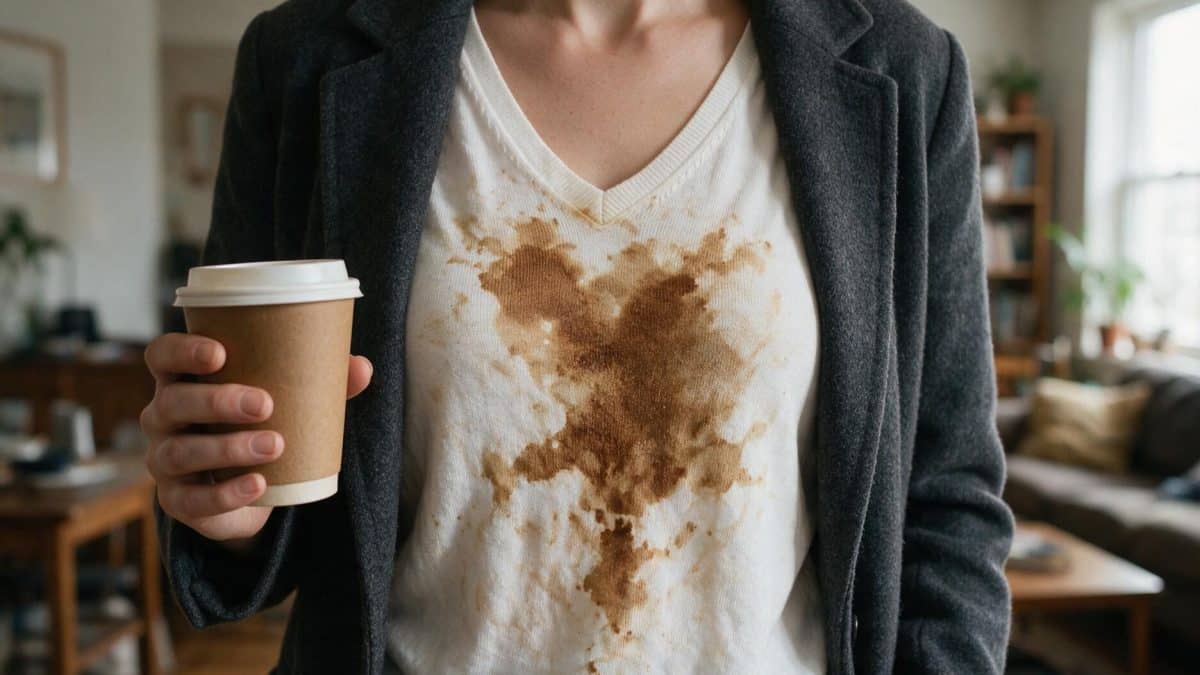
Quick answer · care label General clothing
-
1 · Wash
Wash 40° -
2 · Bleach
Oxygen bleach -
3 · Dry
Tumble low -
4 · Iron
Iron 150° -
5 · Pro care
Pro clean P
In one line Match the stain to one of five categories, protein, tannin, oil, dye, or biological, before choosing a water temperature. Cold water protects protein and tannin stains from being set by heat; warm water and dish soap actually help on oil. Check the fabric wet before it goes near the dryer.
Why one stain-removal rule doesn’t work for every stain
Most stain advice boils down to one instruction: cold water, rub, wash. That rule is correct for blood and wrong for grease, and the reason isn’t the rubbing, it’s the water temperature. Blood and other protein stains cook into the fabric under heat, so cold water is the only safe choice until the stain is fully gone. Blood in particular splits into a protein half and an iron half that behave nothing alike, which is why a three-week-old spot often still lifts while a two-hour-old one that went through a warm wash does not. Grease and body oil are the opposite: they respond to warmth, which loosens the oil enough for a surfactant to lift it, and cold water on a grease stain often just leaves it sitting there. A single universal rule can only be right for one of those categories, and applying it to the other is a common way a stain that would have come out gets set in instead.
The fix isn’t a longer list of products. It’s identifying which category a stain belongs to before choosing a temperature or a treatment, the same way mold needs killing before washing and ink needs matching to the right solvent. This guide covers the categories that come up on everyday clothing. For a stain on bedding, a mattress, or a specific fabric already covered on this site, the category-specific guide linked further down will get you further than the general method here.
Before reaching for anything, ask what the stain actually is: a body fluid, a plant or drink pigment, an oil, or a solid dye. That answer determines the water temperature, and getting the temperature wrong is the single most common reason a treatable stain becomes a permanent one.
What you’ll need
| Item | Why | Substitute |
|---|---|---|
| Cold water | The safe first move on any protein stain (blood, sweat, egg, dairy); warm water sets these before treatment even starts | An ice cube run over a small fresh spot |
| Enzyme-based stain remover | Breaks down protein at a molecular level, which plain detergent alone struggles to fully clear | A paste of baking soda and a little dish soap, worked in and left 15 minutes |
| White vinegar or oxygen-based bleach powder | Lifts tannin stains (coffee, tea, wine, fruit) without the color risk of chlorine bleach | A dedicated oxygen stain-remover powder, dosed per the label |
| Liquid dish soap | Cuts through oil-based stains, grease, butter, makeup, that detergent alone leaves as a faint ring | Any grease-cutting dish soap brand |
| Rubbing alcohol | Dissolves solvent-based pigments, ink, some grass and dye transfer, that soap and water don’t touch | Hand sanitizer with a high alcohol percentage, in a pinch |
| Soft-bristle brush or old toothbrush | Works treatment into the weave without scrubbing hard enough to thin the fabric | Fingertips, for a lighter touch on delicate weaves |
The five stain categories, and what changes for each
Most stains on everyday clothing fall into one of five categories, and the category, not the fabric, is what should decide the water temperature and the product.
| Category | Examples | Water temp | Core treatment |
|---|---|---|---|
| Protein | Blood, sweat, urine, egg, dairy | Cold, always, until confirmed gone | Enzyme stain remover, cold rinse, cold wash |
| Tannin | Coffee, tea, red wine, fruit juice, grass | Cool to lukewarm | Rinse promptly, then oxygen bleach soak |
| Oil and grease | Cooking oil, butter, makeup, body lotion, sunscreen | Warm, once pretreated | Dish soap worked in, then a normal warm wash |
| Dye and pigment | Ink, grass stains with color transfer, dye bleed from other clothing | Depends on the dye, check care label first | Rubbing alcohol or a solvent matched to the ink type |
| Biological | Mold, mildew | Hottest safe setting, after killing the colony | Vinegar soak first, never wash before that step |
The method, step by step
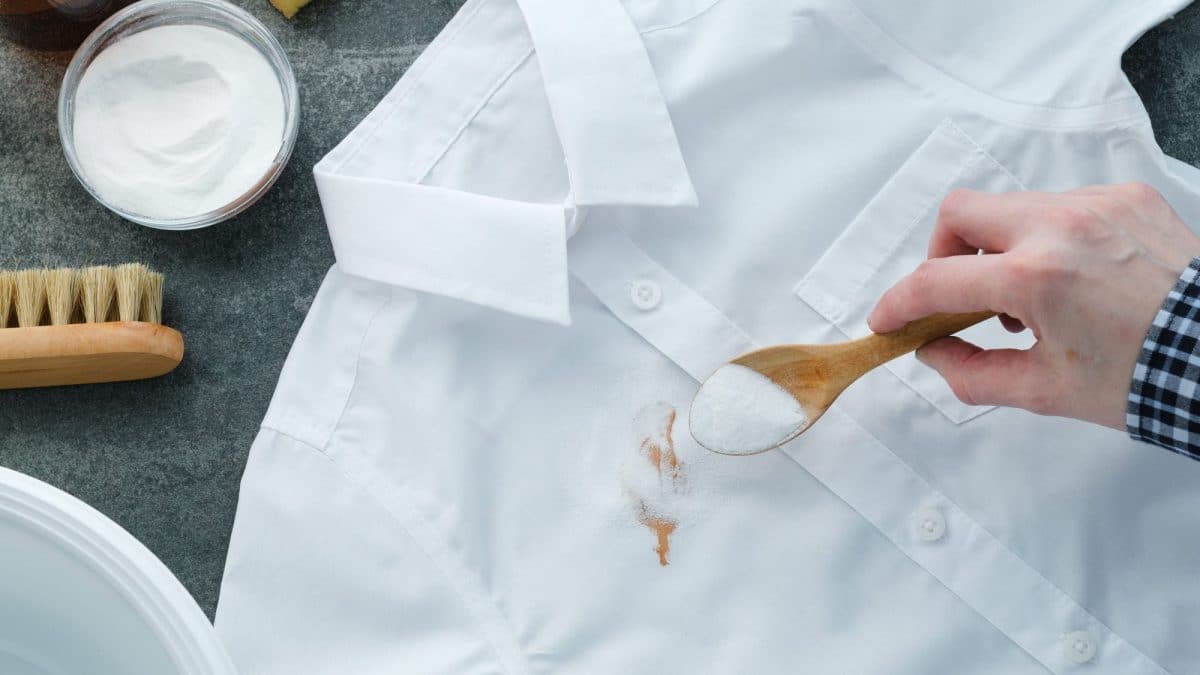
The order below applies regardless of category. What changes at step 2 is the water temperature and the product, based on which row of the table above the stain belongs to.
Identify the category before touching the stain
Match the stain to one of the five categories. When two categories seem to fit, or the stain has already dried and lost its color, treat it as protein by default: cold water is the safer error in every other category too.
Pretreat with the matched product, at the matched temperature
Enzyme remover and cold water for protein, an oxygen soak for tannin, dish soap for oil, rubbing alcohol for dye. Work the product into the stain with a soft brush rather than pouring it on and walking away.
Wash at the temperature the category calls for
Cold for protein and most tannin stains, warm for oil once it’s pretreated. Mixing a warm wash into a fresh protein stain undoes the entire point of the cold pretreat.
Check the fabric wet, before it goes near the dryer
Inspect in daylight while the fabric is still damp. Heat sets what pretreatment didn’t fully remove, on every category except oil, so this check is what actually decides whether the stain is gone for good.
Repeat the pretreat step if any trace remains
A second round of the same category-matched treatment, not a switch to a stronger product, clears most stains that survive the first wash. Drying a stain that’s still visible almost always outlasts starting over.
Interactive
Label decoder
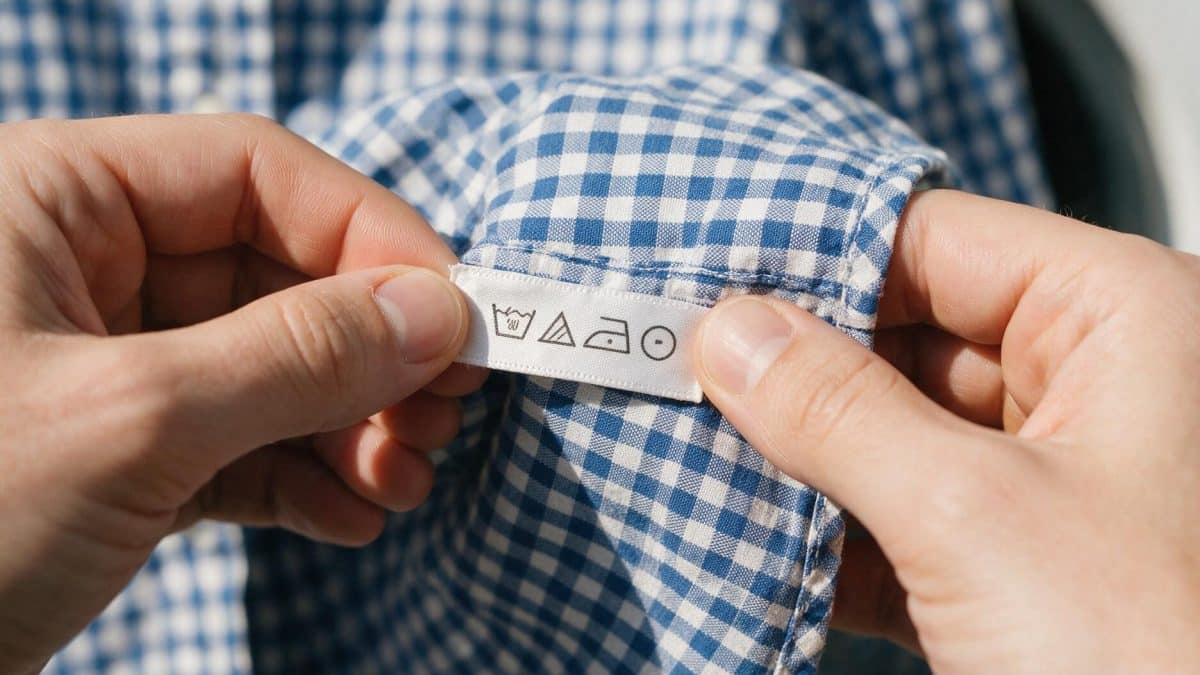
Tap a symbol from your care label. No guessing, no scrolling.
19 symbols. Pick one.
Common mistakes that make a stain worse
- Using hot water on every stain by default. Heat is correct for oil and biological stains once they’re pretreated, and it’s exactly what permanently sets a fresh protein or tannin stain.
- Reaching for chlorine bleach as a first move. It can react with protein residue and darken a stain instead of lifting it, the same failure that shows up on yellow deodorant stains.
- Drying before confirming the stain is gone. A dryer cycle finishes the job a wash didn’t, but only in the sense of making an unfinished stain permanent, not removing it.
- Treating an unidentified stain with the strongest product on hand. A solvent that dissolves ink can spread a protein stain wider instead of lifting it. Match the product to the category, not to what’s already open under the sink.
When a stain-specific guide gets you further
The categories above cover most everyday stains, but a handful of cases need more detail than a general framework can give them.
- Mold or mildew isn’t a stain sitting on the fabric, it’s a living colony that has to be killed before washing, not just cleaned. See how to clean mold off clothes.
- Ink splits into three sub-types (ballpoint, gel, permanent marker) that each need a different solvent and technique. See how to clean ink stains on clothes.
- Deodorant marks are actually two separate stains, a protein-aluminum bond and a wax residue, that need opposite treatments on the same shirt. See how to clean deodorant stains from shirts.
- Blood is the one protein stain where the clock matters less than people think: the protein stays digestible for weeks in cold water, while the iron left behind is a rust stain that no enzyme can reach. See how to clean a blood stain.
- Coffee sits in the tannin row above, but a cup with milk in it is also in the protein row, and those two rows give opposite temperature instructions for the same spot. See how to clean a coffee stain for the order that resolves it.
- Stains on leather break the whole framework, because the stain lands on a sealed finish rather than in a fiber, and there is no rinse and no wash at the end of it. See how to clean stains off leather.
- Stains on a rug or carpet follow the same five categories, but with no rinse available the treatment has to be lifted back out by blotting instead of flushed through. See how to clean stains on a rug.
- Stains treated with no washing machine available keep the same five categories, but the wash at the end of the method is what changes. A basin caps the water temperature at what your hands can stand, which is well below the warm wash the oil row asks for and the hottest safe setting the biological row asks for, and the pretreatment product then has to be rinsed back out by hand rather than flushed away by several fresh fills. See how to clean clothes by hand.
- Paint has no row in the table above, and that is the point. All five categories sort a stain by what dissolves it and at what temperature, and dried paint does not dissolve in anything under a kitchen sink. It is a plastic film that set around the fibers, so it has to be softened and broken up rather than lifted into solution. The default rule on this page, treat an unknown stain as protein and keep it cold, happens to be right for water-based paint and is only half the story on oil-based, which needs a solvent before any water at all. See how to get dry paint out of clothes.
- Stains on bedding can go in the washing machine, which changes the method compared to everyday clothing. See how to clean bed stains.
- Stains on a mattress can never be submerged or machine washed, so the surface-only method is different again. See how to clean a stained mattress and how to clean urine out of a mattress.
Related guides
This page is the starting point for stain questions on this site; the guides above go deeper on the categories that need it. For fabric-care basics that apply once a stain is out, the care label decoder covers what each wash symbol actually means. On a protein fiber the handling matters as much as the chemistry, because rubbing a wet spot felts it: see how to clean cashmere.
Questions
What should I do if I don’t know what caused the stain?
Treat it as a protein stain by default: cold water and an enzyme remover, never heat until you’ve confirmed it’s gone. That’s the safest error across every other category too, since cold water rarely makes a non-protein stain worse, while hot water can permanently set a protein stain you mistook for something else.
Is it ever safe to use hot water on a stain right away?
Only once you know it’s oil-based, like grease or makeup, and only after it’s been pretreated with dish soap. On a fresh stain of any other category, hot water is more likely to set it than remove it.
Why does a stain that looked gone reappear later?
Almost always because it went into the dryer before it was actually gone. Heat finishes the wash cycle’s work in the wrong direction, fixing residue in place instead of removing it, so a faint stain that seemed to disappear can show up again once the fabric is fully dry.
Do these categories apply to colored clothing the same way as white?
The categories and water temperatures apply the same way. Oxygen bleach and hydrogen peroxide are generally color-safe, but always spot-test on an inside seam first, since some dyes are more sensitive than others regardless of stain type.
Can two stain categories overlap on the same spot?
Yes, a grass stain is both tannin (chlorophyll pigment) and can carry dirt or oil depending on how it happened. When categories overlap, treat the more heat-sensitive one first, usually protein or tannin, and address oil or pigment residue afterward once that’s confirmed gone.