How to Clean a Blood Stain (Age Is Not the Problem, Heat Is)
Every guide opens with act fast, and that is only half right. Blood is a protein stain and an iron stain stacked together, and only the first one is in a hurry. The real deadline is not the clock, it is the first time that fabric gets warm.
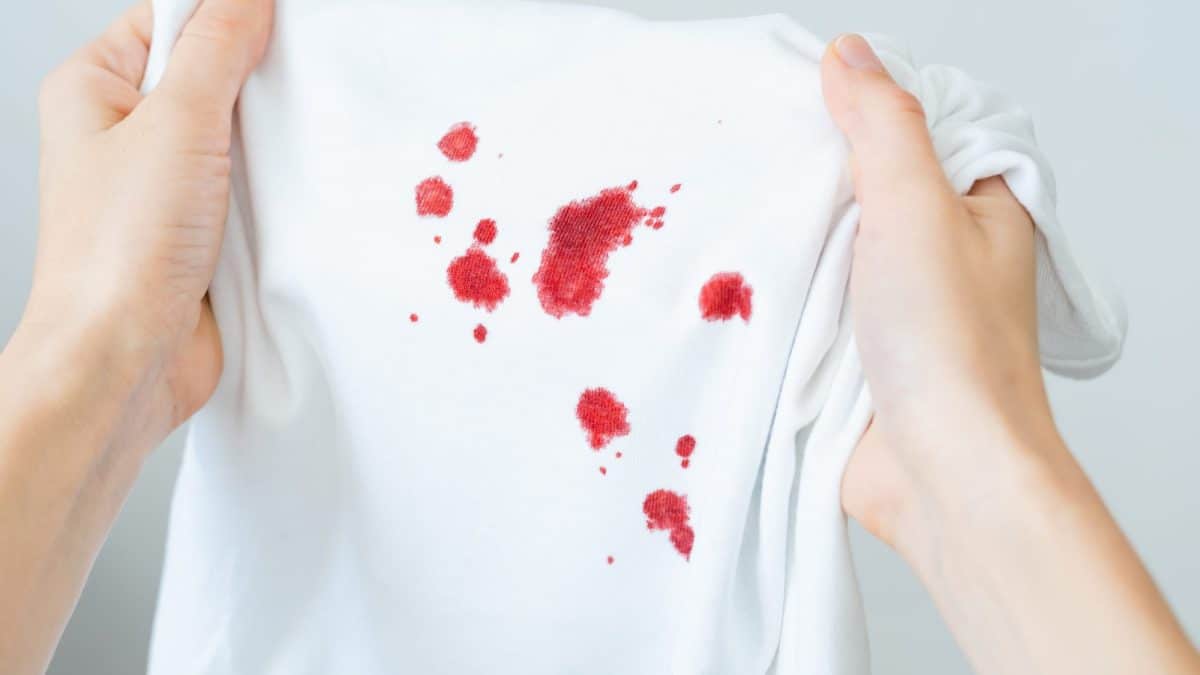
Quick answer · care label Cotton, linen and blends · not wool or silk
-
1 · Wash
Wash 30° -
2 · Bleach
Oxygen bleach -
3 · Dry
No tumble dry -
4 · Iron
Do not iron -
5 · Pro care
Pro clean P
In one line Blood is two stains at once: a protein that stays treatable for weeks in cold water, and an iron residue that no enzyme can touch. Rinse cold from the back, soak cold with an enzyme detergent overnight rather than reaching for heat, then treat any rust colored shadow left afterward as rust rather than as blood. Nothing warm goes near the fabric until the stain is confirmed gone on dry cloth.
A blood stain is two stains stacked, and only one of them is in a hurry
Every guide on the first page of results opens the same way: act fast. That advice is half right, and the half it gets wrong is the half that decides whether the mark ever comes out.
Blood arrives on fabric as two different things at once. The first is globin, an ordinary protein. It dissolves in cold water, it can be digested by the same enzymes that sit in laundry detergent, and it behaves like every other protein stain on this site. The second is heme, the iron complex that carries oxygen and gives blood its color. Iron is not a protein. No enzyme digests it, no detergent dissolves it, and as it sits in air it oxidizes, which is why a red spot turns rust brown over a few days and then stops changing.
Those two halves come apart on completely different schedules. The protein stays treatable for a surprisingly long time, weeks in many cases, as long as nothing warm ever touches it. The iron changes within days and then sits there. So the real deadline on a blood stain is not the clock. It is the first time that piece of fabric gets hot. A three week old spot on a sheet that has been sitting in a laundry basket usually still comes out. A two hour old spot that went through a warm wash and a dryer cycle usually does not, and the difference between those two outcomes has nothing to do with speed.
Warm water, a dryer cycle, an iron, and a hair dryer aimed at a damp spot all do the same thing: they unfold the protein and lock it around the fibers. Everything else on this page can be repeated, corrected, or undone. That one cannot. Until the stain is confirmed gone on dry fabric, treat every heat source in the house as off limits.
Two tests that tell you which half you are dealing with
Both take under a minute, and together they decide whether you need patience or a different product entirely.
The fizz test. Put a drop of 3% hydrogen peroxide on the edge of the mark and watch. Fresh blood contains catalase, an enzyme whose whole job in the body is to destroy hydrogen peroxide, and it does it fast enough to look violent. That white foam is the catalase being used up. It is not the stain lifting, and this is worth knowing because people read the foam as progress and keep pouring. A vigorous fizz means the protein half is still live and intact, so cold water and an enzyme will do most of the work for you. A weak fizz or none at all, on something you are sure is blood, means the catalase is already dead, either from drying hard or from heat, and reaching for more peroxide is the wrong reflex at that point.
The rewet test. Dampen the mark with cold water, press a white cotton cloth onto it for ten seconds, and look at the cloth. Color on the cloth means the protein is still mobile and still leaving the fabric, which is the good outcome at any age. Nothing on the cloth, and a stain that looks exactly the same wet as it did dry, means what is left is fixed in place: either cooked protein or the iron residue. That is the point where more of the same treatment stops paying.
What you’ll need
| Item | Why | Substitute |
|---|---|---|
| Cold water, running if possible | Keeps globin dissolved and moving. Running water from the back of the fabric pushes the stain out the way it came in | An ice cube rubbed over a small fresh spot |
| Enzyme detergent or enzyme stain remover | The protease cuts the protein into pieces small enough to rinse away. This is the only product that does real work on a dried stain | Any liquid detergent that lists enzymes on the label |
| 3% hydrogen peroxide | The fizz test, and bleaching the last of the pigment on white or light fabric. Minutes of contact, not hours | Oxygen bleach powder, slower and easier on color |
| Oxygen bleach powder | A long cold soak for an old stain, which is gentler on dye than peroxide poured straight onto one spot | An oxygen based stain booster, dosed per the label |
| A rust remover, oxalic acid based | The only thing that touches the second half, the yellow rust cast left after the protein is gone | Lemon juice and sun, the folk version, much weaker and slower |
| White cotton cloths | You read this stain rather than scrub it, and white is the only color that shows you what transferred | An old white towel cut into pieces |
| No chlorine bleach | It reacts with protein residue and yellows it, and mixed with the iron already in the stain it attacks the fiber itself | Oxygen bleach, in every case |
The method, step by step
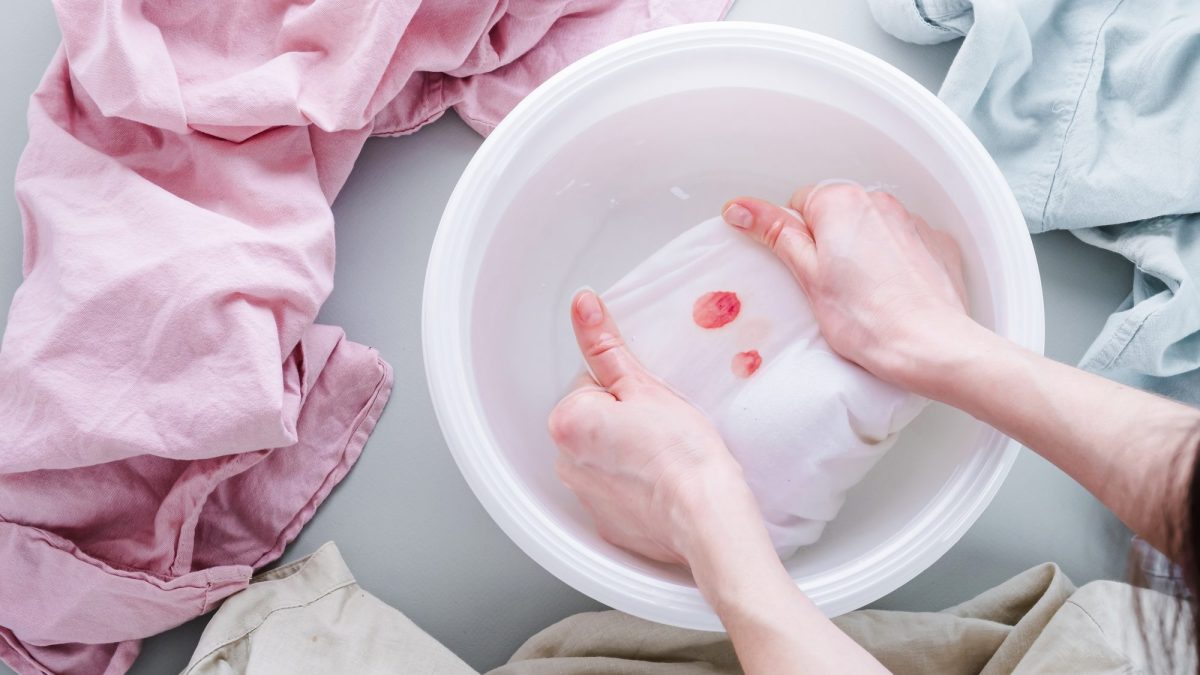
Steps one to four are the protein half and clear most stains completely. Step five exists for the ones where a rust colored shadow is still there afterward.
Rinse cold, from the back of the fabric
Hold the stain face down under cold running water so the water travels through the weave and out the front, carrying the blood with it rather than driving it deeper. On a fresh spill this alone removes most of what will ever come out. Do not rub while you do it: rubbing spreads a wet protein stain sideways and frays the weave at the same time.
Soak cold, for longer than feels reasonable
Enzymes are slow in cold water. That is the real cost of the cold water rule, and the way you pay it is with hours rather than degrees. Add enzyme detergent to a basin of cold water and leave the item in it, thirty minutes for a fresh stain and overnight for a dried one. A cold overnight soak does more for old blood than any amount of scrubbing, and it is the step that almost every quick guide leaves out.
Work the enzyme in directly and let it dwell
Lift the item out, put the enzyme remover straight on the mark, and press it into the weave with a soft brush or a fingertip. Then leave it alone for fifteen to thirty minutes. Contact time is what does the work here, and pressure is what damages the fabric, so the temptation to help it along is worth resisting.
Read the color before you decide anything else
Rinse cold and look at what is left in good light. Red or pink fading toward nothing means the protein is still coming out and another round of the same treatment will finish it. A dull rust, tan, or yellow cast that stopped changing means the protein half is done and what remains is iron. That is a different stain and it needs step five, not a fourth round of enzyme.
Treat the leftover cast for what it is, which is rust
On white or light fabric, ten minutes of 3% hydrogen peroxide or a cold oxygen bleach soak clears most of it. If a rust tone survives that, use a rust remover made for laundry, following the label exactly, and rinse it out thoroughly afterward. Do not mix it with anything, and keep it away from chlorine bleach entirely.
Air dry, then check it dry, and only then wash normally
A faint mark can be invisible on wet fabric and perfectly obvious once it dries, which is why checking wet has fooled so many people into running a dryer cycle. Let the area air dry, look at it in daylight, and only put the item through a normal cold wash once you are satisfied. Nothing goes in a dryer until the fabric is clean dry.
Interactive
Label decoder
Tap a symbol from your care label. No guessing, no scrolling.
19 symbols. Pick one.
Three things page one recommends, and what they actually do
- Reapplying hydrogen peroxide until the stain gives up. Once, briefly, on white fabric, peroxide is useful. As a routine it is the one habit on this list that can destroy the item. Peroxide in contact with iron produces hydroxyl radicals, and hydroxyl radicals cut cellulose. The blood stain you keep treating is, by definition, the place where the iron is. That is how a repeatedly treated spot on a cotton sheet becomes a thin patch and then a small hole several washes later, in exactly the place you kept working on. Use it for minutes, rinse it out, and stop.
- Salt, the most upvoted answer in every forum thread. Salt does not dissolve protein. It does the opposite: a high salt concentration drives dissolved protein back out of solution, which is a standard laboratory method for separating proteins on purpose. The whole point of cold water is to keep the globin dissolved and moving, and a thick salt paste works against that. As a dry powder dropped on a fresh wet spill it absorbs liquid, and that is the honest extent of it. The crystals also abrade the weave when you rub them in.
- Vinegar, which gets asked about more than almost anything else. Two problems, and they compound. Acid pushes heme toward a brown compound, so an acidic treatment can darken a red stain rather than clear it. And a protease needs mildly alkaline conditions to work, while vinegar puts the fabric down around pH 3, where the enzyme cleaner you reach for next is dead before it starts. If vinegar has already gone on, rinse the fabric thoroughly and let it return to neutral before any enzyme step.
Dish soap deserves a fairer answer than the other three. The surfactant in it does help carry loosened protein away, so the peroxide and dish soap recipe that circulates online is not nonsense. It is just that the peroxide is doing nearly all of it, and an enzyme detergent does the soap’s part better and without the color risk.
The fabric decides one thing, and it reverses the main advice
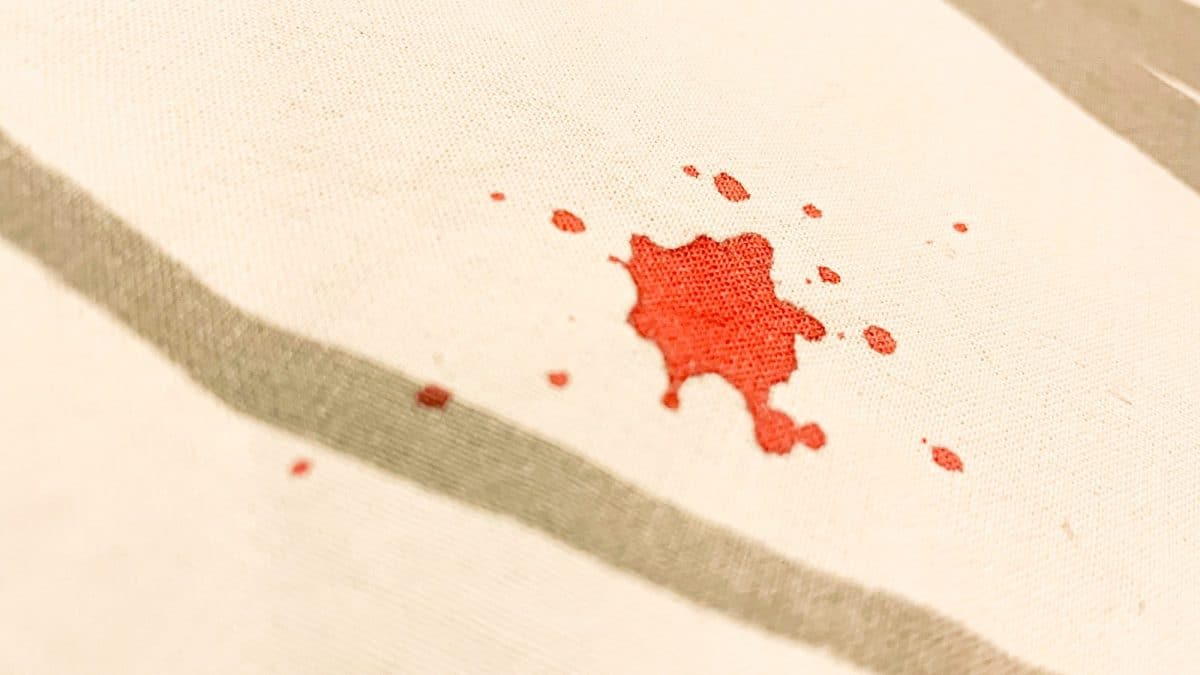
Everything above assumes cotton, linen, or a synthetic blend. On wool and silk, one instruction flips completely: never put an enzyme cleaner on a protein fiber. A protease breaks down protein. Wool and silk are protein. The enzyme cannot tell the stain from the fabric, and given time it will digest both, leaving a weakened, slightly rough patch that no cleaning restores. On those fibers, use cold water, patience, and a wool safe detergent only, and accept a fainter result over a damaged one. The same handling logic applies to how to clean cashmere, where the fiber is the fragile part rather than the stain.
On colored fabric of any kind, hydrogen peroxide is a mild bleach first and a stain remover second. Test it on an inside seam and give the test spot time to dry before deciding, because peroxide lightens gradually rather than instantly.
Related guides
Blood is one row of a larger table, and the framework for sorting any stain by category before touching it is in how to clean stains from clothes. On sheets and pillowcases the machine finishes what pretreatment starts, which changes the method: see how to clean bed stains. On a mattress there is no rinse and no wash cycle at all, so the same stain becomes a surface job with a drying deadline: see how to clean a stained mattress. On a rug the missing rinse creates a second failure mode, the mark that returns two days later, covered in how to clean stains on a rug. And for what each wash symbol on a care label actually permits, the care label decoder covers all of them.
Questions
Are old blood stains permanent?
Old is not the same as permanent, and the difference is heat. A stain that is simply old, on fabric that never went through a warm wash or a dryer, usually still responds to a long cold soak with an enzyme detergent, because the protein stays digestible for weeks. What does not come out is protein that has been cooked into the fiber by heat, and the iron residue left behind once the protein is gone. The second one is a rust stain rather than a blood stain, and it needs a rust remover instead of another round of enzyme.
How do you remove dried blood stains?
Rehydrate first, then be patient. Cold water soak to soften the crust, then a long soak with an enzyme detergent, ideally overnight, then the enzyme applied directly to the mark for another twenty minutes. Hydrogen peroxide comes last and only on white or light fabric, for minutes rather than hours. Skipping the soak and going straight to peroxide is the usual reason a dried stain only half lifts.
Does vinegar remove blood stains?
Not reliably, and it can make the next step fail. Acid can push the pigment toward brown rather than lifting it, and it puts the fabric at a pH where laundry enzymes stop working, so vinegar followed by an enzyme cleaner is close to using neither. If a stain has already had vinegar on it, rinse well with plain cold water before trying anything enzymatic.
Does Dawn dish soap remove blood stains?
It helps, but it is the junior partner in the recipe it appears in. Surfactants carry loosened protein away once something else has loosened it, which on blood means the hydrogen peroxide or the enzyme is doing the actual work. An enzyme laundry detergent covers the same ground and is designed for fabric rather than for dishes.
Do blood stains wash out in a normal cycle?
A fresh, small stain often does, in cold water, if the detergent contains enzymes. Anything dried, large, or already a day old should be pretreated first, because a wash that fails leaves you exactly one dryer cycle away from a permanent mark. The cost of pretreating unnecessarily is ten minutes. The cost of skipping it is the item.
The stain turned yellow after I treated it. What happened?
Either the protein came out and left the iron behind, which reads as a rust or tan cast, or chlorine bleach reached protein residue and yellowed it. In both cases more bleach makes it worse. Treat the first as rust with an oxalic acid based laundry rust remover, and rinse the second thoroughly and treat what remains with oxygen bleach rather than chlorine.
No fizz when I put peroxide on it. Does that mean it is not blood?
No. The fizz comes from catalase, an enzyme in fresh blood, and catalase is destroyed by drying and by heat. An old stain, or one that has been through a warm wash, can be blood and still not react at all. Absence of fizz tells you the stain is past its first phase, not that you misidentified it.