How to Clean Cashmere
The dry clean only label on cashmere protects the brand, not the sweater. Solvent strips the oils that make it soft, while a 20-minute soak in cool water puts them back. Here's the hand wash, why pilling gets better rather than worse, and the storage step that decides whether moths find it.
Quick answer · care label Cashmere · goat hair, keratin protein fiber
-
1 · Wash
Hand wash -
2 · Bleach
No bleach -
3 · Dry
Dry flat -
4 · Iron
Iron 110° -
5 · Pro care
Pro clean P
In one line Soak in cool water around 20 C with a wool wash for 20 minutes without touching it, rinse at the same temperature, press the water out in a towel and dry flat pushed back to shape. Felting needs water, heat and movement together, so removing the movement is what keeps cashmere safe. Wash before storing it for the summer: moth larvae go for body oils, not clean fiber.
The “dry clean only” label on cashmere is mostly liability
Almost every cashmere sweater ships with a dry clean only label, and most of them wash perfectly well by hand. The label protects the brand from the customer who runs a $300 sweater through a hot cycle, not the sweater from water. Cashmere is goat hair. It has been washed in water since long before dry cleaning existed.
The case against dry cleaning is not just cost. Perchloroethylene, the solvent most conventional cleaners still use, strips the natural oils that give cashmere its softness. A sweater dry cleaned four times a season comes back progressively drier and scratchier, and that change is what people usually blame on the sweater being lower quality than they thought. Hand washing with a wool wash puts moisture back into the fiber instead of pulling it out.
Two situations do belong at the cleaner: a structured cashmere coat with interfacing and shoulder padding, which loses its shape in water, and an oil-based stain that has already set. Everything else is a sink job.
| Cause | What it does | Reversible? |
|---|---|---|
| Agitation in warm water | Felting: the scales on each fiber open and lock together permanently | No |
| Hanging on a hanger | Shoulders stretch into points, body grows several inches longer | Partly, by rewetting and reshaping flat |
| Wringing out water | Stretches the knit while it is at its weakest and heaviest | Partly |
| Regular laundry detergent | Alkaline enzymes attack the protein fiber; it goes stiff over several washes | No |
| Clothes moths in storage | Larvae eat holes, usually where body oils remain in the fiber | No, only repairable |
| Pilling | Short fibers work loose and tangle at friction points | Yes, and it improves over time |
The hand wash, and the two temperatures that matter
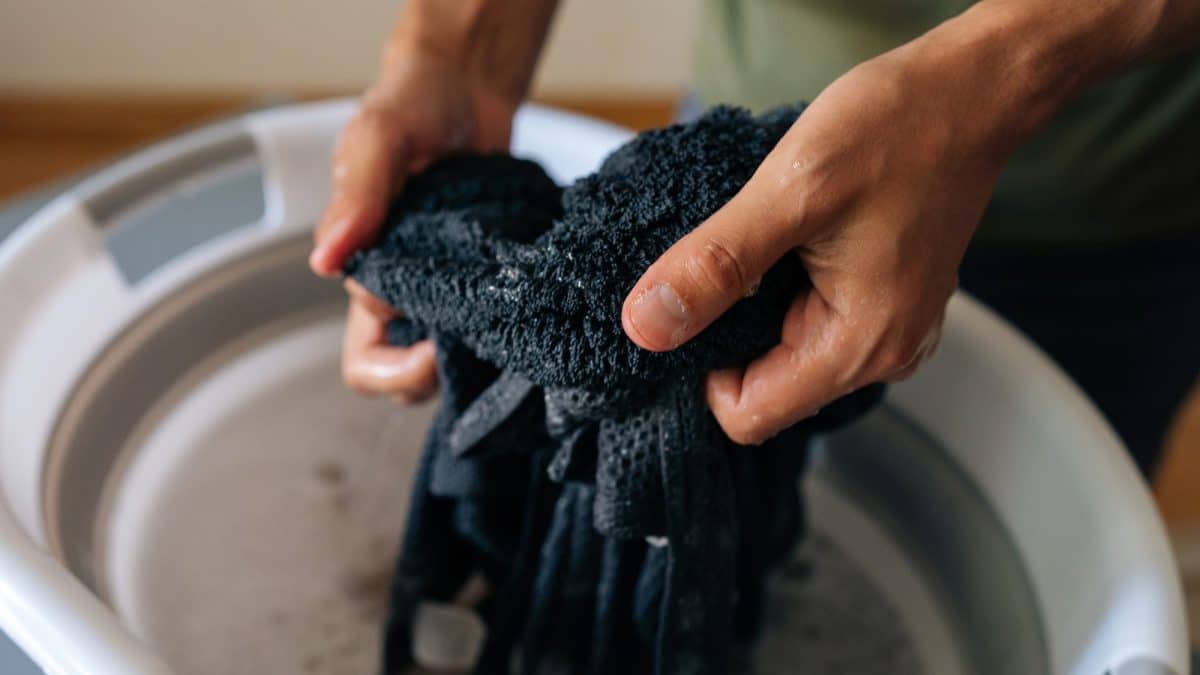
Felting is the one mistake with no recovery, and it needs three things at once: water, heat, and movement. Remove any one of them and cashmere is safe. The practical version of that is cool water and almost no handling.
Fill a basin with cool water and dissolve the wash first
Around 20 C, cool to the touch, not cold enough to sting. Dissolve a capful of wool wash or a tablespoon of baby shampoo into the water before the sweater goes in. Neat detergent dropped onto wet cashmere leaves a patch that stays stiffer than the rest.
Submerge and leave it alone for 20 minutes
Press it under the water once, then do not touch it. No swirling, no kneading, no rubbing collar against cuff. Soaking does the work; movement is what felts the fiber.
Rinse in water at the same temperature
A sudden change from warm to cold, or the reverse, causes the scales to contract unevenly. Keep both basins within a few degrees of each other. Rinse twice; leftover wash residue attracts dirt and dulls the surface.
Press the water out, never wring
Lift the whole sweater with both hands supporting it, so its own soaked weight is not hanging from the shoulders. Press it against the side of the basin, then roll it inside a dry towel and press down along the roll. This rule belongs to protein fibers and loose knits rather than to hand washing in general: on cotton, linen and denim, wringing is the only water extraction you have, and leaving it out is what makes a hand-washed load stay damp for a day. How to clean clothes by hand sets out where the line falls.
Dry flat, in its own shape
Lay it on a fresh dry towel or a mesh rack and push the body, sleeves, and neckline back to the measurements it had before. This is the moment shape is decided. Somewhere warm and airy, never on a radiator or in direct sun, both of which make the fiber brittle.
Modern wool cycles keep the water under 30 C and barely rotate the drum, which is closer to a long soak than to a wash. Use a mesh bag, wool wash, and set the spin to 400 rpm or lower. The condition is that you check the spin speed yourself rather than trusting the cycle default: a 1200 rpm spin at the end undoes everything the gentle wash just protected.
Interactive
Label decoder
Tap a symbol from your care label. No guessing, no scrolling.
19 symbols. Pick one.
Pilling is not a quality problem, and the first few washes make it better
The common belief is that cashmere pills because it is cheap. What actually happens is that cashmere fibers are short, around 3 to 4 centimeters, and short fibers work their way out of the yarn where the garment rubs against itself: under the arms, along the sides, where a bag strap sits. They tangle into balls on the surface. A tighter, longer-staple yarn pills less, so price is loosely correlated, but every cashmere garment pills at first.
The useful part is that it stops. Those loose short fibers are finite. Once they have worked their way out and been removed, the remaining yarn is more stable, which is why a well-treated cashmere sweater in its third year pills less than it did in its first month.
- A cashmere comb is the gentlest tool. Lay the garment flat, hold the fabric taut with one hand, and sweep in one direction. It lifts the pills without cutting into the yarn underneath.
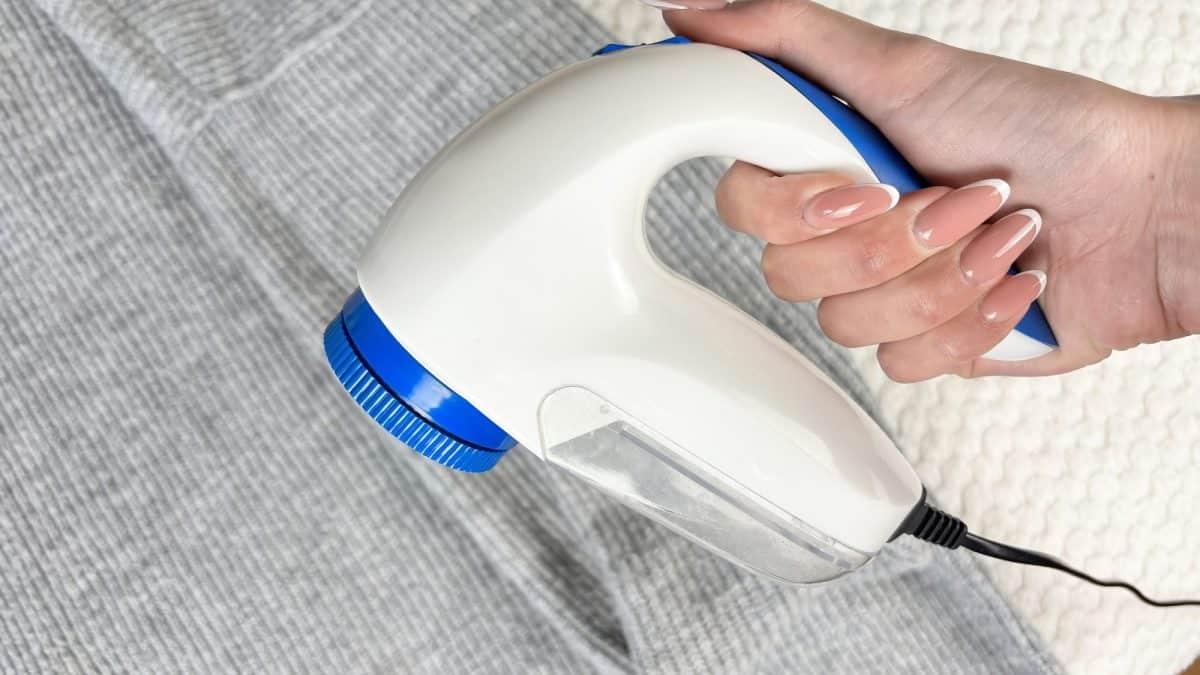
- A battery fabric shaver is faster and riskier. Fine on the body panels, dangerous near ribbing and seams where the fabric can be pulled up into the blade and cut through.
- Do not pull pills off by hand. The pill is still attached to a fiber that runs into the knit, so pulling drags that fiber out and leaves a thinner spot.
- De-pill after washing, not before. Washing loosens more pills than it creates, so doing it in the other order means doing it twice.
- Rest the garment between wears. Two days flat in a drawer lets the fibers recover their loft, and a rested sweater pills noticeably less than one worn on consecutive days.
Spot cleaning without washing the whole thing
Cashmere does not need washing often. Three or four wears between washes is normal, and a sweater worn over a shirt can go longer than that. For a single mark, treating the spot is better for the garment than a full wash it did not need.
Work from the outside of the mark inward, with a white cloth barely damp with cool water and a trace of wool wash, dabbing rather than rubbing. Rubbing is localized agitation, which is how you get a small felted patch that catches the light differently from the fabric around it. For anything oily, put a plain paper towel underneath and press from the back so the oil transfers down and out rather than spreading sideways. If you are unsure what the stain is, how to clean stains from clothes sorts stains by the chemistry that lifts them, and the water temperature guidance there still applies here as long as you keep the handling minimal.
Home dry cleaning kits are a reasonable option for odor and light soiling between real washes, since the process is heat and a treated cloth rather than immersion. What they cannot do is fix a set stain. How to dry clean at home covers what those kits genuinely handle.
Storage is where most cashmere is actually lost
More cashmere is destroyed in a drawer over the summer than in any washing machine. Clothes moth larvae eat keratin, which is what cashmere, wool, and silk are made of, and they are drawn to garments carrying sweat, skin oils, and food traces. A clean sweater is a much less attractive target than a worn one.
That single fact reorders the usual advice. Cedar blocks and lavender sachets repel adult moths to a modest degree and do nothing at all to larvae that have already hatched in the fiber. Washing before storage is the step that matters, and it is the one most often skipped because the sweater looks clean at the end of the season.
- Wash or clean everything before it goes away, including pieces worn only once or twice.
- Fold, never hang. Months on a hanger is how shoulders end up with permanent points.
- Store in breathable cotton bags or an airtight box, not a plastic dry cleaning bag. Plastic traps humidity against the fiber, and a damp protein fiber in a warm cupboard grows mildew: the same mechanism described in how to clean mold off clothes.
- 48 hours in the freezer, sealed in a bag, kills larvae if you suspect a garment is already infested. Do this before it joins the rest of the stored clothes, not after.
Rescuing a sweater that has already gone wrong
A sweater that has stretched, usually from hanging or from being lifted by the shoulders while soaking wet, is straightforward to fix. Rewet it in cool water, press out the water in a towel, and lay it flat pushed back to the right measurements. Cashmere holds the shape it dries in, which is what makes stretching reversible.
A sweater that has felted, gone dense, stiff, and a size smaller after a hot wash, is not fixable. The scales on the fibers have interlocked mechanically and there is nothing to unlock them. Soaking in hair conditioner and stretching is the widely repeated advice, and it can regain perhaps a centimeter of give on a mild case. On a sweater that came out of a hot wash noticeably smaller, it will not bring it back. Better to know that before spending an evening on it.
Related guides
For stain identification and the temperature rules that decide whether a treatment lifts or sets a mark, see how to clean stains from clothes. If you are considering a home dry cleaning kit instead of a hand wash, how to dry clean at home explains what those kits actually do. Suede is the other natural material on this site with a reputation for being unwashable that does not survive contact with the facts: how to clean suede.
Questions
How often should I wash a cashmere sweater?
Every three or four wears for something worn against the skin, and less often for a piece worn over a shirt. Cashmere resists odor better than cotton because the fiber wicks moisture away rather than holding it, so airing a sweater flat overnight often does what a wash would have done.
Can I use fabric softener on cashmere?
No, and it is not needed. Softener works by coating fibers in a waxy film, which flattens the loft that makes cashmere feel the way it does, and it builds up over successive washes. A proper wool wash leaves the fiber soft without coating it.
Is my cashmere sweater fake if it pills in the first week?
Almost certainly not. Every cashmere garment pills, and heavy early pilling usually means shorter fibers or a looser spin rather than a different fiber altogether. If you want to check the material, a single thread pulled from a seam allowance and burned smells like burnt hair and self-extinguishes if it is cashmere or wool, and melts into a hard bead if it is acrylic.
My sweater smells musty after storage but looks clean. What now?
Wash it normally by hand and dry it flat somewhere with good airflow. If the smell survives that, it is mildew in the fiber rather than stale air, and mildew needs treating before washing rather than after, because a normal wash spreads it through the load.