Can You Machine Wash Wool? (The Label and the Cycle Both Decide)
Wool felts when moisture, heat and movement arrive together, and a washing machine supplies all three by design. Two things have to be true before the drum is safe: the fibre and the cycle.
Quick answer · care label Wool — knitwear and blends
-
1 · Wash
Wash 30° gentle -
2 · Bleach
No bleach -
3 · Dry
Dry flat -
4 · Iron
Iron 150° -
5 · Pro care
Pro clean P
In one line Read the label for both a wash symbol and the word superwash, then wash one garment inside out in a mesh bag on the wool or delicates programme at 30 °C, with a non-biological wool wash and the lowest spin the machine allows. Take it out the moment the cycle ends, press the water out through a towel, and dry it flat back to measurements taken before it got wet. About 15 minutes hands-on.
Can wool go in the machine, or does the drum ruin it?
Some wool can, and the wool that can is not rare: most sock yarn, most base layers and a large share of high-street knitwear are finished so that a machine cannot hurt them. What decides it is not the word “wool” on the label. Two separate things both have to be true — the fibre has to have been treated so it cannot felt, and the machine has to have a cycle that barely moves. Either one alone is not enough, which is why the same question gets answered “of course” and “never” by people who are both telling the truth about their own sweater.
The thing a machine does to untreated wool is felting, and felting needs three conditions together: moisture, heat and movement. A washing machine exists to supply all three. In a normal cycle the drum lifts the load and drops it, over and over, for half an hour or more. Every one of those drops rubs fibre against fibre, and because each wool hair is sheathed in scales that catch in one direction and slide in the other, the rubbing ratchets them into each other until they lock. The fabric pulls inward and comes out smaller, denser and stiffer than it went in — and unlike ordinary shrinkage, which is released tension and comes back out with rewetting, felting is fibres knotted together and nothing takes it back.
A wool programme is not a shorter, cooler version of a normal wash. It is a long soak in a lot of water with the drum rocking a few degrees back and forth instead of tumbling, and a spin that is deliberately weak. If your machine cannot do that, no combination of settings on the dial will make it safe.
What you’ll need
| Item | Why | Substitute |
|---|---|---|
| Non-biological wool wash | Biological detergents carry protease, which digests protein, and wool is protein. The damage accumulates over several washes rather than showing up after one | A teaspoon of unscented baby shampoo, poured into the drum |
| Mesh laundry bag | Keeps sleeves and hems from catching on the drum seal, which is where stretching happens | A pillowcase with the open end knotted |
| A wool or delicates programme | Reduced drum action and a capped spin. On this job the setting is most of the method | The coldest, shortest delicates cycle the machine offers |
| Tape measure | Three numbers taken dry are the only reference you will have when the thing is wet and shapeless | A phone photo taken flat with a ruler in frame |
| Two dry bath towels | One to press the water out through, one to dry on | A folded cotton bedsheet |
| Flat drying rack | Air reaches both faces, so the underside dries at the same rate as the top | A towel on a bed, turned once halfway through |
The method, step by step
Read the label twice, for two different things
First the wash symbol: a tub with a number, a tub with one or two bars under it, a hand in a tub, or a crossed-out tub. Then the fibre content, looking for the words “machine washable”, “superwash” or “total easy care”. The symbol tells you what is permitted; the fibre content tells you why.
Close everything, turn it inside out, bag it
Zips done up, buttons fastened, garment inside out so the face of the knit is not the surface doing the rubbing, then into the mesh bag. Loose cuffs and long sleeves are what get caught and pulled during the spin.
Measure it flat, then load a third of a drum at most
Chest, length, sleeve — write them down. Then wash one garment, or a small handful of similar ones. In a packed drum there is nowhere to float, so garments rub against each other instead of moving in water, which is the exact thing the wool cycle exists to prevent.
Set the wool cycle, then look at the spin number specifically
Temperature first, following the label; where there is no number, 30 °C (86 °F). Then look at what the machine has set the spin to and drop it to the lowest the programme allows. Spin is where a heavy wet knit gets pulled out of shape, and on many machines the wool programme’s default is not its minimum.
Dose the wool wash into the drum, and leave the softener alone
A small dose, straight into the drum rather than the dispenser, so it dissolves in the fill instead of arriving neat on wet wool. Skip the fabric softener: it works by leaving a cationic film on the fibre, and on wool that film reads as limp and slightly greasy rather than soft.
Take it out the moment the cycle ends
A wet knit left folded in a drum sets creases along the folds and starts to smell within hours. This is the step people lose garments on, not the wash itself.
Press through a towel, then dry flat to your numbers
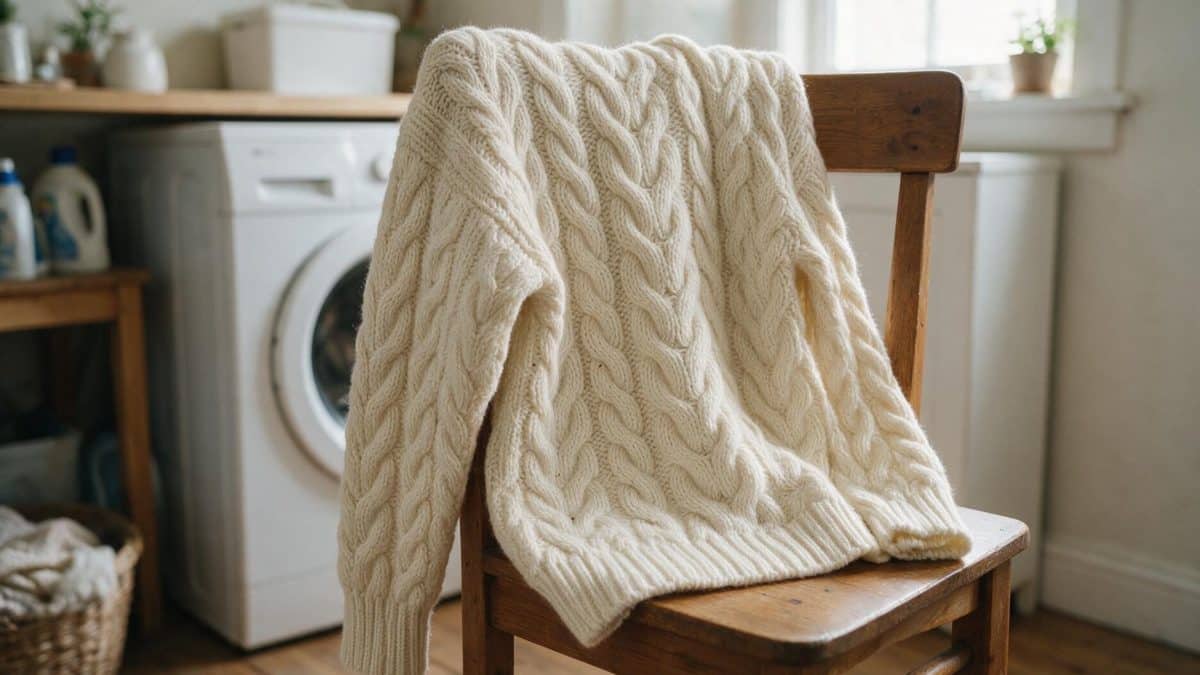
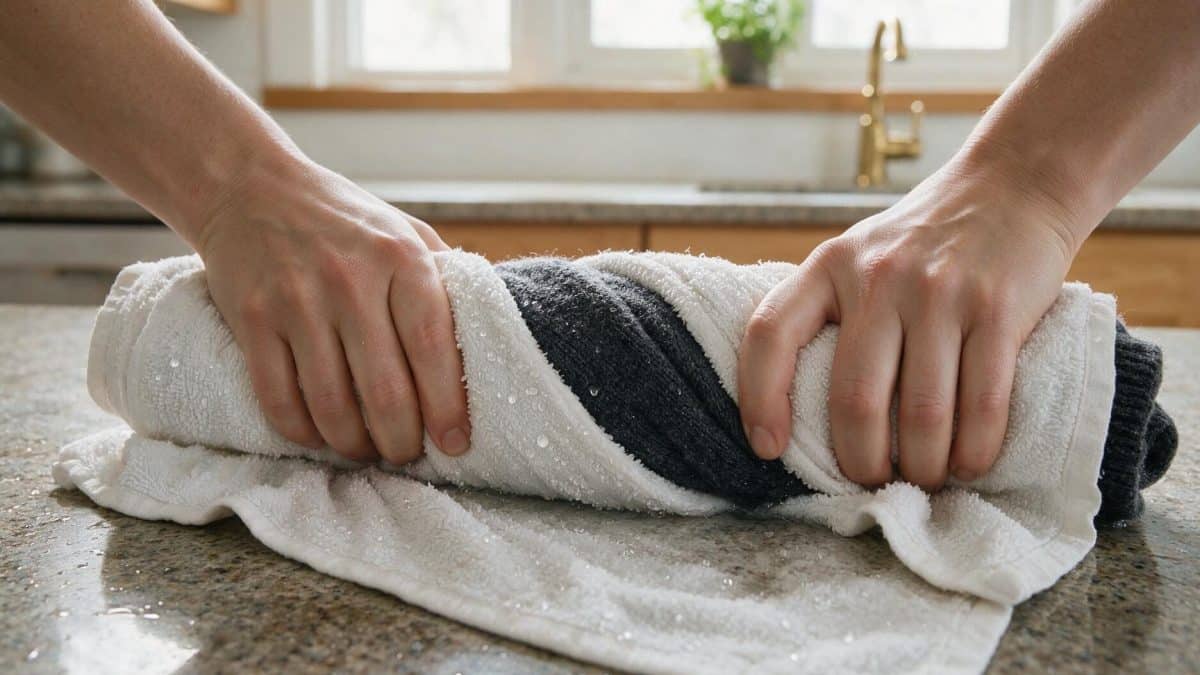
Lift it supporting the whole weight with both hands, never by the shoulders. Roll it in a dry towel and press along the roll rather than wringing. Then lay it on the rack, work it back to the measurements while it is damp, and keep it off radiators and out of direct sun.
The label word that decides it
Wool that can go in a machine has usually had its scales removed: the treatment erodes the scale edges chemically and seals what is left under a thin polymer. A fibre with no scales cannot ratchet, so it cannot felt. Nothing about the yarn looks different afterwards, and the only trace is the wording on the label.
- Words that mean treated: superwash, machine washable, total easy care. These are claims about the finishing process, and they are the ones that matter.
- Words that mean nothing here: merino, lambswool, Shetland, virgin wool. Those are breed, grade and origin terms. A merino base layer sold as machine washable and a merino sweater that felts in one cycle are the same fibre, finished differently.
- When the label says neither: assume untreated and read the wash symbol instead. A hand-in-a-tub or a crossed-out tub is the manufacturer telling you the machine is not the tool. For the full hand-wash method, see how to clean wool.
Blends complicate this in one direction only. If the wool in a blend is untreated, the blend still felts: the acrylic or nylon does not protect it, it only makes the felting uneven, because just part of the fabric is pulling in.
Your machine decides the rest
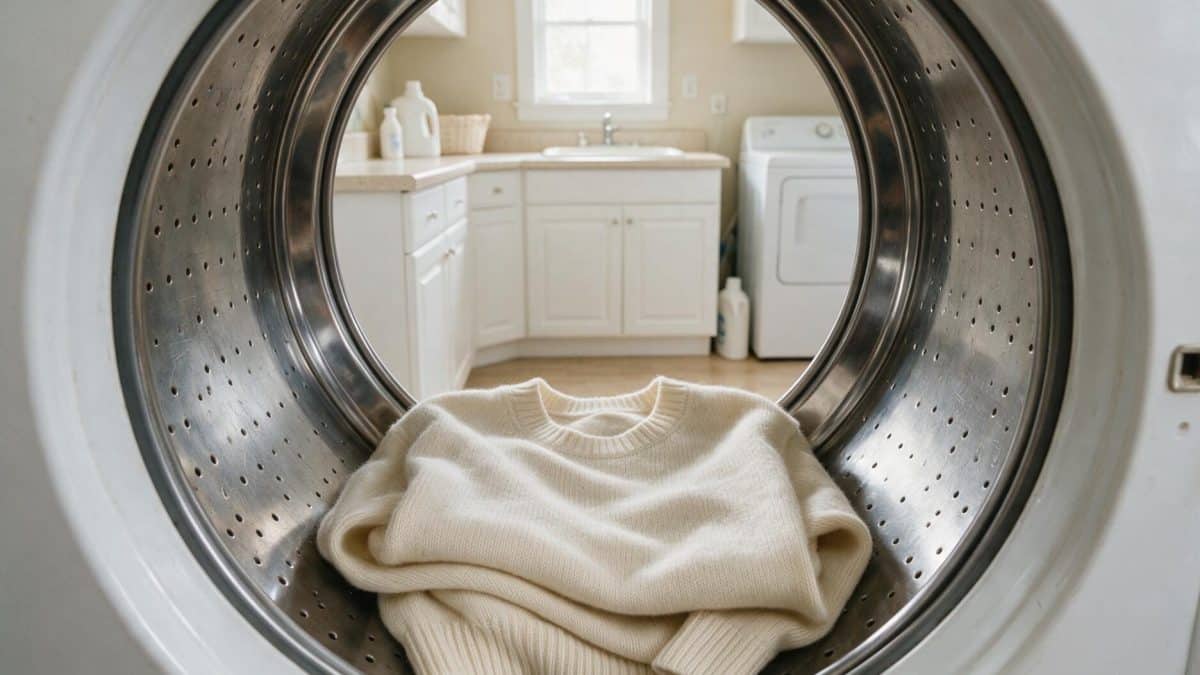
A wool programme is a different machine behaviour, not a milder version of the same one. It fills higher, so the garment floats instead of being dropped through air; it rocks the drum back and forth well short of a full rotation instead of tumbling; and it caps the spin. The rest periods between movements are why the cycle runs so long, and the capped spin is why the load still holds a great deal of water when the door opens.
What “capped” means varies enough that you have to read your own manual. Bosch lists its wool programme at a maximum of 40 °C (104 °F), a maximum spin of 800 rpm and a maximum load of 2 kg (4.4 lb) — that last figure is the drum-fullness rule written down by the manufacturer. There is no single correct number, only the lowest one your own machine offers.
Woolmark certifies washing-machine cycles, and the tier is the useful part. Black covers wool garments labelled machine washable. Blue covers hand-washable wool garments — that is the tier that means a hand-wash-only sweater can go in that machine on that cycle. Green is Blue with tested water and energy efficiency on top. If your machine carries one of these its manual will say which, and that answers the question more reliably than any general advice.
Two cautions on the machine side. A top loader with a central agitator post is built to push fabric against fabric, which is felting by design; impeller top loaders and front loaders are considerably gentler. And sources genuinely disagree on temperature: Woolmark’s own guidance describes the wool setting as gentle action at 40 °C, while most appliance and retail advice caps wool at 30 °C. Where the label gives a number, follow it. Where it does not, the lower setting removes a variable and costs nothing.
What a machine wash can and cannot undo
If something has already been through a cycle, what happens next depends on which of these it is. Only the first is permanent.
| What you’re seeing | What happened | Recoverable |
|---|---|---|
| Smaller, denser, stiffer, and the stitches have closed up | Felting. The scales have interlocked and the fibres are physically knotted | No |
| Smaller but still soft and open, with some give left | Shrinkage from released tension, not felting | Usually |
| Grown sleeves or dropped shoulders | Wet weight pulled through the spin, or hung to dry | Usually |
| Pilling at cuffs, underarms and sides | Friction lifted short fibre ends to the surface | Partly |
| Limp, faintly greasy handle | Fabric softener film on the fibre | Yes |
For both shape problems the move is the same: rewet in lukewarm water, press the water out through a towel, then reshape flat and let it dry that way. Soaking in lukewarm water with a little hair conditioner relaxes the fibres and makes the reshaping easier, but only where there is still give in the fabric. Once wool is genuinely felted, conditioner does nothing.
Put wool in a tumble dryer, whatever the wash label allowed. A dryer is heat and mechanical action together with no water to cushion anything, and it is the most reliable way to felt a garment that survived the wash perfectly well. Unless the label carries a tumble-dry symbol, wool dries flat.
Related guides
The machine question changes shape depending on what the wool is made into:
- Hand washing is the fallback whenever the answer here is no, and it is the method for every untreated wool garment. See how to clean wool.
- Cashmere is wool with a finer, shorter fibre, which narrows the margin further and changes the temperature advice. See can you machine wash cashmere.
- A blanket is mostly a load-size problem: the weight of wet wool is what a domestic drum struggles with. See how to clean a wool blanket.
- Felt is what wool becomes when this goes wrong, deliberately made. Washing it is a different question with a different answer. See can you machine wash felt.
Questions
Can I machine wash a wool sweater that says hand wash only?
Only if your machine has a cycle certified for it. Woolmark’s Blue wool care certification covers exactly this case: a cycle tested to wash hand-washable wool garments without felting them. If your manual names it, the cycle is doing what a careful hand wash does. If it does not, you are guessing, and the failure is not reversible.
What temperature should I set?
Follow the number on the label if there is one. Where there is not, use 30 °C (86 °F). Sources disagree here — Woolmark describes the wool setting as gentle action at 40 °C (104 °F), while most appliance and retail guidance caps wool at 30 °C — and since the lower setting costs nothing and removes a variable, it is the sensible default.
Can wool go in the tumble dryer on low?
Not unless the care label shows a tumble-dry symbol, which most wool labels do not. Heat plus tumbling is the fastest felting mechanism there is, and low heat only slows it. Wool dries flat, reshaped while damp.
Do I really need a special wool detergent?
You need one thing from it: no protease enzymes. Biological detergents cannot tell the protein in an egg stain from the protein in a wool fibre and attack both, and the damage shows up as thinning and small holes after several washes. A pH-neutral wool wash or a non-biological delicates liquid both do the job.
Does the wool cycle work for wool blends?
It depends which fibre is the fragile one. A superwash wool and polyester blend is fine. An untreated wool blend still felts, just unevenly. If the blend contains elastane, treat heat rather than agitation as the main risk: heat is what makes elastane go slack.
My sweater came out of the machine smaller. Is it finished?
Feel it before deciding. If it is still soft and open with some stretch in it, that is shrinkage: rewet it lukewarm, press the water out through a towel and reshape it flat, and most of the size comes back. If it is dense and stiff and the stitch pattern has closed up, that is felting, and it is permanent.