How to Clean Wool Without Felting It
Wool is not ruined by water but by moisture, heat and movement arriving at once. That is why the correct wash is a ten-minute soak you never stir, never wring and never tumble dry.
Quick answer · care label Wool — untreated and superwash
-
1 · Wash
Hand wash -
2 · Bleach
No bleach -
3 · Dry
Dry flat -
4 · Iron
Iron 150° -
5 · Pro care
Pro clean P
In one line Brush the garment and measure it flat, then soak it undisturbed for ten minutes in 30 °C water with a neutral, enzyme-free wool wash. Rinse lukewarm then cold, press the water out through a rolled towel without wringing, and dry flat in the shade, reshaped to the measurements you took. About 30 minutes hands-on, plus 24 to 48 hours drying.
Can wool go in water at all, or is the water what ruins it?
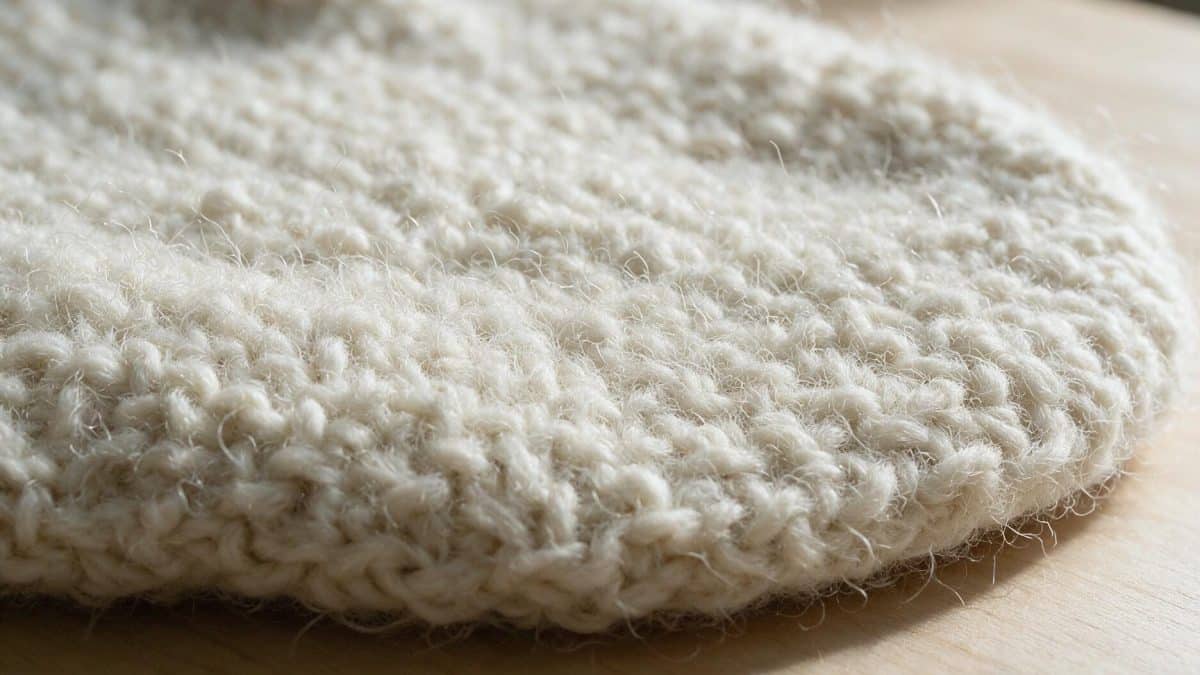
Wool has been washed in water for as long as people have worn it, and the sheep it came from stood out in the rain. What destroys a wool garment is not wetness but felting, and felting needs three conditions at once: moisture, heat and movement. Knowing how to clean wool is mostly knowing how to keep them apart.
The reason sits on the surface of the fibre. Every wool hair is sheathed in overlapping scales that point one way, like roof tiles. Wet and warm, those scales lift; agitated, they ratchet past each other and lock, because a scale slides easily in one direction and catches in the other. The fabric pulls in on itself and gets denser, thicker and smaller. Textile finishing does this deliberately and calls it fulling.
Separate that from ordinary shrinkage, which is released tension and reverses by rewetting and reshaping. Felting is fibres knotted together. A sweater that came out of a hot wash smaller and also denser and stiffer has felted, and stretching will not bring it back.
You cannot take the moisture out of a wash, so the method removes the other two: keep the water lukewarm and keep your hands off the garment. A wool wash is a soak, not a scrub.
What you’ll need
| Item | Why | Substitute |
|---|---|---|
| pH-neutral wool wash | Cleans without the enzymes and alkali that digest a protein fibre | A teaspoon of unscented baby shampoo |
| A basin or clean sink | Lets the garment float open instead of being pushed around | The bath, shallow |
| Two dry bath towels | One to press the water out through, one to dry on | A folded cotton bedsheet |
| A flat drying rack | Air reaches both faces, so the underside dries at the same rate | A towel on a bed, turned once |
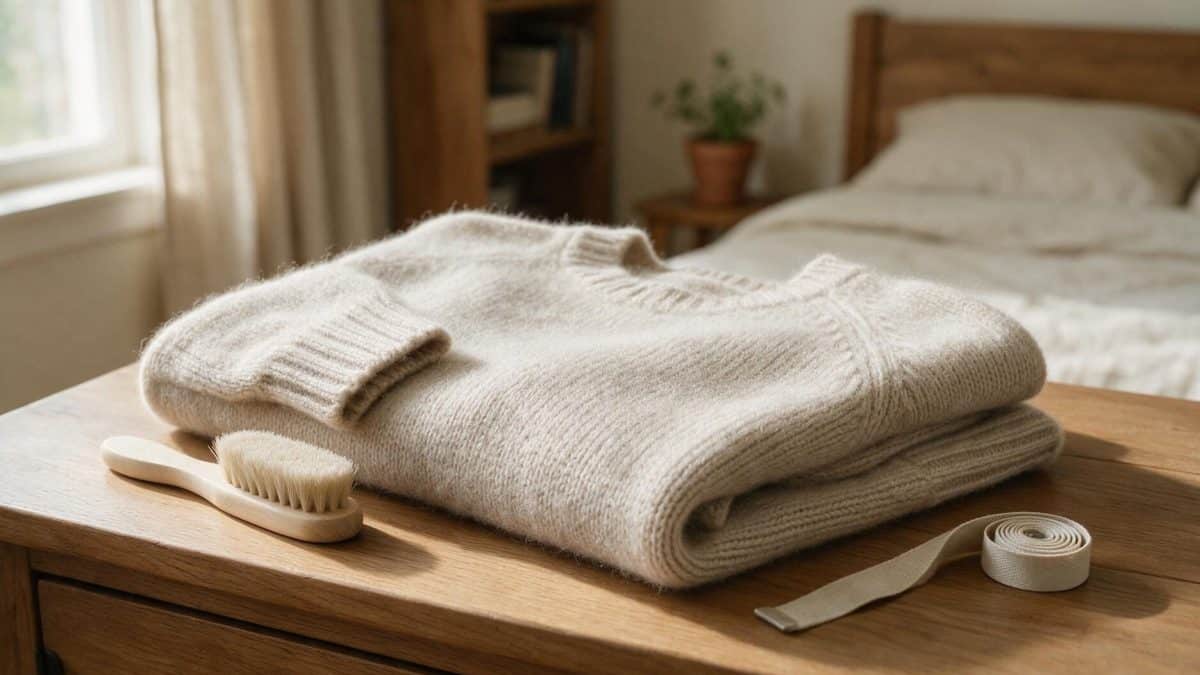
| A soft garment brush | Lifts surface dirt and dried mud, often the whole job | A clean, dry nail brush |
| A tape measure | Records the shape dry, your only reference when reshaping it wet | A phone photo taken flat, ruler in frame |
The method, step by step
Brush it, and decide whether it needs washing at all
Wool holds up to 35 per cent of its own weight in moisture without feeling wet, by the industry’s figure, and binds odour molecules inside the fibre rather than on the surface. Airing it flat for a few hours often does what a wash would have done, and dried mud brushes off.
Measure it flat before it touches water
Chest, length, sleeve. Write the three numbers down. Once a wet knit is lying on a towel, every judgement about its shape is guesswork.
Dissolve the wash into lukewarm water first
Around 30 °C (86 °F): lukewarm on the inside of your wrist, not warm. Neat detergent poured onto wet wool leaves a patch that rinses out slowly and can dry stiffer than the fabric around it.
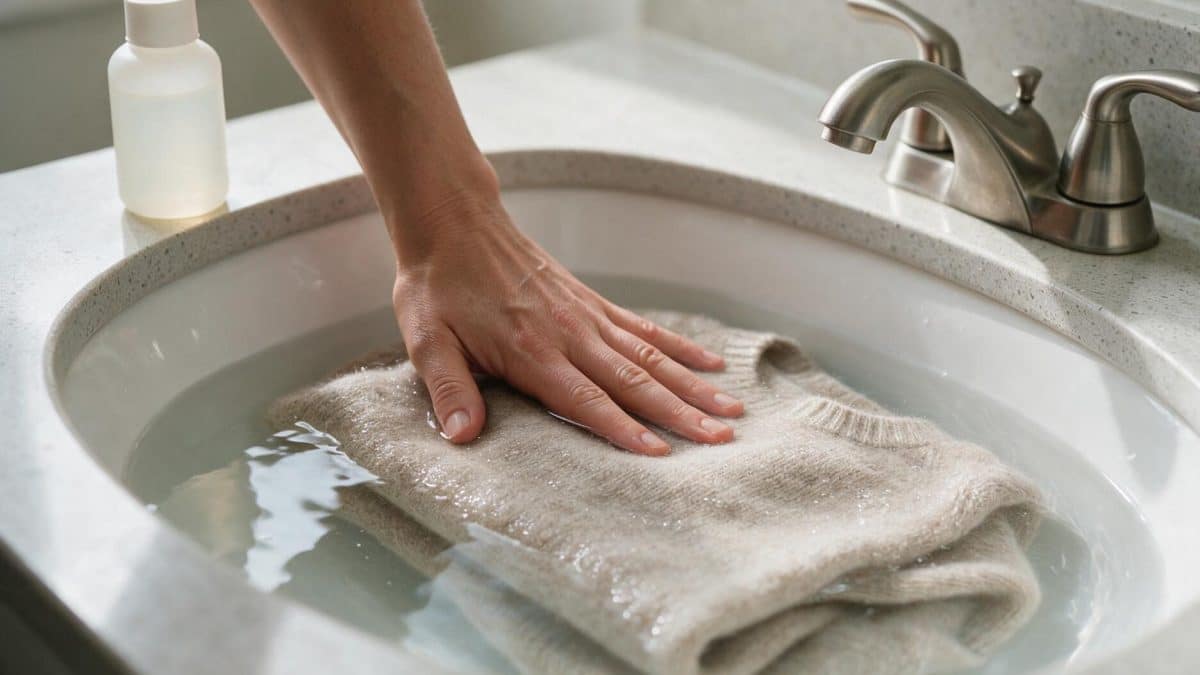
Submerge it once, then leave it alone for ten minutes
Press it under with a flat hand, then stop touching it. No swirling, no kneading, no rubbing one cuff against the other. Ten minutes is the soak The Woolmark Company specifies, and the soak is what cleans. Movement is what felts.
Rinse lukewarm first, then cold
Two rinses in that order, so the fibre never jumps temperature suddenly. Refill the basin rather than running a tap onto the garment. Wash left in the fibre pulls dirt back and dulls the surface.
Lift it as a whole, then press the water out through a towel
Support the garment with both hands so its soaked weight never hangs from the shoulders: a wet sweater lifted by the collar stretches at that moment, not later. Never wring it. Roll it inside a dry towel and press along the roll.
Dry flat, in shade, back to the numbers you wrote down
On the second towel or a rack, work the body, sleeves and neckline back to the measured shape while it is damp. This is the moment the final shape is set. Keep it off radiators and out of sun: heat makes the fibre brittle and sunlight yellows it.
Not every wool is the same problem
Contradictory advice about wool usually comes from people describing different fibres with the same word. What changes everything is whether the scales are still there. Machine-washable wool has had them chemically removed: a chlorine treatment erodes the scale edges, then a polymer resin seals the surface. That chlorine-Hercosett route is the common commercial version of it. Descaled wool cannot ratchet, so it cannot felt.
Nothing on a label tells you this except the words themselves. “Merino” is a sheep breed and says nothing about processing: a merino base layer sold as machine washable and a merino sweater that felts in an afternoon are the same fibre, differently finished.
| What it says | What that means for the fibre | Machine? |
|---|---|---|
| Superwash, or machine washable wool | Scale edges eroded and sealed under a resin, so they cannot interlock | Yes |
| Merino, lambswool, Shetland | Breed and grade names. Scales intact unless the label says otherwise | No |
| Wool with elastane | Heat degrades the elastic and it does not spring back, so the garment goes slack | No |
| Wool blended with polyester | The wool still felts while the synthetic holds its dimensions, so it distorts unevenly | Follow the label |
| A tailored jacket or coat | Canvas, interfacing and padding shrink at different rates from the shell | No |
How far that lets you push a machine is the subject of can you machine wash wool; fabric felted on purpose is its own case in can you machine wash felt.
The detergent decides more than the temperature does
Wool is keratin, the same protein family as hair and fingernails, and ordinary laundry detergent is built to destroy protein. Biological detergents contain protease enzymes whose job is cutting protein chains apart so food and blood stains wash away, and the enzyme cannot tell stain protein from fibre protein. The damage is undramatic at first: strength and elasticity go, then small holes appear after several washes.
Alkalinity is the second half of it. Mainstream detergents are alkaline because alkali lifts grease from cotton, and alkaline water is also the condition in which wool scales open most readily. A neutral wool wash avoids both, which is why a gentle cycle with the wrong detergent is worse than a hand wash with the right one.
Never put chlorine bleach near wool, at any dilution. Household bleach is 3 to 6 per cent sodium hypochlorite and strongly alkaline. On wool it does not lighten the stain, it breaks down the fibre itself. On a garment you get yellowing, then thinning, then holes, none of it recoverable.
Oxygen bleach gets recommended as the wool-safe alternative. It is gentler than chlorine, but it is still an oxidising agent working on a protein, and it can leave wool yellowed and weakened. If the label shows the crossed-out triangle, that covers oxygen bleach as well, not only chlorine.
On temperature, the published guidance disagrees with itself. Woolmark’s machine instruction is the wool setting, gentle action at 40 °C (104 °F), while its own hand-wash instruction says approximately 30 °C. Washing by hand, there is nothing to gain from the warmer figure. What protects wool in a wool programme is the near-absence of drum movement rather than the temperature, so 30 °C costs you nothing and removes one of the three felting conditions outright.
Stains on wool, and which ones actually come out
Wool starts with an advantage: the fibre surface is naturally water-repellent, so a spill sits on top for a few seconds. Blot, never rub. Rubbing is localised agitation, and it leaves a small felted patch that catches the light differently — more visible, in the end, than the stain.
| Stain | Treatment | Recoverable |
|---|---|---|
| Coffee, tea or wine, fresh | Blot dry, then cool water with a trace of wool wash, dabbing from the outside inward | Yes |
| Blood, fresh | Cold water only. Warm water cooks the protein into the fibre and sets it | Yes |
| Body oil on a collar or cuff | Wool wash worked in with a fingertip, left five minutes, then the full soak | Yes |
| Ballpoint ink | Isopropyl alcohol on a cloth, pressing from behind onto a paper towel | Sometimes |
| Old, set oil or grease | Professional solvent cleaning. Water will not move it | No |
| Moth holes, or bleach yellowing | Mending, or nothing. No chemical treatment helps | No |
The temperature rules behind that table apply to every fabric, and how to clean stains from clothes sorts stains by the chemistry that lifts them. The one to internalise for wool is the blood rule: how to clean a blood stain explains why heat, not age, makes it permanent.
For pressing, wool takes a medium iron — two dots, about 150 °C (300 °F). Press while the fabric is slightly damp, use a pressing cloth, and lift the iron rather than dragging it. Better still, hang the garment in a steamy bathroom: wool drops creases on its own in humidity, which is also why a home dry cleaning kit does anything at all. How to dry clean at home covers what those kits do.
More wool is lost in storage than in any wash
Clothes moths are the reason. The larvae, not the adults, do the eating, and what they eat is keratin — the fibre itself. They are drawn to sweat, skin oils and food traces, so a garment put away dirty is a target and a clean one largely is not. That reorders the usual advice: cedar and lavender deter adult moths modestly and do nothing to larvae already hatched in the fibre.
- Clean everything before it goes away, including pieces worn once. This is most of moth prevention; the rest is decoration.
- Fold knitwear, hang tailoring. Months on a hanger puts permanent points in a sweater’s shoulders. A structured jacket wants the opposite: a shaped hanger, buttoned closed.
- Store in breathable cotton or a sealed box, never a plastic dry cleaning bag. Plastic traps humidity against the fibre, and damp protein in a warm cupboard grows mildew: see how to clean mold off clothes.
- Isolate anything you suspect is infested, sealed in a bag, before it joins the rest. A domestic freezer at −18 °C (0 °F) kills larvae over several days, but do not treat it as a guarantee: the eggs are the cold-resistant stage, and conservation guidance runs colder and longer — around a week at −20 °C (−4 °F). Clean the garment as well; freezing alone is the weaker half of the job.
- Rest a garment two days between wears. Flat in a drawer, the crimp recovers, and a rested garment holds its shape and pills less.
Related guides
- Cashmere is goat hair, finer and shorter in the staple, which changes how it pills: how to clean cashmere.
- A blanket is the same fibre at a size no basin will take, so the problem becomes water weight: how to clean a wool blanket.
- A rug is dense pile over a backing that must not get soaked, cleaned in place: how to clean a wool rug.
- Hand washing in general is where the rinse and the water extraction are the hard parts: how to clean clothes by hand.
Questions
How often does wool actually need washing?
Far less often than cotton. Wool binds odour molecules inside the fibre rather than releasing them from the surface, which is why it builds up noticeably less smell between wears than polyester does. Three or four wears is normal against the skin; a sweater over a shirt can go most of a season with airing.
My sweater shrank. Can I get it back?
It depends which kind. Same thickness, simply smaller, is relaxation shrinkage: rewet in cool water, press the water out in a towel, and stretch it flat to shape as it dries. Smaller and also denser, stiffer and matted means it has felted. Diluted hair conditioner buys back a little give on mild cases by reducing friction between fibres, but on a sweater a full size down it does nothing: the fibres are knotted, not compressed.
Can wool go in the tumble dryer on low?
Not untreated wool. A dryer supplies heat and mechanical action together — two of the three felting conditions, with the moisture already in the garment. Machine-washable wool tolerates a low tumble if its label says so, because the interlocking scales have been removed.
My wool smells of wet sheep after washing. Did I do something wrong?
No. That is the natural fibre smell coming forward while the garment is damp, and it fades as it dries. A musty smell that survives drying is mildew, and mildew needs treating before another wash rather than after.