How to Clean Urine Out of a Mattress
Regular cleaning removes the stain but the smell comes back on humid days. That's because dried urine crystallizes into a form soap can't touch. Here's the enzymatic method that actually breaks it down, and how to avoid trapping mold inside the mattress instead.
Quick answer · care label Mattress cover — foam, innerspring or hybrid core
-
1 · Wash
Do not wash -
2 · Bleach
No bleach -
3 · Dry
No tumble dry -
4 · Iron
Do not iron -
5 · Pro care
Pro clean P
In one line Blot fresh urine and treat with an enzymatic cleaner within the hour. For dried stains, find the full extent under UV light, rehydrate first, then saturate with enzyme cleaner and dwell longer. Always dry with airflow, never soak the core.
Uric acid crystallizes as it dries, which is why the smell keeps coming back
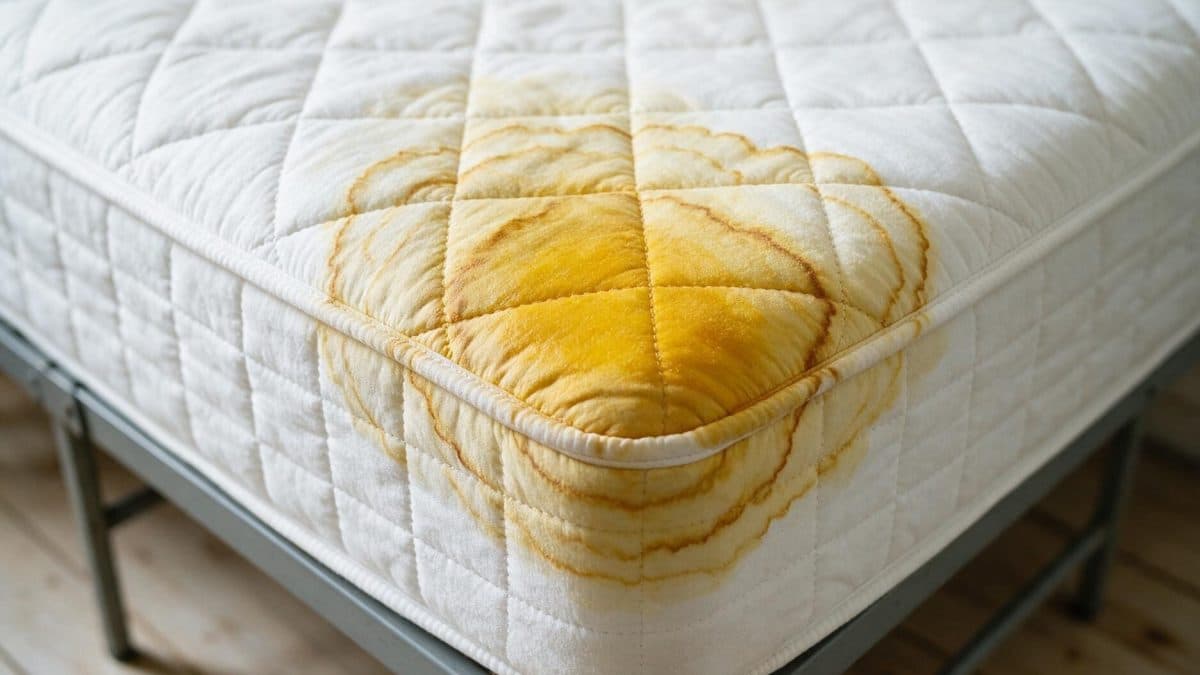
The stain looks gone after a scrub with soap and water, but a week later, on a humid afternoon, the smell is back like nothing happened. This is the most common complaint about mattress urine stains, and it isn’t because the first cleaning failed. It’s because urine isn’t one substance. It’s mostly water and urea at first, both of which soap and water handle fine. But as it dries, the urea breaks down and the uric acid left behind crystallizes, binding tightly to fabric fibers and foam. Uric acid crystals are essentially insoluble in water. Wiping the surface removes the smell you can detect right then, but the crystals stay put underneath, and every time humidity rises, they reabsorb a little moisture and start releasing odor again.
This is also why the fix depends on catching the stain early. Fresh urine responds to blotting and a mild cleaner because the uric acid hasn’t crystallized yet. A stain that’s already dried, especially one that’s been through a few days of guesswork with vinegar or carpet shampoo, needs a different approach: rehydrating the crystals so an enzyme cleaner can actually reach and break them down, not just mask the smell on top.
Urine contains ammonia compounds, and mixing bleach with an ammonia source produces toxic chloramine gas. Skip bleach entirely on a urine stain: it doesn’t break down uric acid anyway, so there’s no cleaning benefit to offset the risk.
What you’ll need
| Item | Why | Substitute |
|---|---|---|
| Enzymatic pet/urine stain remover | Enzymes break the chemical bonds holding uric acid crystals together, which is what actually removes the odor source rather than covering it | None that works quite the same way. Vinegar and baking soda deodorize but don’t break down the crystals |
| Cool water, in a spray bottle | Rehydrates dried crystals so the enzyme solution can reach them; hot water sets protein stains and speeds crystallization instead | A spray bottle set to mist, not stream |
| White towels or rags | Blotting instead of rubbing keeps the stain from spreading further into the foam or batting below the cover | Paper towels, changed often |
| Baking soda | A final overnight step that draws out residual moisture and adsorbs odor after the enzyme has done the actual breakdown | Skip if the mattress is fully dry and odor-free after the enzyme step |
| UV blacklight (optional) | Dried urine fluoresces under UV in a dark room, which is often the only way to find old stains that are invisible under normal light | Skip if the stain’s location is already known |
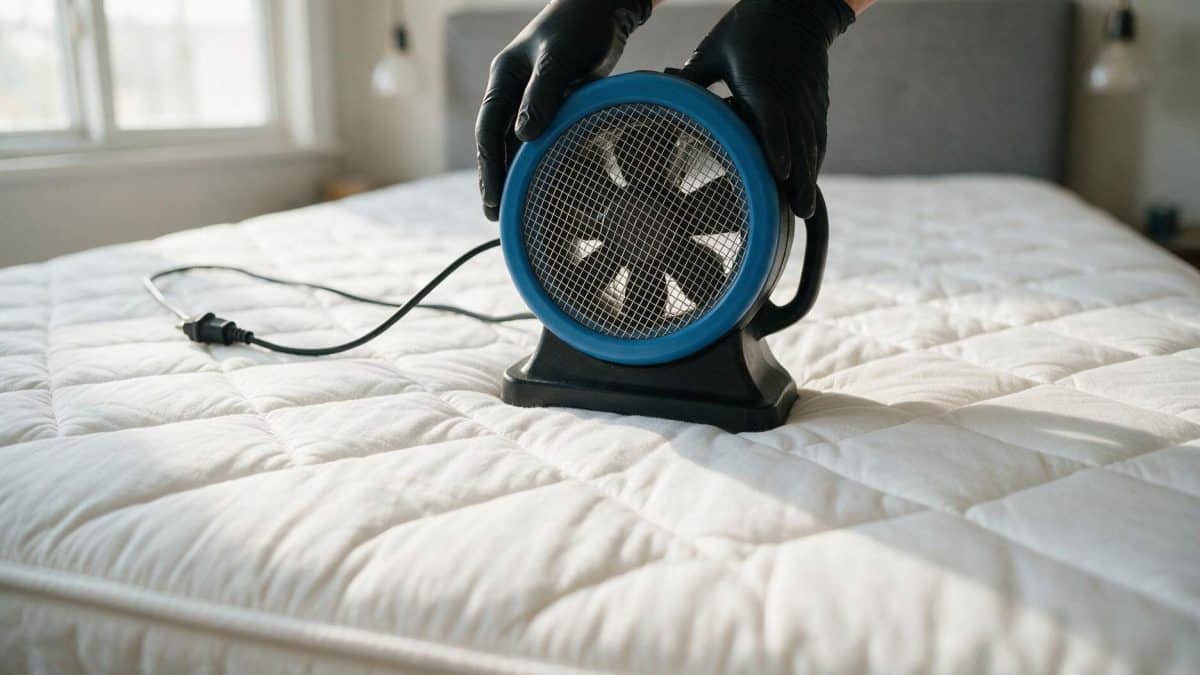
| Fan or dehumidifier | Moves air across the treated area so it dries within a day instead of staying damp for several, which is what invites mold inside the mattress | An open window with cross-breeze |
Fresh urine, still damp
Blot, don’t rub
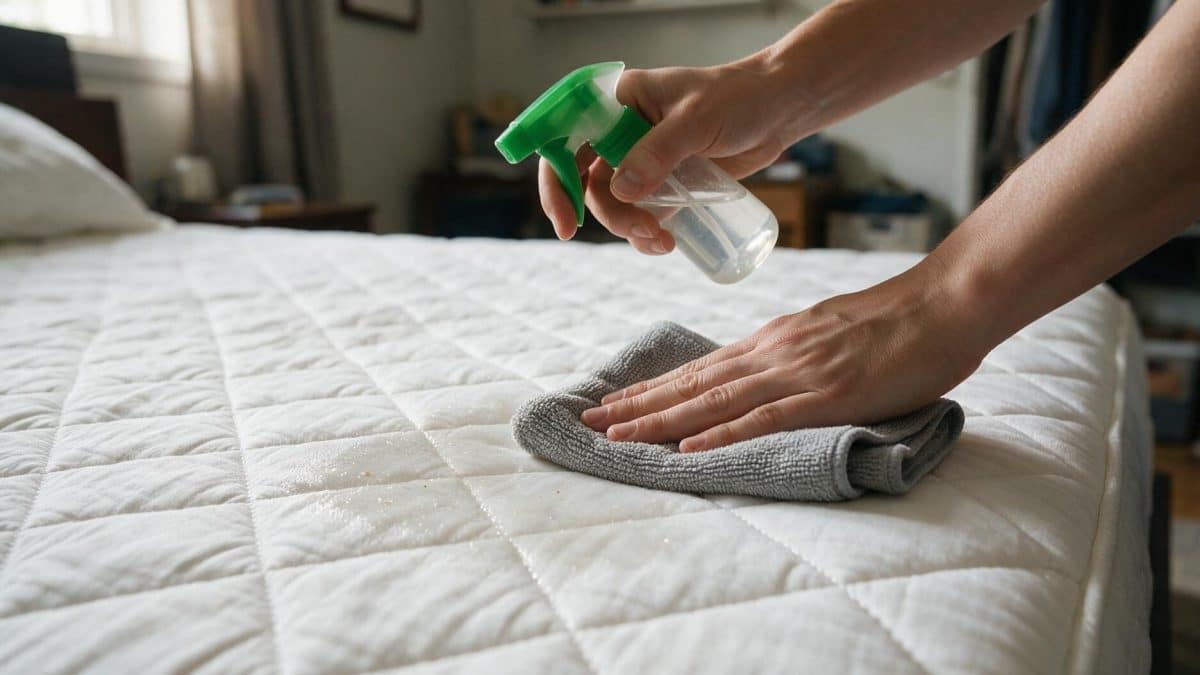
Press clean towels straight down onto the stain and let them absorb, working from the outside edge in. Rubbing pushes urine sideways and deeper into the mattress rather than lifting it out, spreading the area that will need treatment.
Apply the enzymatic cleaner and let it dwell
Spray enough to cover the stain without soaking through to the core, and leave it for the dwell time printed on the bottle, usually 10-15 minutes. This is the window the enzymes need to actually break the uric acid bonds rather than just sitting on the surface.
Blot the area dry
Press with fresh dry towels until no more moisture transfers. Don’t rinse the enzyme solution away immediately. A light residue left to finish working outperforms a rinse that removes it too early.
Dust with baking soda, vacuum after a few hours
A light, even layer left for at least 3-4 hours, or overnight, pulls out the last bit of surface moisture and any remaining odor. Vacuum it up with the upholstery attachment.
Dried or old stains, including ones you can only see under UV
Find the full extent of the stain first
In a dark room, a UV blacklight makes old urine glow with a yellowish tint that’s invisible under normal light. Treating only the visible ring and missing the fainter edges is the most common reason an old stain seems to “come back”: it was never fully treated in the first place.
Rehydrate the stain with cool water before anything else
Mist the area lightly and let it sit for a couple of minutes. Dried uric acid crystals need moisture to redissolve enough for the enzymes to reach them; applying cleaner straight onto a bone-dry stain leaves most of the crystal structure untouched.
Saturate with enzymatic cleaner, generously but not soaked through
Old, set-in stains need more product and more time than fresh ones. Cover the full area found under UV, not just the visible center, and let it dwell for at least an hour. Some products recommend covering the spot loosely with plastic wrap during this stage to slow evaporation, which keeps the enzymes working longer instead of drying out too fast.
Blot thoroughly, then repeat if odor remains
Press dry with towels until the area feels only slightly damp. Old stains sometimes need a second full treatment cycle. That’s normal, and better than reaching for a stronger product, which usually means bleach or ammonia-based cleaners that don’t actually target uric acid.
A mattress that stays damp below the surface for more than a day or two grows mold inside the foam or spring cassette, where a fan can’t reach it. That’s a worse problem than the original stain, and it’s often not fixable. Keep every application light enough to dry within 24 hours with a fan running, and skip fully soaking any single spot. This is the same failure mode that turns a damp rug backing or a comforter’s baffle box that never fully dries into a mold problem: a mattress core traps moisture the same way.
Interactive
Label decoder
Tap a symbol from your care label. No guessing, no scrolling.
19 symbols. Pick one.
Why vinegar and baking soda alone don’t fully work
Vinegar and baking soda are the default advice almost everywhere online, and they aren’t useless. Vinegar’s mild acidity can help neutralize some odor compounds, and baking soda adsorbs moisture and smell on the surface. What neither one does is break the chemical bond holding a dried uric acid crystal together. That takes an enzyme reaction, the same kind used in biological laundry detergents, which digests the crystal structure rather than covering or diluting it. A vinegar-and-baking-soda treatment can leave a mattress smelling clean the day you do it and smelling of urine again a week later in humid weather, because the crystals that cause the smell were never actually removed, just masked. If a mattress has already been through that cycle once, it almost certainly needs an enzymatic treatment now, not a repeat of the same method.
What ruins a mattress during cleanup
| Mistake | What happens | Fix |
|---|---|---|
| Hot water or a hair dryer on the stain | Heat sets protein-based stains and speeds up crystallization, making the uric acid harder to break down afterward | Cool water only, air-dry with a fan instead of heat |
| Soaking the mattress to “flush out” the smell | Moisture pushes past the surface into the foam or spring core, where it can take days to dry and often grows mold before it does | Light, even application; blot and extract rather than pour |
| Scrubbing hard with a brush | Pushes the stain deeper into the batting and can damage the cover fabric’s surface | Blot, always working inward from the edges |
| Sealing a still-damp mattress under a plastic protector | Traps residual moisture against the surface instead of letting it finish evaporating, which invites mold and mildew | Wait until the treated area is fully dry to the touch before covering it again |
| Hydrogen peroxide straight from the bottle, undiluted | Can bleach or discolor mattress fabric, especially darker covers, without fully dissolving the uric acid crystals | Spot test in a hidden corner first, or use an enzymatic cleaner instead |
Related guides
The same trapped-moisture failure that ruins a mattress core shows up on other absorbent home textiles: see how to clean a rug for a backing that stays wet after the pile looks dry, and how to clean a down comforter for a fill that felts into lumps if it isn’t dried through. If mold has already set in from a stain left too damp, how to clean mold off clothes covers the kill-first method a living colony actually needs. For blood, vomit, or sweat on the same mattress, how to clean a stained mattress covers the cold-water rule those stains need instead. If the same stains land on sheets or a pillowcase rather than the mattress itself, how to clean bed stains covers the full wash-cycle method that washable fabric allows and a mattress core never can. For the general framework that sorts any stain into the right category before treatment, see how to clean stains from clothes. For the routine that keeps a mattress from reaching a crystallized stain like this as often, see how to clean a mattress. The same uric acid problem on a rug behaves differently, because the liquid passes through to the pad and the floor underneath: see how to clean dog urine from a rug.
Questions
Does hydrogen peroxide work on urine stains?
It can lighten a stain as an oxidizer, but it doesn’t fully break down uric acid crystals the way an enzymatic cleaner does, and it can bleach darker mattress fabric. Spot test in a hidden area first, and treat it as a lightening step rather than a full replacement for enzymatic cleaning.
Why does the smell only come back when it’s humid?
Dried uric acid crystals are hygroscopic, meaning they absorb ambient moisture. On humid days they reabsorb enough water to start releasing odor again, even though the mattress looks and feels dry. It’s a sign the crystals were masked, not removed.
How long does a mattress need to dry after treatment?
With a fan running and light, even application, the treated area should be dry to the touch within 24 hours. If it’s still damp after two days, increase airflow or use a dehumidifier in the room, and don’t cover the mattress again until it’s fully dry.
Is memory foam different from an innerspring mattress?
Yes. Memory foam absorbs moisture more deeply and dries more slowly than the batting over an innerspring core, so it needs even lighter applications and longer airflow time. Oversaturating memory foam is the fastest way to trap moisture where a fan can’t reach it.