How to Clean a Clothes Iron
A scorched soleplate and clogged steam vents are two different problems with two different fixes. Treating them as one job is why baking soda never clears the flecks and vinegar never touches the scorch mark.
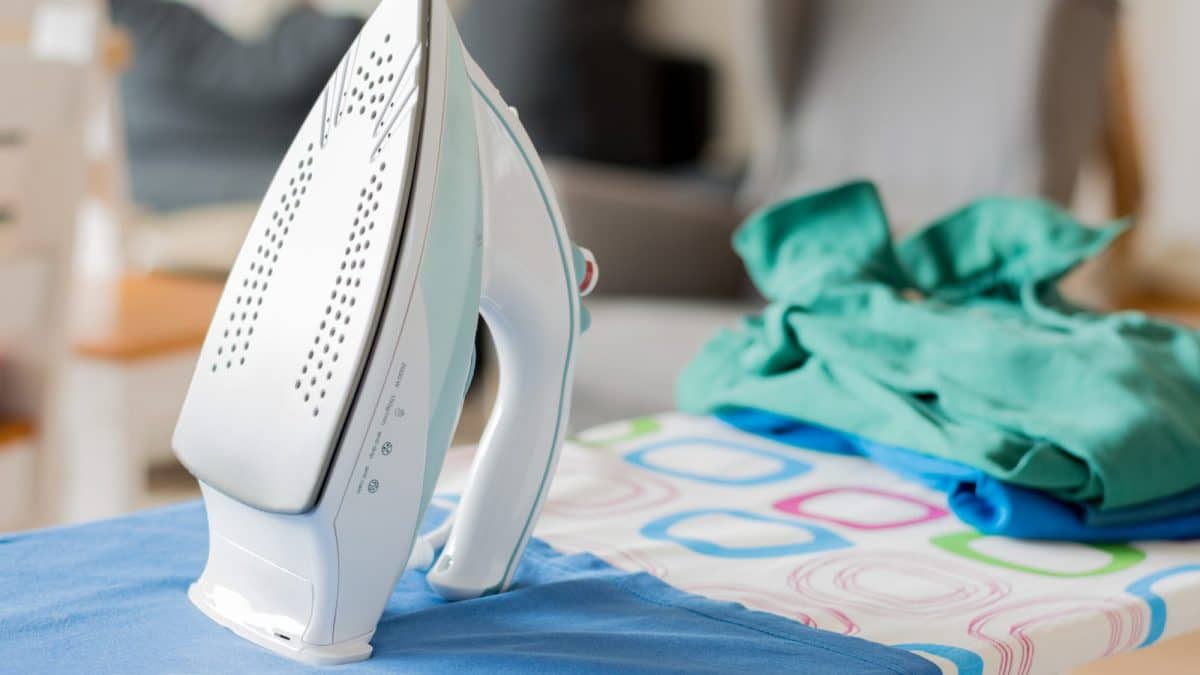
Two different problems, and only one of them is on the soleplate
An iron gets dirty in two places that have nothing to do with each other, and most guides treat them as one job. The soleplate collects surface residue: starch scorch, a smear of melted polyester or nylon that touched too hot a plate, or a rust-brown stain from an old scratch. That residue sits on top of the metal, and a paste or a scraper can reach it. The steam vents are a separate problem entirely: hard-water minerals build up inside the water reservoir and the tiny holes the steam escapes through, and no amount of wiping the outside of the plate touches it. Confusing the two is why people scrub a soleplate raw trying to fix a steam vent that’s spitting brown flecks, or run a vinegar cycle hoping it’ll lift a scorch mark it was never going to reach.
If the residue is a flat, shiny patch stuck to the surface of the plate, that’s surface buildup: treat the soleplate. If the iron sputters, spits brown or white flecks onto fabric, or the steam holes look crusted when you look straight down into them, that’s mineral scale inside the reservoir: treat the water system instead. Most older irons in hard-water areas eventually need both.
What you’ll need
| Item | For | Substitute |
|---|---|---|
| Baking soda + a few drops of water | Soleplate scorch and starch buildup | A dedicated iron-plate cleaning stick, sold for this exact job |
| An old cotton towel + used dryer sheet | Melted synthetic residue, while the plate is still warm | A dry microfiber cloth, weaker on melted plastic specifically |
| White vinegar, undiluted | Descaling the internal steam vents and reservoir | A commercial iron descaling solution, follow its own ratio |
| A soft-bristle toothbrush | Working residue out of the steam holes themselves | A cotton swab, slower but works on a single stubborn hole |
Method 1: clearing scorch and starch off the soleplate
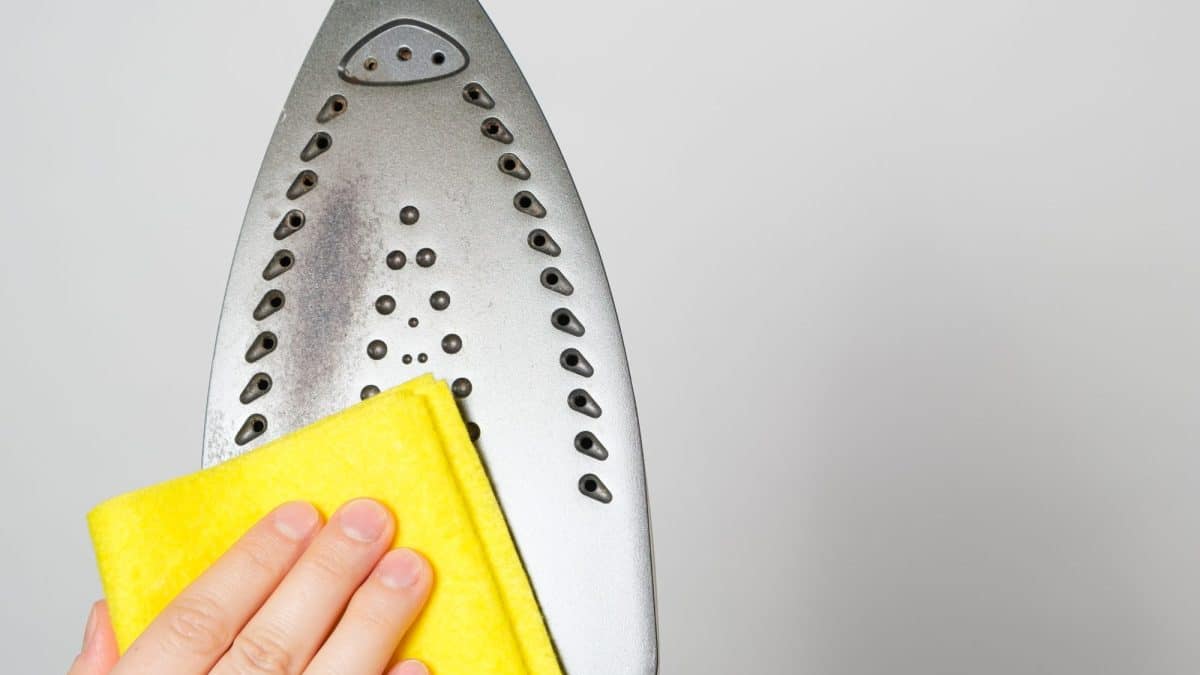
Unplug the iron and let it cool completely
Never work on a hot or even warm plate with baking soda paste. Water on hot metal flashes to steam, and the abrasive paste can scratch a nonstick or ceramic coating that’s more vulnerable while heat-softened.
Mix a thick paste, not a runny one
Two parts baking soda to one part water, stirred until it holds its shape on a spoon. A runny paste slides off the plate before the mild abrasive has time to work on the residue.
Rub gently along the plate’s grain, never in circles on a nonstick coating
Work a soft cloth or an old, clean toothbrush over the residue in straight lines. Circular scrubbing is what puts fine scratch swirls into a nonstick or ceramic-coated plate; a plain stainless soleplate tolerates it better, but straight lines are still the safer default.
Wipe the paste off completely with a damp cloth
Any baking soda left in the steam holes turns into its own residue the next time the iron heats up, so go over the holes specifically with a damp cotton swab.
For melted synthetic residue specifically, use the dryer sheet trick instead
Heat the iron on low, unplug it, and immediately wipe the warm plate with a used dryer sheet. The residual fabric softener on the sheet reacts with the gentle heat and lifts melted polyester or nylon that baking soda alone won’t budge, because that residue is plastic, not mineral.
Method 2: descaling the steam vents and reservoir
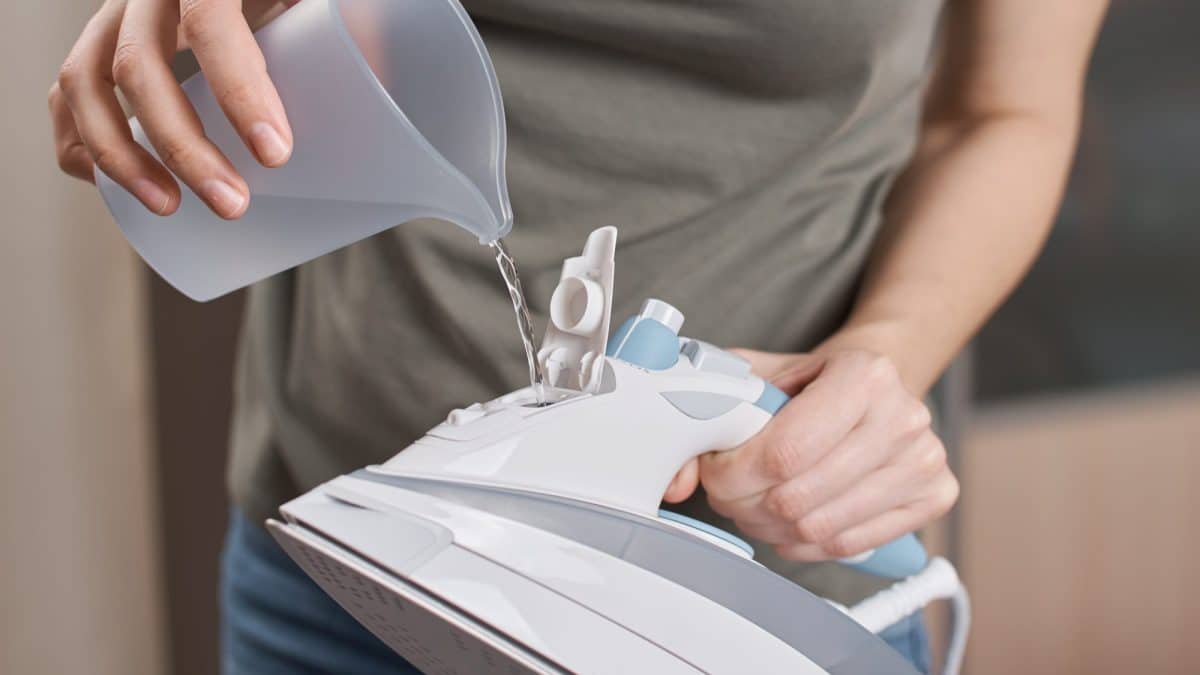
Fill the reservoir with undiluted white vinegar
Skip the water for this cycle. A 50/50 mix works for light buildup, but hard-water areas with visible flecking need the full-strength pass to dissolve calcium deposits, not just loosen them.
Stand the iron upright and steam it over an old towel for 5 minutes
Set it to the highest steam setting and let it run continuously rather than in short bursts. That’s what pushes the vinegar through the internal channels and out the vents, carrying dissolved mineral scale with it.
Empty the reservoir, refill with plain water, and repeat once
A second steam pass with plain water flushes out any vinegar residue and loosened mineral flecks still sitting in the channels, so they don’t end up on your next garment.
Test-steam onto a spare white towel before ironing anything else
If brown or white flecks still show up on the towel, repeat the vinegar pass. This step confirms the descale actually worked, instead of just assuming it did.
Interactive
Label decoder
Tap a symbol from your care label. No guessing, no scrolling.
19 symbols. Pick one.
Not sure how much heat a specific fabric can safely take from an iron? The dot symbols on a garment’s care label spell it out, and the decoder above covers what each one means.
What causes each kind of buildup, and how to avoid it next time
| Mistake | What happens | Fix |
|---|---|---|
| Ironing over spray starch at full heat | Starch scorches onto the plate at high temperatures and bonds to the metal surface | Iron starched fabric at a moderate setting, or spray it and let it dry slightly before ironing |
| Using tap water in a hard-water area | Minerals concentrate inside the reservoir every time water boils off as steam, and eventually clog the vents | Use distilled or demineralized water, or descale on a fixed monthly schedule if you can’t switch water sources |
| Scrubbing a nonstick plate in circles | Puts fine scratch swirls into the coating, which grip residue even more than a smooth plate would | Straight lines only, and skip abrasive pastes on nonstick, use the dryer sheet method instead |
| Ironing directly over a plastic zipper pull or button | Melts a thin layer of plastic onto the plate, which then transfers a shiny smear to the next garment | Iron around hardware, or use a pressing cloth over it |
| Ironing over a dried water-based paint mark | The same failure as a zipper pull, except the plastic is spread flat across the fabric and easy to miss. Latex and acrylic paint stay thermoplastic once dry, so a soleplate softens the film, picks up part of it and drives the rest further into the weave | Clear the paint before the garment goes near an iron, and treat any deposit it leaves as melted plastic rather than scorch: warm plate and a dryer sheet, not baking soda. See how to get dry paint out of clothes |
What not to do
- Don’t use steel wool or a metal scouring pad on any soleplate finish. It scratches stainless steel and destroys a nonstick or ceramic coating outright, and a scratched plate snags fabric on every future pass.
- Don’t run vinegar through the reservoir to fix a soleplate scorch mark. The two systems don’t connect: vinegar cycled through the steam vents never touches the outer surface of the plate.
- Don’t use bleach or ammonia-based cleaners on the plate. Both can pit or discolor the metal, and residue left in the steam holes ends up as fumes on your next ironing session.
- Don’t descale with vinegar on an iron that warns against it in its manual. Some ceramic-tank models specify distilled water flushes only, so check before assuming the vinegar method applies universally.
Related guides
The same heat-threshold logic shows up with a home dry-cleaning kit’s dryer cycle: exceed the safe temperature for the fabric or finish and you damage it rather than clean it. See how to dry clean at home for how that plays out with suede trim and glued construction specifically. The same threshold problem shows up on microfiber cloths too, where too much dryer heat fuses the split fibers instead of scorching a soleplate.
Questions
Can I use tap water in my iron if I don’t have a hard-water problem?
Yes. If your water is genuinely soft, the mineral buildup that causes scale is minimal. Not sure? Check whether your kettle or dishwasher develops white crust; if it does, your iron’s reservoir is building up scale too, just less visibly.
My iron has a nonstick coating. Is baking soda paste still safe?
Use it sparingly and always in straight lines, never circles, and stop scrubbing the moment the residue lifts. On a heavily nonstick or ceramic-coated plate, try the dryer sheet method on melted synthetic residue first; it’s gentler.
How often should I descale the steam vents?
Roughly every 4-6 weeks with regular use in a hard-water area, or immediately if brown or white flecks land on fabric during steaming. Soft-water areas can often stretch that to a few months.
The scorch mark won’t come off with baking soda. What’s next?
A dedicated hot-iron cleaning stick, sold specifically for this, works at a warm (not hot) plate temperature and handles set-in scorch that a room-temperature baking soda paste can’t fully lift. Follow its package instructions rather than combining it with the vinegar descale method.