How to Clean Hats in the Dishwasher
A washing machine's spin cycle crushes a structured brim, but a dishwasher's top rack never touches it. Here's which caps survive the trick, and the one setting that ruins it if you forget to turn it off.
Quick answer · care label Cotton twill & buckram
-
1 · Wash
Wash 30° gentle -
2 · Bleach
No bleach -
3 · Dry
No tumble dry -
4 · Iron
Do not iron -
5 · Pro care
No dry clean
In one line Pretreat the sweatband by hand, secure the cap brim-down on the top rack, run a normal cold or warm cycle alone, skip the heated dry, then reshape over a bowl to air-dry. Total hands-on time: 5 minutes.
Which hats can actually go in the dishwasher?
This trick works on one specific construction: a structured baseball cap with a stiff buckram lining inside the brim and crown panels. Buckram is a resin-stiffened fabric, not cardboard, and it holds its shape when wet the same way it holds its shape dry. That’s the entire reason the dishwasher method exists at all. A washing machine’s tumbling and spin cycle will bend and crease a buckram brim in ways it never fully recovers from, while a dishwasher’s gentle water jets on the top rack apply almost no mechanical force to it.
The material that rules a cap out isn’t dirt level or age, it’s what’s inside the brim. A cardboard-brim cap, common on some fitted styles and cheaper promotional hats, delaminates in water regardless of which appliance you use, because cardboard has no water resistance at all. Wool and wool-blend crowns are a separate problem: wool felts and shrinks in hot water no matter how gently it’s agitated, and a dishwasher’s water runs hotter than most people expect.
Press gently on the underside of the brim, about an inch from the edge. If it flexes slightly and springs back flat, that’s buckram or a plastic insert, safe for this method. If it creases and stays creased, or you can feel a soft, slightly fibrous give, that’s cardboard. Skip the dishwasher and spot-clean by hand instead.
What you’ll need
| Item | Why | Substitute |
|---|---|---|
| Top rack space | Water pressure is gentler up top and it’s furthest from the heating element at the base of the machine | None. The bottom rack is not an option for this method |
| Cap cage or hat frame | Holds the crown’s shape and keeps the brim from flipping against the tines during the cycle | Wedge the cap securely between two upright tines, brim facing down and away from the sprayer arm |
| A capful of mild dish soap in the dispenser | A dishwasher cycle alone often won’t fully lift an oily sweat ring; a small amount of grease-cutting soap does that work | Skip the dispenser entirely and hand-pretreat the sweatband instead (next section) |
| A bowl or coffee can | Holds the crown’s curve while it air-dries, so the cap doesn’t dry flat or lopsided | A clean, empty jar of a similar diameter to your head size |
The method, step by step
Pretreat the sweatband by hand first
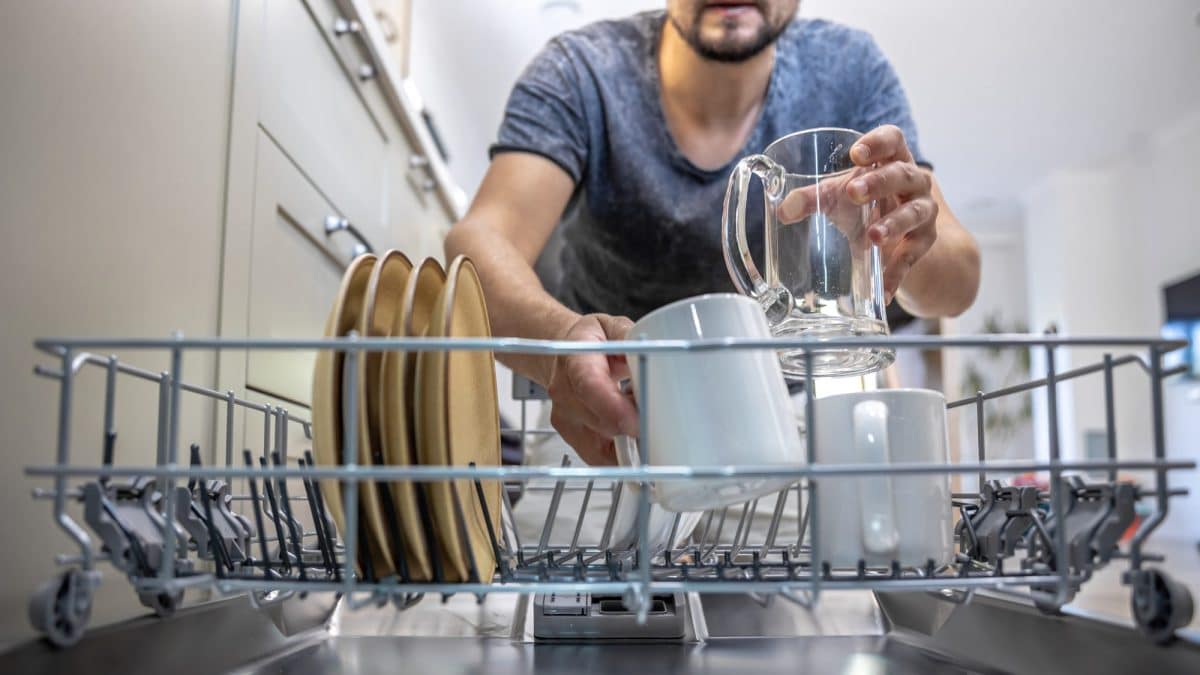
Dab a little dish soap directly onto the inside sweatband with an old toothbrush and work it in for about a minute. This is where body oil actually concentrates, and a dishwasher cycle’s water flow doesn’t scrub, it rinses. Without this step, the ring around the inside band is usually still visible afterward.
Secure the cap on the top rack, brim down
Use a cap cage if you have one, or wedge it firmly between two tines so it can’t flip or slide toward the heating element at the bottom of the machine during the cycle.
Run it alone, on a normal or eco cycle, cold or warm, never hot
Run the cap by itself, not mixed in with a food-soiled load of dishes; grease from actual dishes will transfer onto the fabric. An eco or energy-saver setting also tends to run cooler, which matters more for a wool-blend crown than for a fully synthetic one.
Cancel or skip the heated dry cycle
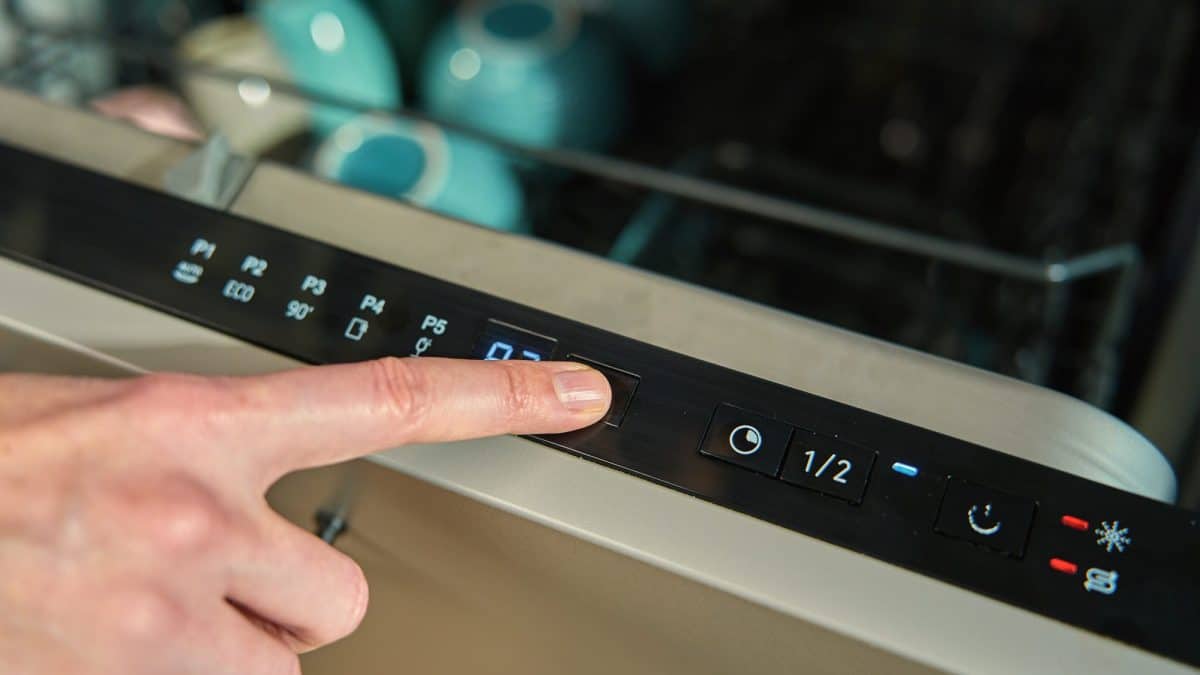
This is the step that decides whether the trick works. Most dishwashers’ heated dry element runs well above 140°F to flash-dry dishes, which is hot enough to soften the resin in a buckram brim and warp it permanently, and hot enough to shrink a wool-blend crown. Select “air dry” or “no heat dry” before starting, or open the door and remove the cap as soon as the wash cycle itself ends.
Reshape over a bowl and air-dry
Set the damp cap crown-down over a bowl or coffee can sized close to your head, which holds the curve while it dries instead of letting it dry flat. Keep it out of direct sun and away from a heater vent, both of which can dry the brim unevenly and warp it on one side.
Interactive
Label decoder
Tap a symbol from your care label. No guessing, no scrolling.
19 symbols. Pick one.
What ruins hats in the dishwasher, and how to avoid it
| Mistake | What happens | Fix |
|---|---|---|
| Leaving the heated dry cycle on | The heating element’s flash-dry heat softens buckram resin and can shrink a wool-blend crown by a visible amount | Always select air dry, or pull the cap the moment the wash finishes |
| Washing it with an actual load of dishes | Grease and food residue from plates and cutlery transfers onto the fabric, sometimes leaving a stain worse than what you started with | Run the cap alone, or with other laundry-safe items only, never with a food-soiled load |
| Skipping the sweatband pretreat | The inside band ring, mostly oxidized body oil, survives the rinse-only water flow of a normal cycle largely intact | Work a little dish soap into the band by hand before the cap goes in |
| Bottom rack placement | Sits closest to the heating element and takes the most direct, forceful spray, both of which stress the brim structure | Top rack only, every time, cap cage or wedged securely between the tines |
What not to put in the dishwasher
These hat types don’t belong in this method regardless of how dirty they are:
- Cardboard-brim caps. Cardboard has no water resistance and delaminates on contact, unlike water-resistant buckram. Use the brim-flex test above before assuming a structured cap is safe.
- Fully wool or wool-blend hats without a rigid brim: berets, wool flat caps, knit beanies. Wool felts and shrinks in the dishwasher’s water temperature no matter how it’s positioned.
- Leather-brim or leather-strap hats. Leather cracks when it air-dries fast, the same failure mode covered for jackets in how to clean a leather jacket.
- Caps with foam-backed logos, iron-on patches, or glued appliqué. Water plus any residual dishwasher heat is exactly the combination that loosens this kind of adhesive.
Related guides
This is the same principle as running canvas sneakers through a washing machine cycle, applied to a different appliance because a cap’s brim can’t survive a washer’s spin: see how to clean shoes in the washing machine for the parallel method and why the two appliances aren’t interchangeable between hats and shoes. And if you’ve ever wondered why a home dry-cleaning kit warns so heavily about its own heat setting, it’s the same failure mode as a dishwasher’s heated dry cycle: see how to dry clean at home.
Questions
Can I put any baseball cap in the dishwasher?
Only structured caps with a stiff buckram brim, not cardboard-brim caps or soft, unstructured ones. Use the brim-flex test: press the underside of the brim near the edge, and if it springs back flat rather than staying creased, it’s a safe candidate.
What temperature does a dishwasher actually reach, and does that hurt the hat?
The wash cycle itself typically runs 120–140°F, which most structured caps tolerate fine. The heated dry cycle is the real risk: it runs hotter still to flash-dry dishes, and that’s specifically what softens buckram resin and shrinks wool blends. Skip it every time.
Do I need a hat cage, or can I just put it on the rack loose?
A cap cage helps hold the crown’s shape and stops the brim flipping against the spray arm, but it isn’t strictly required. Wedging the cap securely between two upright tines, brim down and away from the sprayer, works almost as well if you don’t own one.
Why not just use the washing machine instead?
A washing machine’s tumbling and spin cycle bend a structured brim the way a dishwasher’s still, gentle top rack never does. Canvas shoes handle that tumbling fine because they have no rigid structure to lose; a cap’s brim does, which is why the two appliances aren’t interchangeable for this job. That answer covers the structured buckram cap this method is written for, and it does not carry over to the hats excluded above. A soft unstructured cap, a cotton dad hat, or an acrylic beanie has no rigid brim to bend, and those wash better in a machine than in a dishwasher: see can you machine wash hats, which also explains why running one alone on a gentle cycle is the version that does the damage.