How to Clean Shoes in the Washing Machine
Not every sneaker survives a machine cycle, but canvas and mesh ones usually do. Here's how to protect the eyelets, soles, and midsoles that actually fail first.
Quick answer · care label Canvas & mesh
-
1 · Wash
Wash 30° gentle -
2 · Bleach
No bleach -
3 · Dry
No tumble dry -
4 · Iron
Do not iron -
5 · Pro care
No dry clean
In one line Strip laces and insoles, brush off dry dirt, wash in a mesh bag with towels on a cold gentle cycle, then stuff with paper and air-dry for 24 to 48 hours. Total hands-on time: 10 minutes.
Which shoes can actually go in the washing machine?
Canvas sneakers, cotton lace-ups, and most synthetic mesh trainers handle a machine cycle well. The material that decides this is the upper, not the brand: if it’s woven fabric, canvas, or mesh, water and a spin cycle won’t hurt it. Leather, suede, and anything with glued-on decoration are a different story, and they’re the reason “can I machine wash shoes” doesn’t have one universal answer.
The part people miss is the sole and midsole, not the upper. A foam midsole (the white cushioned layer on most running shoes) can absorb water, lose its bounce, and take days to dry from the inside out even after the outside looks fine. Glued soles can separate under the heat and tumbling of a full cycle. That’s the actual risk, more than the fabric getting wet.
Press a fingernail into the upper. If it’s woven fabric or mesh, it’s a good candidate. If it’s smooth, suede, or has a leather logo patch, skip the machine and clean it by hand instead.
What you’ll need
| Item | Why | Substitute |
|---|---|---|
| Mesh laundry bag | Stops the shoes hitting the drum directly, which is what usually causes noise and scuffing | An old pillowcase, tied shut |
| A few old towels | Balances the load so the drum doesn’t bang on one side | Two or three bath towels you don’t mind getting dirty |
| Mild liquid detergent | Powder detergent can leave gritty residue in the mesh | Half the usual dose of your regular liquid detergent |
| Soft-bristled brush | Loosens dried mud and grit before the wash, so it doesn’t just relocate during the cycle | An old toothbrush |
The method, step by step
Remove laces and insoles
Wash these separately, by hand or in the bag alongside the shoes. Left in place, laces tangle around the drum’s paddles and insoles trap water against the foam long after the shoe itself is dry.
Brush off loose dirt and mud
Do this dry, over a bin. Wet mud smears into the mesh during the wash instead of rinsing out, which is why shoes that go in caked in dirt often come out with a grey haze.
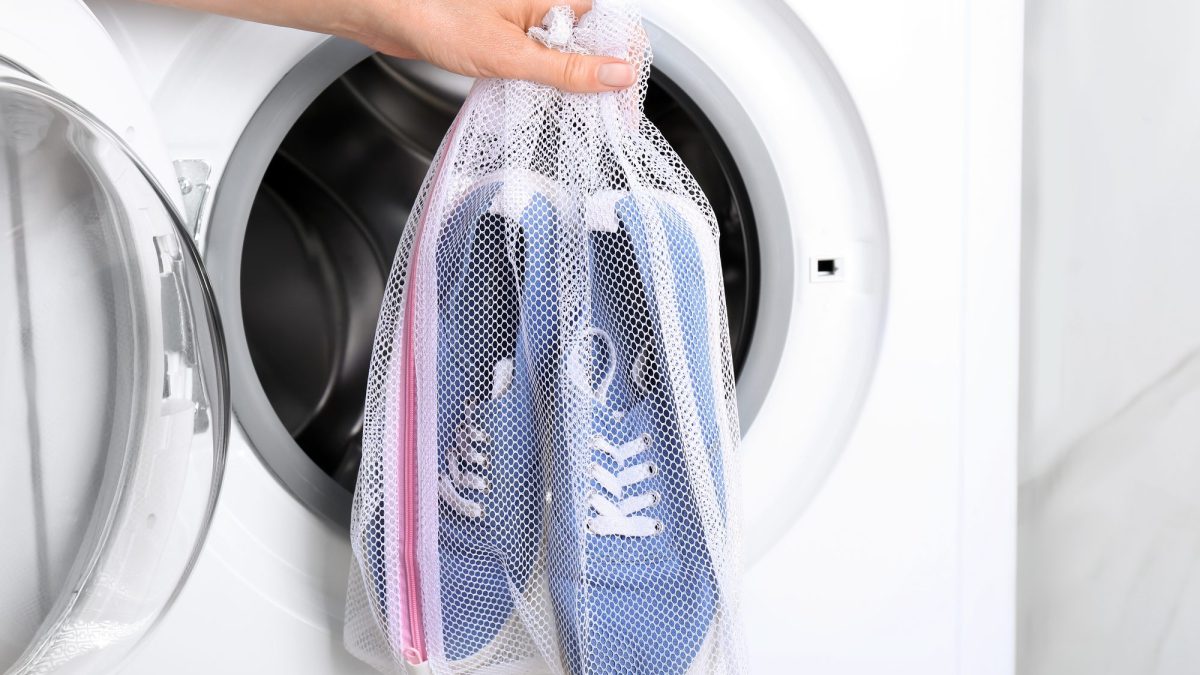
Load the shoes in a mesh bag with towels
Two to four towels alongside the shoes stop them thudding against the drum door, which is the main source of the banging noise people report and, over many cycles, the main source of cracked plastic eyelets.
Run a cold, gentle cycle
Delicates or hand-wash setting, cold water, half the usual detergent dose, and skip the spin cycle if your machine lets you choose it separately. High spin speeds are what stress glued seams the most.
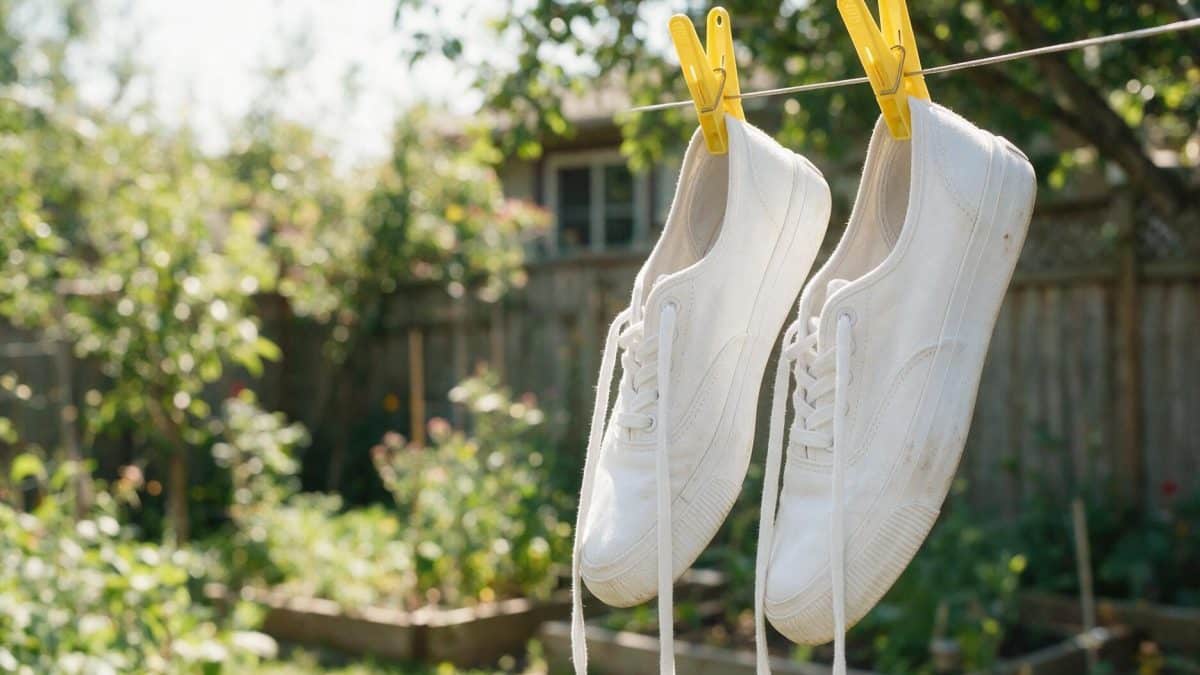
Stuff with paper and air-dry
Plain paper (no color print) holds the shape while the shoe dries and pulls moisture out of the foam faster than air alone. Keep it in for the first hour, while there is still bulk water to soak up, then take it out so air can reach the inside of the shoe. Paper left in for two days blocks the airflow that dries the foam core, and a core that is still damp is exactly why a freshly washed pair can come back smelling worse than it did before.
Interactive
Label decoder
Tap a symbol from your care label. No guessing, no scrolling.
19 symbols. Pick one.
What ruins shoes in the wash, and how to avoid it
| Mistake | What happens | Fix |
|---|---|---|
| Tumble drying | Heat softens glue in the sole, and the tumbling that follows can peel it loose within a few cycles | Air-dry only, stuffed with paper, away from a radiator or heater vent. This row treats heat and tumbling as one thing, and on every dryer they are separate controls: a short low-heat run on shoes that are still soaking is a different operation from a full hot cycle, because water leaving the foam holds it cool. See how to dry shoes in the dryer for where that boundary sits |
| Full detergent dose | Excess suds trapped in mesh take extra rinse cycles to clear and can leave a stiff residue | Half the usual liquid detergent dose is enough for the smaller fabric surface area |
| Washing with a full load | Zippers and buttons on other clothes can scuff or snag the mesh | Shoes alone, in their bag, with towels for balance, not mixed into a regular laundry load. This rule protects the laundry from the shoes, not the shoes from the drum, so it inverts for anything soft: see can you machine wash hats |
| Skipping the laundry bag | Shoes striking the drum directly is the leading cause of loosened eyelets and frayed stitching | Mesh bag or tied pillowcase, every time |
What not to machine wash
These material types don’t belong in a washing machine cycle regardless of how dirty they are:
- Suede and leather uppers. Water swells and stiffens the material, and machine agitation on top of that finishes the damage. See how to clean suede shoes for the hand method instead.
- Anything with glued-on rhinestones, sequins, or foam decoration. These are attached with an adhesive that isn’t rated for water immersion and detaches within one or two cycles.
- Light-up sneakers. The small battery and wiring inside the sole aren’t sealed for submersion; a machine cycle can short the circuit permanently.
- Shoes with cardboard or non-removable insoles. These disintegrate in water and can leave paper pulp stuck inside the shoe.
Related guides
This method covers canvas and mesh uppers specifically. If your shoes are a different material, the approach changes:
- Suede shoes need a dry-brush method, never a machine cycle. See how to clean suede shoes.
- For general laundry symbols and what each one actually permits, use the decoder above or see how to clean suede for how it applies to leather goods.
- Not sure whether your specific pair belongs in the machine at all? See can you machine wash shoes for the full material-by-material breakdown.
- A cap’s rigid brim can’t take a washing machine’s spin cycle the way canvas shoes can. See how to clean hats in the dishwasher for the appliance swap that works instead.
- If the reason you are washing them is smell rather than dirt, the cycle is only half the job and the drying is the other half. See how to clean smelly shoes for which part of the shoe actually holds the odor.
Questions
Will machine washing ruin white sneakers?
Not if the upper is canvas or mesh. The risk with white shoes specifically is the rubber sole yellowing from a hot wash, so stick to cold water. A cold cycle followed by air-drying in shade, not direct sun, keeps white soles from discolouring either way.
Can I put running shoes with foam midsoles in the machine?
You can, but expect a longer dry time and some risk of the foam feeling slightly less springy afterward. If the shoes are an expensive pair you rely on for training, hand-cleaning the upper with a damp cloth and leaving the midsole untouched is the safer route.
What cycle and temperature should I actually use?
Cold water, delicates or hand-wash cycle, and no spin if your machine allows setting that separately. Warm or hot water is what causes glue to soften and colours to run between fabric panels.
How do I stop the machine from banging during the cycle?
A mesh bag plus two or three towels for balance almost always solves it. Persistent banging after that usually means the load is too small for a full-size machine, in which case add another towel or two rather than running the shoes alone.