Can You Machine Wash Hats? (The Drum Decides, Not the Hat)
Nike says yes, GQ prints a quote calling it the worst thing you can do, and Whirlpool says maybe. They are describing different loads. A cap tumbled alone takes the full drop every rotation, and the same cap buried in a full wash barely moves.
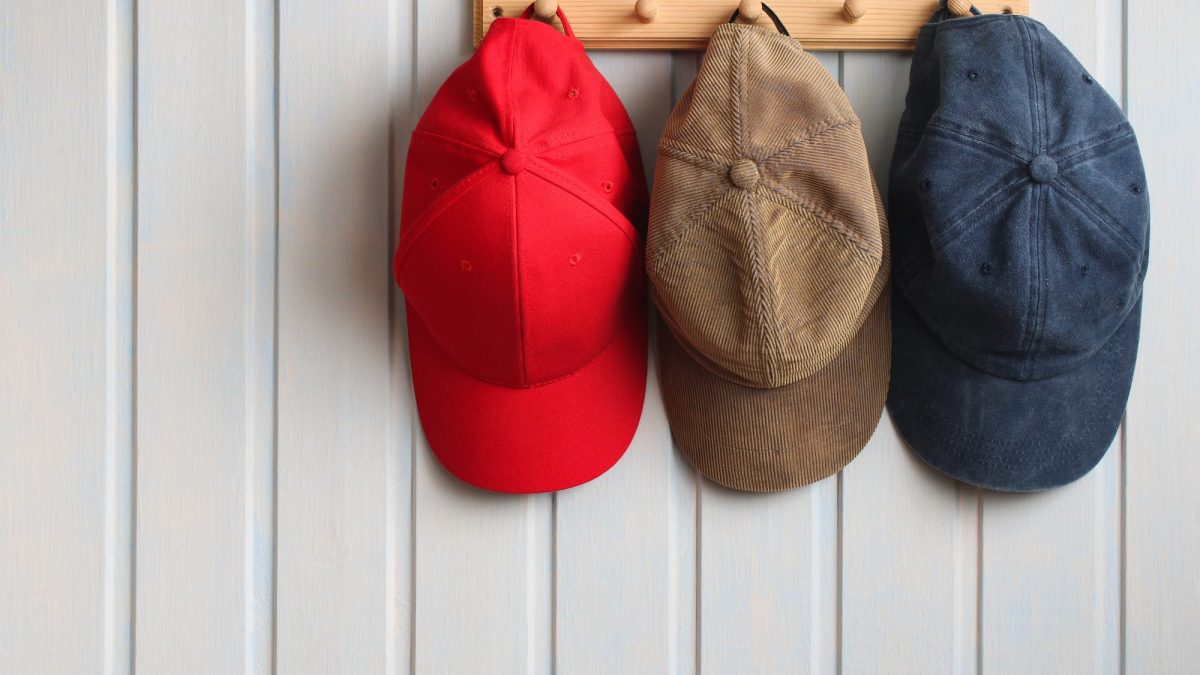
Quick answer · care label Cotton twill & polyester
-
1 · Wash
Wash 30° -
2 · Bleach
Oxygen bleach -
3 · Dry
No tumble dry -
4 · Iron
Do not iron -
5 · Pro care
No dry clean
In one line Most modern caps survive a washing machine. What ruins them is running the cap alone, where an almost empty drum gives it the full drop every rotation, and warm water, which shrinks the crown around a brim insert that keeps its length. Bury it in a full cold load, hand-treat the sweatband first, and dry it over a bowl.
The first page cannot agree with itself
Search whether you can machine wash hats and you get a yes and a no on the same screen, from sources that all have reason to know.
Nike says your baseball caps can be cleaned in the machine without getting damaged. GQ, two positions above it, publishes a quote saying that people throw hats in the washer or even the dishwasher, which is honestly the worst thing you can do. Whirlpool, which builds the machine, splits the difference and says it is possible on the delicates cycle but you still run the risk of the hat losing its structured shape. Quiksilver, cited by Google’s own summary at the top of the page, calls machine washing a last resort and the most abrasive method available.
The summary itself lands on yes, with conditions, and then closes by asking the reader to say what material or type of hat this is so it can give exact steps. That request is the whole problem, and it is the same failure a search for how to get dry paint out of clothes produces: the page sorts the answer by a fact the person searching does not have. Underneath the summary, the first organic result is a Reddit thread that opens with someone explaining they cut the tag off before reading it and it is long gone by now. Four positions further down, a Quora thread with thirty answers asks whether a wash would ruin the hat at all.
The disagreement is real, and every one of those sources is describing a different load. A cap tumbled by itself in a large drum and a cap buried in a full wash are two different mechanical events, and almost nobody on the page says which one they ran.
Most caps made in the last few decades go through a washing machine intact. The part that decides it is not the fabric on the outside, it is what is stiffening the panels and what the sweatband is made of. The setting everyone recommends, alone on a gentle cycle in a hat cage, is the one that does the most damage, because mechanical action in a drum comes from items lifting and dropping and a nearly empty drum gives a single item the full drop every rotation. Put the cap in a full load of soft laundry on a normal cold cycle, keep it out of the dryer, and dry it over something round.
Three groups, and the brim is not what sorts them
Every guide on the first page sorts hats by the brim: bend it, and if it springs back it is plastic and you are clear. That test is real and this site already uses it for the dishwasher method covered in how to clean hats in the dishwasher. It answers one question, which is whether the brim will delaminate on contact with water. It says nothing about the two things that actually decide how a cap comes out of a wash cycle.
The real sort has three groups.
| Group | What it is | Machine? | The reason |
|---|---|---|---|
| Washable | Cotton, cotton twill, or polyester caps with a flexible brim insert and a stitched cloth or synthetic sweatband. Most fitted caps, dad hats, and snapbacks fall here. Knit beanies in acrylic or cotton belong here too | Yes, in a full load | Nothing in the cap is glued, nothing in it is protein, and the brim insert bends without taking a set |
| Depends on the build | Foam front trucker caps, heavily embroidered caps, caps with iron-on or glued patches, five panels with a fused stiffener | Sometimes, and check after the first one | The failure is adhesive, not water. Tumbling flexes a bonded panel thousands of times in one cycle, and a bond that has begun to let go does not reattach |
| Never | Wool felt hats, straw, leather sweatbands or leather brim trim, vintage caps with a cardboard brim, anything you would describe as blocked rather than sewn | No, at any temperature | Wool felts, straw is a woven plant fiber held by shape alone, cardboard has no water resistance, and leather dries hard and cracks |
The first page collapses groups one and two into a single category it calls structured. That is where most of the ruined hats come from. A trucker cap and a cotton dad hat look equally sturdy on a shelf and fail in completely different ways, because one of them is held together partly by glue.
Two tests worth thirty seconds
Turn the cap inside out at the opening and pull the sweatband down and away from the crown. A stitched cloth or synthetic band folds flat, springs back, and shows stitching along both edges. That band washes. If it holds the crease you just made, or you can feel a smooth stiff strip inside it, that is leather or leather backed, and it belongs with the leather in how to clean a leather jacket. A leather sweatband takes the cap out of the machine no matter what the crown is made of, because the band is the part that sits in the water longest and dries hardest.
Pinch the front panel between thumb and forefinger, low down where the embroidery is not, and try to slide the outer fabric across whatever is behind it. If the layers move independently by even a millimeter, the stiffener is sewn or floating, and water passes through it and out again. If the panel behaves like one solid board with no slide at all, the layers are bonded to each other. A bond is what tumbling attacks, and it is the same failure this site describes for glued shoe decoration in how to clean shoes in the washing machine.
The drum decides, not the hat
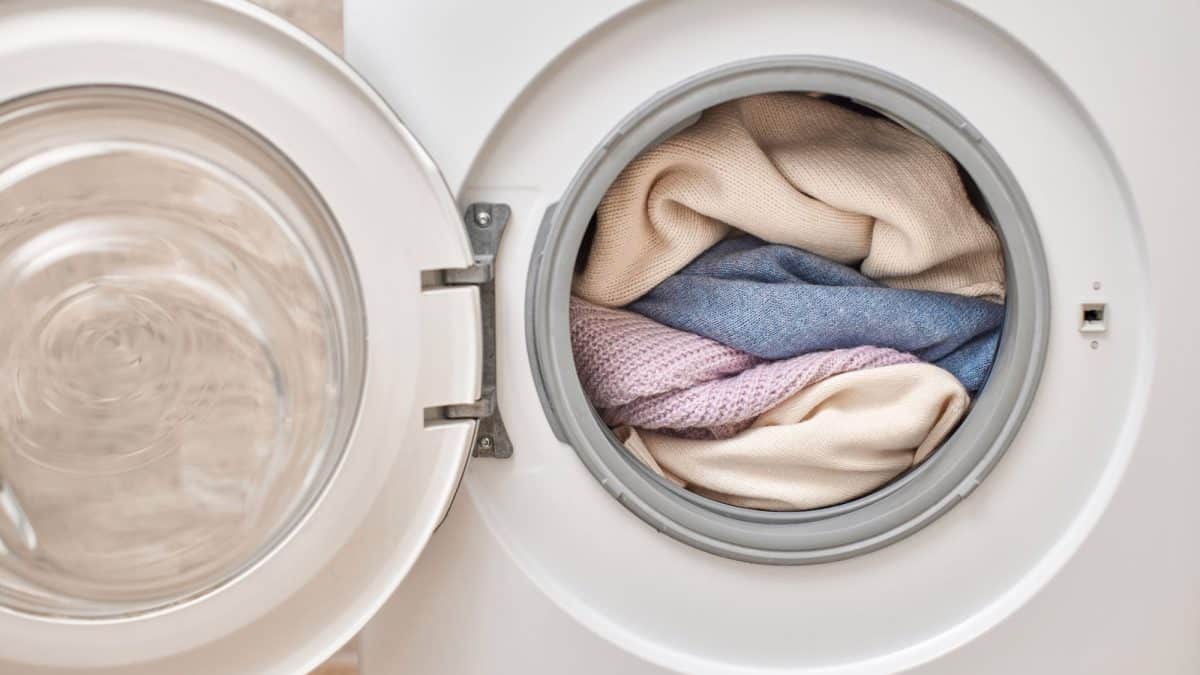
Here is the part every result on the page has backwards, including this site’s own shoe guide.
A washing machine does not clean by soaking. It cleans by moving fabric against fabric and against water, and in a drum machine that movement comes from one thing: the drum lifts an item up the wall, the item loses contact near the top, and it falls. The chemistry works on the soil, the falling works on everything else. That is the entire mechanical budget of a cycle.
Now put one cap in an empty drum. Every rotation, it rides up the wall and drops the full diameter of the machine onto bare steel. There is nothing in the way. Then the spin starts, and a single wet object on one side of a drum is the definition of an unbalanced load: the machine ramps up, senses the imbalance, stops, redistributes, and tries again, sometimes many times in one cycle. Each of those attempts is a fresh acceleration with the cap slammed against the wall.
Now put the same cap in a full load of towels, shirts, and sheets. It rides up inside a mass of wet cloth and it does not free fall, because there is no free space for it to fall through. The load turns over as a body. The cap gets the same water, the same detergent, and the same time, and it takes a fraction of the impacts. The spin is balanced by everything else in the drum, so the machine reaches speed once and stays there.
This is why gentle is a trap. A delicates cycle reduces the number of drops per minute, which helps a little. A full load reduces the height of every drop to almost nothing, which helps enormously. Between a lone cap on delicates and a buried cap on a normal cold cycle, the buried cap takes far less abuse, and it is the second one that every guide on the page tells you not to do. A full load on delicates would be gentler still, and if that is the cycle you were going to run anyway then use it. What you should not do is choose the cycle setting over the company.
How to clean shoes in the washing machine lists washing with a full load as a mistake and tells you to run shoes alone in a bag with two to four towels for balance. That is correct for shoes and wrong for hats, and the reason lies in what a shoe does to the rest of the load. Shoes are heavy, hard, and carry grit in the outsole tread, so a full load is banned there to protect the rest of the laundry from the shoes. A cap is soft and light and has nothing on it that will hurt a shirt. The towels in that article are doing exactly the job described here, adding mass to damp the fall, and the article stops one step short of the conclusion: if mass is what protects the item, then real laundry is better mass than two towels, whenever the item is safe to put next to it.
The cage is a hard object in a tumbling drum
The plastic hat cage is recommended by Google’s summary, by most of the articles, and by a shelf of products built around the idea. It holds the crown and brim in a rigid frame so they cannot bend.
It also puts a rigid plastic shell into a machine whose only mode of operation is dropping things. The cap inside stops flexing, which is the point, and instead it now rides inside a hard box that hits the drum wall as one solid mass. If the cage is in a load by itself, which is what the same guides recommend, that is a plastic frame in free fall onto steel a few hundred times.
A cage earns its place in one situation, which is a cap with a brim that has already taken a set and that you are trying to hold flat while it is wet. In every other case a mesh bag does the useful half of the job, keeping straps and adjusters from catching on other items, without adding a hard shell. And in a full load, even the bag is optional.
The same logic applies to the small countertop hat cleaning gadgets that show up all over the video and social results on this search. They work, in the sense that they wash a hat. They are also solving a problem that a full laundry load solves for free.
Ruined means two different things, and only one is permanent
When people say a wash ruined a hat, they are describing one of two outcomes that have almost nothing in common.
The first is shape. The crown went soft, the brim went flat or curled the wrong way, and the cap looks defeated. This is usually reversible and almost always looks worse wet than it will ever look again. A wet cap draped over a bowl, a ball, a canister, or a folded towel and left alone will dry to the shape you gave it, because the fabric sets as it dries. Most of the disaster photos in the forum threads on this search are wet caps that had not been reshaped yet.
The second is dimension, and it does not come back. A cotton crown shrinks in a warm wash. The brim insert is a plastic strip and it does not shrink at all. So the fabric contracts around a rigid part that stays exactly the length it was, and the surplus has to go somewhere: a brim that ripples along its edge, a front panel that puckers, a band that suddenly sits differently on the head. This is the same mechanism that governs the object in how to clean an electric blanket, where a fabric envelope shrinks around a wire that keeps its length, and it is the reason temperature matters more than cycle choice on a cap. A cold wash does not shrink cotton. A hot one does, and no amount of reshaping puts the size back.
That is the real answer to the question everyone is asking. The shape scare is mostly recoverable. The size loss is not, and it comes from heat, which is the one variable nobody on the first page puts in front.
The machine cannot reach the only part that is dirty
A cap is not uniformly soiled. Almost everything you object to lives in one strip: the sweatband, where sweat and skin oil concentrate and slowly oxidize into a yellow-brown ring. The crown is mostly dust.
A wash cycle rinses, and where it does scrub, it scrubs fabric against fabric. The inside of a sewn band, folded against the crown, is the one part of the cap the load cannot rub. So a cap can go through a full cycle and come out with the ring exactly where it was, which is why so many people conclude that machine washing does not work.
Two things fix that, and neither is the cycle.
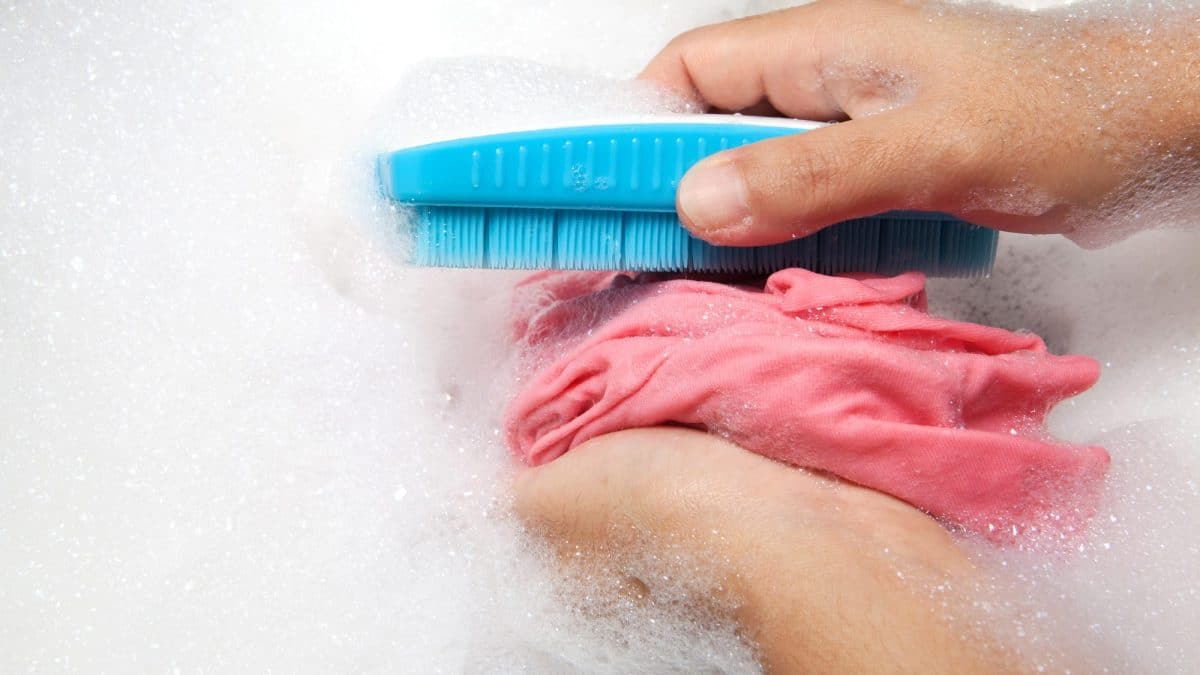
- Work the band by hand first. A drop of liquid detergent and an old toothbrush, worked along the band for a minute, does the mechanical part the machine cannot. This is the same opening step as the dishwasher method, for the same reason.
- Soak before you wash, in oxygen bleach. The yellow is oxidized body oil and it responds to an oxidizing agent rather than to a surfactant. Oxygen bleach, sold as a powder and mixed into warm water, releases peroxide and lifts that discoloration without the dye damage chlorine causes on a colored cap or on contrast stitching. Give it an hour in warm water in a bowl or the sink, then wash cold.
The soak is the free part of this. A soak applies chemistry and time and no mechanical action at all, so it costs the cap nothing, while every minute of tumbling is paid for. That trade is the same one that makes the maker’s instructions work in how to clean an electric blanket, where a long presoak carries the load and the wash itself is measured in minutes.
If the ring survives all of that, it is worth knowing that oxidized sweat plus antiperspirant behaves like the yellow described in how to clean deodorant stains from shirts, which is a bond rather than a deposit, and heat sets it permanently. A cap that has been through a hot dryer with a ring on it has the ring for good.
The method, step by step
Run the two tests and check the tag if it is still there
Band fold and pinch and slide, above. If the band is leather or the front panel is a bonded board, stop here and spot clean instead. If there is still a care tag, it outranks everything on this page.
Brush the crown dry
A soft brush over the outside first. Dry dust that goes into water becomes a suspension that has to be rinsed back out, and on a light colored cap that is where a gray cast comes from.
Work the sweatband by hand
Liquid detergent and a toothbrush along the band, both faces, about a minute. Do not rinse it out yet.
Soak in warm oxygen bleach if there is a ring
Powder dissolved in warm water in a bowl, cap in, one hour, no agitation. Skip this step if the cap is unwashed dark cotton and you have not tested for dye bleed, or run the white cloth check described in how to clean stains from clothes first.
Put it in a full load of soft laundry, cold, normal cycle
Towels, shirts, sheets, anything without zippers or hooks that could catch the adjuster. Cold water, normal action, regular detergent dose for the load. A mesh bag is optional and helps only if the cap has a metal buckle or a long strap. Do not run the cap alone, and do not use a hat cage.
Take it out at the end of the spin
Not later. A damp cap left folded under a wet load takes the crease of whatever is on top of it, and creases set as things dry.
Reshape while wet and dry it over something round
A bowl, a canister, a ball, or a balled up towel sized close to your head. Pull the crown down over it, run a thumb around the brim to set the curve you want, and leave it out of direct sun and away from a radiator. Uneven drying is what warps a brim on one side.
Interactive
Label decoder
Tap a symbol from your care label. No guessing, no scrolling.
19 symbols. Pick one.
What goes wrong, and what to do instead
| What happened | Why | Instead |
|---|---|---|
| Ran it alone on delicates | An almost empty drum gives the cap the full drop every rotation, then repeats the spin ramp several times trying to balance one wet object | Bury it in a full load on a normal cold cycle. Mass beats cycle choice |
| Used a hat cage | A rigid shell stops the cap flexing and hands it a hard box to be slammed inside | Mesh bag at most, and only for straps and buckles |
| Warm or hot water | The cotton shrinks, the plastic brim insert does not, and the fabric ripples around a part that kept its length | Cold for the wash. Warm only for a still soak, where nothing is being flexed |
| The band ring is still there | The one strip that holds the soil is folded against the crown, where nothing in the load can rub it | Toothbrush and detergent by hand before the wash, and an oxygen soak if it is yellow |
| Dryer, on any setting | Heat shrinks the crown and can soften an adhesive or a brim insert. It also sets the sweat ring permanently | Air dry over a round object. There is no low enough setting worth the risk |
| Left in the machine after the cycle | Damp fabric takes the shape of whatever is pressing on it, and the crease dries in | Out at the end of the spin, shaped immediately |
| Washed with jeans or anything new and dark | A pale cap in a load of unwashed dark cotton picks up dye, and a cap crown holds it visibly | Match it to a load of similar colors, the way you would a shirt |
What does not go in a washing machine, at any temperature
- Wool felt hats. Fedoras, flat caps, and anything made of felted wool rather than sewn panels. Agitation plus water plus warmth is the recipe that made the felt in the first place, and it keeps working: the hat gets denser, smaller, and harder. This is the same fiber behavior described in how to clean cashmere, where the answer is a still soak and never a cycle. For a felt hat that needs more than brushing, a hatter can reblock it, which no home method can.
- Straw. Woven plant fiber that holds its shape because it was formed wet and dried in a mold. Put it back in water and it gives that shape up.
- Leather sweatbands and leather brim trim. Leather that soaks and then dries fast dries hard, and the band is the part that stays wet longest. The general behavior is covered in how to clean leather.
- Vintage caps with a cardboard brim. Cardboard has no water resistance and separates into layers on contact. One of the results on this search puts the cutoff at hats made before the early eighties, on the grounds that plastic brim inserts became standard after that. Treat that as a rough guide and use the brim bend test rather than a date.
- Anything with a glued patch you can lift an edge of. If it has started to let go, a cycle finishes it.
Dishwasher or washing machine
This comes up as its own question on the results page, and the honest answer is that they solve different problems and the choice follows from the cap.
A dishwasher’s top rack applies water without tumbling, which is exactly what a stiff buckram brim needs, and this site covers that method in how to clean hats in the dishwasher. It is the better appliance for a rigid structured cap you are unwilling to risk. It is the worse one for everything else, because a dishwasher runs hot, has a heated dry element, and cannot be filled with soft laundry to protect anything.
A washing machine handles the whole rest of the shelf: soft caps, knit beanies, cotton dad hats, anything unstructured. The quote GQ published is not wrong that a washer can wreck a hat. It describes the lone cap on gentle that everybody recommends.
The comparison worth making is with shoes rather than dishes. Can you machine wash shoes answers its question by material of the upper, because on a shoe the visible material is the whole object. A cap is the opposite case: the outside is almost always washable cotton or polyester, and the decision lives in parts you have to go looking for.
Questions
How do I tell whether a hat is machine washable?
Check the tag first if it is there. If it is not, run the two tests above: fold the sweatband to see whether it is cloth or leather, and pinch the front panel to see whether the layers slide or behave like one bonded board. Cloth band plus sliding layers means it washes. One result on this page suggests using the manufacture date instead, on the theory that plastic brim inserts became standard in the early eighties, but bending the brim tells you the same thing without needing to know the year.
Is it safe to wash hats in a washing machine?
For most modern caps, yes. The two things that cause trouble are running the cap by itself, which maximizes how far it falls inside the drum, and using warm or hot water, which shrinks the crown around a brim insert that keeps its length. Cold water and a full load remove most of the risk.
Can I use Dawn dish soap to wash my hats?
You can, on the sweatband, by hand, where a grease cutting soap has a real job to do on skin oil. It is a poor choice in the machine itself. Dish soap is formulated to foam in a sink, and a high efficiency machine treats that much foam as a fault to correct, adding rinses to clear it. It also comes out of fabric less readily than laundry detergent, and detergent residue sitting in a sweatband is the sort of thing you were trying to get rid of. Use liquid laundry detergent for the cycle and save the dish soap for the band.
How do I wash a sweaty hat so the ring actually comes out?
Treat the ring as a separate job from the cap. Work detergent into the band with a toothbrush, then soak the whole cap in warm oxygen bleach for an hour before the cycle. The ring is oxidized body oil, so it responds to an oxidizing agent rather than to more detergent. Keep it out of the dryer until you are sure the ring is gone, because heat sets it.
Can you put a hat in the dryer?
No, and it is the one instruction on this subject with no exceptions worth listing. Dryer heat shrinks the crown, can soften a brim insert or an adhesive, and sets any remaining sweat stain permanently. The whole drying problem is solved by a bowl and a day. The general case for heat as the thing that does the damage is in how to dry shoes in the dryer.
Do I need a hat cage or a hat washer gadget?
No. A cage is worth using in one case, holding a brim flat while it dries after it has already taken a set. In the wash it adds a rigid shell to a machine that works by dropping things. The countertop hat washers do work, and they are solving a problem that a load of towels solves for free.
What about a beanie or a knit winter hat?
Acrylic and cotton knits wash in a normal load and dry flat. Wool and wool blend knits do not, for the same reason wool felt does not: agitation plus water plus warmth felts the fiber, and it does not come back. If the label says wool or the yarn is soft and slightly springy rather than squeaky, treat it as knitwear and hand wash it the way how to clean cashmere describes.