How to Clean Leather (Every Type, Explained)
A damp cloth is safe on most leather, but not all of it. Here's the water-drop test that tells you which type you actually have, and why skipping it is how an unfinished leather piece gets permanently stained by the very method meant to clean it.

Quick answer · care label Leather — pigmented or aniline
-
1 · Wash
Do not wash -
2 · Bleach
No bleach -
3 · Dry
No tumble dry -
4 · Iron
Do not iron -
5 · Pro care
Pro clean P
In one line Test with a water drop first. Beads = damp-cloth method safe. Absorbs and darkens = dry cloth only, no water. Condition and protect once dry.
Not all leather takes water the same way
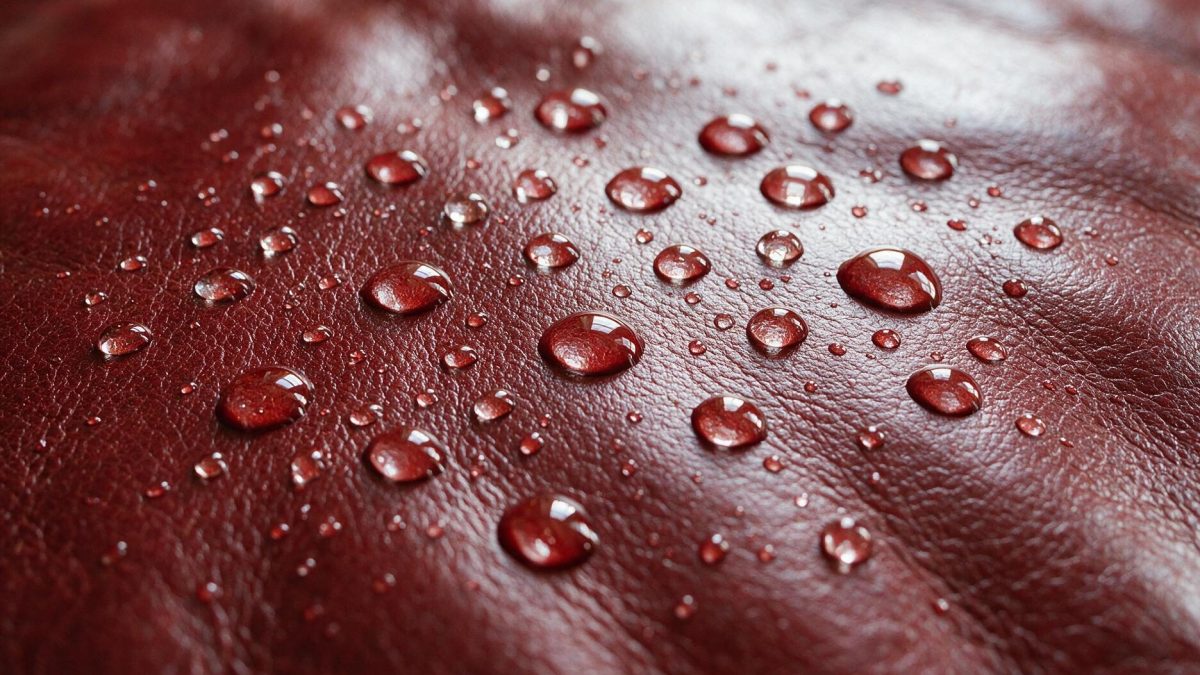
Most leather care advice assumes one kind of leather: pigmented, sealed with a topcoat, the kind used on the majority of jackets, bags, and furniture. That leather tolerates a barely damp cloth without staining. But a meaningful share of leather goods, particularly aniline and unfinished leather, have no protective topcoat at all. The dye sits directly in the open pores of the hide, and a damp cloth on that surface doesn’t clean it, it drives moisture and whatever residue is on the cloth straight into the leather, leaving a dark mark that never fully lifts.
Neither how to clean a leather jacket nor how to clean a leather bag covers this distinction in depth, because both assume a standard pigmented finish, which is what most jackets and bags use. This guide starts one step earlier: identifying which type of leather is actually in front of you, before any cleaning method gets applied to it.
On a hidden spot (inside a cuff, under a strap, the underside of a wallet), place one small drop of water. If it beads on the surface for a few seconds before slowly soaking in, the leather is finished and pigmented: the standard damp-cloth method below is safe. If the drop is absorbed almost instantly and leaves a visibly darker spot, the leather is aniline or unfinished: skip straight to the section on that further down, and do not use water on the rest of the piece. One exception to “a hidden spot”, and it applies to furniture only: on a sofa or a recliner the hidden panels are frequently a matched synthetic rather than the same hide, so the test has to be run in two places and the readings compared. That case is covered in how to clean a leather sofa.
What you’ll need
| Item | Why | Substitute |
|---|---|---|
| Mild soap, diluted (a few drops in a cup of water) | Lifts surface grime on finished leather without stripping the topcoat | Saddle soap, used sparingly |
| Two soft microfiber cloths | One barely damp for cleaning, one dry for immediate follow-up | A clean, lint-free cotton cloth |
| Leather conditioner or cream | Replaces natural oils that soap, sun, and normal handling remove over time | A balm with no wax or silicone listed on the label |
| Soft-bristle brush | Clears dust from grain lines, stitching, and hardware seams a cloth can’t reach | A clean, dry makeup brush |
| Leather protector spray | Adds a light water-repellent layer once cleaning and conditioning are done | Skip on aniline leather; a topcoat spray defeats the point of an unfinished look |
The method for finished, pigmented leather
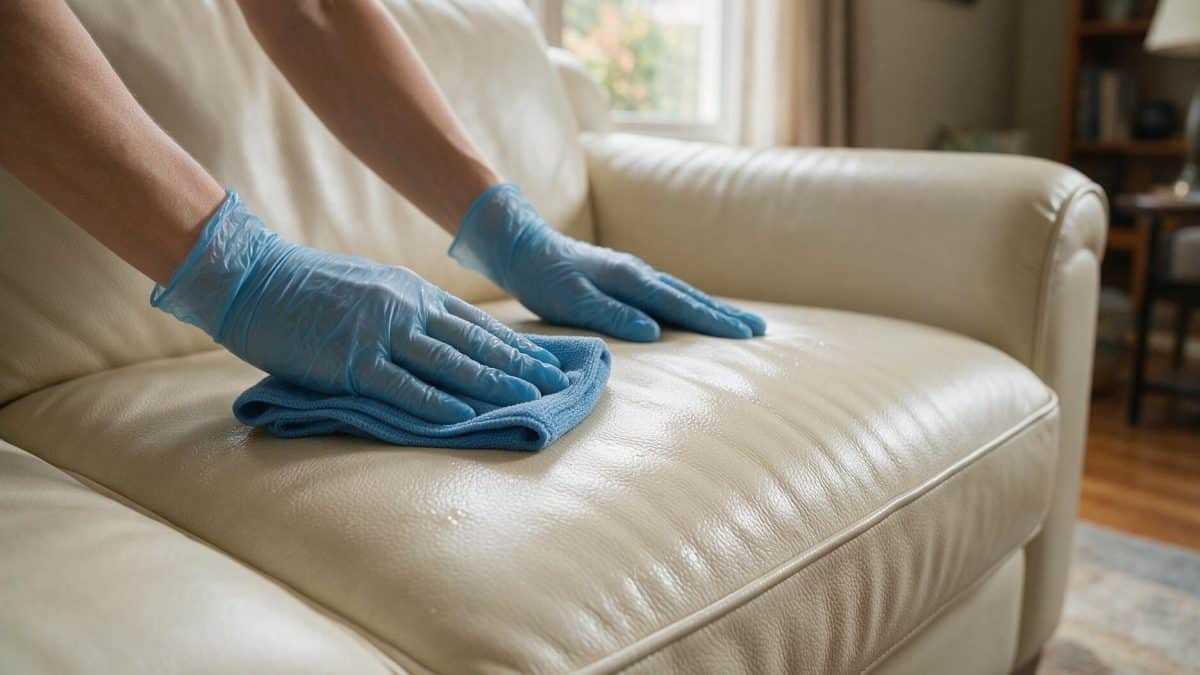
This is the standard method, safe once the water-drop test above confirms a sealed finish.
Run the water-drop test first
On a hidden spot, always, even on a piece you’ve cleaned before. The same handbag can mix pigmented panels with an unfinished trim strip, and treating both the same way is how the trim gets stained.
Brush dust out of the grain and seams
A dry, soft brush over the whole surface, working into stitching lines and hardware edges. Dust trapped under a damp cloth acts like fine grit against the finish.
Clean one section at a time
Barely damp cloth on a small area, then the dry cloth immediately after that same area, before moving on. Leather that sits wet for more than a minute or two starts absorbing moisture through the finish instead of just having it wiped off the surface.
Air dry away from any heat source
Room temperature, out of direct sun, away from radiators or a hairdryer. Heat pulls oil out of the hide itself, and that’s what shows up as cracking weeks later, not immediately.
Condition once fully dry
A thin, even layer worked in with a clean cloth in small circles. Cleaning removes some of the leather’s natural oil along with the dirt, and skipping this step is how a piece ends up dry and stiff within a season.
Protect with a light spray, if desired
Two thin passes rather than one heavy coat, held back from hardware and any fabric trim. Optional on furniture kept indoors; more useful on anything that sees rain or regular outdoor use.
Interactive
Label decoder
Tap a symbol from your care label. No guessing, no scrolling.
19 symbols. Pick one.
Aniline and unfinished leather need the opposite approach
If the water-drop test showed fast absorption and darkening, water is off the table entirely, even the barely damp cloth from the method above. Aniline leather is dyed all the way through with no pigment coating sealing the surface, which is exactly why it looks and feels richer and more natural than pigmented leather, and exactly why it stains as easily as suede does.
| Task | Do this instead |
|---|---|
| Routine cleaning | Dry, soft cloth only. No water, no soap, no wipes of any kind. |
| Fresh spill | Blot immediately with a dry cloth, straight up and down, never wiped sideways across the surface. |
| Conditioning | A cream made specifically for aniline or unfinished leather, applied sparingly; standard conditioner can darken it unevenly. |
| Set-in stains | A professional leather specialist. Home remedies that work on pigmented leather tend to spread the stain further on unfinished hide. |
Common stains, treated individually
These apply to finished, pigmented leather. On aniline leather, none of these are safe to attempt at home. The table below is the short version; how to clean stains off leather goes further, because on a sealed finish the question of whether a mark comes off at all is decided before any product is chosen.
| Mark | Treatment | Recoverable |
|---|---|---|
| Ink | Rubbing alcohol on a cotton swab, dabbed directly on the mark only | Usually, if fresh |
| Grease or oil | Cornstarch pressed onto the spot, left overnight, then brushed away | Usually |
| Salt rings from rain or snow | Equal parts water and white vinegar, wiped over the whole panel so the tone stays even | Yes |
| Mold from storage | Equal parts rubbing alcohol and water, dried fully in open air, then conditioned | Usually, if caught early |
Bleach, ammonia, nail polish remover, or a washing machine. These strip or dissolve the finish faster than any stain damages it on its own.
What ruins leather
| Mistake | What happens | Fix |
|---|---|---|
| Using the pigmented-leather method on aniline leather | Water darkens the hide permanently in the exact shape of the damp cloth | Run the water-drop test before cleaning anything |
| Skipping conditioner after cleaning | The surface dries out faster than usual and starts cracking within a season | Condition every time water or soap has touched the leather |
| Drying near a heat source | Oil is pulled out of the hide itself, not just off the surface | Air dry at room temperature only, no exceptions |
| Storing in a sealed plastic bag | Trapped humidity is exactly what mold needs to establish itself | A breathable cotton bag, or no bag in a dry closet |
Leather care by object
The finish test and the two methods above apply across every leather item. Object shape changes drying and a few pressure points, which is why specific pieces get their own guide.
- Jackets dry unevenly across panels and need a padded hanger to hold their shape. See how to clean a leather jacket.
- Bags add a fabric lining that traps odor and a handle that wears faster than the rest of the piece. See how to clean a leather bag.
- Sofas and armchairs break the one-piece assumption above, because a large share of them are sold as leather match: real hide on every surface the body touches, color-matched polyurethane on the outside back and arms. The water-drop test has to be run twice on furniture, and the panel you would normally pick as the hidden spot is often the one that is not hide. See how to clean a leather sofa.
Related guides
Leather and suede are often confused, but suede is the unsealed underside of the same hide, sanded into a nap, and it fails with water the way aniline leather does, not the way pigmented leather does. See how to clean suede for that method instead. If a piece has already developed mold from damp storage, the removal steps differ from routine care; see how to clean mold off clothes. And if the water-drop test behaved oddly, or the grain looks uniform to the point of being printed, the piece may not be hide at all: how to clean faux leather covers the two plastics sold under that name, and why the routine on this page is the wrong one for both.
Questions
How do I know if my leather is aniline without a water test?
Aniline leather usually shows more natural variation, like visible grain, small scars, or insect bites in the hide, since nothing is covering the surface to hide them. Pigmented leather looks more uniform and slightly plastic-like by comparison. The water-drop test is still the reliable way to confirm it, since some corrected-grain leather is dyed to imitate the aniline look.
Is faux leather (PU) covered by this method?
No, and the gap is wider than the missing conditioner step. Faux leather has no hide underneath, so there is nothing for a cream to feed and it just sits on top attracting dust. The part that matters more is the coating itself, which is either polyurethane or vinyl. Polyurethane breaks down on contact with water, so mild soap and water is still the right cleaner but it has to be followed by a dry cloth within seconds rather than left to air dry. The full method, and the test that tells the two plastics apart, is in how to clean faux leather.
How often should leather be conditioned?
Every three to six months for a piece in regular use, or any time it’s been cleaned with soap and water. A piece that starts feeling dry or slightly stiff to the touch usually needs it sooner than the schedule suggests.
Can leather go in the washing machine on a delicate cycle?
No, on any finish. Submersion saturates the hide in a way a damp cloth never does, and leather that’s been through a wash cycle typically dries stiff and uneven across panels.