How to Clean White Shoes
Scrubbing off dirt is the easy half. The soles that turn yellow over time aren't dirty, they're oxidizing, and that needs a completely different fix.
Quick answer · care label Canvas / leather · mixed
-
1 · Wash
Hand wash -
2 · Bleach
No bleach -
3 · Dry
Dry in shade -
4 · Iron
Do not iron -
5 · Pro care
No dry clean
In one line Clean the upper by material (detergent for canvas, a damp cloth for leather, blotting for mesh), then treat yellowed rubber soles separately with a benzoyl peroxide cream and 2 to 6 hours of direct sunlight, since yellowing is oxidation, not dirt. Total hands-on time: 20 minutes.
White shoes have two separate problems, not one
Most cleaning advice treats a white shoe like any other dirty shoe: scrub it, rinse it, done. That covers surface dirt fine, but it misses the second problem entirely, which is why a pair that gets cleaned regularly can still look worse every year. Yellowing on rubber soles and foam midsoles isn’t dirt. It’s oxidation, a chemical reaction between the rubber compound and UV light or heat, and no amount of scrubbing removes it because there’s nothing sitting on the surface to remove. This is also why unworn sneakers still in the box can turn yellow after a few years in storage. Treating both problems the same way is why so many white-shoe guides don’t actually work for long.
What you’ll need
| Item | Fixes | Substitute |
|---|---|---|
| Mild liquid detergent | General surface dirt on canvas, leather, and synthetic uppers | A few drops of dish soap in warm water |
| Melamine foam pad (magic eraser) | Scuffs on rubber soles and midsoles | A pencil eraser for small marks |
| Soft-bristle brush | Working detergent into canvas weave without flattening the nap | An old toothbrush |
| 10% benzoyl peroxide cream | Yellowed rubber and foam (oxidation, not dirt) | An oxygen-based whitening paste made for sneakers |
| Plastic wrap | Holding the peroxide cream against the sole while it works | A sandwich bag, cut open and taped in place |
Dab any product, including plain detergent, on a small inside seam before treating the whole shoe. Some coated synthetics react to benzoyl peroxide with a faint pink tinge instead of a color reversal.
Cleaning the upper, by material
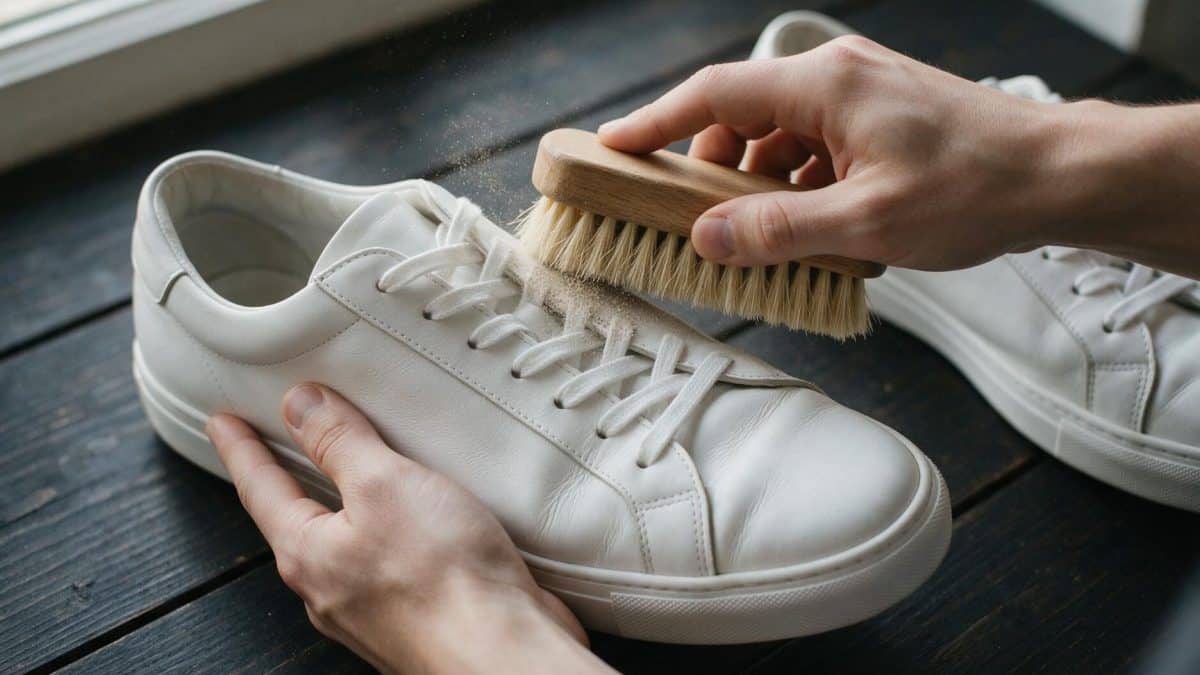
Remove the laces and brush off loose dirt
Wash laces separately by hand; they trap grime in the weave that resists a quick rinse. Brush the upper dry first so mud doesn’t smear into the material once it’s wet.
Canvas and cotton uppers
Mix a teaspoon of detergent into a cup of warm water, work it in with the brush using small circles, then wipe with a damp cloth until no suds remain. Canvas can handle more scrubbing pressure than leather without damage.
Leather and synthetic leather uppers
Use the same diluted detergent but a soft cloth instead of a brush, wiping rather than scrubbing. Bristles can scratch a smooth leather finish, especially on patent or coated surfaces.
Mesh and knit panels
Blot rather than scrub. Mesh is thin enough that hard brushing can tear the weave, and most dirt sits on the surface rather than worked into the fibers.
Air-dry away from direct heat
Stuff with paper towels to hold shape and set the shoes away from a radiator, heater vent, or direct sun. Heat is one of the two accelerants of the yellowing reaction described above, so drying a clean shoe next to a heat source undoes some of the work.
Interactive
Label decoder
Tap a symbol from your care label. No guessing, no scrolling.
19 symbols. Pick one.
Fixing soles that have already yellowed
This only works on oxidation, not dirt, and it takes patience: rushing the exposure time is the most common way people end up with an uneven, blotchy result instead of a clean reversal.
Clean the sole first
Any surface grime left on before treatment can bake into the rubber under UV exposure, so start from a dirt-free sole using the melamine pad and warm water.
Apply the benzoyl peroxide cream in a thick, even layer
Cover the entire yellowed area, not just the worst spots, or the treated sections will end up visibly whiter than the rest of the sole.
Wrap in plastic and set in direct sunlight
The plastic traps heat and keeps the cream from drying out, both of which speed the reaction. A sunny windowsill or a UV nail lamp both work; direct outdoor sun is fastest.
Check every hour and rewrap
The color shifts gradually, and checking hourly is what prevents the blotchy result mentioned above. Reapply cream if it’s dried out before the color has fully turned.
Rinse and dry away from heat
Wipe the cream off completely once you’re satisfied with the color, since leaving residue on the sole can cause it to keep darkening slightly over the following days.
Slowing down the next round of yellowing
- Store out of direct sunlight. A closet shelf ages soles far slower than a windowsill or a car trunk, where heat and UV both run high.
- Skip sealed plastic bags for long-term storage. Trapped humidity reacts with the rubber compound faster than open air does; a breathable shoe box or dust bag holds up better.
- Rotate pairs instead of wearing one white pair daily. Constant flexing and sweat exposure both speed up the same oxidation process that sitting in sunlight does. Rotation earns its keep twice over, because it also gives the foam inside a full day to dry out, which is what keeps a pair from starting to smell.
- Wipe soles after wet weather. Road salt and standing water left to dry on rubber accelerates discoloration around the edges specifically.
White fabric and canvas shoes
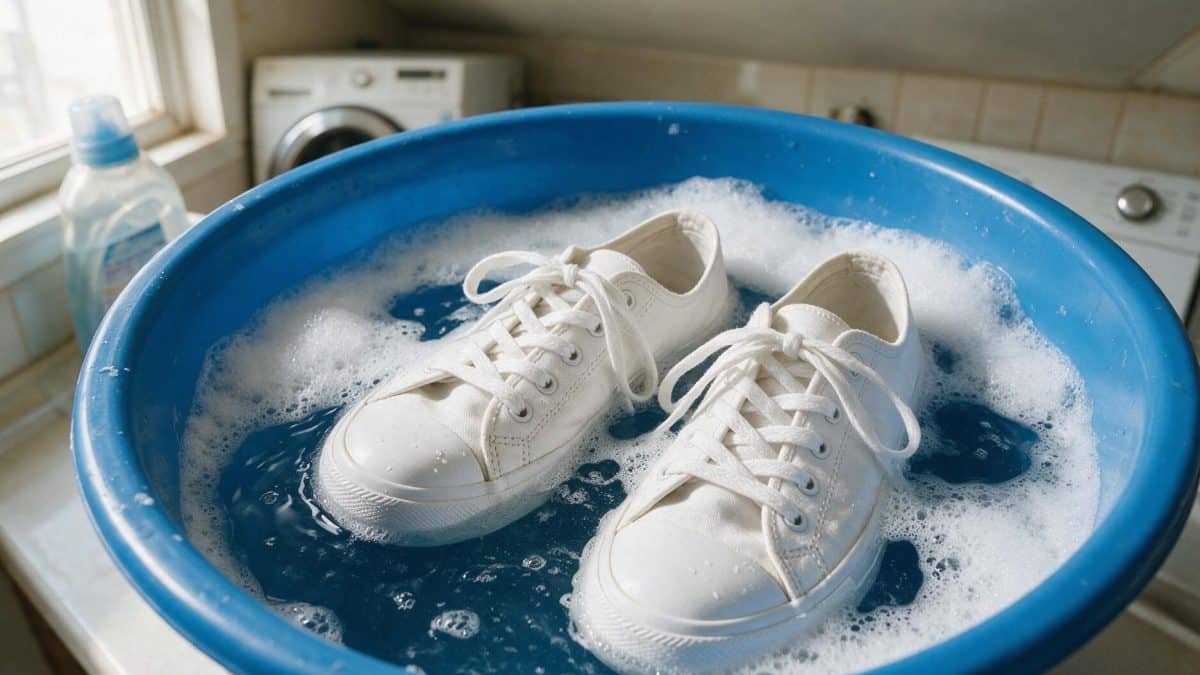
Fabric uppers fail differently from leather ones, and the difference is worth separating out because it changes what “clean” even means. A white leather shoe gets marks on its surface, and the marks come off. A white canvas or mesh shoe rarely has one identifiable stain. It goes evenly grey, all over, and comes out of a clean looking exactly as grey as it went in.
That greying is dirt held inside the weave rather than sitting on it, plus detergent residue from previous cleanings holding onto more of it. Two things follow from that.
- Pretreat and let it sit, rather than scrubbing harder. Work diluted detergent into the fabric, then leave it 15 minutes before touching it again. Dwell time reaches into the weave where pressure does not, and hard brushing on wet canvas mostly just fuzzes the surface fibers, which makes the shoe look duller once it dries.
- Rinse far longer than feels necessary. Detergent left in canvas is why a shoe cleaned three times looks worse than one cleaned once. Wipe with a cloth rinsed in clean water repeatedly, until no suds appear when you press the fabric.
Two more things specific to white fabric. Oxygen bleach powder in a lukewarm soak is safe on white canvas and genuinely lifts the overall grey, where chlorine bleach turns cotton yellow and weakens it. And a white shoe should always dry out of direct sun if any part of it is rubber or foam, which is a real conflict: sunlight does brighten damp canvas, and it is also what yellows the sole underneath it. Dry the shoe in the shade, and use sunlight only on the sole, deliberately, as part of the peroxide treatment above.
For canvas and mesh pairs that are dirty enough to need more than a hand clean, the machine is usually safe, and the risk is the midsole rather than the fabric: how to clean shoes in the washing machine covers which pairs survive it.
Related guides
If the shoes are suede rather than canvas or leather, this method isn’t the right one: see how to clean suede shoes for the dry-brush approach instead. For canvas or mesh sneakers dirty enough to need a full wash, how to clean shoes in the washing machine covers which pairs can safely go in a machine cycle. For grass stains, black scuff marks, and a routine that keeps a white sneaker looking new between cleans, see how to clean white sneakers.
Questions
Can I use bleach on white canvas shoes?
It’s better avoided. Chlorine bleach often shifts white canvas toward a dull grey or pale yellow rather than brightening it, and it breaks down cotton fibers with repeated use. Diluted detergent and a soft brush get most stains out without that risk.
Why did my shoes turn yellow if I never wore them?
Oxidation doesn’t require wear. Unworn “deadstock” sneakers still in the box commonly yellow after a few years because heat and ambient light reach the rubber even in storage, and the plasticizers in the sole compound break down over time regardless of use.
Can white leather sneakers go in the washing machine?
No. Water and machine agitation dry out and crack leather, and the tumbling can loosen glued soles. Clean leather uppers by hand with a damp cloth, following the leather steps above.
Does toothpaste actually whiten shoes?
It has a mild abrasive effect that can lighten small surface scuffs on rubber, similar to a melamine pad but weaker. It does nothing for yellowing, since that’s a chemical change in the rubber itself rather than a surface mark.