How to Clean White Sneakers
Grass stains and rubber scuff marks are what actually wreck white sneakers day to day, not the slow oxidation that turns soles yellow. Here's how to treat both, plus a routine that keeps them white longer.
Quick answer · care label Canvas / leather / knit · mixed
-
1 · Wash
Hand wash -
2 · Bleach
No bleach -
3 · Dry
Dry in shade -
4 · Iron
Do not iron -
5 · Pro care
No dry clean
In one line Treat grass stains and black rubber scuff marks with rubbing alcohol and a melamine pad, since neither responds to plain detergent, then clean the rest of the upper by material. A silicone protector spray and same-day scuff wiping keep them white longer between cleans. Total hands-on time: 15 minutes.
The everyday damage isn’t the same as the long-term damage
Search for “white sneakers” and most guides hand you the same advice as any white shoe: scrub the upper, done. That’s fine for general dirt, but it skips the two things that actually wreck a white sneaker week to week. Grass stains don’t respond to plain detergent, because the green pigment is chlorophyll, not dirt, and it needs a different solvent to lift. And the black scuff marks that build up on the toe and sides aren’t scuffed-in dirt either, they’re a thin transfer of rubber left behind by contact with other rubber, like a curb, a pedal, or another shoe. Neither one is the slow rubber-oxidation yellowing that eventually dulls a white sole; that’s a separate chemical process covered in full in how to clean white shoes. This guide focuses on the marks that show up the same day you get them, and on keeping the sneakers looking new for longer between cleans.
What you’ll need
| Item | Fixes | Substitute |
|---|---|---|
| Rubbing alcohol (70%) | Grass stains and black rubber transfer marks | A hand sanitizer with a high alcohol content |
| Melamine foam pad | Dry scuffs on rubber toe caps and midsoles | A soft pencil eraser for small marks |
| Mild liquid detergent | General surface dirt on canvas, leather, and knit uppers | A few drops of dish soap in warm water |
| Soft-bristle brush | Working stain treatments into canvas without flattening the weave | An old toothbrush |
| Silicone-based sneaker protector spray | Repelling grass and mud before they set as stains | None reliable; fabric-only sprays don’t bond the same way to rubber and coated leather |
Dab rubbing alcohol on a small inside seam before treating the visible upper. It’s safe on canvas and most coated synthetics, but it can strip the finish off some soft aniline leathers.
Removing grass stains
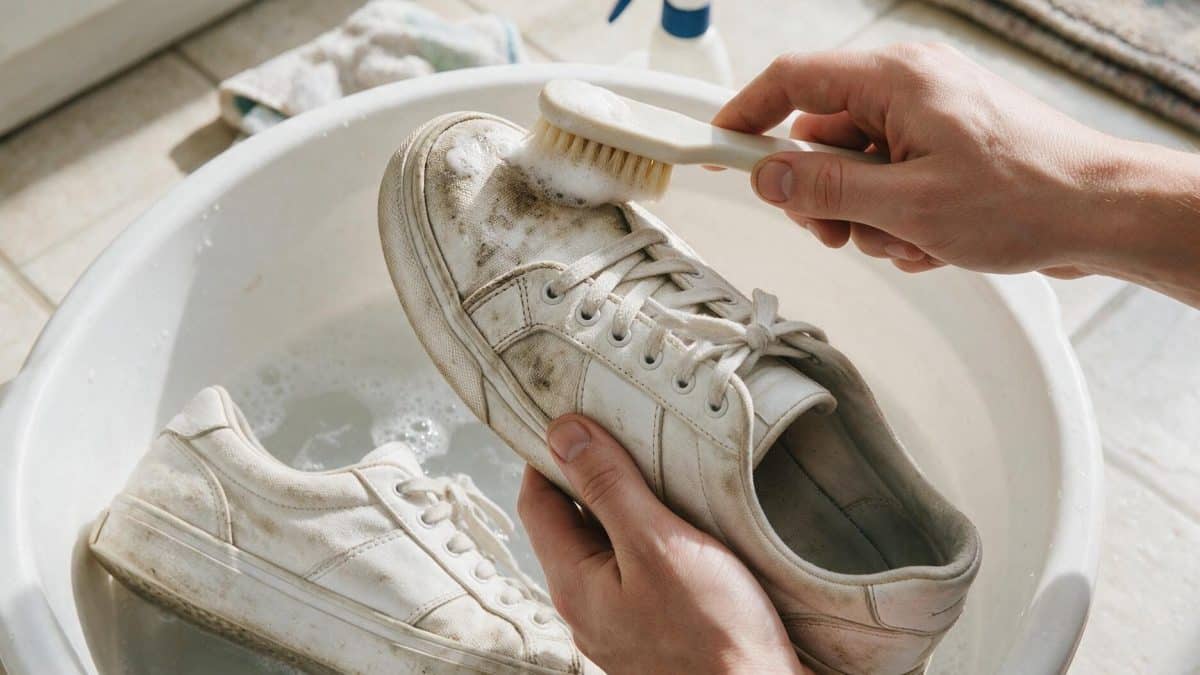
Grass marks look like dirt but behave like a dye, which is why scrubbing with soap alone often just spreads the green tint into a wider, fainter smear instead of removing it.
Blot before you rub
Press a clean cloth against the stain first to lift any wet plant matter still sitting on the surface. Rubbing at this stage grinds the pigment deeper into the weave.
Apply rubbing alcohol on a cotton pad
Dab, don’t scrub, working from the outer edge of the stain toward the center so you’re not dragging pigment into clean fabric.
Rinse with a damp cloth
Wipe the treated area with plain water to lift the dissolved chlorophyll before it can dry back onto the fibers.
Repeat on any residual shadow
Older grass stains usually need a second, lighter pass rather than one aggressive one; more alcohol in a single application doesn’t speed this up.
Air-dry away from direct heat
Stuff with paper towels to hold shape while it dries, out of direct sun.
Removing scuff and transfer marks
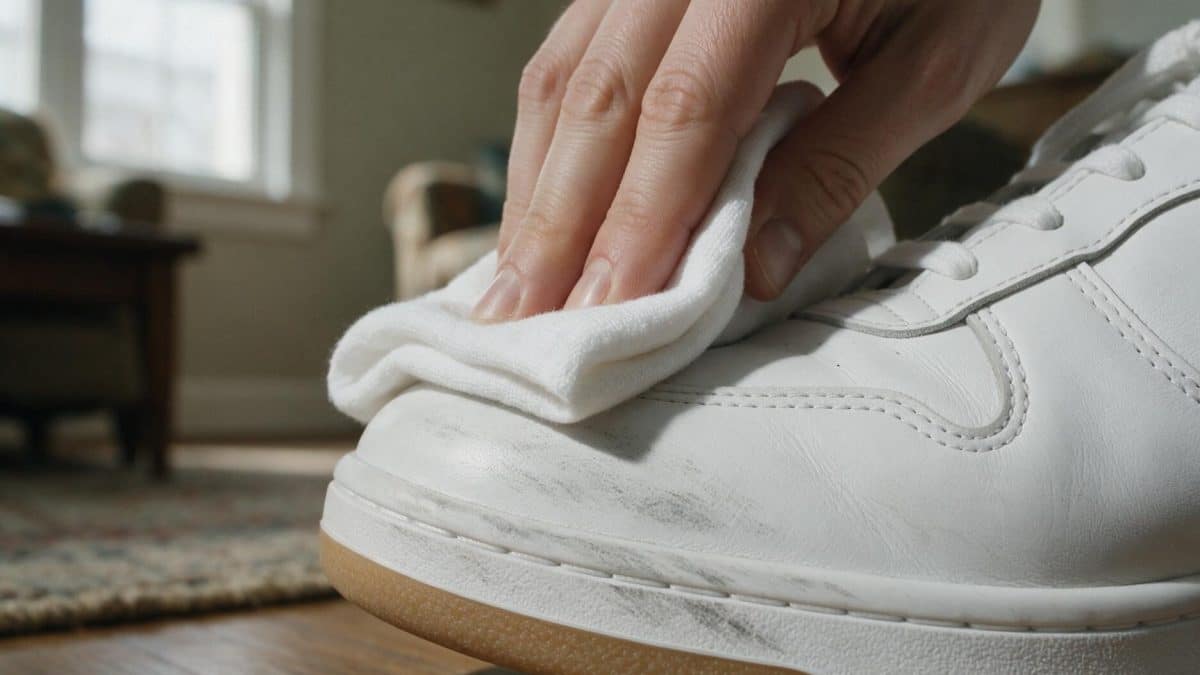
A black mark on a white toe cap is almost always rubber transferred from something else, not ground-in dirt, which is why wiping it with a wet cloth alone rarely clears it.
Try the melamine pad dry first
Rub gently in one direction rather than back and forth. Most transfer marks lift with light dry friction before any liquid is needed.
Move to rubbing alcohol for marks that stay
Dab the mark with an alcohol-soaked cloth and hold for a few seconds before wiping. Alcohol breaks down the rubber compound’s bond to the surface better than water or soap does.
Wipe with a damp cloth to finish
Clear any alcohol residue so it doesn’t dry the material out over repeated treatments.
Interactive
Label decoder
Tap a symbol from your care label. No guessing, no scrolling.
19 symbols. Pick one.
Cleaning the rest of the upper, by material
Once the stains and scuffs are handled, the rest of the upper follows the same rules as any white shoe: canvas takes a diluted-detergent scrub with the brush, leather and synthetic leather want a damp cloth wipe instead of bristles, and knit or mesh panels should be blotted rather than scrubbed so the weave doesn’t tear. The full step-by-step for that general clean, plus the separate fix for soles that have already gone yellow from UV and heat exposure, is in how to clean white shoes.
Keeping them white longer
- Spray a silicone-based protector on clean, dry sneakers. It beads grass and mud on the surface long enough to wipe off before either sets into a stain.
- Wipe toe-drag scuffs the same day. Fresh rubber transfer marks come off with a dry melamine pad; marks left for weeks bond harder and often need the alcohol step above.
- Keep them off newsprint during storage. Packing white sneakers in newspaper instead of tissue paper can transfer ink onto the upper, especially on damp days; use plain paper or the original tissue instead.
- Rotate pairs rather than wearing one white pair daily. Less contact time with grass, pavement, and curbs means fewer marks to treat in the first place.
Related guides
If the upper is suede rather than canvas, leather, or knit, none of the steps above apply; see how to clean suede sneakers for the dry-material method instead. Not sure your pair can survive a full wash cycle? can you machine wash shoes covers the yes/no by upper material before you commit a whole pair to the machine.
Questions
Can I use rubbing alcohol on all sneaker materials?
It’s safe on canvas, most coated synthetics, and rubber, but test it on soft or aniline leather first. Alcohol can strip the finish and leave a dull patch on some leather uppers, so a hidden seam test matters more there than on canvas.
Will grass stains come back after cleaning?
Not from the same exposure, but a light shadow can remain if the stain sat and dried for more than a day or two before treatment. A second, lighter alcohol pass a day later usually clears what the first one didn’t.
Does the protector spray stop soles from turning yellow?
No. Yellowing is UV and heat oxidation inside the rubber compound itself, not something that happens on the surface, so a surface repellent spray has no effect on it. That’s a separate problem with its own fix in how to clean white shoes.
Are black scuff marks the same as dirt?
No. They’re a thin layer of rubber transferred from whatever the shoe rubbed against, similar to a pencil eraser mark on paper. That’s why plain soap and water often smear them rather than lifting them, while a dry melamine pad or alcohol breaks the transfer bond directly.