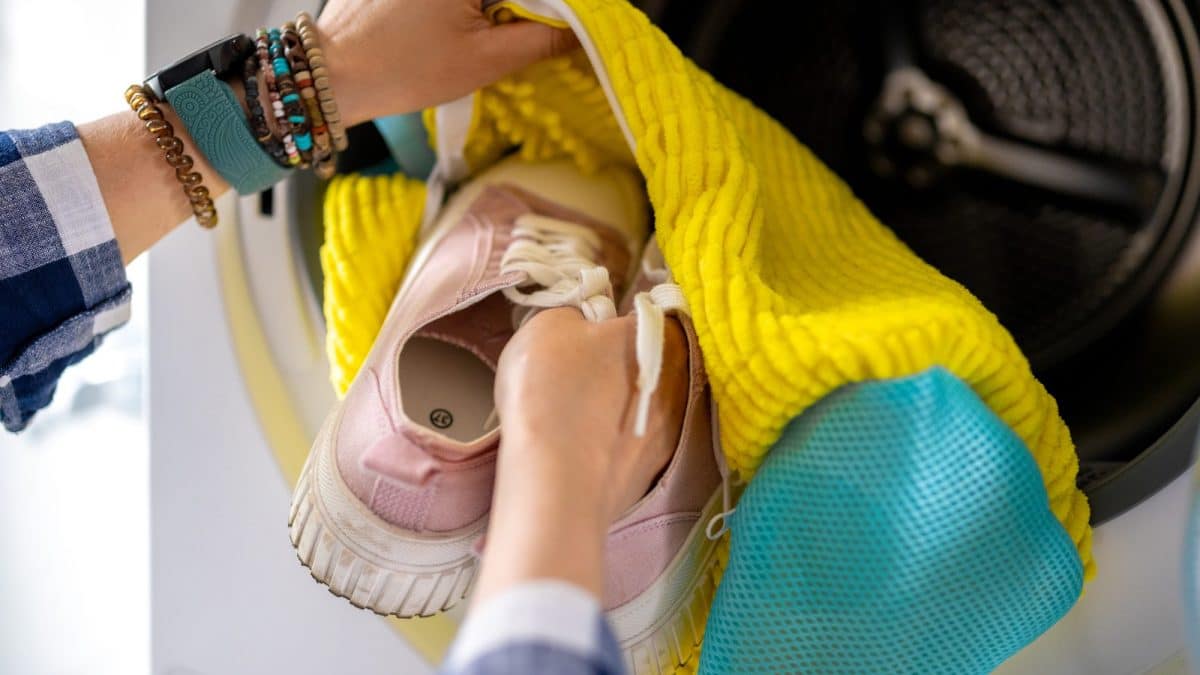
Can You Machine Wash Shoes?
The upper material decides the answer, not the price or the brand. Here's the yes/no by material, and the foam midsole risk the full method article doesn't cover.
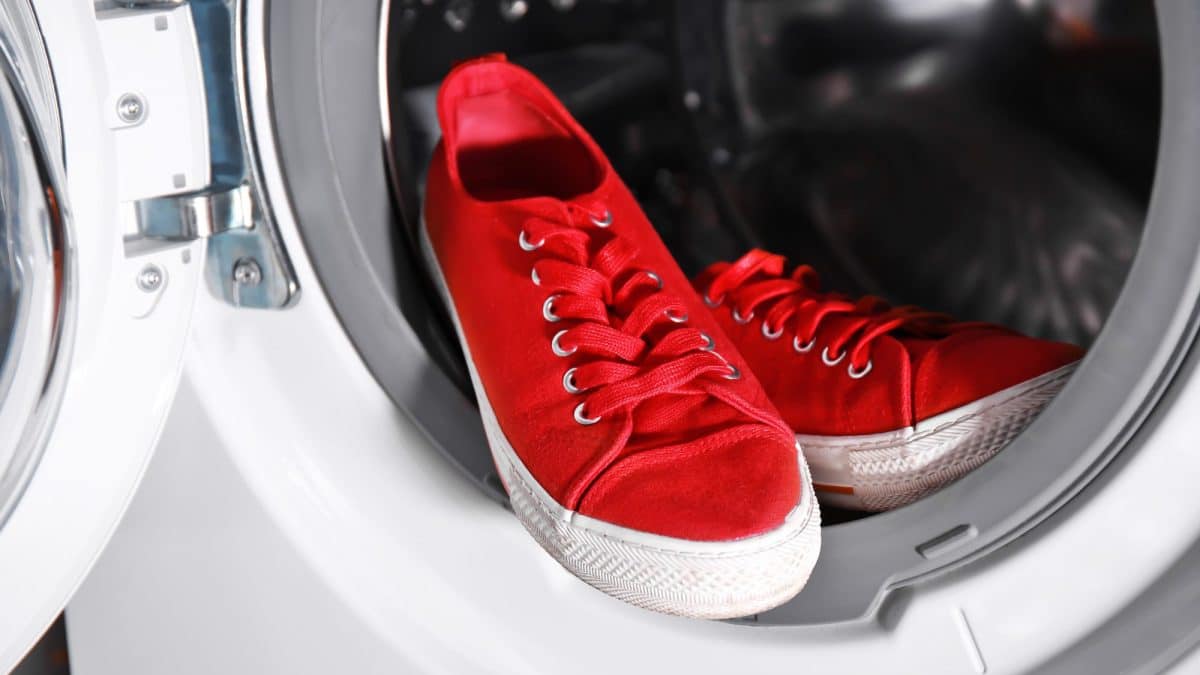
Quick answer · care label Canvas & mesh — upper-dependent
-
1 · Wash
Wash 30° gentle -
2 · Bleach
No bleach -
3 · Dry
No tumble dry -
4 · Iron
Do not iron -
5 · Pro care
No dry clean
In one line Canvas, cotton, and mesh uppers are machine-safe on a cold, gentle cycle in a mesh bag. Suede, leather, and glued decoration are never machine washable. Foam midsoles are safe but slow to dry.
The short answer: the upper material decides it, not the price or the brand
Yes for canvas, cotton, and mesh or knit synthetic uppers. No for suede, leather, and anything held on with glue, rhinestones, or foam trim. The material on top is what makes or breaks the decision, not how expensive the shoes were or what’s printed on the box. A $15 canvas sneaker and a $150 mesh running shoe are both fine in the machine. A $15 pair of suede slip-ons is not.
There’s a second factor that catches people who already checked the upper and assumed they were done: the midsole. A foam midsole, the cushioned white or grey layer under a running shoe, can soak up water and take days to dry from the inside, even after the outside looks bone dry. It won’t ruin the shoe outright, but it changes the answer from a clean yes to a “yes, but expect a longer wait.”
| Material | Machine safe? | Why |
|---|---|---|
| Canvas or cotton canvas | Yes | Woven fabric tolerates water and agitation without swelling or stiffening |
| Mesh or knit synthetic upper | Yes | Same tolerance as canvas; the real risk sits in the sole, not the mesh itself |
| Foam midsole under a mesh or canvas upper | Usually, plan for a slow dry | The upper is fine; the foam can absorb water and take 2 to 3 days to dry through |
| Suede | No | Water swells and stains the nap in a way that doesn’t reverse; needs a dry-brush method instead |
| Leather, smooth or corrected-grain | No | Water strips the surface oils and can cause cracking once it dries out |
| Glued rhinestones, sequins, or foam trim | No | The adhesive isn’t rated for water immersion and lets go within a cycle or two |
| Light-up soles | No | The battery and wiring sealed inside aren’t built to survive submersion |
A mesh-upper running shoe with a thick foam midsole is technically machine safe. It’s just slow: two to three days of drying and, on some pairs, a bit less spring afterward than before. Worth separating those two, because water alone does not flatten a midsole. Heat does, and those two or three days are exactly the stretch during which reaching for the dryer starts to look reasonable; how to dry shoes in the dryer covers when that is survivable and when it is not. If you’re relying on those shoes for training tomorrow, hand-cleaning the upper and leaving the midsole dry is the safer call.
Canvas and mesh: yes, and the full method avoids the two things that actually go wrong
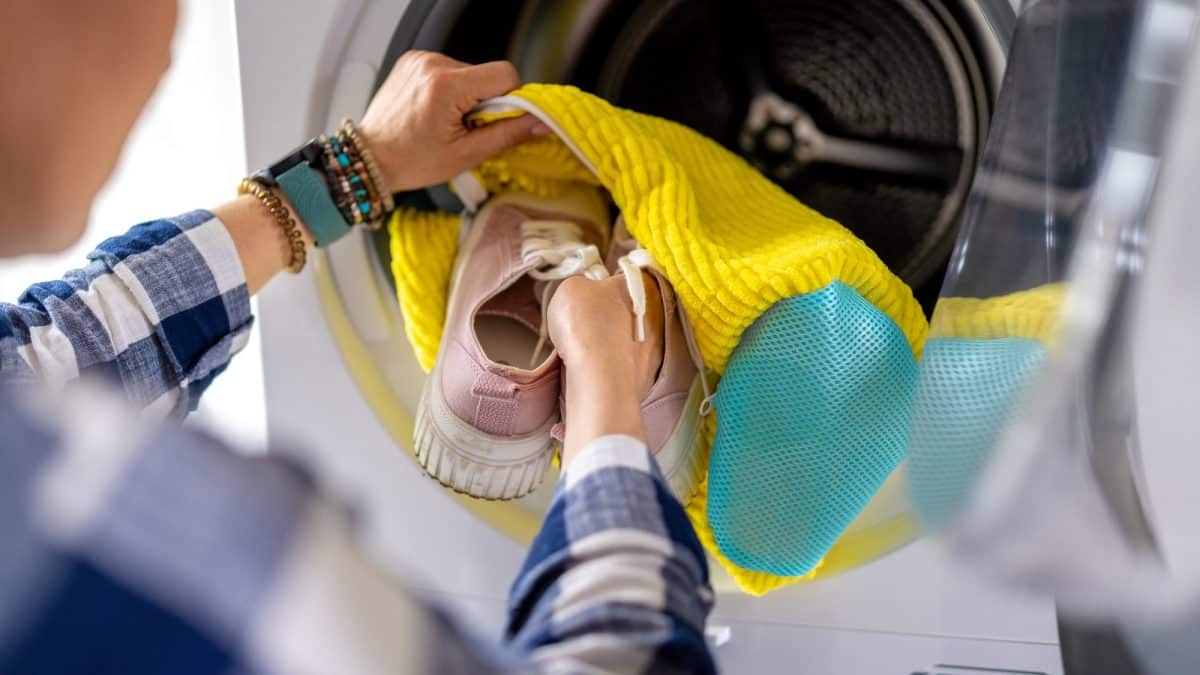
Machine washing canvas and mesh shoes is safe, but two mistakes account for most of the damage people blame on “the machine ruining my shoes”: tumble drying, which softens the glue holding the sole on, and skipping a laundry bag, which lets the shoes strike the drum directly and loosens eyelets over repeated washes. Neither is a reason to avoid the machine. Both are avoided with a cold cycle, a mesh bag, and air-drying. Sorting by the upper works here because on a shoe the material you can see is the whole object. It fails on the next thing people ask this question about: a baseball cap is almost always washable cotton or polyester on the outside, and what decides the answer is the stiffener inside the panels and the material of the sweatband, neither of which is visible. That sort is in can you machine wash hats. The full step-by-step, including the exact cycle setting and how long to air-dry, is in how to clean shoes in the washing machine.
Suede, leather, and glued decoration: never, no matter how dirty they get
These three share the same underlying problem: water doesn’t just clean them, it changes the material itself. Suede’s nap mats down and stains when wet, and the stiffness that follows doesn’t brush back out. Leather loses the surface oils that keep it flexible, and a machine cycle’s tumbling on top of that is what usually turns “a bit stiff” into visible cracking. Glued trim simply isn’t built to survive submersion at all, wet-clean or not. For suede specifically, dry-brushing and a suede eraser get out the same dirt a wash would target without swelling the nap; see how to clean suede shoes for the full method.
How to tell what’s on your shoes if the box and tag are both gone
Resoled shoes, hand-me-downs, and anything bought secondhand often arrive with no care label at all. Three checks, used together, are enough to decide:
- Press a fingernail into the upper. Give slightly and show a woven texture, it’s canvas or mesh. Feel smooth and unyielding, or show a soft nap under light pressure, it’s leather or suede.
- Drop a small bead of water on an inconspicuous spot. Water beading on the surface for a few seconds points to treated leather. Water soaking in almost immediately points to canvas or untreated suede, both of which should stay out of the machine if the nap or grain looks brushed rather than woven.
- Check the sole edge where the upper meets it. Woven fabric frays slightly at a cut edge. Leather and suede show a solid, uniform edge with no visible threads.
If the water-bead test and the fingernail test agree, that’s reliable enough to act on. If they disagree, treat the shoes as leather or suede and clean them by hand rather than risk a wash that can’t be undone.
Related guides
For the full wash-and-dry method once you’ve confirmed a machine-safe upper, see how to clean shoes in the washing machine. For suede specifically, see how to clean suede shoes. White canvas and mesh soles carry their own separate yellowing risk once the fabric itself is clean; see how to clean white shoes for that, or how to clean white sneakers for grass stains and scuff marks specifically. And if the reason you are considering a wash is smell rather than dirt, the upper material matters far less than you would expect: see how to clean smelly shoes for the two-hour test that finds which part of the shoe the odor is coming from before you commit the pair to a cycle at all.
Questions
My sneakers are mostly mesh but have a small glued-on logo patch. Can I still machine wash them?
Usually yes. Small, flat logo patches glued at the factory tend to hold up better than loose decorative trim like rhinestones or foam appliques, but there’s no guarantee. A cold, gentle cycle in a mesh bag lowers the risk either way, and it’s worth checking the patch after the first wash before running the shoes through again.
Will machine washing change the shape of my shoes?
It can, mainly from the shoes losing their structure while wet and drying in whatever position they land in. Stuffing them with plain paper right after the wash and reshaping by hand before they dry mostly prevents this; letting them air-dry flat with nothing inside is what usually causes a warped or flattened toe box.
Are white canvas shoes riskier to machine wash than colored ones?
The canvas itself isn’t riskier, but white soles can yellow from a hot wash or from drying in direct sun, which is a separate issue from the fabric getting clean. Cold water and shade during drying avoid it.
Can shoes with cardboard or non-removable insoles go in the machine?
No. Cardboard insoles break down in water and can leave wet pulp stuck inside the shoe. If the insole doesn’t pull out, hand-clean the upper with a damp cloth instead of running the whole shoe through a cycle.