How to Clean Pillows in the Washing Machine
Down, feather, and fiberfill pillows all handle a machine cycle well. The step people get wrong isn't the wash, it's drying the core all the way through.
Quick answer · care label Down, feather & fiberfill
-
1 · Wash
Wash 40° -
2 · Bleach
Oxygen bleach -
3 · Dry
Tumble low -
4 · Iron
Do not iron -
5 · Pro care
No dry clean
In one line Confirm the fill is down, feather, or fiberfill, wash in pairs with half detergent and an extra rinse, then tumble dry low with tennis balls, checking every 30-45 minutes until the core is bone dry. Total hands-on time: 15 minutes.
Which pillows can actually go in the washing machine?
Polyester fiberfill and most down or feather pillows handle a machine cycle fine. Memory foam, latex, and buckwheat hulls do not, no matter how the label reads. Water breaks down foam’s cell structure permanently, and a solid foam or hull-filled pillow never dries all the way through in a home machine. That’s the split that matters: the fill inside, not the pillow’s price or the fabric of the cover.
The part most guides skip is what happens after the spin cycle. A pillow that looks dry on the outside can still be damp at the core for days, and that damp core is exactly where mold takes hold, out of sight until the pillow starts smelling musty. Getting the pillow into the machine correctly is the easy half of this job. Getting it bone dry afterward is the half that actually determines whether it’s safe to sleep on.
Press the pillow flat and let go. If it springs back within a second or two, it’s down, feather, or fiberfill, and it’s a machine candidate. If it holds the dent, it’s memory foam or latex, and it needs to stay out of the water entirely.
What you’ll need
| Item | Why | Substitute |
|---|---|---|
| A second pillow or two bath towels | A single pillow throws the drum off balance, which is what causes loud banging and, over repeated washes, can crack the drum bearing | Wash pillows in pairs whenever you can |
| Mild liquid detergent, half dose | Powder rarely dissolves fully around bulky fill, and a full dose takes an extra rinse to clear, leaving a window for residue to set into the fibers | Half your usual liquid detergent measure |
| 3-4 clean tennis balls or wool dryer balls | They pound the fill apart as it tumbles, which is the only thing that stops down and feathers from drying into a single flat clump | Tie a few balled-up socks into a pillowcase |
| A large-capacity washer and dryer | Standard top-loaders with a center agitator post can tear the pillow’s ticking; front-loaders and agitator-free top-loaders don’t have that post in the way | A laundromat’s large-capacity machine, if yours has a center post |
The method, step by step
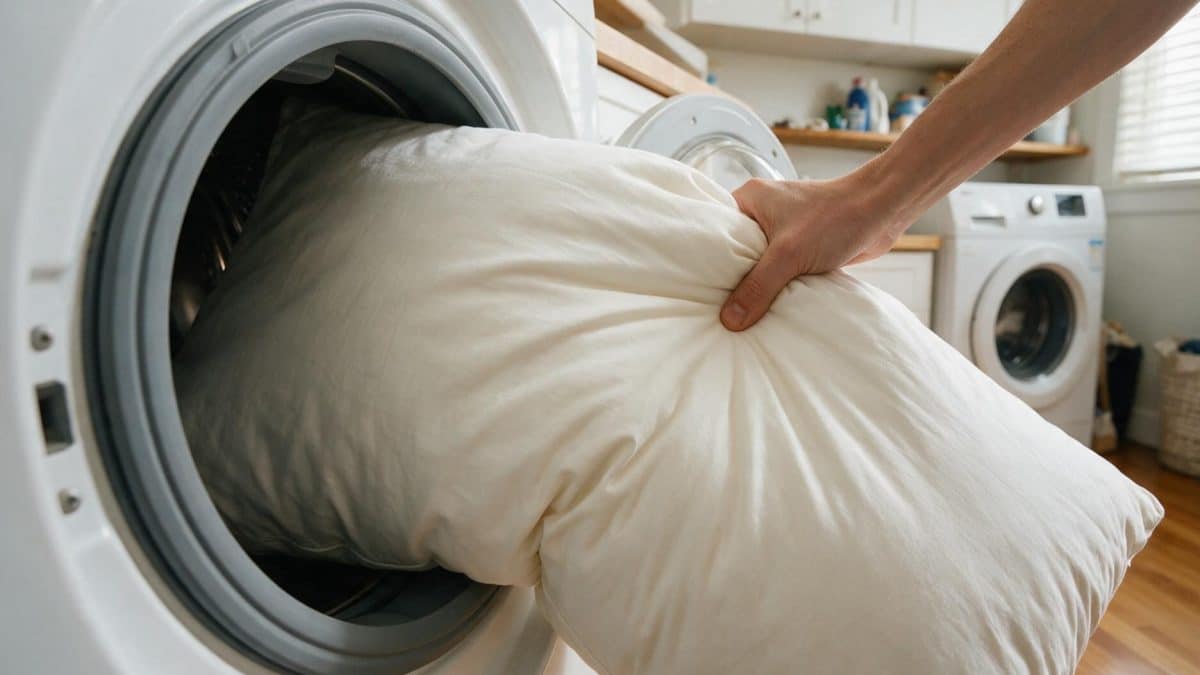
Check the fill and the seams
Confirm it’s down, feather, or polyester fiberfill using the dent test above, and check the ticking for any tears. A split seam lets clumps of fill escape into the drum, where they can clog the pump.
Load two pillows together, or pad with towels
Pairing pillows, or bulking out a single pillow with towels, keeps the load balanced through the spin. An unbalanced drum with a single pillow is the single biggest cause of washers “walking” across the laundry room floor.
Run a warm, gentle cycle with an extra rinse
Half the usual detergent dose, and set a second rinse if your machine has the option. Detergent trapped deep in feather or fiberfill doesn’t always show up as a problem on wash day. It shows up as a yellow patch or a stale smell weeks later, once oils and residue have had time to interact.
Tumble dry low with tennis balls, checking every 30-45 minutes
Break up clumps by hand each time you check, kneading the pillow like dough. This is the step that actually determines the outcome: surface-dry is not the same as dry. Continue until the pillow feels uniformly light and springs back fully when pressed, not just around the edges.
Confirm the core is dry before it goes back on the bed
Squeeze the center firmly. Any coolness or heaviness compared to the edges means moisture is still trapped, and it needs another dryer cycle. A pillow that goes back into a pillowcase even slightly damp at the core is how mold ends up growing where nobody can see it. If that’s already happened to a pillow or a garment, the fix is different from ordinary washing; see how to clean mold off clothes.
Interactive
Label decoder
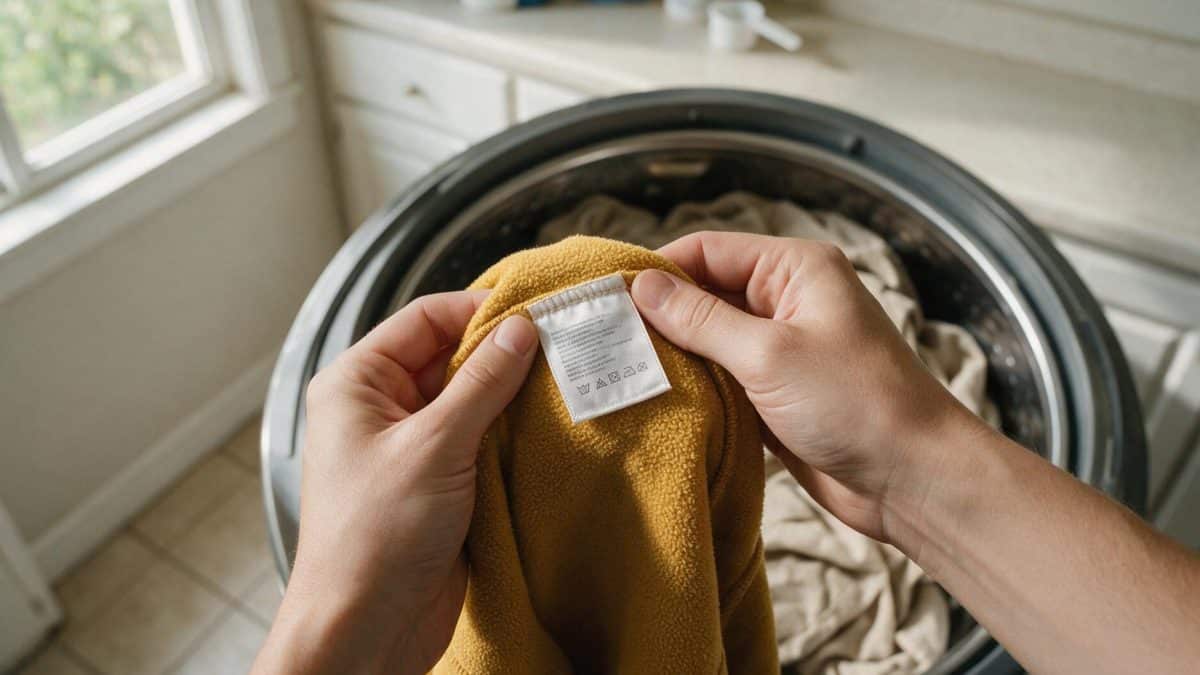
Tap a symbol from your care label. No guessing, no scrolling.
19 symbols. Pick one.
What ruins pillows in the wash, and how to avoid it
| Mistake | What happens | Fix |
|---|---|---|
| Washing memory foam or latex | The cell structure collapses permanently and the core stays wet for weeks, breeding mold inside a pillow you can no longer return to shape | Vacuum the surface and spot-clean the cover only; never submerge foam or latex |
| Washing a single pillow alone | The unbalanced load bangs against the drum and can crack seams or, over time, damage the machine’s bearing | Always wash pillows in pairs, or pack towels around a single one |
| Skipping the extra rinse | Detergent left deep in the fill oxidizes over weeks into yellow patches and a stale odor that reappears even after airing the pillow out | Add a second rinse cycle, or run a short rinse-only cycle afterward |
| Calling it dry once the outside feels dry | The center of a down or fiberfill pillow can stay damp for days after the surface feels fine, which is exactly where mold takes hold unseen | Squeeze-test the core, not the edges, before putting it back into use |
What not to machine wash
These fill types don’t belong in a washing machine regardless of what the outer cover looks like:
- Memory foam and latex. Both absorb water into a solid block that never fully dries in a home machine, and the foam structure doesn’t recover once it’s been compressed wet.
- Buckwheat hulls. The hulls swell and split when wet and don’t dry back to their original shape, which ruins the support the pillow was bought for.
- Pillows with non-removable decorative trim, beading, or embroidery. These are usually glued or hand-stitched with materials not rated for machine agitation.
- Anything already torn at the seam. Repair it first; otherwise fill escapes into the drum and clogs the drain pump.
Related guides
This method covers down, feather, and fiberfill pillows specifically. For other fabric items that share the same balance and drying concerns:
- Canvas and mesh shoes follow a similar balanced-load approach; see how to clean shoes in the washing machine.
- If incomplete drying has already led to a musty smell or visible spots, that’s a different problem than routine washing; see how to clean mold off clothes.
- Not sure a specific pillow belongs in the machine at all? See can you machine wash pillows for the yes/no breakdown by fill type.
Questions
How often should pillows actually be washed?
Every three to six months for daily-use sleeping pillows. Body oils and sweat build up in the fill well before it looks or smells dirty, and by the time an odor is noticeable, residue has usually been accumulating for months.
Can I wash two different types of pillows together?
Only if both are machine-safe fill types. A down pillow and a fiberfill pillow can go in together fine, since both tolerate the same cycle and drying time. Never add a foam or latex pillow to that load.
Why does my pillow smell musty after I already washed it?
Almost always incomplete drying. If the center stayed damp for even a day before it went back into a case, that’s enough time for mold to establish itself inside the fill, and the smell is often the first sign since the growth itself is hidden.
Is it safe to wash a pillow in a top-loader with a center agitator?
It’s risky. The agitator post can catch the ticking and tear it, especially on older or lower-quality pillows. A front-loader, a top-loader without a center post, or a large-capacity laundromat machine is the safer choice.