How to Clean a Down Jacket
A down jacket has two things a down comforter never deals with: a water-repellent coating that regular detergent strips, and a zipper that can tear the baffles in the wash. Here's how to protect both.
Quick answer · care label Down, feather & down-alternative fill
-
1 · Wash
Wash 30° -
2 · Bleach
No bleach -
3 · Dry
Tumble low -
4 · Iron
Do not iron -
5 · Pro care
No dry clean
In one line Wash alone on cold or warm with down-specific detergent, run an extra rinse, then dry on low heat with tennis balls, checking every 20-30 minutes so the baffles don't felt. Reproof the shell if water stops beading. Total hands-on time: 25 minutes.
Check the fill, the shell, and the coating before you wash anything
A down jacket shares its fill with a down comforter: real down, a feather-and-down blend, or a synthetic down-alternative, and the fill-power tag inside the jacket usually tells you which. But a jacket adds something a comforter never has to deal with: a shell fabric treated with a durable water-repellent (DWR) coating, the finish that makes rain bead up and roll off instead of soaking in. That coating is the part most home washes damage, not the down underneath it. Standard laundry detergent contains surfactants built to strip oils and residue, and a DWR finish is essentially a thin layer of oil-like molecules on the fabric’s surface. A regular wash cycle removes soil and the coating at the same time.
An open zipper track can catch and tear the thin fabric walls between baffle chambers, letting down migrate and clump on one side of the jacket permanently. Close every zipper, snap, and velcro tab, and turn the jacket inside out so the washer’s agitation works against the lining instead of the coated face fabric and any printed logos. If the hood has a real fur trim, detach it: fur needs a separate hand-clean and ruins in a washer regardless of what the jacket itself can take.
What you’ll need
| Item | Why | Substitute |
|---|---|---|
| Detergent labeled specifically for down | Formulated without the harsh surfactants that strip a DWR coating, so it cleans the fill without undoing the jacket’s water resistance | A small amount of mild, low-suds detergent if no down-specific wash is on hand, though the coating will fade faster over repeated washes |
| Front-load washer or large-capacity top-load | A jacket needs room to tumble freely so detergent reaches every baffle chamber, and an agitator post can snag a closed zipper | A laundromat front-loader if your machine has a center agitator |
| 2-3 clean tennis balls or wool dryer balls | Break up down clusters as they dry so the fill doesn’t felt into hard lumps inside the narrow baffles | Tie the balls into a sock or pillowcase corner if the drum noise bothers you |
| DWR reproofing spray (optional, only if water no longer beads) | Reactivates or replaces the water-repellent finish after washing has worn it down | None. Skipping this step just means the jacket wets through faster in rain until the next reproofing |
The method, step by step
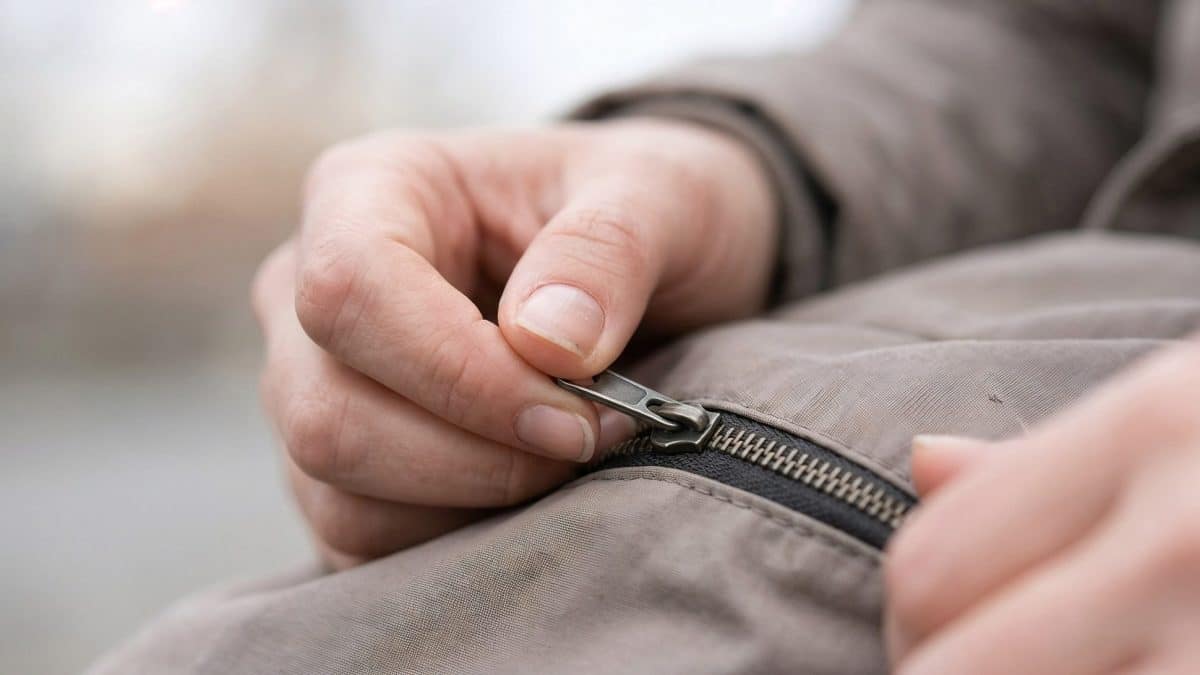
Prep the jacket: zip, snap, empty pockets, turn inside out
Close every fastener, empty every pocket, and check the baffle seams for small tears. A torn baffle leaks down into the wash and keeps leaking every time you wear the jacket afterward, so patch it with seam tape before it goes anywhere near water.
Wash alone on a gentle cold or warm cycle with down-specific detergent
Cold or warm water, never hot: heat is what breaks down the natural oils that keep the down lofty, on top of the risk it poses to the coating. Use about half the amount of detergent the bottle suggests, since a jacket’s dense baffles trap suds more than a single-layer garment would.
Run an extra rinse before you even think about the dryer
Down that goes into the dryer while still holding detergent residue comes out stiff and matted no matter how long you tumble it afterward, the same trap that ruins a comforter’s fill. Most washers have an extra-rinse option; use it every time on a down jacket.
Dry on low heat with the tennis balls, checking every 20-30 minutes
Toss in the balls and run a low-heat cycle, pulling the jacket out every 20 to 30 minutes to knead each baffle chamber by hand. A jacket’s chambers are narrower than a comforter’s baffle boxes, which means clusters can felt into a hard lump faster if you skip a check.
Reproof the shell once it’s completely dry, if water no longer beads
Splash a few drops of water on the sleeve. If it soaks in instead of beading and rolling off, the coating has worn down enough to need help. A spray-on reproofing treatment restores it in a few minutes, and a warm tumble-dry cycle afterward helps the new coating bond to the fabric.
Interactive
Label decoder
Tap a symbol from your care label. No guessing, no scrolling.
19 symbols. Pick one.
Why the coating fades before the down flattens
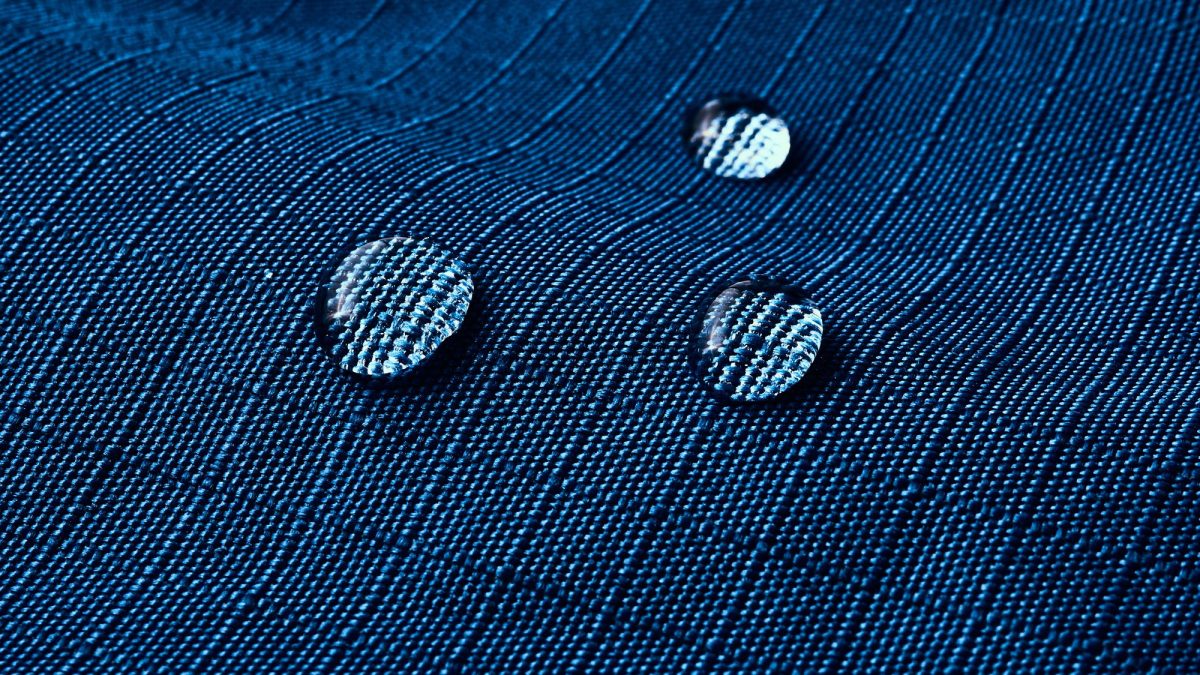
A comforter’s shell only has to hold the fill in and survive a wash. A jacket’s shell has a second job: shedding water before it ever reaches the down, because wet down loses almost all its insulating loft. The DWR coating that does that job sits as a microscopically thin layer on top of the woven fibers, and it wears down from three things at once: the surfactants in ordinary detergent, the natural body oils and skin residue that build up at the collar and cuffs over months of wear, and simple abrasion from a backpack strap or seatbelt rubbing the same few inches of fabric. None of that applies to a comforter, which is why a comforter care guide never mentions reproofing and a jacket guide has to.
The counterintuitive part is that low dryer heat, the same setting used to protect a comforter’s down from scorching, is also what helps a jacket’s coating recover. Heat causes the DWR molecules to realign and stand up on the fabric surface again, temporarily restoring some water resistance even without adding new spray. That’s why some jacket labels specifically call for a warm tumble-dry cycle after washing: it’s doing double duty, drying the down and touching up the coating at the same time.
The zipper and hood problem a comforter never has
A comforter is one continuous shell with no moving parts. A jacket has a zipper running the full length of a narrow baffle chamber, snap plackets, elastic cuffs, and often a hood with a trim that isn’t down at all. Machine agitation works the zipper teeth against the fabric right at the point where the baffle stitching is weakest, which is the actual reason to zip up and turn the jacket inside out rather than a general tidiness habit. A faux fur hood trim can usually go through the same gentle wash and low-heat dry as the jacket itself, though it mats faster and looks noticeably flatter afterward; a real fur trim needs to come off and be cleaned separately by hand, since the same wash that’s safe for down will ruin fur.
When to skip the DIY wash entirely
- The shell is a technical laminate, like Gore-Tex or a similar waterproof-breathable membrane. These jackets often specify professional cleaning because standard detergent and machine agitation can delaminate the membrane layer, not just strip the surface coating.
- The stain is grease, motor oil, or ski wax. A down-specific detergent lifts body oil and general soil, but it won’t touch a petroleum-based stain; pretreat with a dish-soap solution first or the wash will just spread the grease across the shell.
- A baffle seam has already split and down is visibly leaking. Washing first pushes more down out through the tear and clumps what’s left permanently on one side; get the seam patched or repaired before it goes in the machine.
- It’s a premium goose-down jacket rated above roughly 750 fill power. Manufacturers of high-fill-power jackets often specify hand-washing or a specialist down cleaner to protect the investment and preserve any warranty, the same caution a suede care guide asks for with any animal-derived material.
Related guides
For the fill mechanics that a jacket and a comforter share, baffle clumping and the pinch test for checking a chamber is dry all the way through, see how to clean a down comforter. For a jacket built from a completely different material with the opposite problem (leather tolerates a damp cloth where a down shell needs to stay dry until the wash cycle), see how to clean a leather jacket.
Questions
Can I use regular laundry detergent on a down jacket?
It’s not recommended. Regular detergent contains surfactants that strip the water-repellent coating along with the dirt. A detergent labeled specifically for down cleans the fill without stripping that finish as fast.
Should I dry clean a down jacket instead of washing it at home?
Only if the care label calls for it, which usually means a technical waterproof-breathable shell. Solvent-based dry cleaning can strip a standard DWR coating just as thoroughly as detergent can, so it isn’t automatically the safer choice.
How do I know if my jacket’s water repellency needs restoring?
Splash a few drops of water on a dry sleeve. If the water beads and rolls off, the coating is still working. If it soaks straight into the fabric, it’s time for a spray-on reproofing treatment followed by a warm tumble-dry cycle.
Why does my jacket feel lumpy after washing even though I used tennis balls?
The chambers likely dried unevenly because a check was skipped partway through. Down needs to be redistributed by hand every 20 to 30 minutes while it’s still damp; once a cluster dries compressed against the fabric, tumbling alone won’t undo it.