How to Clean a Leather Jacket
Leather isn't suede. It tolerates a damp cloth and conditioner where suede can't touch water at all. Here's the wipe, condition, and protect method that keeps full-grain and top-grain leather from cracking.
Quick answer · care label Leather — full-grain / top-grain
-
1 · Wash
Do not wash -
2 · Bleach
No bleach -
3 · Dry
Dry in shade -
4 · Iron
Do not iron -
5 · Pro care
Pro clean P
In one line Wipe down with a barely damp cloth and mild soap in small sections, dry away from heat on a padded hanger, then condition and protect once fully dry. Total hands-on time: 30 minutes.
Leather isn’t suede, and treating it like suede is the mistake
Suede is the underside of the hide, napped and completely intolerant of water: a single drop leaves a permanent dark ring. Leather is the top-grain or full-grain surface, sealed and finished, and it can handle a barely damp cloth without staining at all. The two materials often sit next to each other on the same rack, sometimes even on the same jacket as trim, so it’s an easy mix-up. Clean a leather jacket with the suede method (dry brushing only, never any moisture) and dirt and body oil just sit on the surface, building up a dull film that no amount of brushing removes.
The reverse mistake is worse. Clean a suede jacket with the leather method below, with a damp cloth and conditioner, and the water leaves marks that don’t come out. If there’s any doubt which material a jacket is, check the surface: leather has a visible grain pattern and a slight sheen, suede is uniformly matte and fuzzy to the touch. For a suede garment specifically, see how to clean a suede jacket instead of the method here.
Polyurethane (PU) and other faux leather jackets don’t need conditioner at all, since there’s no natural hide to feed, and they tolerate a milder, simpler wipe-down. Using leather conditioner on faux leather usually just sits on the surface and attracts dust. It is also a different material with a different way of failing, since the coating breaks down on its own timetable: how to clean faux leather has the method and the test that tells PU from vinyl.
What you’ll need
| Item | Why | Substitute |
|---|---|---|
| Mild soap, diluted (a few drops in a cup of water) | Lifts surface grime without stripping the finish the way a stronger detergent would | Saddle soap, used sparingly |
| Two soft microfiber cloths | One damp for cleaning, one dry for immediate follow-up; leather shouldn’t stay wet even briefly | A clean, lint-free cotton cloth |
| Leather conditioner or cream | Replaces the natural oils that soap and normal wear both remove over time | A leather balm with no wax or silicone listed |
| Leather protector spray | Adds a light water-repellent layer so future rain beads off instead of soaking in | Skip if the jacket already has a factory finish; test a hidden spot first |
| Padded or wide-shouldered hanger | Keeps the shoulder shape while the jacket air-dries | Two hangers hooked together to widen a narrow one |
The method, step by step
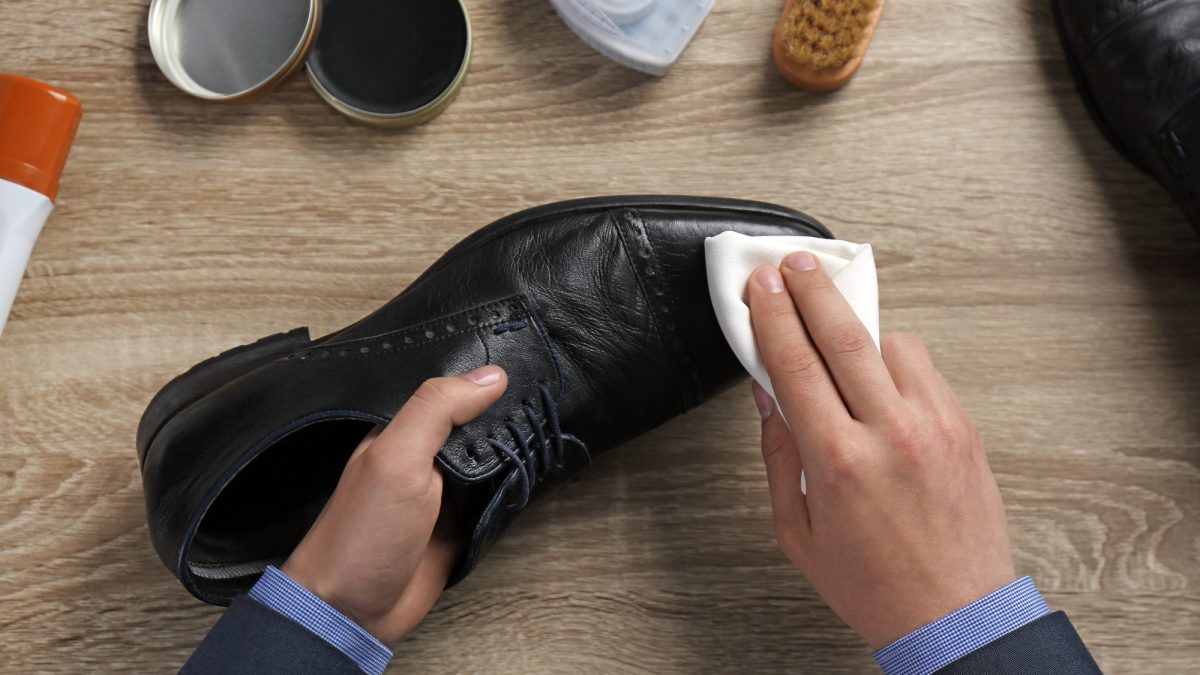
Spot test on an inside cuff first
Dab a small amount of diluted soap on an inconspicuous spot, like the inside of a cuff or an inner pocket flap, and let it dry fully before working on the visible panels. Some dyed or aniline leathers lighten slightly with any moisture, and it’s better to find that out on a hidden spot.
Dust the whole surface dry first
A dry microfiber cloth over every panel before any liquid touches the jacket. Dust and grit ground into the surface during a wet wipe-down act like fine sandpaper against the finish.
Clean in small sections with the damp cloth
Work one panel at a time with the barely damp cloth, then immediately follow with the dry cloth on that same section before moving to the next. Leather that sits wet, even for a few minutes, is more likely to absorb moisture into the surface instead of just having it wiped off.
Air dry away from any heat source
On the padded hanger, at room temperature, away from radiators, direct sun, or a hairdryer. Heat pulls moisture out of the leather itself, not just off the surface, and that’s what causes cracking later.
Condition once completely dry
A thin, even coat of conditioner worked in with a clean cloth, in small circular motions. Leather that was just cleaned has less natural oil than usual, and skipping this step is how a jacket ends up dry and prone to cracking within a season.
Finish with a light protective layer
Two thin passes of protector spray, held back from any hardware, zippers, or non-leather trim. A heavy single coat can leave a visible sheen that wasn’t there before.
Interactive
Label decoder
Tap a symbol from your care label. No guessing, no scrolling.
19 symbols. Pick one.
Stains and problem spots, treated individually
| Mark | Treatment | Recoverable |
|---|---|---|
| Ink | Rubbing alcohol on a cotton swab, dabbed directly on the mark only, never wiped across the surrounding leather | Usually, if treated fresh |
| Grease or oil spot | Cornstarch or talcum powder pressed onto the spot, left overnight to draw the oil out, then brushed away | Usually |
| Salt rings from rain or snow | A cloth dampened with equal parts water and white vinegar, wiped over the entire panel rather than just the ring, so the color stays even | Yes |
| Mold from storage | Wipe with a cloth dampened in equal parts rubbing alcohol and water, dry fully in open air, then condition; do not use bleach or ammonia on leather | Usually, if caught early |
What ruins a leather jacket
| Mistake | What happens | Fix |
|---|---|---|
| Machine or hand washing, fully submerged | Water saturates the hide and dries stiff, often shrinking unevenly across panels | Damp-cloth cleaning only, never submersion |
| Speeding up drying with a hairdryer or radiator | Direct heat pulls oil out of the leather itself, leading to cracking that shows up weeks later | Air dry at room temperature, away from any heat source |
| Alcohol-based wipes or baby wipes for routine cleaning | Strips natural oils with every use, leaving the surface dry and brittle over a few months | Mild soap solution for cleaning, conditioner to replace oils afterward |
| Storing in a sealed plastic garment bag | Traps humidity against the leather, which is exactly the condition mold needs to establish itself | A breathable cotton garment bag, or no bag at all in a dry closet |
Related guides
For a suede jacket specifically, which needs a completely different, water-free method, see how to clean a suede jacket. If a jacket has been stored somewhere damp and already shows mold, the removal approach differs from routine leather care; see how to clean mold off clothes. For a leather bag, which has a fabric lining and a handle that need different treatment than a jacket’s flat panels, see how to clean a leather bag. For a jacket with an entirely different fill and construction problem, an insulating layer with a water-repellent coating to protect, see how to clean a down jacket. For the water-drop test that tells finished leather apart from aniline leather before you clean anything, see how to clean leather.
Questions
Can I use baby wipes on a leather jacket?
Not for routine care. Most baby wipes contain alcohol or fragrance compounds that strip the natural oils out of leather over repeated use, the same problem as alcohol-based cleaning wipes. A diluted mild soap solution does the same cleaning job without that side effect.
How often should a leather jacket be conditioned?
Every three to six months for a jacket in regular use, or any time it’s been cleaned with soap and water. Conditioning replaces oils that both wear and washing remove, and a jacket that starts feeling dry or slightly stiff usually needs it sooner than the schedule suggests.
Can a leather jacket go in the washing machine on a delicate cycle?
No, regardless of the cycle setting. Any full submersion in water saturates the hide in a way a damp cloth never does, and leather that’s been through a wash cycle typically dries stiff and uneven across the panels.
Does this method work for faux leather (PU) jackets?
Only partly. Faux leather tolerates a simpler wipe-down with mild soap and water, but skip the conditioner and protector spray steps entirely, since there’s no natural hide underneath for conditioner to feed. The bigger difference is that a PU jacket ages whether you wear it or not, so the drying-time rule matters far more than it does here: see how to clean faux leather.