How to Clean a Leather Bag
A leather bag isn't a scaled-down jacket. It has a fabric lining that traps odor, one handle spot that absorbs most of the hand oil, and a structured shape that creases if it dries flat. Here's the wipe, stuff, and condition method built around those three points.
Quick answer · care label Leather — full-grain / top-grain
-
1 · Wash
Do not wash -
2 · Bleach
No bleach -
3 · Dry
Dry in shade -
4 · Iron
Do not iron -
5 · Pro care
Pro clean P
In one line Clean the handle separately first, wipe the body in sections, stuff the bag before it dries to hold its shape, and deodorize the fabric lining with baking soda while it airs out. Total hands-on time: 45 minutes.
A bag fails in three places a jacket never has to deal with
The wipe-and-condition method for a leather jacket assumes flat, unstructured panels with even wear across the whole surface. A bag is a different shape of problem. It has an interior lining, usually cotton or polyester twill, that traps odor and moisture against the leather from behind where no amount of exterior conditioning ever reaches. It takes almost all of its hand-oil wear at one exact point, the handle or strap grip, rather than spread evenly the way a sleeve or collar wears. And it’s structured: a jacket dries fine laid flat or hung, but an empty bag left to dry collapsed in on itself sets hard creases across the base and sides that no amount of conditioning erases afterward.
None of that shows up in a general leather-care guide, because a jacket doesn’t have any of it. Treat a bag exactly like a jacket, and the outside can look perfect while the lining quietly grows mildew and the base has already creased.
Polyurethane (PU) bags don’t have a hide to feed and don’t need conditioner. A mild soap wipe-down is enough; conditioner and protector spray just sit on the surface and attract dust.
What you’ll need
| Item | Why | Substitute |
|---|---|---|
| Mild soap, diluted (a few drops in a cup of water) | Lifts surface grime and handle oil without stripping the finish | Saddle soap, used sparingly |
| Two soft microfiber cloths | One damp for cleaning, one dry for immediate follow-up on each section | A clean, lint-free cotton cloth |
| Leather conditioner or cream | Replaces oils that soap, sun, and normal handling remove, concentrated where the strap grip needs it most | A leather balm with no wax or silicone listed |
| Tissue paper or a rolled hand towel | Fills the bag from inside to hold its shape while damp, so the base and sides don’t crease flat | Bubble wrap, loosely packed |
| Baking soda | Sits inside overnight to pull odor out of the fabric lining, which the exterior method never touches | An unused, unscented dryer sheet left inside for a few days |
The method, step by step
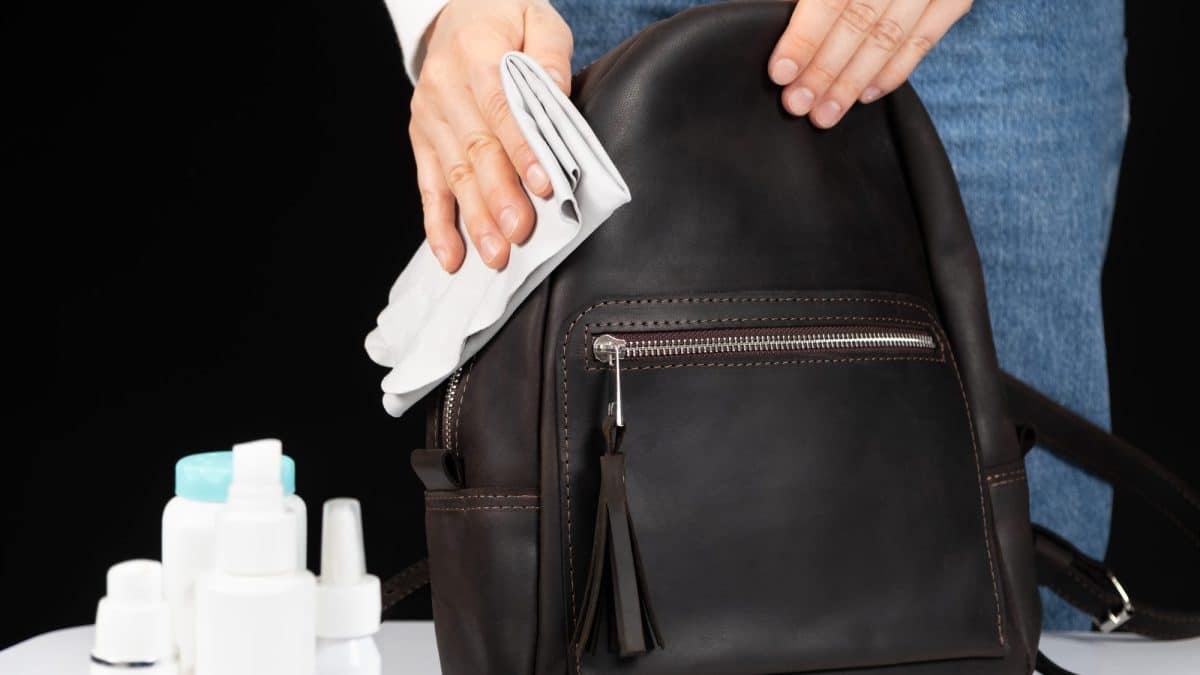
Empty it completely and check the lining
Every pocket, including zip compartments. Anything left inside presses against the leather from behind while it’s damp, and a forgotten pen or receipt is how ink stains and creased lining happen.
Spot test on the underside of the base
A dab of diluted soap on a hidden panel, left to dry fully before touching the visible sides. Dyed and aniline leathers can lighten slightly with any moisture, and the underside of the base is the one spot no one sees.
Dust the whole exterior dry first
A dry microfiber cloth over every panel, working into corners and along the base seam where grit collects. Ground-in dust acts like fine sandpaper once a wet cloth goes over it.
Clean the handle or strap separately, first
This is the one spot with genuinely different wear: concentrated hand oil rather than the light, even grime the rest of the bag sees. Go over it with the damp cloth twice, since a single pass usually isn’t enough to lift oil that’s had weeks to set into the grain.
Clean the rest of the exterior in sections
One panel at a time with the barely damp cloth, then immediately the dry cloth on that same section before moving on. Leather that sits wet for more than a minute or two is more likely to absorb the moisture than just have it wiped off.
Stuff the bag before it dries
Pack tissue paper or a loosely rolled towel into the body, enough to round it out without straining the seams. Do this while the bag is still damp, not after: a bag left to dry collapsed sets the crease in permanently, and stuffing it later won’t pull the shape back out.
Air dry away from any heat source
Standing upright at room temperature, away from radiators, direct sun, or a car interior. Heat pulls moisture out of the leather itself, which is what causes cracking weeks later, not right away.
Deodorize the lining while it dries
A few tablespoons of baking soda in a small open container or a loosely tied sock, set inside the bag for the same 24 hours. This is the step a jacket never needs, since a jacket doesn’t have an enclosed lining trapping moisture and odor against fabric the way a bag’s interior does.
Condition the whole exterior, handle last and heaviest
A thin, even coat worked in with a clean cloth once completely dry, with a second light pass specifically on the handle or strap grip, since that’s the spot that lost the most oil during cleaning.
Interactive
Label decoder
Tap a symbol from your care label. No guessing, no scrolling.
19 symbols. Pick one.
The lining is a separate problem from the leather
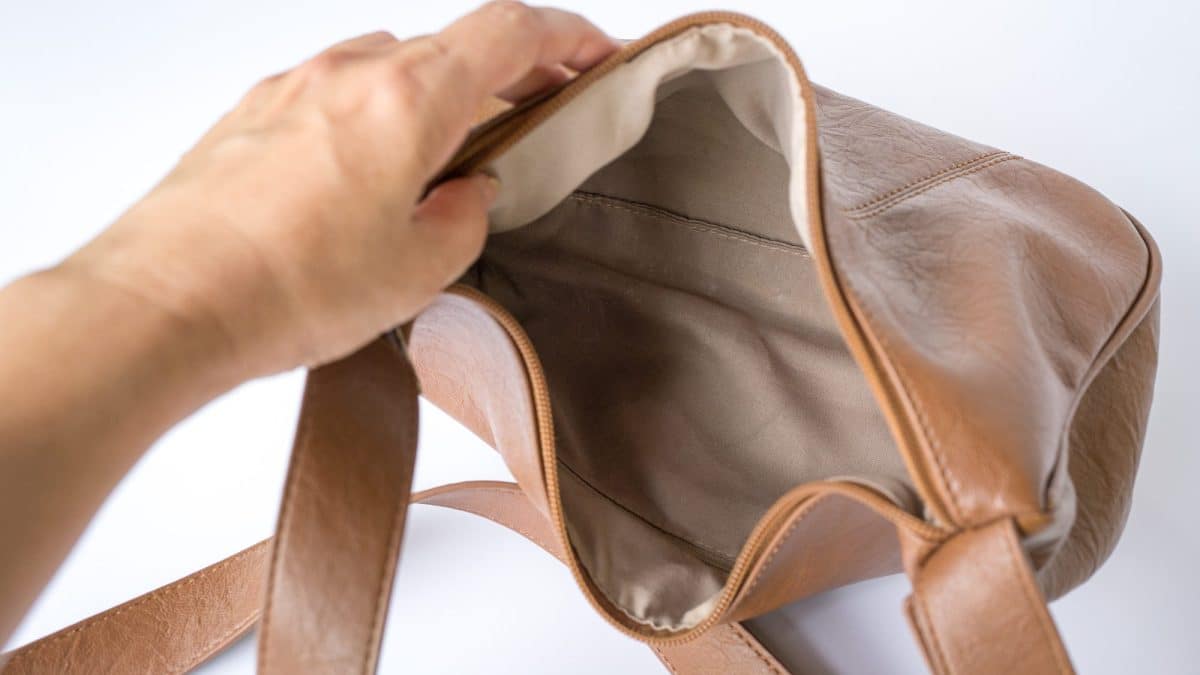
Everything above treats the outside. The inside is fabric, not leather, and it fails a different way: it doesn’t crack or dry out, it holds odor and, if the bag was ever put away damp, mildew.
| Problem | Fix |
|---|---|
| General musty smell, no visible marks | Baking soda left inside 24-48 hours, vacuumed out with a brush attachment afterward |
| Dark or fuzzy spots on the fabric lining | Dab with a cloth dampened in equal parts rubbing alcohol and water, then leave the bag open and unstuffed in a dry room until fully aired out before restuffing |
| Loose pen ink or makeup residue | Rubbing alcohol on a cotton swab, blotted rather than rubbed, working from the edge of the mark inward |
Stains on the exterior, treated individually
| Mark | Treatment | Recoverable |
|---|---|---|
| Ink | Rubbing alcohol on a cotton swab, dabbed on the mark only, never wiped across surrounding leather | Usually, if treated fresh |
| Grease or oil spot on the body | Cornstarch pressed onto the spot, left overnight to draw the oil out, then brushed away | Usually |
| Dark ring where a metal foot or buckle has rested | Diluted soap on the leather only, worked up to the hardware edge without touching the metal | Usually |
| Color transfer from dark denim against the body | Only while it is fresh, and only the share still sitting on the surface: a leather cleaner wiped over the whole panel rather than the mark, so the tone stays even. Once the dye has migrated into the finish there is nothing left on top to lift, which how to clean stains off leather explains in full | Only if caught early |
What ruins a leather bag
| Mistake | What happens | Fix |
|---|---|---|
| Letting it dry collapsed and unstuffed | The base and sides set hard creases that conditioning afterward can’t pull back out | Stuff it while still damp, not after it’s already dry |
| Cleaning only the exterior, never the lining | Moisture and odor build up inside where they’re never seen until the smell is already established | Baking soda inside every time the outside gets a full clean |
| Conditioning evenly instead of favoring the handle | The one spot with the heaviest oil loss doesn’t get enough conditioner, and it’s the first part to show cracking | A second, heavier pass on the handle or strap grip |
| Storing in a sealed plastic bag | Traps humidity against both the leather and the lining, which is exactly what mildew needs | A breathable cotton dust bag, stuffed lightly, in a dry closet |
Related guides
For a suede bag, which fails from dye transfer rather than handle wear, see how to clean a suede bag. For the general leather wipe-and-condition method without a bag’s lining or structure to account for, see how to clean a leather jacket. If mildew has already set into the lining rather than just leaving an odor, see how to clean mold off clothes for the removal approach. For the water-drop test that tells finished leather apart from aniline leather before any cleaning method touches it, see how to clean leather.
Questions
Why does my leather bag smell musty even though the outside looks clean?
The smell almost always comes from the fabric lining, not the leather itself. Exterior cleaning and conditioning never reach the inside, so a bag can look perfectly cared for on the outside while the lining holds moisture and odor from being put away damp even once.
Should I condition the handle the same amount as the rest of the bag?
No, it needs more. The handle or strap grip absorbs far more hand oil and wear than any other panel, and treating it the same as the body under-conditions the one spot most likely to crack first.
My bag dried with creases across the bottom. Can that be fixed?
Sometimes, if caught early. Restuff it firmly, lightly dampen the creased area, and let it dry stuffed again. Creases that have been set for months are much harder to remove than ones caught right after the bag dried flat.
Can I put a leather bag in the freezer to deal with a musty smell, like some people suggest for shoes?
It doesn’t fix the cause. Cold can mask odor temporarily, but the moisture in the lining that’s producing the smell is still there once the bag warms back up. Baking soda left inside actually pulls the moisture and odor out instead of just suppressing it.