How to Clean a Shower Curtain
A shower curtain doesn't just get dirty once, it lives in a room that keeps reinfecting it. Pink film and dark mildew spots are two different organisms with two different fixes, and washing the fabric alone doesn't solve either one.

Quick answer · care label Fabric shower curtain — polyester or cotton-blend
-
1 · Wash
Wash 40° -
2 · Bleach
Oxygen bleach -
3 · Dry
Tumble low -
4 · Iron
Do not iron -
5 · Pro care
No dry clean
In one line Wash on cold or warm with towels added for agitation and oxygen bleach for the pink film, pretreat the hem with vinegar first, then wipe down the tub, tile, and rod the same day, since that's what actually causes it to come back. Total hands-on time: about 20 minutes.
A fabric shower curtain doesn’t just get dirty once, it lives in a room that keeps reinfecting it
Most fabric covered in this kind of guide gets stained by one event and then dries out somewhere else. A shower curtain never leaves the room where the problem started. It gets soaked in warm water and soap film several times a week, then gets bunched to one side against a wet tile wall or a puddled tub rim, and it stays there until the next shower starts the cycle over again. That’s why a shower curtain can come out of the wash looking clean and be discolored again within a week: the fabric wasn’t the actual source, the bathroom was, and washing the curtain alone doesn’t touch it.
Two different organisms cause the two problems people usually lump together as “shower curtain grime,” and they need different treatment. Knowing which one you’re looking at changes what actually works.
Most fabric shower curtains hang outside a separate vinyl or PEVA liner that touches the water directly. If yours has one, only the fabric outer layer is covered by the care label below; a plastic liner isn’t a textile, and it’s usually cheaper to replace than to fully de-slime once it’s coated.
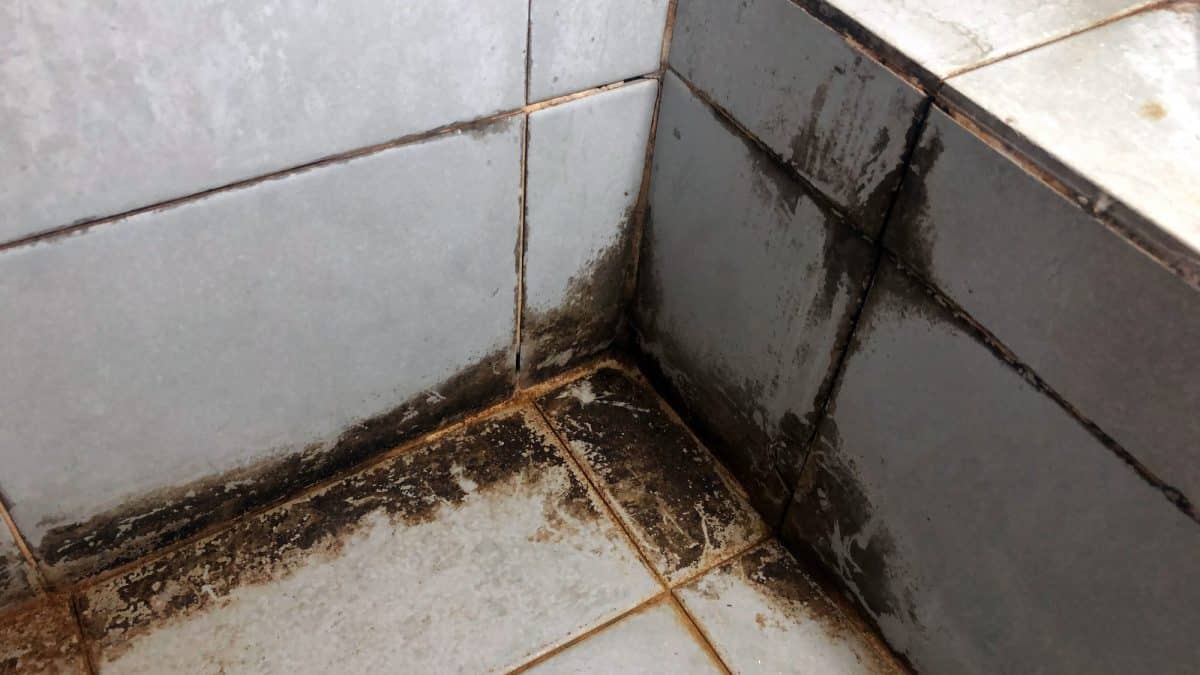
Pink slime is bacteria, mildew is fungus, and they don’t respond to the same fix
| Sign | What it is | What actually works |
|---|---|---|
| Pink, orange, or reddish film, usually along the hem or in the folds | Serratia marcescens, an airborne bacteria that feeds on soap scum and mineral residue, not on the fabric itself | Bleach or vinegar kills it, but it comes back fast unless the tub, tile, and caulk it’s also colonizing get cleaned the same day |
| Black, gray, or dark green fuzzy spots, usually where the curtain folds against itself | Mold or mildew, a fungus that needs the fabric to stay damp for an extended stretch, the same organism covered in how to clean mold off clothes | A vinegar soak followed by full drying in sunlight or a well-ventilated space, and keeping the curtain from staying folded wet |
The two often show up together, since a curtain damp long enough to grow mildew is also a curtain sitting next to a wet tub rim long enough to pick up bacteria from it. Treating for one and ignoring the other is usually why the same method “doesn’t work” for some people.
What you’ll need
| Item | Why | Substitute |
|---|---|---|
| Distilled white vinegar | Breaks down mildew and soap-scum residue without the coating risk that chlorine bleach carries on printed or laminated curtains | A store-bought mildew remover labeled safe for fabric |
| Oxygen-based (non-chlorine) bleach | Lifts the pink bacterial film and general graying without stripping color or attacking a water-resistant coating | A color-safe bleach booster added to the wash |
| 2-3 old bath towels | Washing a stiff curtain alone in the machine gives it almost no scrubbing action; towels add bulk and friction that helps lift the biofilm | A couple of pillowcases stuffed with an old T-shirt |
| All-purpose bathroom cleaner or more vinegar | For wiping the tub, tile, and curtain rod the same day, since that’s the actual reservoir reinfecting the curtain | A diluted bleach solution on tile and grout only, never on the fabric |
The method, step by step
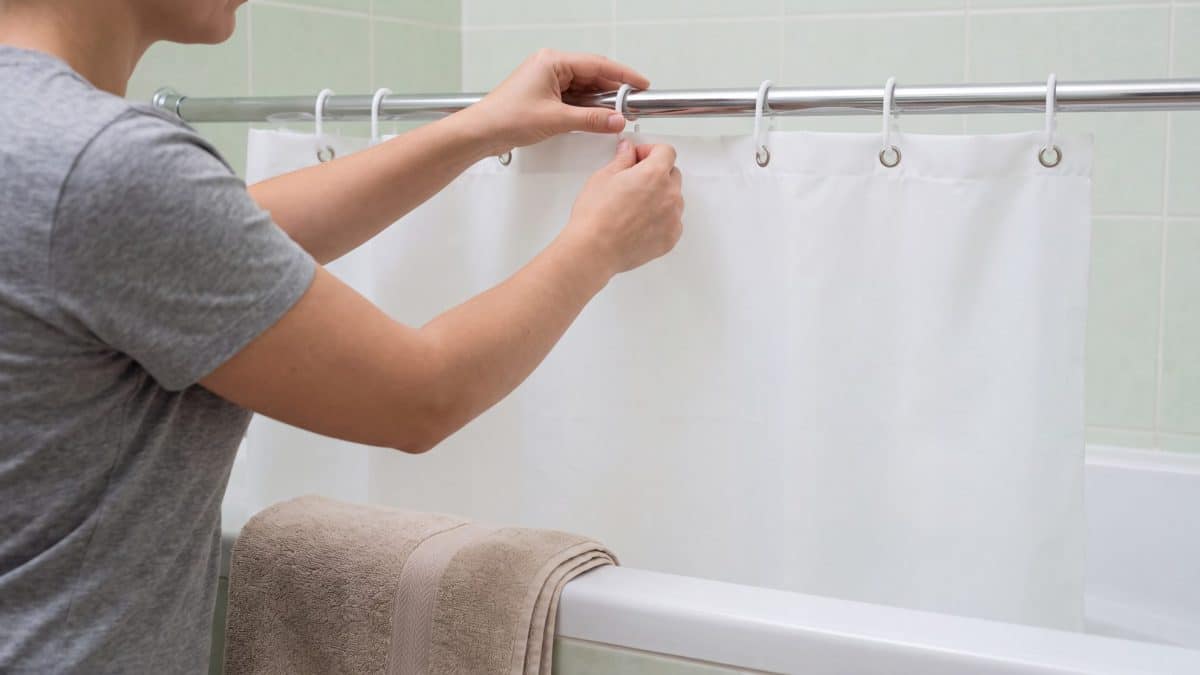
Check the care label and the hem first
Most polyester and cotton-blend curtains are machine washable; look for the tag sewn into a side seam. Then check the hem specifically, even if the rest of the panel looks fine. The bottom few inches sit closest to standing water and trap the most biofilm, so they’re usually discolored well before the rest of the curtain shows anything.
Pretreat the hem and any visible spots
Spray or sponge distilled vinegar directly onto the hem and any pink or dark spots, and let it sit for 10-15 minutes before washing. This gives the vinegar time to break the biofilm loose instead of just diluting on contact with the wash water.
Wash on cold or warm with towels added
Add 2-3 old towels to the load for agitation, along with your normal detergent and the oxygen bleach. Warm water clears more soap-scum residue than cold, but check the tag first; some water-resistant or laminated curtains specify cold only to protect the coating.
Skip the high-speed spin if the curtain has metal grommets
A full high-speed spin can bend or tear the fabric around the grommet holes over repeated washes. If the machine has a delicate or reduced-spin option, use it, then let the curtain drip partway before moving it to finish drying.
Hang to dry immediately, fully spread out
Rehang the curtain right away rather than leaving it damp in the machine or a laundry basket. A tumble dryer on low is fine for most fabric curtains, but pulling it out slightly damp and hanging it fully open finishes the job without the heat risk to a coating or grommets, and gets it back to work before mildew has a chance to restart.
Wipe the tub, tile, and rod the same day
Clean the surfaces the curtain actually touches: the tub rim, the tile it brushes against, and the rod itself. Skipping this step is the single biggest reason pink slime comes back within a week of a wash that looked completely effective.
Interactive
Label decoder
Tap a symbol from your care label. No guessing, no scrolling.
19 symbols. Pick one.
Keeping it from happening again is easier than re-cleaning it
The fix that actually prevents both problems isn’t a stronger cleaner, it’s changing what happens in the 30 seconds after a shower ends. A curtain pushed to one side and left bunched against a wet tile wall recreates the exact conditions mildew and bacteria both need: standing moisture, no airflow, and folds of fabric touching itself for hours. Spreading the curtain fully across the rod after every shower, and leaving the bathroom fan on or a window cracked for 20-30 minutes afterward, does more to prevent regrowth than any cleaning method above.
| Mistake | What happens | Fix |
|---|---|---|
| Using chlorine bleach on a printed, laminated, or water-resistant curtain | Strips print color and can degrade the water-resistant coating, leaving a curtain that soaks through faster than before | Use oxygen-based bleach instead; save chlorine bleach for plain white, uncoated cotton curtains only |
| Washing the curtain but not the tub, tile, or rod | The bacteria causing pink slime live on those surfaces too, so the curtain picks the film back up within days | Wipe down the surfaces the curtain touches on the same day it comes out of the wash |
| Leaving it bunched and damp after a shower | Recreates the trapped-moisture conditions mildew needs, undoing a clean wash within a week or two | Spread the curtain fully across the rod after every shower and run the bathroom fan briefly |
| Full-speed spin cycle on a curtain with metal grommets | Repeated high-speed spins bend and eventually tear the fabric around the grommet holes | Use a delicate or reduced-spin cycle, or remove the curtain and hang it damp instead |
Related guides
The fungus behind the dark, fuzzy spots on a shower curtain is the same one covered in how to clean mold off clothes, including why killing it before drying matters more than the cleaner used. For another fabric that looks dry on the surface while staying damp underneath for much longer, how to clean a rug covers the same drying trap from a different angle: a backing instead of a hem. The bath mat on the floor of the same room is part of the same reservoir and fails for exactly the reason the hem does, with its non-slip backing pressed flat against a cold floor between showers: how to clean throw rugs.
Questions
Can a fabric shower curtain go in the washing machine?
Most polyester and cotton-blend fabric curtains are machine washable; check the tag sewn into a side seam to confirm. Vinyl and PEVA liners are not machine washable and should be wiped down or replaced instead.
Why does my shower curtain turn pink?
Pink or orange film is usually a bacteria called Serratia marcescens that feeds on soap scum and mineral residue in the bathroom, not on the fabric. It also grows on tile, grout, and tub surfaces, which is why it comes back quickly if only the curtain gets cleaned.
Is bleach safe to use on a shower curtain?
Oxygen-based, non-chlorine bleach is safe for most fabric curtains and won’t strip color or coatings. Regular chlorine bleach is only safe on plain white, uncoated cotton; on printed or water-resistant curtains it can fade the print and degrade the coating.
How often should a shower curtain be washed?
Every 2-4 weeks for a curtain in regular use, and sooner if pink discoloration appears at the hem. Waiting until mildew spots are visible usually means the fabric has already been damp long enough for the fungus to take hold, not just the surface.