How to Clean Suede Shoes
Suede shoes can handle a splash of rain. What they can't handle is drying near heat or losing their shape while wet. Here's the method that protects the toe box and heel, the two spots that fail first.
Quick answer · care label Suede — LS
-
1 · Wash
Do not wash -
2 · Bleach
No bleach -
3 · Dry
Dry in shade -
4 · Iron
Do not iron -
5 · Pro care
Pro clean P
In one line Brush dry, spot-treat salt and marks with a barely damp vinegar cloth, dry with shoe trees or stuffing away from heat for 24 hours, then brush the nap back up. Total hands-on time: 15 minutes.
Can suede shoes get wet, or should you avoid puddles altogether?
They can get wet. A short walk through drizzle or a splash from a puddle will not ruin a pair of suede shoes. What causes lasting damage is what happens after: drying them on a radiator, wearing them again before they’re fully dry, or scrubbing at a water mark with a wet cloth. Suede is leather with a raised nap, and leather tolerates water. It does not tolerate heat or pressure while wet.
Shoes take more punishment than any other suede item because they carry your full weight, flex at the toe with every step, and pick up road salt, oil from pavement and grit that other suede items never touch. That is why the fix below is built around the two failure points specific to footwear: the toe box, which creases first, and the heel counter, which loses its shape fastest.
Water in, water out, slowly, away from heat, with the shape held by a shoe tree or stuffing while it dries. Skip the shape support and the shoe dries with a crease that brushing cannot remove.
What you’ll need
| Item | Why | Substitute |
|---|---|---|
| Suede brush | Brass or nylon bristles lift the nap without cutting it | A clean, dry toothbrush |
| Shoe trees or plain paper | Holds the toe box and heel shape while the shoe dries | Rolled kitchen paper, no colour print |
| White vinegar | Lifts salt rings at a pH the leather tolerates | Rubbing alcohol, mixed 1:1 with water |
| Suede eraser | Removes dry scuffs at the toe without water | A clean pencil eraser for small marks |
The method, step by step
Let the shoes dry fully first
If they’re wet or muddy, resist the urge to clean them right away. Insert shoe trees or stuff the toe with paper so they hold shape while drying, then leave them somewhere away from heat.
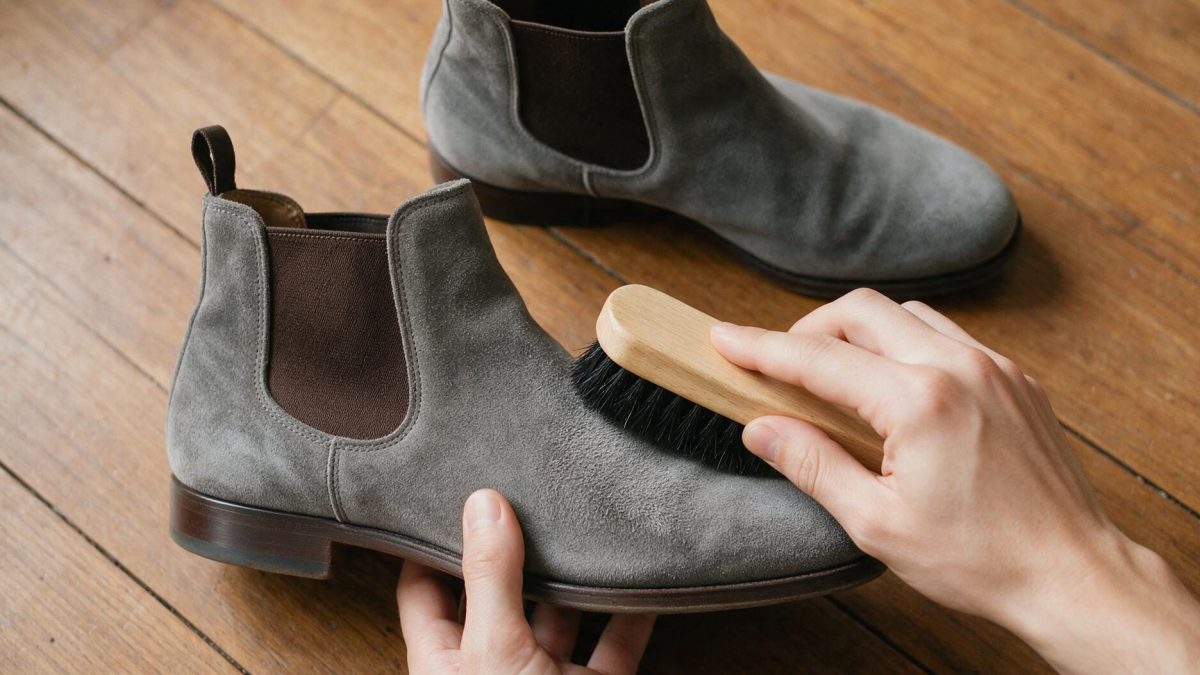
Brush the entire upper, one direction
Work in short strokes following the grain of the nap, paying extra attention to the toe box and the crease line where the shoe flexes. Most everyday dulling disappears at this step.
Spot-treat marks and salt rings
A cloth dampened with a 1:1 mix of white vinegar and water, pressed onto the mark and lifted rather than rubbed. Work from the outer edge of the stain inward so you don’t push it wider.
Re-insert the shoe trees
If you removed them for the spot treatment, put them back before the shoe starts drying. This single step prevents most of the toe creasing people blame on “bad suede.”
Dry in shade, away from any heat
Never a radiator, never a car heater vent, never direct sun on a windowsill. Give the shoes the full day even if the surface feels dry after a few hours.
Brush the nap back up, then protect
Once bone dry, brush again to raise the fibre and even out the colour. Finish with two light passes of a silicone-free suede protector spray, held about 25 cm from the leather.
Interactive
Label decoder
Tap a symbol from your care label. No guessing, no scrolling.
19 symbols. Pick one.
The toe box and heel counter need extra attention
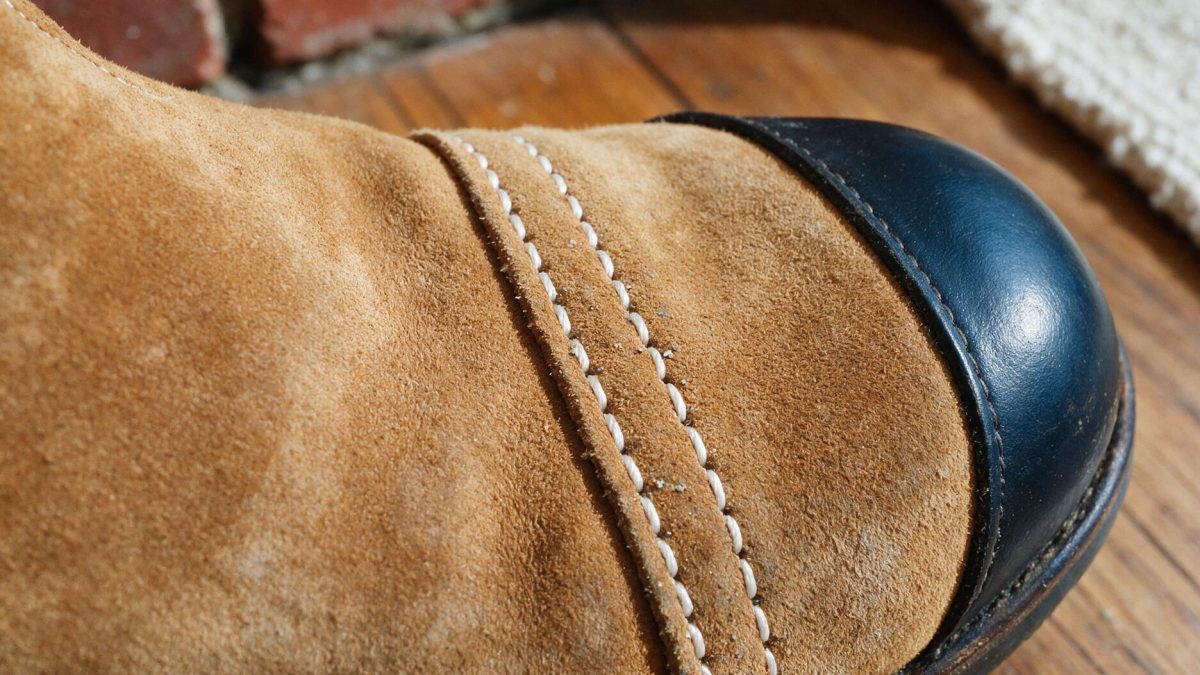
These are the two spots where suede shoes fail first, and both are avoidable with the routine above.
| Spot | What goes wrong | Fix |
|---|---|---|
| Toe box | Flattens and shines from repeated flexing when the shoe dries without support | Shoe trees or firm paper stuffing on every wet clean, not just storage |
| Heel counter | Collapses inward if the shoe is left slouched instead of upright while drying | Dry the shoe standing on its sole, never lying on its side |
| Welt line | Traps grit that then abrades the nap just above the sole | Run the brush along the welt last, after the rest of the upper |
Common suede shoe stains
| Stain | Treatment | Recoverable |
|---|---|---|
| Road salt | Undiluted white vinegar dabbed on, repeated once dry if a ring remains | Yes |
| Scuffs at the toe | Suede eraser, worked in short strokes, then brushed | Yes |
| Oil or grease from pavement | Cornflour pressed on, left 8 hours, then brushed away | Usually |
| Deep-set mud | Fully dried first, then brushed hard; never scraped while wet | Usually |
Machine wash, tumble dry, or clean with saddle soap and leather conditioner. Conditioner is made for smooth leather; on suede it mats the nap flat and the fibres do not stand back up.
Buying suede shoes that survive daily wear
Not all suede holds up the same way, and a few minutes checking before you buy saves a lot of brushing later.
- Ask about the finish. Some suede shoes now come with a factory water-repellent treatment. It wears off gradually, so a fresh coat of protector spray after the first few wears extends it rather than replaces it.
- Check the sole attachment. Glued soles handle occasional wetting fine; stitched welts tolerate more repeated exposure over the shoe’s life, which matters if you plan to wear the pair through a full wet season.
- Darker suede hides wear better. Pale grey and sand tones show water rings and scuffs far more readily than tobacco or black, which is worth knowing if these are meant for daily use rather than occasional wear.
Related guides
This method covers low-cut shoes specifically. A few situations need a different approach:
- Ankle and calf-height styles crease at the shaft in a way low shoes don’t. See how to clean suede boots.
- Suede combined with mesh or rubber panels needs spot treatment that stops at the seam. See how to clean suede sneakers.
- For the general method behind all of this, and how suede compares to nubuck and nappa leather, see how to clean suede.
Questions
Can I wear suede shoes in the rain at all?
Yes, especially with a protector spray applied beforehand. A short walk in light rain is well within what suede tolerates. What to avoid is standing water deep enough to soak through the welt, and wearing them again before they’ve fully dried.
My suede shoes smell. What actually works?
Baking soda left inside overnight absorbs odour without any moisture. Avoid spray deodorisers made for sneakers; several contain alcohol or fragrance oils that leave a ring on suede.
Is it worth paying for professional suede cleaning?
For an expensive pair with a stain the home method doesn’t shift, yes. A professional cleaner with the right solvent can lift oil-based stains that vinegar and cornflour won’t touch. For everyday scuffs and water marks, the routine above gets the same result for free.
How long do suede shoes usually last with proper care?
Several years of regular wear is typical when they’re brushed after each use and never dried near heat. Most suede shoes that fail early do so from a handful of heat exposures, not from ordinary wear.