How to Clean Jeans
Machine wash cold, or never wash at all: both are correct denim advice, just for different jeans. Here's how to tell which method your pair actually needs.
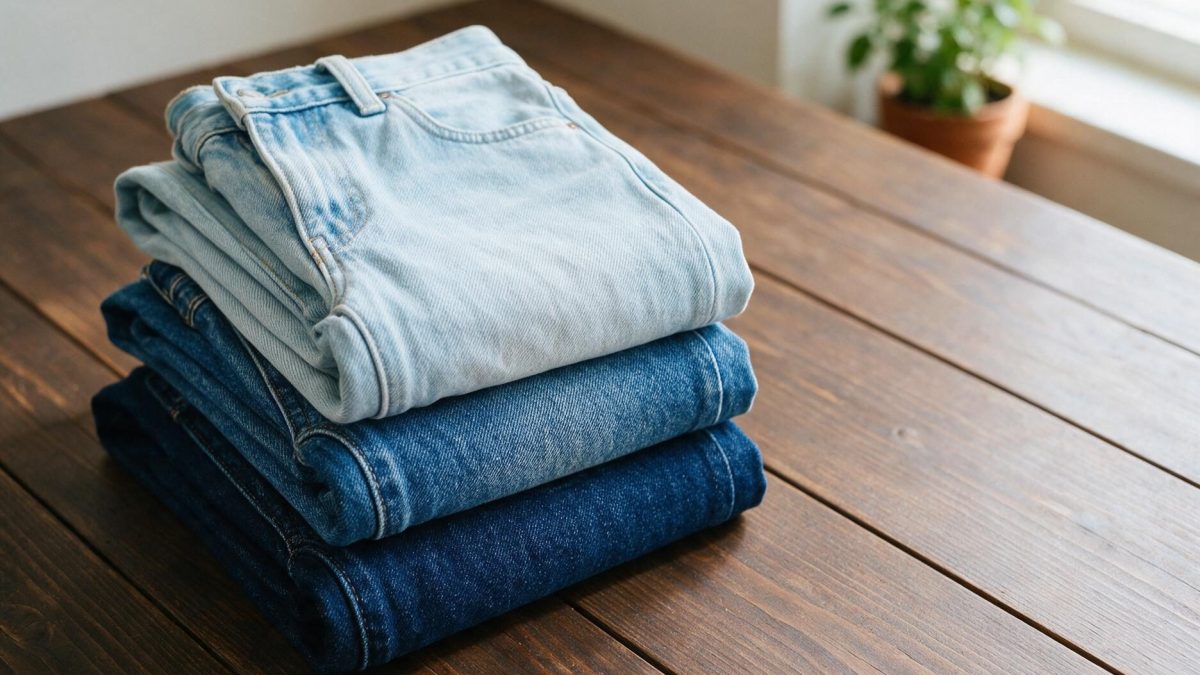
Quick answer · care label Denim — cotton / cotton-elastane
-
1 · Wash
Wash 30° -
2 · Bleach
No bleach -
3 · Dry
Line dry -
4 · Iron
Iron 150° -
5 · Pro care
No dry clean
In one line Check the inside tag: stretch denim (elastane listed) gets a cold, gentle machine wash every 5-10 wears; raw denim (no elastane) gets 3-6 months of wear before its first wash. Both dry flat or line-dried, never in a hot dryer.
Raw denim and stretch denim need opposite care, and the label rarely says which you have
Two completely different sets of advice circulate for jeans, and both are right, just for a different pair than the one you’re holding. One camp says never machine wash denim at all, freeze it instead, and let months of wear build fades that are unique to your body. The other says machine wash cold every week like any other cotton garment. The reason both are correct is that “jeans” covers two constructions that behave nothing alike: everyday stretch denim, built with 1-3% elastane for recovery, and raw or rigid denim, 100% cotton with no give at all. Wash a rigid pair too early and the fade pattern that was supposed to form at the knees and hips never develops. Baby a stretch pair with the wear-in method and the elastane just degrades from wear with no washing to remove the salt and oil breaking it down.
The inside waistband tag settles it in one line. A percentage next to “elastane,” “spandex,” or “Lycra” means stretch denim, so wash it on the schedule below. Words like “rigid,” “raw,” “unwashed,” “dry,” or “unsanforized,” with no stretch fiber listed, mean the wear-in method below applies instead.
Black, white, or garment-dyed jeans lose color faster than indigo and need a cold, dark-cycle wash regardless of construction. Denim with leather patches, waxed coating, or embroidery should be spot-cleaned around those elements rather than fully submerged, treated like the leather trim on a leather jacket, not like the denim itself.
What you’ll need
| Item | Why | Substitute |
|---|---|---|
| Detergent for dark colors, or a mild liquid detergent | Formulated with less optical brightener, which otherwise dulls indigo over repeated washes | Any liquid detergent, used at half dose |
| White vinegar (1 cup) | A cold-water soak before the first wear helps set loose surface dye on brand-new dark jeans, cutting how much rubs off in the meantime | Skip if the jeans have already been washed once |
| Mesh laundry bag | Keeps rivets and the zipper pull from snagging other laundry, and reduces the friction that blurs fade lines during the wash cycle | Turn inside out and wash alone if no bag is available |
| Soft-bristle brush | Spot-cleaning a raw pair during the wear-in months, without a full wash | An old toothbrush |
| Wide flat surface or drying rack | Both methods dry flat or hanging, never in the dryer on high heat | A clean towel laid over a shower rod |
Everyday stretch jeans: the wash routine
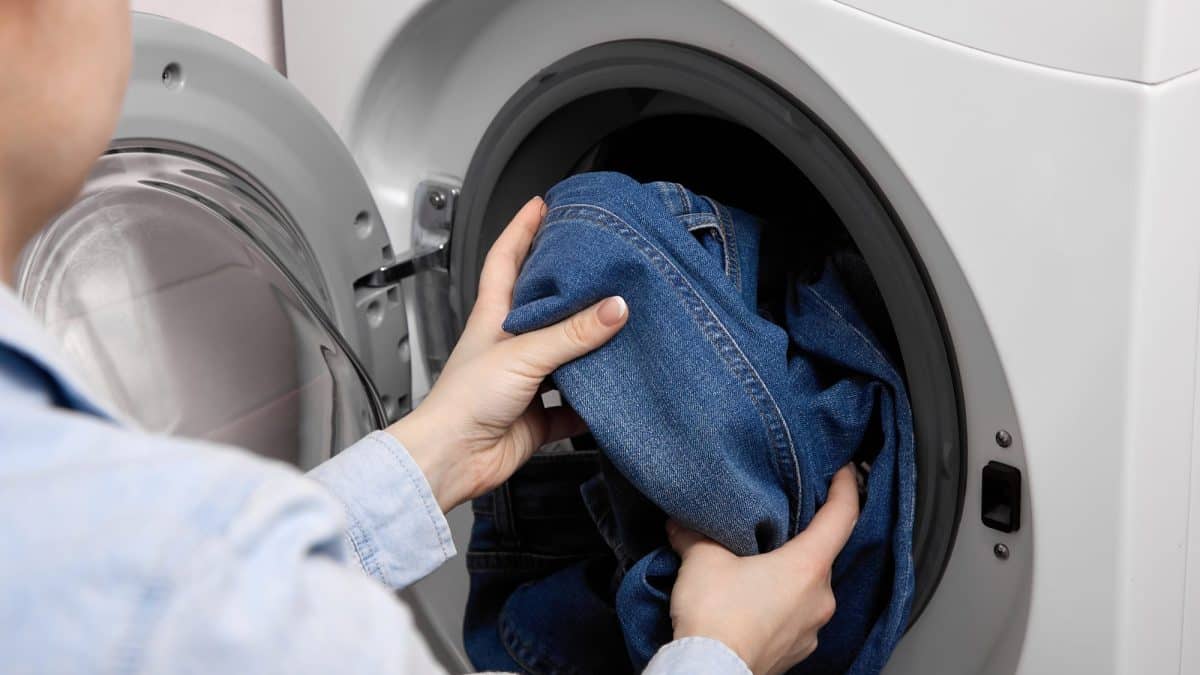
Turn inside out before anything else
The outer face carries both the color and the fade lines from wear; turning the pair inside out puts the more color-stable inner face against the drum, so the indigo on the visible side takes less abrasion and less exposure to detergent per cycle.
Cold wash, gentle cycle, alone or with other dark items
Indigo on denim is rope-dyed onto the surface of the yarn rather than through its core, which is why it sheds a little with every wash. Cold water slows that shedding; hot water speeds it up and also relaxes the elastane fibers faster, shortening how long the stretch actually recovers after sitting or bending.
Skip the dryer, or use ten minutes on low heat only
Sustained dryer heat is the single fastest way to break down elastane’s recovery. A pair that used to snap back after sitting starts “bagging out” at the knees within a few dryer cycles. Line dry or lay flat instead, and if a few minutes of tumbling helps soften the fabric, keep it brief and on the lowest setting.
Wash every 5-10 wears, not after every wear
Each wash cycle removes a small amount of dye and stresses the stitching at the pocket corners and inseam. Airing a pair out between wears and spot-cleaning small marks does most of the same hygiene work with a fraction of the wear on the fabric.
Raw or rigid denim: the wear-in method
Wear before washing, at least three to six months
Rigid denim develops its fades from repeated flexing at the same creases: honeycomb patterns behind the knees, whiskers across the hips, a stack at the ankle. A wash resets those creases before they’ve had time to set permanently, which is the single most common reason a raw-denim pair ends up looking generic instead of body-specific.
Spot-clean during the wear-in period
A damp cloth and a dab of mild soap on an isolated stain, worked in with the soft brush and left to air dry, handles most marks without submerging the rest of the jeans and without disturbing fades that haven’t set yet.
First wash: cold, by hand, minimal agitation
When a full wash is finally needed, fill a tub or basin with cold water, add the jeans inside out, and swish gently for a minute or two rather than scrubbing or wringing. Machine agitation at this stage tends to soften fold lines unevenly across the two legs, which shows up as a lopsided fade later.
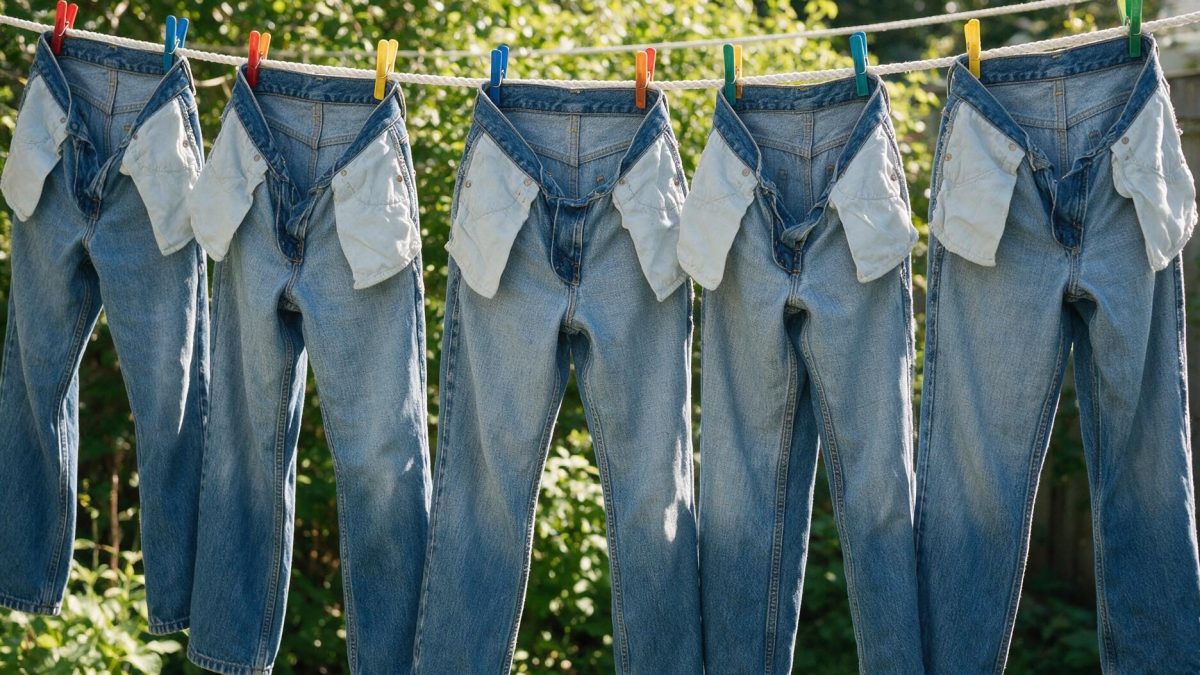
Dry flat or hanging, never in the dryer
Unsanforized raw denim is woven without the pre-shrinking step regular denim gets at the mill, so it’s expected to shrink somewhat in that first wash, which is the “shrink to fit” some brands build the fit around. Dryer heat pushes that shrinkage further and less predictably than air drying does.
Freezing jeans overnight is a popular way to avoid washing a raw pair, but the bacteria that cause the smell go dormant in the cold rather than dying, and start producing odor again as soon as the fabric warms back up. Airing the jeans outside in fresh air, or spot-cleaning the inside of the waistband and crotch where sweat concentrates, does more than a night in the freezer.
Interactive
Label decoder
Tap a symbol from your care label. No guessing, no scrolling.
19 symbols. Pick one.
Indigo dye transfer isn’t a stain, it’s loose surface dye
New dark or raw denim rubbing color onto skin, car seats, light-colored upholstery, or another garment is called crocking, and it isn’t dirt transferring. It’s the same loosely-bonded surface dye that washing gradually removes, coming off through friction instead. It’s strongest in the first several wears and fades as the surface dye wears down. A cold vinegar soak before the first wear (see the kit above) reduces how much comes off in that early period, and washing a new dark pair separately for its first three to five washes keeps that dye off other laundry. If denim dye has already transferred onto something light, like a pair of white canvas shoes, treat it as a fresh dye stain rather than dirt: cold water and detergent worked in quickly, before it has time to oxidize and set.
Stains, treated individually
| Mark | Treatment | Recoverable |
|---|---|---|
| Ballpoint pen ink | Rubbing alcohol dabbed on the back of the fabric so the ink is pushed out rather than further into the weave, then a cold rinse | Usually, if fresh |
| Grease or cooking oil | Cornstarch pressed onto the spot, left 20-30 minutes to absorb the oil, brushed off, then washed as usual | Usually |
| Dried mud | Let it dry completely first, break it off by hand, then brush the residue before washing, since wiping wet mud spreads pigment into the weave | Yes |
| Indigo dye on skin or upholstery | Cold water and a little dish soap worked in immediately; on fabric or upholstery, blot rather than rub to avoid pushing the dye deeper | Usually, if treated fresh |
What ruins a pair of jeans
| Mistake | What happens | Fix |
|---|---|---|
| Hot wash plus full dryer heat, on a stretch pair | Elastane loses its recovery within a handful of cycles; knees and seat start bagging out and staying stretched | Cold wash, line dry or a brief low-heat tumble only |
| Washing raw denim during the wear-in period | Creases and fold lines that were forming into a personal fade pattern reset to flat | Hold off on any wash for 3-6 months, spot-clean instead |
| Chlorine bleach on indigo | Strips color unevenly rather than lightening it cleanly, leaving blotches rather than a faded look | A controlled acid or enzyme wash from a denim specialist for intentional fading |
| Ironing directly over fade lines | Heat and pressure flatten the raised texture of whiskers and honeycombs that took months of wear to form | Iron the flat panels only, or skip ironing on a pair with fades worth keeping |
| Tumble drying rigid, unsanforized denim on high heat | Shrinkage runs past the expected “shrink to fit” amount and becomes uneven between the two legs | Air dry flat, checking fit as it dries |
Related guides
If dark denim has transferred dye onto light fabric or shoes, treat it as a fresh stain: see how to clean white shoes for the canvas-specific method. For jeans with leather patches, trim, or a leather jacket in the same wardrobe, how to clean a leather jacket covers the wipe-and-condition method leather trim actually needs.
Questions
How do I know if my jeans are raw denim or regular stretch denim?
Check the inside waistband tag. Any percentage next to elastane, spandex, or Lycra means it’s stretch denim and can be washed on the routine schedule above. Words like raw, rigid, unwashed, or unsanforized with no stretch fiber listed mean the wear-in method applies instead.
Does freezing jeans actually clean them?
No. Cold temperatures make the bacteria that cause odor dormant rather than killing them, so the smell returns once the fabric warms up again. Airing the jeans outside or spot-cleaning the waistband and crotch area does more to actually reduce odor between washes.
Why do my new dark jeans rub blue dye onto everything?
This is crocking. Indigo sits as loosely-bonded surface dye rather than penetrating through the yarn, so friction rubs some of it off, especially in the first several wears. A cold vinegar soak before the first wear and washing separately for the first few washes both reduce it.
Can I put raw denim in the washing machine at all?
Once the 3-6 month wear-in period is done, yes, though a first hand wash with minimal agitation preserves the fade pattern better than a machine cycle. After that first wash, a normal cold, gentle machine cycle is fine going forward.