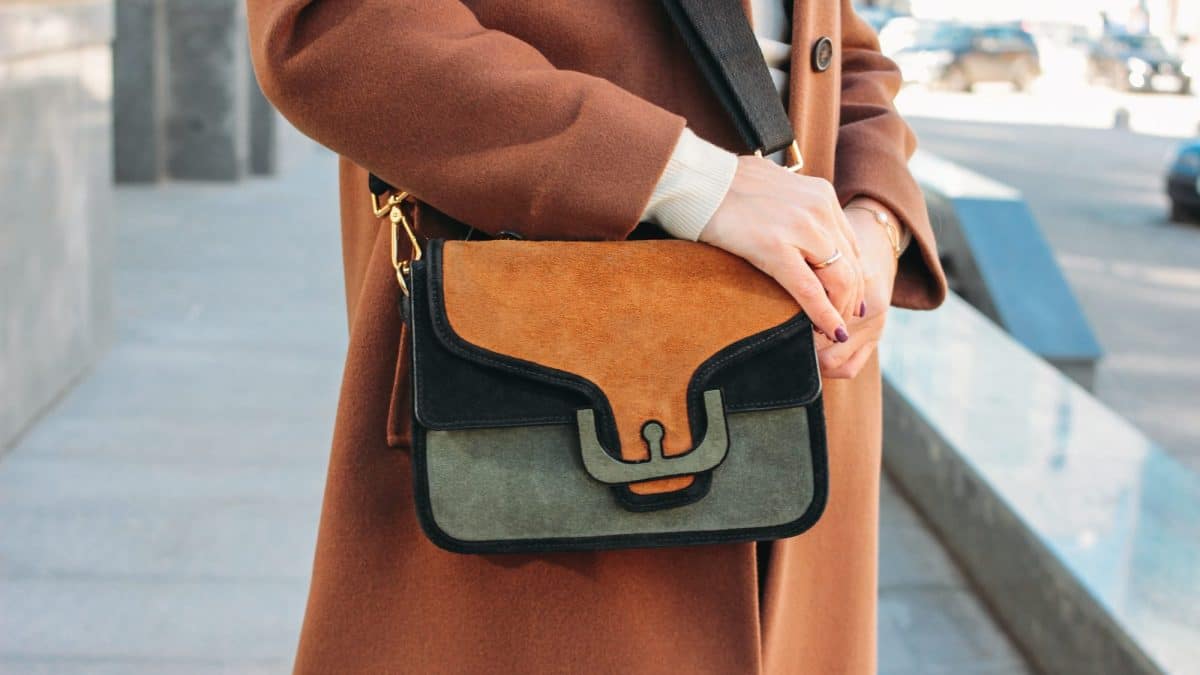
How to Clean a Suede Bag
Suede bags don't get muddy: they pick up colour from the clothes they ride against. Here's how to lift dye transfer, protect the hardware, and stuff a bag so it dries without creasing.
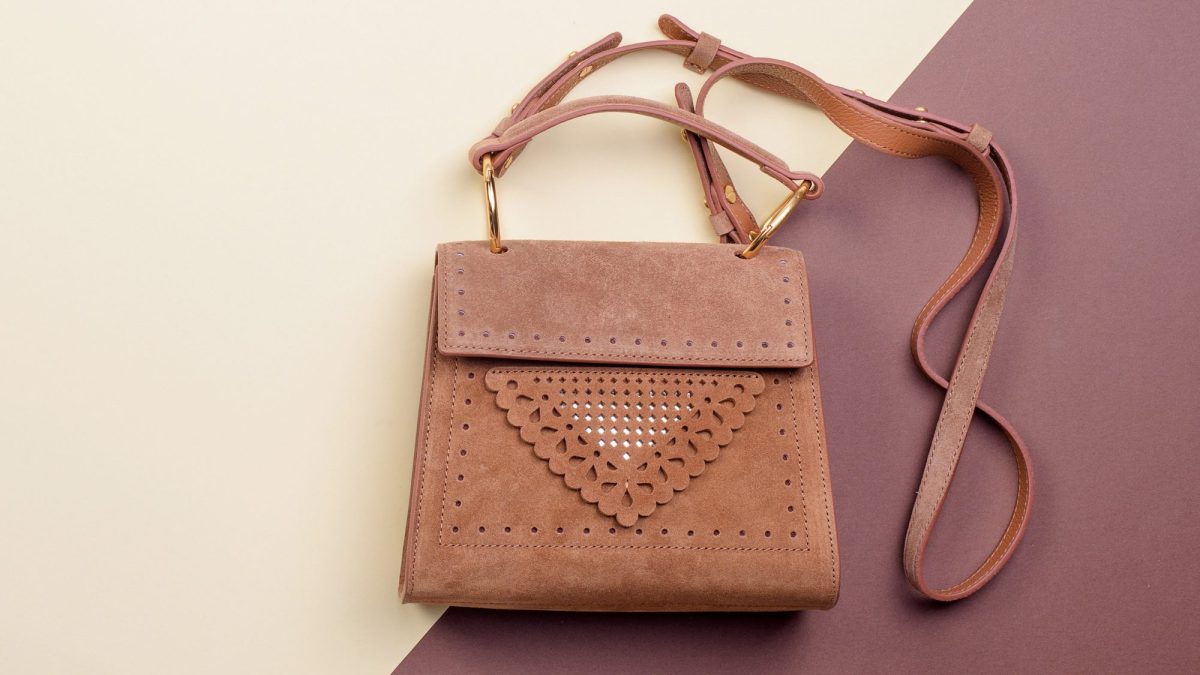
Quick answer · care label Suede — LS
-
1 · Wash
Do not wash -
2 · Bleach
No bleach -
3 · Dry
Dry in shade -
4 · Iron
Do not iron -
5 · Pro care
Pro clean P
In one line Brush the surface, spot-treat dye transfer and stains with a barely damp vinegar cloth, stuff with tissue paper to hold shape, dry stood upright for 24 hours away from heat, then brush and protect. Total hands-on time: 22 minutes.
Where suede bags actually fail
A suede bag doesn’t get muddy the way a shoe does, and it doesn’t crease at an ankle the way a boot shaft does. Its damage comes from something the other suede items barely see: constant contact with clothing. A bag rides against jeans, coats and jacket sleeves for hours at a time, and dark, unstable dye migrates onto pale suede long before any single spill or rainstorm does. The second failure point sits inside the bag, not outside it: hardware, linings and whatever’s been carried against the suede from behind.
Treat the outside and the inside as two separate problems. Dye transfer and surface stains get worked from the front; hardware, straps and the lining get protected, not cleaned the same way.
What you’ll need
The core suede kit, plus two things a bag specifically needs: something to hold its shape from the inside while it dries, and a way to keep metal hardware away from the vinegar.
| Item | Why | Substitute |
|---|---|---|
| Suede brush | Brass or nylon bristles lift the nap without cutting the fibre | A clean, dry toothbrush |
| White vinegar | Dissolves salt, water rings and light dye transfer at a pH suede tolerates | Rubbing alcohol, mixed 1:1 with water |
| Microfibre cloth | Lifts residue instead of pushing it deeper into the nap | An old, colour-safe cotton T-shirt |
| Tissue paper or a rolled hand towel | Fills the bag from inside to hold its shape while damp, without stretching the seams | Bubble wrap, loosely packed |
The method, step by step
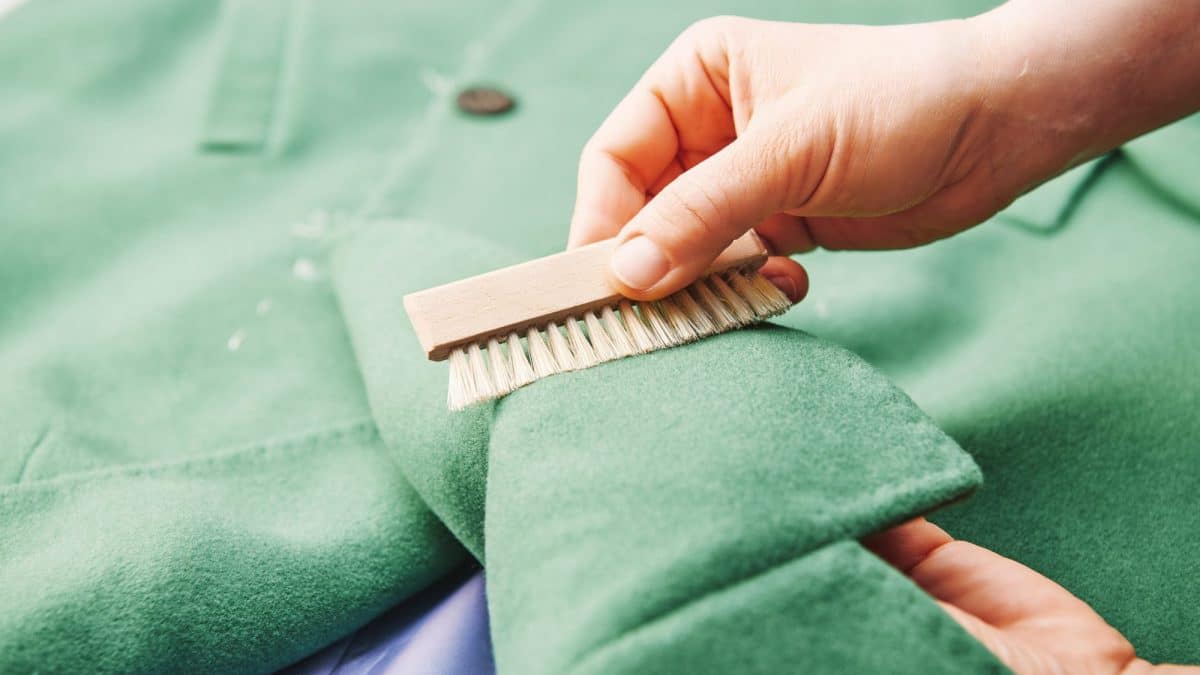
Empty the bag completely first. Anything left inside presses against damp suede from behind and leaves its own mark, receipts and pens included.
Empty it and check the hardware
Zippers, clasps, feet and buckle plates usually aren’t suede. Note where they sit, since the next steps need to stay away from them: vinegar dulls unlacquered brass and can leave a tide mark around a metal edge.
Brush the whole surface, one direction
Short strokes, following the natural lie of the nap, working around hardware rather than over it. This lifts dust and the first layer of dye transfer before any liquid touches the bag.
Spot-treat dye transfer and stains
Dampen a cloth with a 1:1 mix of white vinegar and water. Work outward from the centre of the mark, lifting rather than rubbing. Dye transfer from denim often needs two light passes rather than one heavy one: a single hard scrub just spreads the tint across a wider patch.
Stuff the bag to hold its shape
Pack tissue paper or a loosely rolled towel into the body, enough to round it out without stretching the seams or straps. A collapsed, damp bag dries with permanent creases across the base where the sides fold in on themselves.
Dry in shade, at room temperature
Away from radiators, direct sun and car interiors. Stand it upright rather than laid flat, so damp suede doesn’t rest against itself at the base. Give it the full 24 hours even once the surface feels dry.
Brush the nap back up, then protect
Brush again once fully dry. Finish with a silicone-free suede protector spray, holding it back from any hardware and the strap’s attachment points, where oversaturation can stiffen the stitching.
Interactive
Label decoder
Tap a symbol from your care label. No guessing, no scrolling.
19 symbols. Pick one.
Suede bags vs. other suede items
The general suede method covers dust, dirt and water marks the same way everywhere. What changes with bags is what they touch, not what they’re made of.
| Item | Main exposure | Main risk |
|---|---|---|
| Suede shoes and boots | Rain, pavement, mud | Losing shape while wet |
| Suede jackets | Rain, arm creases | Uneven drying at seams and lining |
| Suede bags | Constant contact with clothing dye | Colour transfer building up gradually, unnoticed until it’s set |
Common suede bag marks, treated individually
The step-by-step method above handles dust, dirt and general water marks. A few marks specific to bags need something different.
| Mark | Treatment | Recoverable |
|---|---|---|
| Denim or dark clothing dye transfer | Vinegar spot-treatment, worked from the edge of the tint inward so it doesn’t spread further; repeat once dry if a faint cast remains | Usually |
| Ink from a pen carried loose inside | Rubbing alcohol on a cotton bud, dabbed rather than rubbed, stopping the instant any colour lifts | Rarely |
| Dark ring where a metal buckle or clasp has rested | Vinegar cloth on the suede only, working carefully up to the hardware edge without touching the metal itself | Usually |
| Grease from hands or lotion at the handle | Cornflour pressed onto the mark, left 8 hours to draw the oil out, then brushed away | Usually |
Washing machine, tumble dryer, saddle soap, leather conditioner, or any cleaner containing wax or silicone. A bag’s lining traps moisture against the suede far longer than a shoe’s open structure does, so err on the side of less liquid, not more.
Three mistakes that ruin suede bags
- Leaving it collapsed while damp. An empty, unstuffed bag dries with hard creases across the base that a brush can’t lift back out.
- Scrubbing dye transfer the moment it appears. Fresh dye transfer usually lifts with light, repeated passes. Aggressive scrubbing on the first attempt just drives it deeper into the nap.
- Wiping vinegar straight across metal hardware. It dulls unlacquered brass and can leave a faint tide mark around clasps and feet that no amount of brushing removes.
Questions
Why does my suede bag keep picking up colour from my jeans?
Dark denim dye isn’t fully fixed even after washing, and repeated friction against a bag transfers a small amount every time you carry it. It’s a wear pattern, not a one-off accident, which is why the fix is periodic vinegar spot-treatment rather than a single deep clean.
Can I use a leather conditioner on the suede trim if the rest of the bag is smooth leather?
Only on the smooth leather. Keep conditioner off any suede panel entirely, including the edges where the two meet, since it mats the nap down in a way brushing can’t reverse.
The bottom corners of my suede bag are shiny from resting on tables. Can that be fixed?
Usually. That shine is crushed nap, not worn-away material. Hold the spot a few seconds over steam from a kettle without touching it, then brush firmly while still warm.
Is it safe to store a suede bag in a plastic bag or bin?
No. Suede needs to breathe, and trapped humidity in plastic encourages mould on the nap. Use a cotton dust bag instead, stuffed lightly to hold shape during storage.