How to Clean Suede Birkenstocks
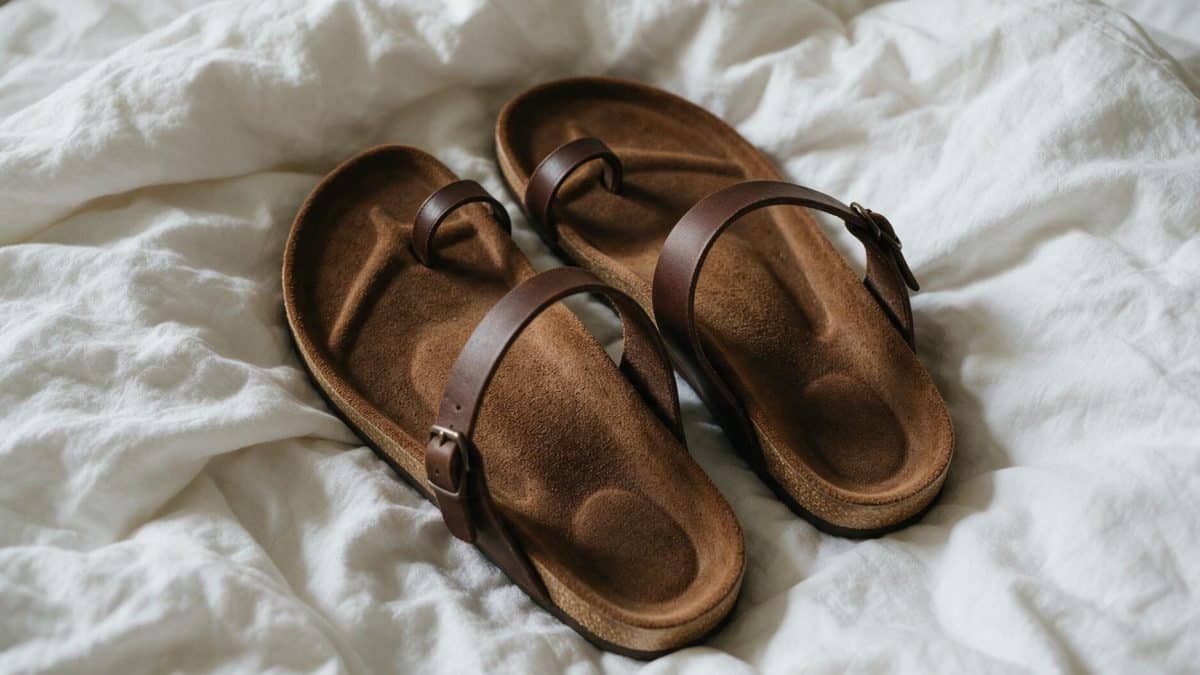
The strap is the easy part. What actually ends a pair of suede Birkenstocks early is water reaching the cork footbed underneath, and here's how to keep the two separate.
Quick answer · care label Suede — strap
-
1 · Wash
Do not wash -
2 · Bleach
No bleach -
3 · Dry
Dry in shade -
4 · Iron
Do not iron -
5 · Pro care
Pro clean P
In one line Brush the strap dry, powder oily marks with cornflour, spot-treat any remaining mark with a barely damp vinegar cloth kept a centimetre clear of the sole, then air dry flat away from heat. Total hands-on time: 15 minutes.
Can you get suede Birkenstocks wet at all, or does the cork footbed rule that out?
You can get the suede upper wet. What you can’t do is treat a suede Birkenstock like a suede shoe on a canvas sneaker base, because the sole underneath isn’t rubber or foam. It’s cork, latex and jute, built to mould to a foot over time. That footbed handles damp air fine. It does not handle sitting in a puddle, a full soak, or a fast dry on a radiator, all of which make cork shrink, crack or separate from the layers underneath. The suede strap is the easy part of this article. The footbed is the part that actually gets ruined by an ordinary suede-cleaning mistake.
The other difference from a closed shoe is exposure. A suede strap has no toe box or heel counter to protect it: it’s fully open to spills, foot oil and whatever the ground puts on it, and there’s no lining between the suede and your skin. That combination means Birkenstock straps show wear and staining faster than almost any other suede item, but they’re also the fastest to clean: less material, less shape to hold, no laces or seams to work around.
Clean the strap with the least moisture that works, and keep every drop away from the footbed. Suede tolerates a damp cloth. Cork does not tolerate a soak, and it’s the footbed, not the strap, that ends a pair of Birkenstocks early.
What you’ll need
| Item | Why | Substitute |
|---|---|---|
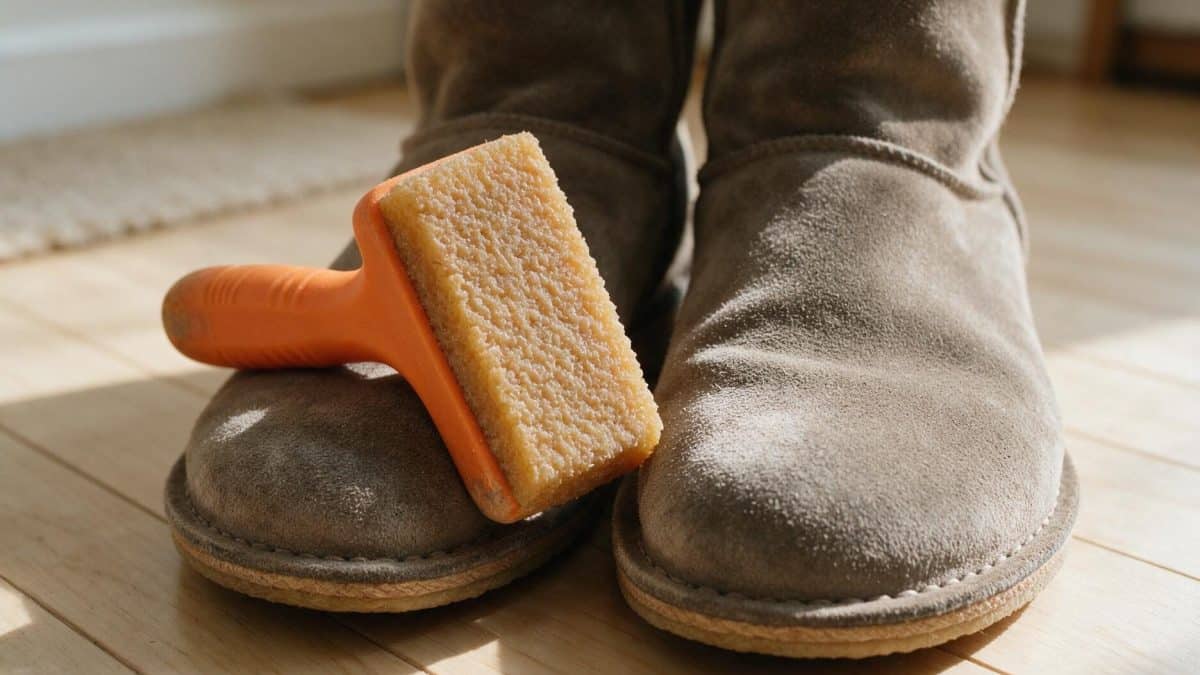
| Suede brush | Lifts dirt and flattened nap without pulling threads from the strap | A clean, dry toothbrush |
| Cornflour or talc | Draws out oil and sweat marks without introducing water | Baby powder |
| White vinegar | Lifts salt and light staining at a pH suede tolerates | Rubbing alcohol, mixed 1:1 with water |
| Cotton buds | Controls moisture right at the strap edge, away from the cork | A twisted corner of a soft cloth |
The method, step by step
Brush the strap dry first
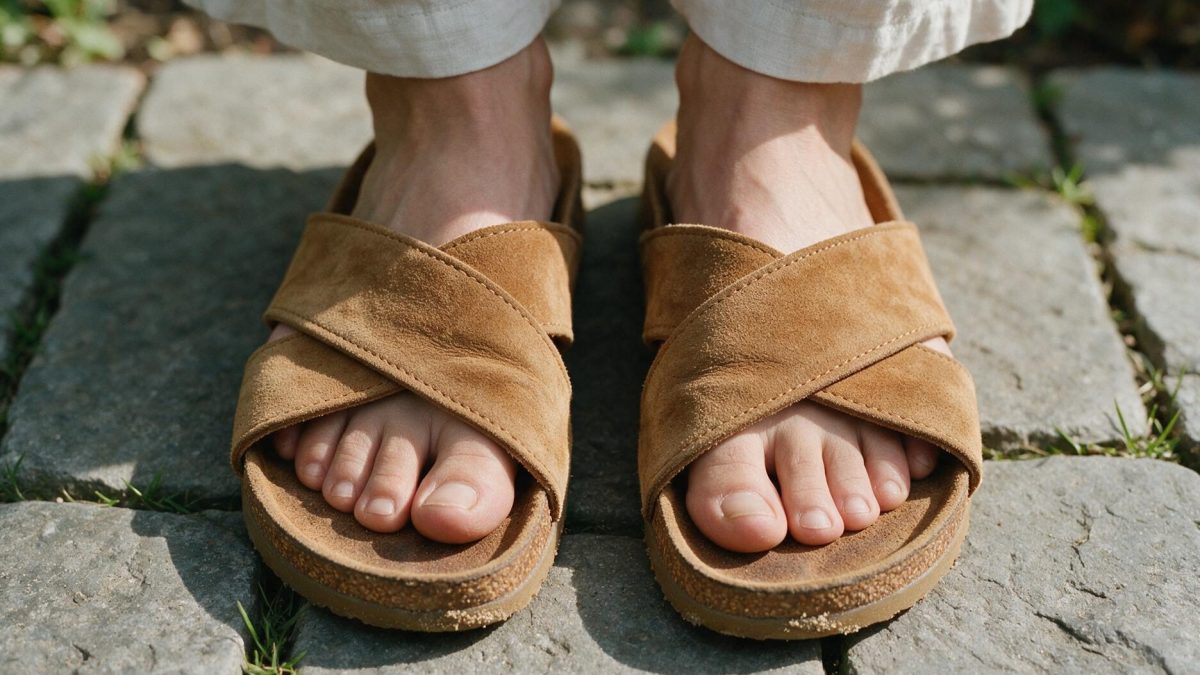
Short strokes along the nap, working from the buckle end toward the toe. This alone clears most dust and lifts foot-oil sheen before it needs any moisture at all.
Powder any oily marks
Cornflour or talc pressed onto sweat marks or foot-oil discoloration near the toe strap, left to draw the oil out, then brushed away. This step handles the most common Birkenstock stain without a drop of liquid near the cork.
Spot-treat with a barely damp cotton bud
For marks the powder didn’t lift, a cotton bud dampened, not soaked, with a 1:1 vinegar and water mix, worked along the strap only. Stop a full centimetre before the strap meets the cork sole; that gap is what keeps moisture out of the footbed.
Wipe the buckle and hardware
A dry cloth over any metal pin or buckle. Leftover vinegar solution left sitting on brass or nickel hardware will dull it faster than normal wear does.
Air dry flat, away from heat
Lay the sandals flat rather than standing them on end. There’s no shaft to support here, just a strap that dries evenly on its own. Never a radiator or a car dashboard: both dry the cork too fast and that’s when it cracks.
Brush the nap back up
Once dry, a final brushing pass restores the texture and evens out any flattening from the spot treatment.
Interactive
Label decoder
Tap a symbol from your care label. No guessing, no scrolling.
19 symbols. Pick one.
The footbed is the part people damage by accident
Almost every ruined pair of suede Birkenstocks was ruined at the sole, not the strap. Knowing what not to do here matters more than the cleaning method itself.
| Spot | What goes wrong | Fix |
|---|---|---|
| Cork and jute footbed | Shrinks, cracks or delaminates if soaked or dried fast near heat | Keep all moisture on the strap only; air dry flat, away from heat, always |
| Strap edge nearest the sole | Trapped moisture there seeps into the cork before it evaporates | Stop spot-treating a centimetre short of where suede meets sole |
| Buckle and pin hardware | Dulls or tarnishes if cleaning solution is left to sit on metal | Wipe hardware dry immediately after any wet step |
Common suede Birkenstock stains
| Stain | Treatment | Recoverable |
|---|---|---|
| Foot oil and sweat sheen | Cornflour pressed on, left to sit, then brushed off | Yes |
| Dust and everyday dirt | Dry brushing alone, no moisture needed | Yes |
| Water spots or rain marks | Once dry, brush the whole strap evenly; an even brushing blends an isolated spot into the rest of the nap | Usually |
| Grease or sunscreen | Cornflour left 8 hours minimum, repeated once if a mark remains | Usually |
Submerge the sandals, run them under a tap, or leave them to dry on a heater vent. A closed suede shoe can occasionally survive a light rinse. A Birkenstock’s cork footbed cannot, and there’s no drying it back into shape afterward.
Buying suede Birkenstocks that hold up
A few things to check before buying make the straps easier to keep clean for years, not just months.
- Check the strap-to-sole seam. A tight, well-glued seam keeps cleaning moisture from tracking into the cork; a loose or visibly gapped seam is a weak point from day one.
- Ask about a factory finish. Some suede Birkenstock straps ship with a light water-repellent coating. It wears off with foot oil and normal use faster than most people expect, so a suede protector spray after the first few wears extends it.
- Darker suede hides foot-oil sheen longer. Pale sand and taupe tones show oil discoloration at the toe strap noticeably sooner than black or dark brown, worth knowing if these are meant for daily summer wear rather than occasional use.
Related guides
This method covers the classic two-strap and single-strap suede sandal specifically. A few related situations use a different approach:
- Closed suede shoes have a toe box and heel to hold in shape while damp, which sandals don’t need. See how to clean suede shoes.
- Suede boots add a tall shaft that needs support while drying. See how to clean suede boots.
- For the general method behind all of this, and how suede compares to nubuck and nappa leather, see how to clean suede.
Questions
Can I put suede Birkenstocks in the washing machine?
No. The cork and jute footbed cannot survive a wash cycle’s water exposure and agitation. It will crack, shrink or separate from the base layers. Machine washing is one of the few things on this method that isn’t a judgment call; it’s a straightforward way to end the sandals early.
Is it normal for the footbed to darken and mould to my foot over time?
Yes, and that’s separate from staining. The cork footbed is designed to soften and take an impression of your foot shape with wear, and it typically darkens slightly from foot oil as it does. That’s expected break-in, not a stain to treat.
My suede strap has a hard, shiny patch where my foot rubs. What is that?
Glazing, caused by repeated friction flattening the nap in one spot. A suede brush worked firmly over the patch, sometimes combined with a light steam pass held well clear of the sole, usually raises the texture back up. It’s a strap-only fix; keep steam away from the cork entirely.
How often should I reapply protector spray?
Every four to six weeks with regular summer wear, or sooner if you notice the strap absorbing water instead of beading it. Sandals worn daily against bare skin pick up oil faster than a shoe worn with socks, which is why the interval is shorter here than on boots.