How to Clean Suede Sneakers
Suede sneakers aren't just suede — they mix in mesh and rubber, and the method that's safe on one material will damage the other. Here's how to clean each part without crossing the seam.
Quick answer · care label Suede — LS
-
1 · Wash
Do not wash -
2 · Bleach
No bleach -
3 · Dry
Dry in shade -
4 · Iron
Do not iron -
5 · Pro care
Pro clean P
In one line Brush suede panels only, mask the mesh seam with a card before spot-treating with a barely damp vinegar cloth, wipe mesh and rubber separately, dry stuffed with paper for 24 hours away from heat, then brush and protect. Total hands-on time: 18 minutes.
Where suede sneakers actually fail
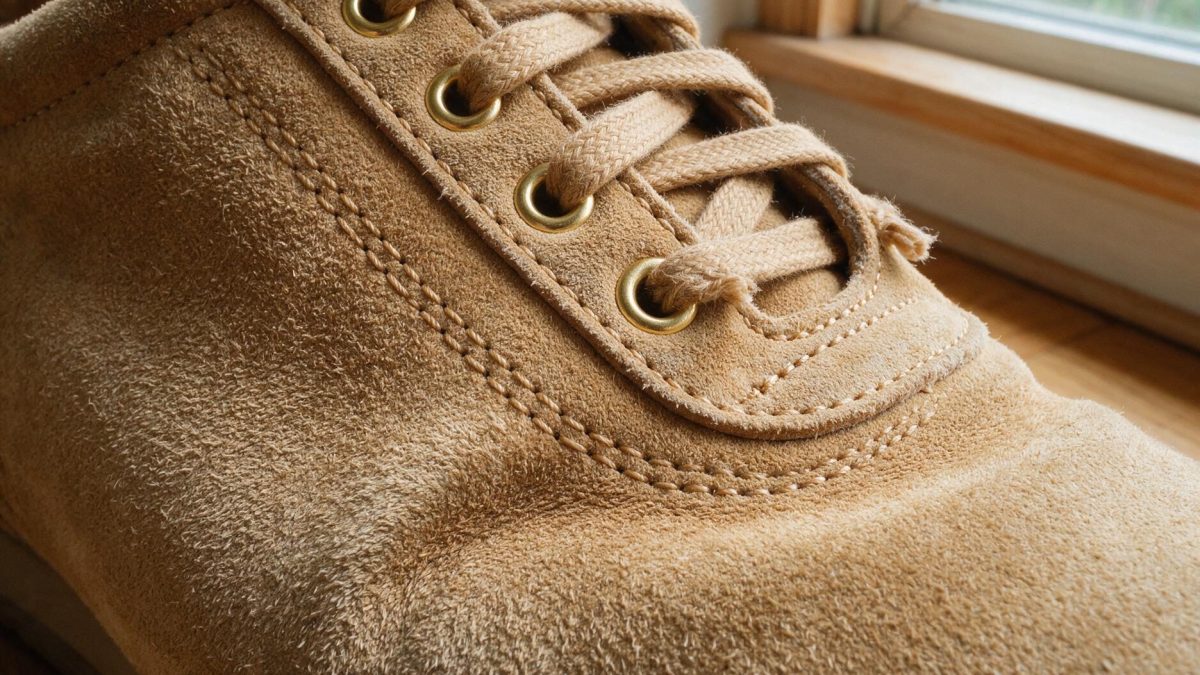
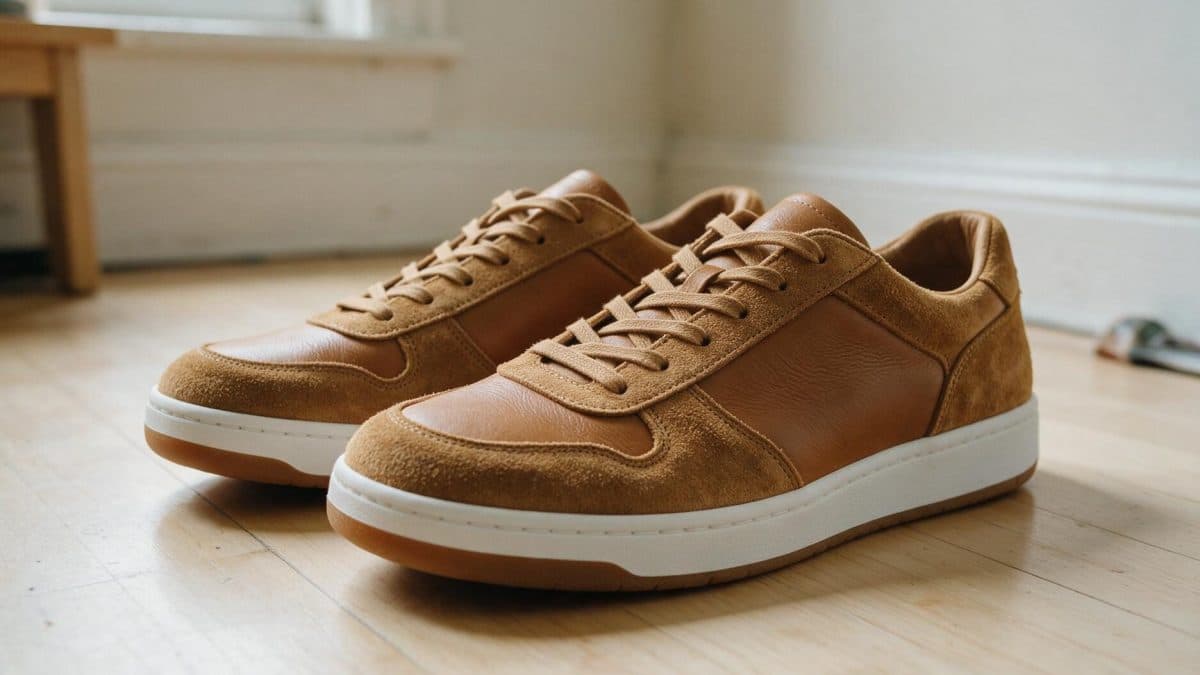
A suede sneaker is never just suede. Almost every pair pairs a suede upper with a mesh tongue and side panels, a rubber toe cap, and a foam midsole wrapped in more rubber or textile. That mix is the whole problem. Vinegar and water that suede shrugs off will leave a dark tide mark on mesh, and a stiff-bristle brush that raises the nap perfectly will fuzz or fray a knit panel in seconds. The method for suede boots or suede shoes assumes one material end to end. Sneakers don’t give you that luxury, and treating the whole shoe as suede is the single most common way people damage the parts that aren’t.
Work each material to its own edge and stop. The seam between suede and mesh, or suede and rubber, is a hard boundary, not a suggestion. Cross it and you’re cleaning the wrong material with the wrong method.
What you’ll need
The same core kit as any suede item, plus one thing sneakers specifically need: a way to keep water off the mesh while you work the suede panels next to it.
| Item | Why | Substitute |
|---|---|---|
| Suede brush | Brass or nylon bristles lift the nap without cutting the fibre | A clean, dry toothbrush |
| White vinegar | Dissolves salt and water rings at a pH suede tolerates | Rubbing alcohol, mixed 1:1 with water |
| Microfibre cloth, two | One for suede panels, one kept dry for blotting mesh | An old, colour-safe cotton T-shirt, cut in two |
| Old credit card or plastic scraper | Masks the mesh edge while you dampen the suede next to it | A strip of stiff cardboard |
The method, step by step
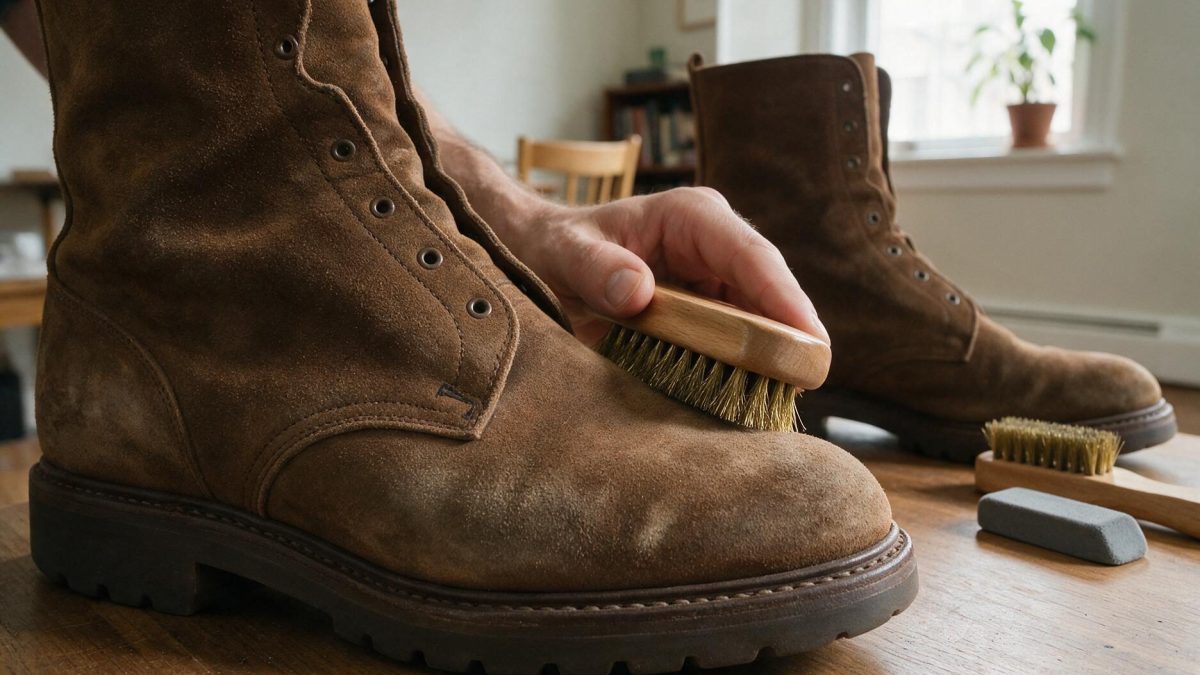
Sneakers get treated panel by panel, not as one surface. Suede first, mesh second, rubber last, because rubber tolerates the most handling and suede tolerates the least.
Pull the laces and let mud dry
Laces make the tongue impossible to brush properly and hide grime in their eyelets. If the shoe is muddy, wait a full day before touching it. Wet suede brushed too early just grinds grit deeper into the nap.
Brush the suede panels only, one direction
Short strokes with the nap, staying on suede. Where a panel meets mesh, stop the stroke a few millimetres short of the seam rather than brushing across it: the bristles that lift suede nap will pull loose threads out of a knit edge.
Mask the mesh, then spot-treat the suede
Slide the plastic scraper or an old card under the edge of any suede panel that borders mesh, so a barrier sits between the two. Dampen a cloth with a 1:1 vinegar and water mix, and work the stain from the centre outward. Damp, not wet: the goal is a cloth that leaves no visible trail of moisture behind it.
Wipe the mesh and rubber with a barely damp cloth
Mesh takes a different touch entirely: blot rather than press, and never scrub in circles, since that’s what drives dirt into the weave instead of lifting it out. Rubber soles and toe caps can take a proper wipe with the same cloth, since they’re the one part of the shoe that doesn’t stain or mark from water.
Stuff with paper, not the shoe tree from your dress shoes
Plain paper, packed to fill the toe box and hold the shape, works better here than a rigid shoe tree, since sneakers flex more than dress shoes and a hard tree can distort the last while the suede is still soft and damp.
Dry in shade, at room temperature
Away from radiators, direct sun and the boiler cupboard. Give the pair the full 24 hours even once the outside feels dry. The foam midsole holds moisture longer than the suede does, and rushing this step is what leaves a faint damp smell behind.
Brush the suede back up, then protect
Once fully dry, brush the suede panels again to restore the colour and nap. Finish with a silicone-free suede protector spray, holding it back from the mesh and rubber. Oversaturating a mesh tongue with protector spray leaves a stiff, water-resistant patch that traps moisture underneath it on the next wear.
Interactive
Label decoder
Tap a symbol from your care label. No guessing, no scrolling.
19 symbols. Pick one.
Suede sneakers vs. suede shoes and boots
The general suede method covers dust, dirt and water marks the same way everywhere. What changes with sneakers is the presence of a second and third material on the same shoe, and how much of the surface is actually suede in the first place.
| Item | Suede share of upper | Main risk |
|---|---|---|
| Suede dress shoes | Usually 100% | Losing shape while wet |
| Suede boots | Usually 100% | The shaft creasing at the ankle |
| Suede sneakers | Often 40–70%, mixed with mesh and rubber | Treating mesh or rubber with a suede method, or vice versa |
Common suede sneaker stains, treated individually
The step-by-step method above handles dust, dirt and water marks. A few marks specific to sneakers need something different.
| Stain | Treatment | Recoverable |
|---|---|---|
| Scuffs on the toe cap or heel | Suede eraser worked in short strokes, straight over the mark, brushed clean afterward | Yes |
| Grass or dirt on the midsole rim | Let it dry fully, then knock it off with the eraser or a dry toothbrush before touching the suede above it | Yes |
| Colour transfer from dark jeans onto pale suede | Vinegar spot-treatment, repeated once dry if a faint tint remains; on white or very pale suede this can take two passes | Usually |
| Mesh gone grey from general wear | Old toothbrush with a drop of dish soap in water, worked into the weave and rinsed with a barely damp cloth. This is the one step where a mild detergent is fine, because it’s mesh, not suede | Usually |
Washing machine, tumble dryer, saddle soap, leather conditioner, or any cleaner containing wax or silicone. These rules apply to the suede only. The mesh and rubber parts of the same shoe are more forgiving, which is exactly why keeping the two separate matters.
Three mistakes that ruin suede sneakers
- Brushing straight across a suede-to-mesh seam. It looks like one continuous surface. It isn’t, and the bristles that groom suede will pull threads out of knit mesh.
- Soaking the whole shoe to clean one stain. Sneakers pack more layers than a single suede shoe (foam, textile lining, glued panels), and all of it holds water longer than the visible suede does.
- Machine washing “because they’re sneakers.” The mesh and rubber would survive a gentle cycle. The suede panels will not, and there’s no way to wash one part of a shoe without the other.
Related guides
If the pair is white canvas, leather, or knit rather than suede, this dry-brush method isn’t the right one; see how to clean white sneakers for grass stains, scuff marks, and the wet-clean steps that suede can’t take.
Questions
Can I put suede sneakers in the washing machine if I use a mesh laundry bag?
No. A laundry bag protects the shoe from abrasion against the drum, but it does nothing about the agitation and spin cycle itself, which is what damages wet suede. The bag solves a problem sneakers don’t have and ignores the one they do.
My sneakers have suede only on the toe cap, with the rest in canvas. Does this method still apply?
Yes, on the toe cap specifically. Canvas is far more washable than mesh and can usually take a gentle hand wash or even a cool machine cycle on its own, but keep the suede toe cap dry during that wash, or treat it separately afterward with the vinegar spot method above.
The suede panels on my sneakers have gone shiny where my foot flexes. Can that be fixed?
Usually. Shine there means the nap is crushed from repeated flexing, not worn away. Hold the spot a few seconds over steam from a kettle without touching it, then brush firmly while it’s still warm. This spot will crush again with wear, so expect to repeat it every few months on shoes worn often.
Is it worth suede-protecting the whole sneaker, including the mesh?
No, spray only the suede panels. Suede protector on mesh creates a stiff, semi-waterproof patch that stops the mesh breathing normally, which on a shoe you actually walk in tends to make your foot sweat more, not less.