Can You Machine Wash Silk? (Yes — the Detergent Is the Risk)
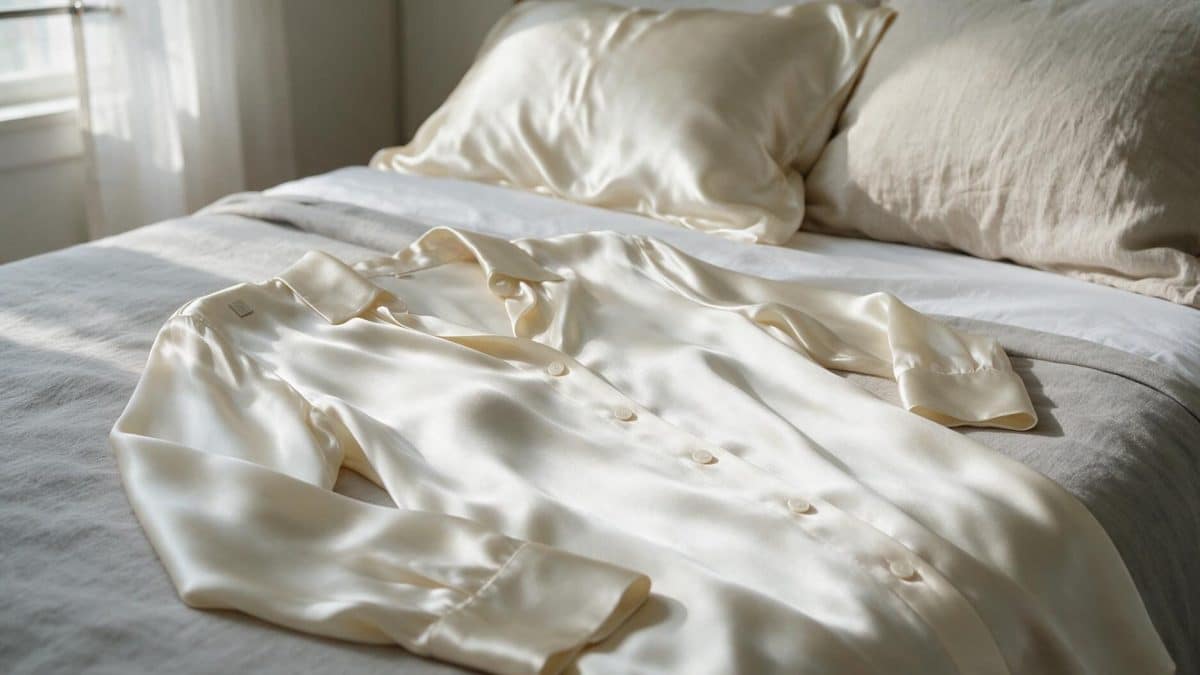
Most silk survives a 30 °C delicates cycle without trouble. What destroys it is alkaline or enzymatic detergent, a hot dryer and direct sun, not the drum.
Quick answer · care label Silk — fibroin filament
-
1 · Wash
Wash 30° gentle -
2 · Bleach
No bleach -
3 · Dry
Dry in shade -
4 · Iron
Iron 110° -
5 · Pro care
Pro clean P
In one line Wash inside out in a mesh bag on a delicates or hand-wash programme at 30 °C (86 °F) with a neutral, enzyme-free detergent and the lowest spin available. Never a biological detergent, never chlorine bleach, never a tumble dryer, and dry on a rack out of direct sun. About 15 minutes hands-on.
Is it the washing machine that ruins silk, or the detergent?
Most silk can go in a washing machine. A delicates or hand-wash programme at 30 °C (86 °F), a low spin, the garment inside out in a mesh bag: that is a routine wash for a silk pillowcase, a charmeuse blouse or a set of silk sheets, and the companies that sell those things publish more or less that instruction themselves. The drum is not the enemy it is assumed to be.
What ends silk garments is usually something else in the same machine. Silk is fibroin, a protein filament, and it answers to laundry chemistry the way hair does rather than the way cotton does. Ordinary detergents sit at pH 9 to 11, and that alkalinity hydrolyses the protein chains, so the cloth hardens and loses strength over many washes rather than in one accident. Biological detergents are worse: the proteases in them cannot tell a protein stain from the protein fibre underneath it, and on silk that shows up as small random holes, at the seams first, after several washes.
The third thing is heat, in the drum and after it. Warm water releases dye, and silk dyes are not reliably fast; a hot dryer shrinks and dulls the cloth at once, and neither change reverses. So: can you machine wash silk? Yes, most of it, and the answer depends less on the machine than on what goes in the drawer and what happens after the cycle stops.
Silk is a protein, not a plant fibre. Everything that destroys it is alkaline, enzymatic, hot or bright. Keep the water cool, the detergent neutral and enzyme-free, the dryer off and the drying rack out of the sun, and the drum itself is the smallest risk in the room.
What you’ll need
| Item | Why | Substitute |
|---|---|---|
| pH-neutral, non-biological detergent | Standard detergent is alkaline and carries protein-digesting enzymes; both attack the fibre itself | A clear, unperfumed baby shampoo |
| Mesh laundry bag | Keeps thin silk off zips, hooks and the drum seal, where tears actually start | A zipped pillowcase |
| A scrap of white cotton | Tests the dye before the whole garment is wet, the only moment the test is any use | A folded piece of kitchen roll |
| White vinegar | A splash in the rinse leaves the fabric faintly acidic and lifts detergent film | A second plain cold rinse, slower but similar |
| Two dry bath towels | Blot out the water so nothing hangs under its own wet weight | A cotton bedsheet folded to four layers |
| A wide or padded hanger | Wet silk takes the shape of what holds it; a wire hook prints a ridge that stays | A drying rack with a towel over the bars |
The method, step by step
Test the dye first
Damp the scrap of white cotton and press it against an inside seam for half a minute. Any dye transferring to the cotton means the garment will bleed onto itself and onto whatever is washed with it; that piece is a wash-alone item at best.
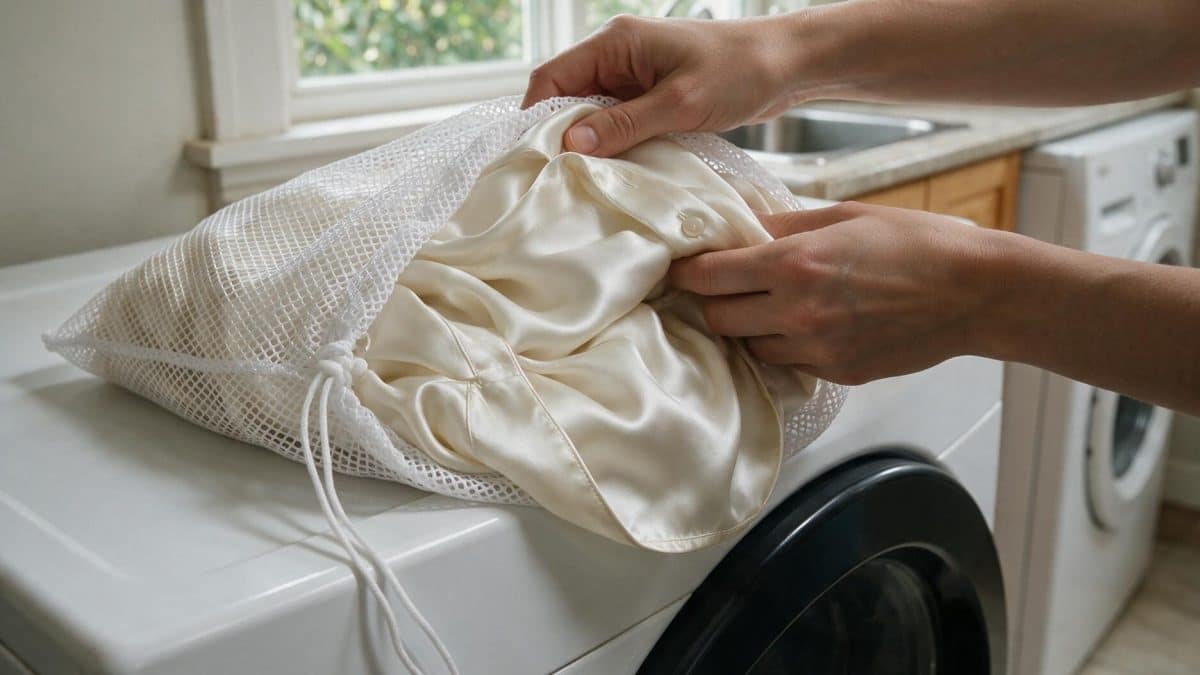
Turn it inside out and bag it
Inside out protects the face of the fabric, which is the surface that shows abrasion on satin weaves; the mesh bag stops a sleeve finding a zip. Wash silk with silk or on its own, never with towels, jeans or anything carrying hardware.
Set 30 °C, delicates, lowest spin
The delicates or hand-wash programme uses more water and less drum movement, which is what a filament fibre wants; on most machines the lowest spin setting is 400 rpm, and some offer no spin at all. Sources disagree on the ceiling: silk bedding makers mostly say 30 °C, while some silk sellers put the working range lower, at roughly 18 to 29 °C (65 to 85 °F). Cold is never wrong here.
Use a small dose of neutral detergent, and nothing else
Half what a normal load takes. No fabric softener, which coats the filament and takes the lustre with it; no bleach, no pods with optical brighteners. Detergent that fails to rinse out is the usual reason washed silk comes out stiff.
Add a splash of white vinegar to the rinse
About a tablespoon in the softener compartment. Optional, and the case for it is modest: it neutralises leftover alkalinity and clears detergent film. Keep it dilute, and skip it on deeply dyed silk you have not tested.
Take it out the moment the cycle ends and roll it in a towel
Silk left damp in a drum creases hard, and on printed pieces it gives dye time to migrate. Lay it flat on a dry towel, roll the towel up with the silk inside and press. Never wring or twist it: silk is weaker wet than dry, by roughly a fifth on the figure usually quoted.
Dry indoors, in the shade, off the heat
A wide hanger for wovens, flat on a towel for knits and anything heavy enough to stretch under its own wet weight. Not a sunny window, not a radiator, and not the dryer even on a machine-washable label. Direct sun yellows silk and weakens the fibre.
Iron on one dot, inside out, through a cloth
One dot is 110 °C (230 °F), the silk setting, and it is a real ceiling rather than a suggestion; hotter, and silk scorches to a yellow that does not wash out. Advice splits on damp against dry: ironing evenly damp works, but spraying water onto dry silk in patches is how water rings appear, so if it is already dry, iron it dry.
The machine will not felt silk. That is wool’s problem
Wool felts because every wool fibre is wrapped in overlapping cuticle scales that ratchet one way when wet and moved about; CSIRO’s description of merino calls felting a property no other textile fibre shares. Silk has no scales. It is a single continuous filament, smooth along its length, and no amount of drum rotation will lock it into a mat. Two protein fibres, both labelled delicate, failing in completely different ways.
Agitation, then, is not the mechanism here. These are:
- Alkali. Detergent at pH 9 to 11 hydrolyses fibroin. The cloth hardens and grows brittle across many washes, which is why the damage is so easy to blame on age.
- Enzymes. The protease in a biological detergent digests the fibre as willingly as the stain. Holes turn up at seams after several washes, not after the first.
- Temperature. Warm water loosens dye and can shrink the cloth. A heated dryer does both at once and permanently, which is why “machine washable” and “tumble dry” are not the same permission.
- Yarn twist. Crepe silks are woven from heavily over-twisted yarn, and water lets the twist relax. One sewing magazine puts crêpe de Chine at up to 3 percent; fabric suppliers quote 5 to 8 percent for crepes, and one fabric house that wash-tested its own range measured 8 percent in silk noil. The spread is itself the warning: a fitted crepe garment will not fit afterwards.
- Hardware. Zips, hooks and eyes, a crowded drum. The one risk a mesh bag genuinely removes.
Which silks survive a machine and which do not
The label is the first input, not the last word. “Dry clean only” is printed on a great deal of silk that washes perfectly well, partly because a maker only has to test one method to print it and partly because it moves the risk onto you. It is also printed on silk that genuinely cannot be washed. What separates the two is not the fibre, which is the same in every row below, but the weave and the construction.
| Type | What happens in the machine | Machine wash |
|---|---|---|
| Charmeuse and satin | Softens slightly on the first wash, then holds. Blouses and camisoles live here | Yes |
| Habotai and China silk | Plain weave, no twist to relax, nothing to distort. The easiest silk to wash | Yes |
| Silk knits and jersey | Washable, but they stretch under their own wet weight, so dry them flat | Yes, dry flat |
| Crêpe de Chine, georgette, crepe-back satin | Over-twisted yarn contracts in water; the piece changes size and hand | No |
| Dupioni and taffeta | Water spots it permanently and washes out the crispness that is the point of it | No |
| Silk velvet | The pile crushes flat and the backing shrinks at a different rate | No |
| Tailored, interfaced, beaded or embroidered | The silk may be fine; the interfacing, glue and trims are not | No |
| Vintage silk, roughly pre-1930s | May be weighted with metallic salts that cut the fibre from within. It splits | No |
Put chlorine bleach near silk, including a drum that has just finished a bleach cycle. Chlorine attacks the protein directly, so the result is not a fade but the fibre coming apart: a yellow cast first, then tearing where the cloth was sound. Oxygen bleach is a different oxidiser and the advice on it splits: some sources allow a well-diluted solution, others say it weakens and yellows the fibre much as chlorine does. That disagreement is reason enough to keep it, and anything sold as whitening or brightening, off silk.
Sunlight, sweat and deodorant: the slow ways silk dies
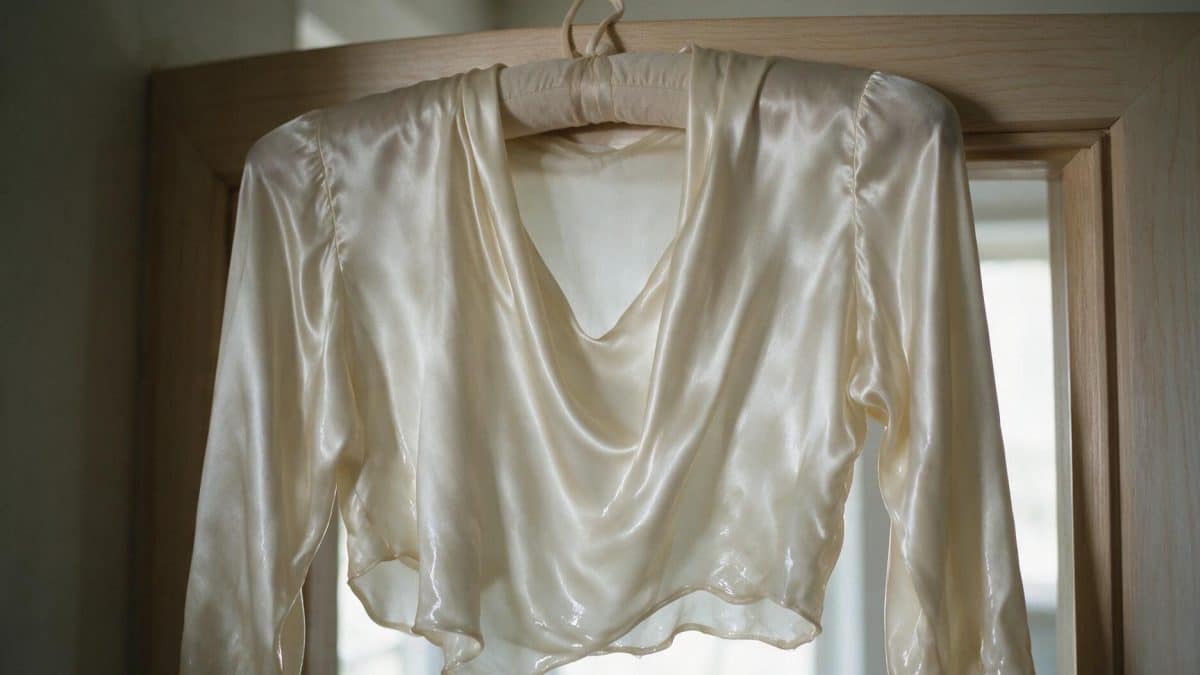
Two identical blouses washed identically can end up years apart in condition, and the difference is usually what happened between the washes rather than during them.
- Sunlight. Silk is among the most light-sensitive of the common fibres. UV breaks the protein chains in the filament, so sun-dried silk yellows, dulls, and eventually goes brittle enough to split along a fold. “Dry in the shade” on a silk label is a structural instruction, not a note about the dye.
- Perspiration left in the cloth. Sweat is not neutral and it does not stop working when the garment goes back on the rail. Underarm areas yellow and weaken over time, so washing a silk top after a couple of wears treats it better than saving up a load.
- Antiperspirant. Aluminium salts react with the proteins in sweat to make the yellow, stiffened patch familiar from cotton shirts, and they are acidic enough to shift some dyes. Let deodorant dry before dressing, and treat marks early; a set underarm stain on silk generally does not come out.
Related guides
Machine washing is a fibre question before it is a garment question, and the neighbouring fibres fail differently:
- Wool is the fibre that actually felts, so its rules are about movement and temperature change rather than detergent pH. See can you machine wash wool.
- Cashmere is wool with a shorter, finer fibre, which changes how much handling it survives. See can you machine wash cashmere.
- If your item sits in the No column above, the basin is the alternative, and the rinse is the step most people cut short. See how to clean clothes by hand.
- Solvent kits handle the structured and interfaced silk that water would distort. See how to dry clean at home.
Questions
Can I machine wash silk that says dry clean only?
Often, but it is a judgement call and it is yours. Check the garment against the table above: a plain charmeuse or habotai piece with no interfacing, no beading and a dye that passes the white-cloth test is very likely washable whatever the label says. A crepe, a dupioni, a velvet or anything tailored is not, and care in the machine will not change that.
Does silk shrink in the washing machine?
It depends on the weave, not the fibre. Habotai and charmeuse move very little. Crepes shrink because their yarn is over-twisted and water lets that twist relax; published figures run from about 3 to 8 percent depending on who tested what. Heat multiplies all of it, which is the real argument against the dryer.
Can I use ordinary laundry detergent on silk just once?
Once will rarely wreck a garment outright, which is exactly why the habit forms. The damage from alkaline pH and protein-digesting enzymes is cumulative: stiffness, dullness and lost strength build over many washes, holes at the seams later still. In an emergency, use a quarter dose and rinse twice.
Can I wash a silk pillowcase with the rest of the bedding?
No, and this is the most common way silk pillowcases get wrecked. Cotton sheets need a hotter, harder cycle than silk tolerates, and a heavy wet sheet wrapping around a light case abrades it. Wash silk cases in a mesh bag with other silk, or alone.
My silk came out stiff and dull. Is it ruined?
Usually not, after a single wash. The common cause is detergent that did not rinse out, leaving a film on the filament: rinse again in cool water with a tablespoon of white vinegar, blot in a towel and dry flat. If the stiffness survives several rinses and the fabric feels papery rather than coated, the fibre itself is alkali-damaged, and that does not come back.
What about the dryer’s no-heat or air-fluff setting?
Heat is the larger half of the problem, so an unheated cycle is less destructive than a warm one. It still tumbles, though, and the silk sellers who do publish machine-wash instructions still say to air dry.