How to Clean a Rug
Most rug guides focus on the pile and ignore the backing underneath, which is exactly where mildew starts if it stays damp. Here's how to identify the fiber, clean it safely, and dry it all the way through.
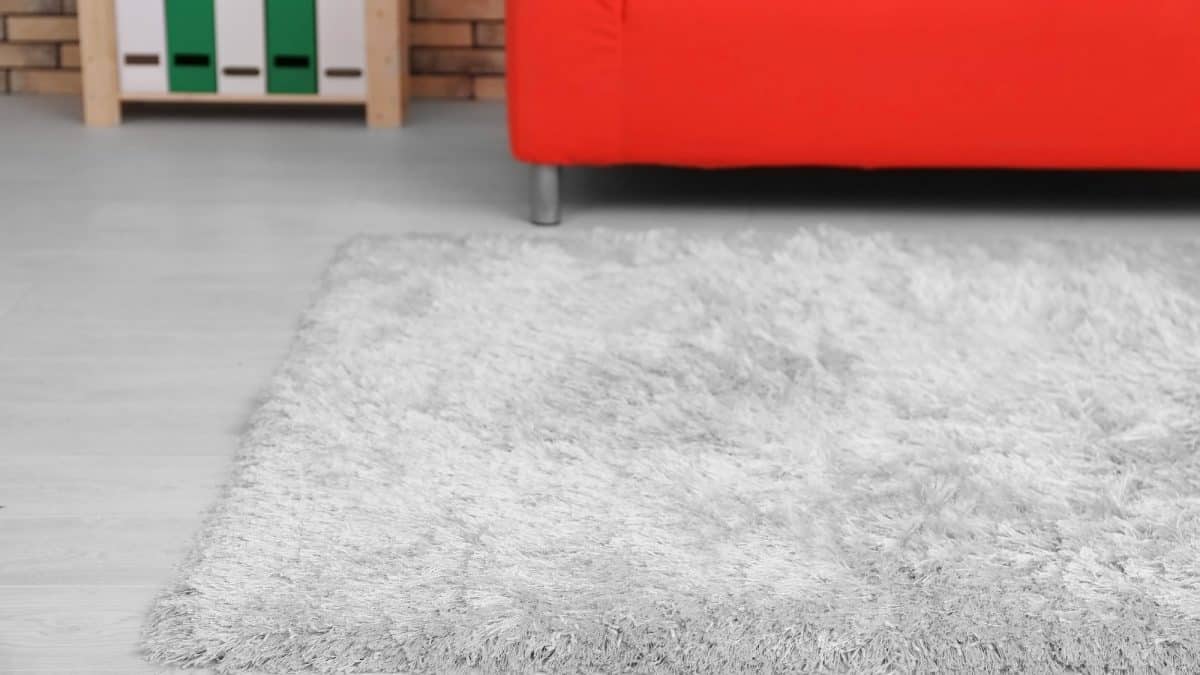
Quick answer · care label Area rug — varies by fiber
-
1 · Wash
Hand wash -
2 · Bleach
No bleach -
3 · Dry
Dry in shade -
4 · Iron
Do not iron -
5 · Pro care
Pro clean P
In one line Vacuum both sides, spot-test dye colorfastness in a hidden corner, hand-wash washable rugs by fiber type, then dry elevated with airflow on both sides for 24 to 48 hours to keep the backing from mildewing. Total hands-on time: 30 minutes.
Identify the fiber before you do anything else
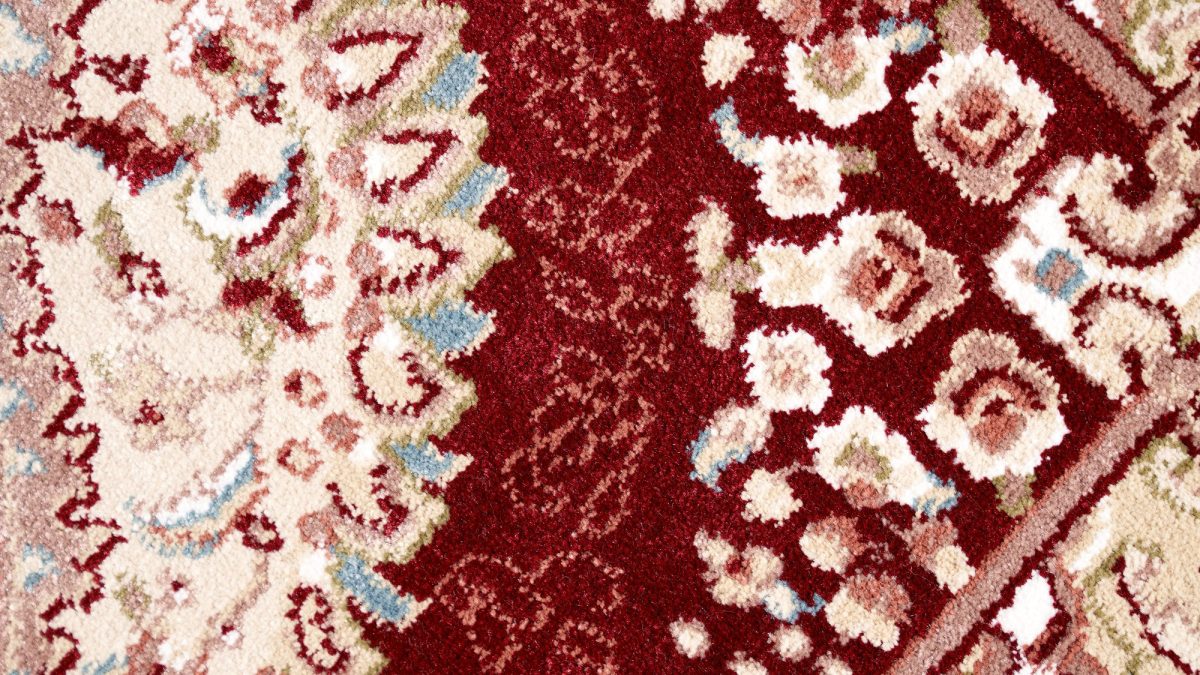
Area rugs get treated as one category, but the fiber underneath the pile decides almost everything about how you can clean it. Check the weave on the back or the tag if it still has one. Wool has a soft, slightly springy pile and feels warm to the touch. Synthetic pile (nylon, polypropylene, olefin, polyester) feels cooler and more uniform, and is often labeled “indoor/outdoor” because it’s built to tolerate water. Cotton flatweaves and dhurries are thin, reversible, and washable much like a heavy towel. Jute, sisal, and seagrass rugs have a coarse, visibly woven texture and are the ones most guides skip over, because they behave nothing like the other four.
This page covers cleaning the whole rug. If you are here for one spill rather than an overall clean, the method is genuinely different, because a spot has to be lifted out without wetting the backing: see how to clean stains on a rug.
Rugs with any silk or “art silk” (viscose) content stain permanently when wet: water leaves rings that don’t come out with more water. If the rug has that sheen, stop reading the DIY steps and call a rug specialist instead.
What you’ll need
| Item | Why | Substitute |
|---|---|---|
| Wool-safe detergent | Regular laundry detergent is often too alkaline for wool fibers and strips their natural lanolin | A few drops of clear dish soap, well diluted |
| Soft-bristle brush | Works dirt out of the base of the pile without fraying the fiber tips | A clean, dry car-wash brush |
| White cotton cloth | Used for the colorfastness test, since a colored cloth would hide dye transfer | A clean white sock |
| Wet/dry shop vacuum | Pulls water out of the pile before drying starts, cutting hours off the process | Pressing with dry towels, then replacing them repeatedly |
The method, step by step
Vacuum both sides
Flip the rug over and vacuum the back first. Grit trapped against the backing is what actually cuts pile fibers from underneath as people walk on the rug. The top layer of dust is mostly cosmetic by comparison.
Test for colorfastness
Dampen the white cloth and press it into a hidden corner for 10 seconds. If any color transfers, use cold water only for the rest of the process and skip any detergent stronger than plain water with a splash of vinegar.
Shake out loose dirt outdoors
For rugs you can lift, hang them over a railing or fence and beat the back with a broom handle. This dislodges far more grit than vacuuming alone, especially in the corners where a vacuum head doesn’t reach well.
Clean according to fiber
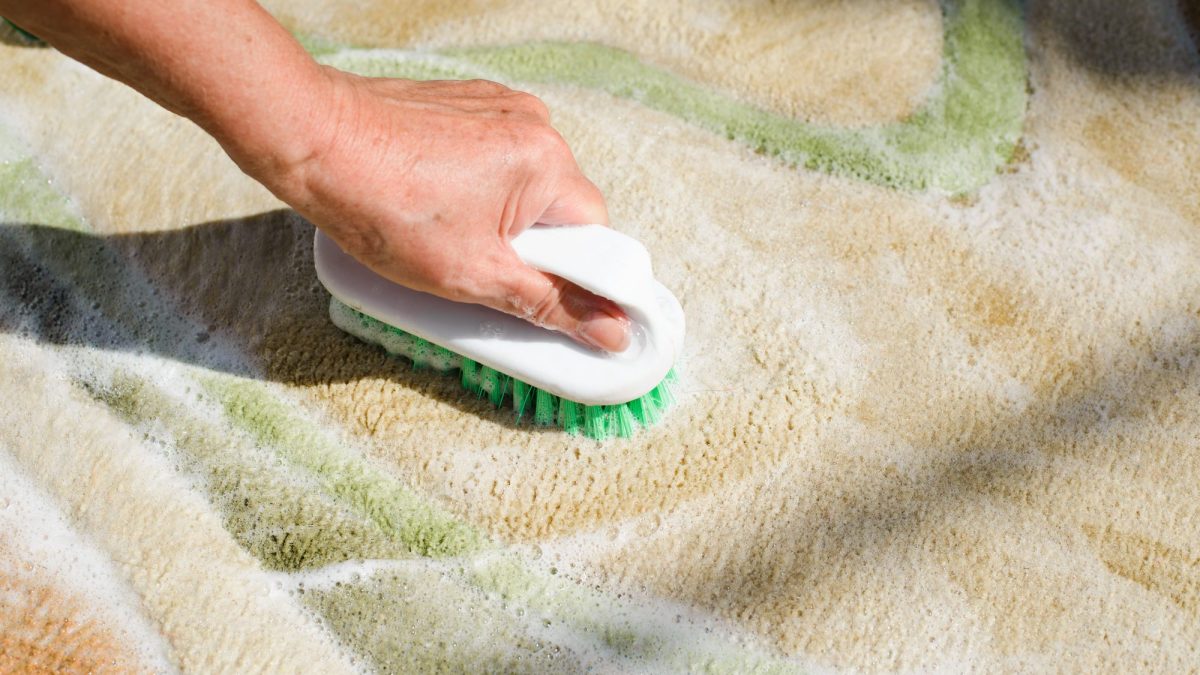
Synthetic pile and cotton flatweaves tolerate a full hand wash: diluted detergent, a soft brush worked in the direction of the pile, then a thorough rinse. Wool needs cold water, minimal brushing, and no wringing. Twisting a wet wool rug stretches and felts it. Jute, sisal, and seagrass should never be soaked; vacuum thoroughly, blot any spots with a barely damp cloth, and leave deeper cleaning to a professional who uses dry-compound methods.
Rinse until the water runs clear
Leftover detergent attracts dirt faster than a rug that was never washed, which is why a rug can look duller a few weeks after a rushed cleaning. Keep rinsing with a hose or clean water until nothing sudsy comes out when you press the pile.
Extract as much water as possible before drying
Run a wet/dry vacuum over both sides, or press firmly with dry towels and swap them out three or four times. The less water left in the rug at this stage, the faster and safer the next part goes.
Interactive
Label decoder
Tap a symbol from your care label. No guessing, no scrolling.
19 symbols. Pick one.
Cleaning a rug at home without a machine
The method above assumes a hose, an outdoor railing, and a wet/dry vacuum. Plenty of people have none of those, and the usual advice at that point is to hire a professional. That is not necessary for most rugs, but it does change which step is hard. Washing a rug indoors is easy. Getting the water back out of it is the whole problem, and everything below is organized around that.
- Small rugs, up to about 3×5 feet: use the bathtub. A few inches of cool water, a capful of wool-safe detergent, and 15 minutes of soaking. Press the rug down with your hands rather than swirling it. Drain, refill with clean water, and repeat until the water stays clear. If the rug is that small and has a non-slip backing, check whether it can simply go in the washing machine instead: how to clean throw rugs covers what the backing tolerates.
- Larger rugs: work in sections on the floor. Lay a plastic sheet or a shower curtain under the area you are working on, clean one square meter at a time with a barely damp brush, and dry each section before moving on. Slower, but it never puts more water into the rug than you can pull back out.
- Extraction is towels and body weight. Lay dry towels over the wet area, stand on them, then swap for fresh ones. Four or five changes gets you close to what a wet/dry vacuum would have taken out. This is the step people skip, and skipping it is what turns a 12-hour dry into a three-day one.
- Never wring or twist a wet rug. On wool it felts the pile permanently, and on any rug with a latex backing it cracks the backing along the fold lines.
- Dry it over the bathtub rail or two chairs, not flat. Air has to reach the back. A box fan pointed at the underside is the single most useful thing you can add if the weather does not let you dry it outside.
Carpet shampooers and steam cleaners are worth a mention here because they are the machine people do often own. On synthetic pile with no rubber backing they are fine, with cold water rather than hot. On wool, jute, or anything with a latex backing they put far more water into the rug than they take back out, which is the opposite of what an indoor clean needs. Whichever machine you use, finish with one pass of plain water and nothing in the tank. That is the same point as step 5 above: detergent left in the pile is what makes a cleaned area collect dirt faster than the rug around it, and a machine sprays soap more easily than it recovers it. On carpet that is fixed to the floor, where no rinse is possible at any stage, that rinse pass stops being good practice and becomes the whole method: see how to clean carpet.
Drying is where most rugs actually get ruined
The pile can look and feel dry within a few hours while the backing underneath stays damp for days. That’s the part most cleaning guides skip, and it’s the part that matters most: a rug laid flat on carpet or a hard floor while still damp underneath traps moisture against the surface below it, which is how mildew smell and floor staining start, and how a latex or rubber backing begins to break down. The same failure mode ruins a mattress core that never fully dries after a stain, and it’s also why a shower curtain grows mildew at the hem long before the rest of the panel looks damp.
| Rug type | Typical dry time |
|---|---|
| Thin cotton flatweave | 6-12 hours |
| Synthetic pile (indoor/outdoor) | 12-24 hours |
| Wool pile | 24-48 hours |
| Thick wool, shag, or with a rubber pad | 48-72 hours |
Dry it elevated, not flat on the floor: over two sawhorses, a drying rack, or a railing, so air reaches the back as well as the pile. A box fan angled at the underside cuts the times above by roughly a third. Before putting the rug back down, press your palm flat against the backing near the center, not just the top of the pile. That’s where dampness lingers longest.
When it’s worth paying a professional instead
- Hand-knotted wool or oriental rugs. The dyes are more prone to bleeding between colors, and the knotted construction is expensive enough that a mistake costs more than a professional clean would have.
- Any silk or viscose content. Covered above: water causes permanent damage that no home method reverses.
- Rugs with fringe. Fringe mats and yellows quickly if it’s not cleaned and combed with the right technique, and it’s usually the first part of an old rug to look ruined.
- Rugs larger than about 6×9 feet. Past that size, drying evenly at home gets difficult, and the weight of a soaked large rug is genuinely hard to move.
- A mildew smell that’s already there before you clean it. That smell usually means the backing is already compromised. A surface clean won’t reach it, and you risk sealing the moisture back in.
Questions
Can I use a carpet steam cleaner on an area rug?
On synthetic pile without a rubber backing, usually yes. On wool, natural fiber, or anything with a rubber or latex backing, the heat and added moisture make drying harder and can degrade the backing faster than a cold hand wash would.
How often should an area rug get a deep clean?
Every 12-18 months for a rug in a low-traffic room, and every 6-12 months for one in an entryway or a home with pets. Weekly vacuuming on both sides in between keeps grit from cutting into the fibers.
I cleaned the rug and the smell came back after a few days. Why?
The odor is usually sitting in the backing or the pad underneath, not the pile itself, so a surface clean doesn’t reach it. If it returns after full drying, the backing or pad likely needs replacing rather than another cleaning attempt. If a pet is the source, the pad and the floorboards under the rug are almost always still holding it: see how to clean dog urine from a rug.
Is vinegar safe to use on a rug?
Diluted white vinegar (about one part vinegar to four parts water) is fine as a rinse or odor step on synthetic and cotton rugs. On wool, repeated use of vinegar weakens the protein fiber over time, and on jute or sisal it can leave dark spots. Plain water is safer for both.