How to Clean Bed Stains
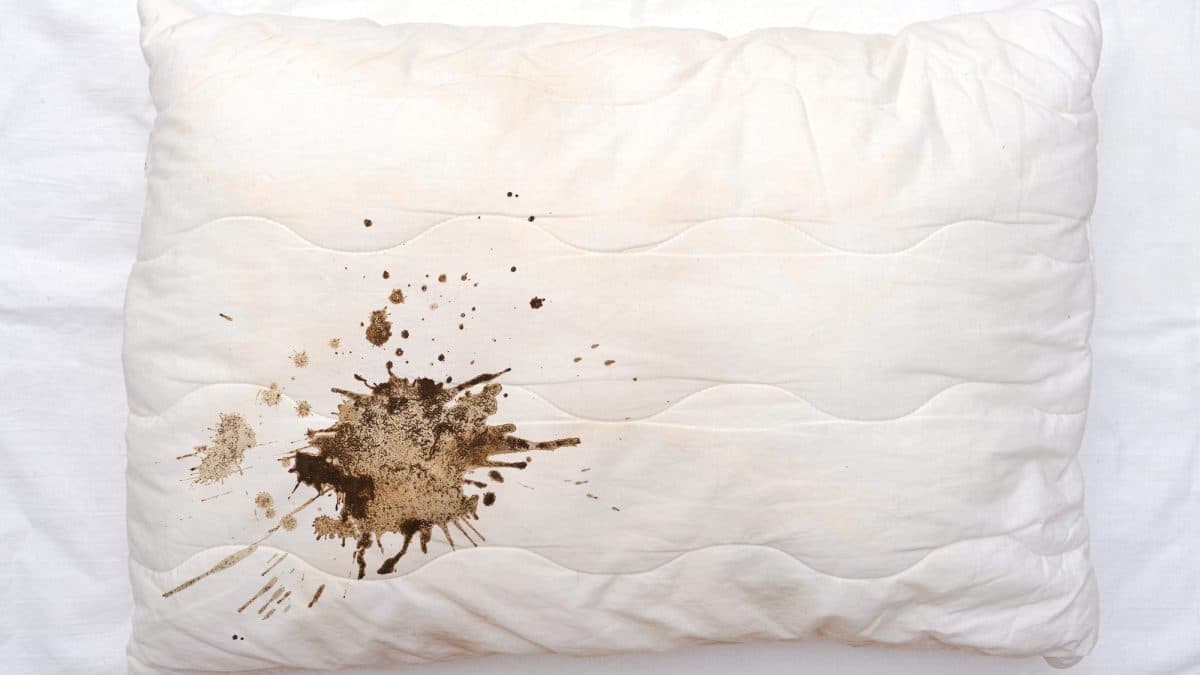
Sheets and pillowcases can go in the washing machine, which a mattress never can. That's exactly why bed stains get ruined so often: pretreat too little and the wash won't finish the job, skip checking before the dryer and the heat sets what's left for good.
Quick answer · care label Bed linens — cotton, cotton-poly, or linen sheets and pillowcases
-
1 · Wash
Wash 40° -
2 · Bleach
Oxygen bleach -
3 · Dry
Tumble low -
4 · Iron
Iron 150° -
5 · Pro care
No dry clean
In one line Bedding can go in the washing machine, unlike a mattress, but only if you pretreat first: cold water on blood and urine, a peroxide-baking soda paste on sweat and yellowing, dish soap on makeup and skincare transfer. Always check the stain is gone before it hits the dryer.
Bed linens can go in the washing machine, and that’s exactly where most bed stains go wrong
A stain on a mattress has one path: careful surface treatment, because the mattress itself can never be submerged or run through a machine. A stain on a sheet, pillowcase, or duvet cover has a completely different path, because the fabric can be pretreated, soaked, and washed all the way through. That sounds like an advantage, and it is, but it’s also where most bed stains actually get ruined. People either treat washable bedding as carefully as a mattress, blotting at a blood spot for ten minutes and calling it done, or they skip pretreating entirely and toss stained sheets straight into a normal wash. The first leaves a stain that a real wash cycle would have finished lifting. The second sends a still-visible stain into the dryer, where heat does to bedding exactly what it does to a mattress cover: it cooks the stain into the fibers permanently.
The fix isn’t a special detergent. It’s treating the stain before the fabric ever reaches the washing machine, and checking it again before the fabric ever reaches the dryer. Everything below assumes standard machine-washable cotton, cotton-poly, or linen bedding; silk sheets and pillowcases need a gentler hand-wash approach and aren’t covered here.
A washing machine can fail to fully lift a stain on the first pass, especially blood, sweat, or urine. Dryer heat then does what a hair dryer does to a mattress stain: it sets whatever protein or oxidized residue is left, permanently. Check the fabric wet, in good light, before it goes anywhere near the dryer.
What you’ll need
| Item | Why | Substitute |
|---|---|---|
| Cold water | The first rinse on every fresh protein stain (blood, sweat, urine); warm water sets these before they’re even pretreated | An ice cube run over a small fresh spot |
| Enzyme-based stain remover | Breaks down protein and body oil at a molecular level, which plain detergent alone struggles to fully clear on set-in stains | A paste of baking soda and a little dish soap, worked in and left 15 minutes |
| 3% hydrogen peroxide | Lifts dried blood and oxidized sweat residue; fizzes on contact with blood specifically, which also confirms what you’re treating | An oxygen-based powder stain booster added to the wash |
| Liquid dish soap | Cuts through the oily base of makeup, sunscreen, and skincare-product transfer stains that detergent alone leaves as a faint ring | A grease-cutting dish soap brand, any will do |
| Soft brush or old toothbrush | Works pretreatment into the weave without scrubbing so hard it thins the fabric | Fingertips, for a lighter touch on delicate weaves |
Blood
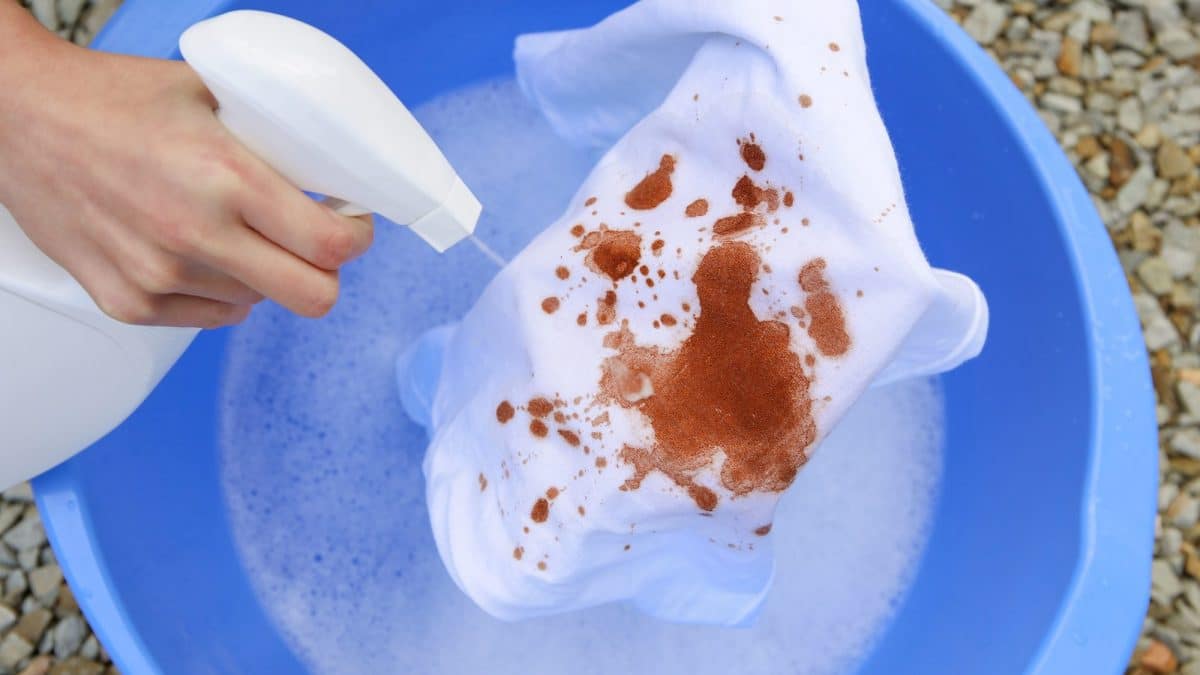
Blood on bedding responds fastest right when it happens, and gets harder with every hour it dries. The rule that matters most is the same one that applies to a mattress: cold water only, never warm, until the stain is fully gone.
Rinse or soak in cold water immediately
Run the stained area under cold running water from the back of the fabric, pushing the stain out rather than further in. For a larger stain, soak the whole area in a basin of cold water for 10-15 minutes.
Work in enzyme stain remover
Apply directly to the stain and work it in gently with a soft brush. Let it sit for the time printed on the label, usually 5-10 minutes, before rinsing.
For dried blood, add hydrogen peroxide
Pour a small amount directly onto the rehydrated stain and give it a few minutes. Don’t expect the fizzing you get on a fresh spot: that reaction comes from an enzyme in the blood that drying and heat destroy, so a dried stain often sits there quietly while the peroxide still works on the color. Blot and reapply once if color remains, but don’t keep going for hours. Peroxide sitting on the iron in an old blood stain slowly attacks the cotton itself, which is covered in how to clean a blood stain.
Wash on a cold, normal cycle
Once no color transfers to a white cloth pressed against the stain, wash as usual in cold water. Check the spot again before drying.
Sweat and pillowcase yellowing
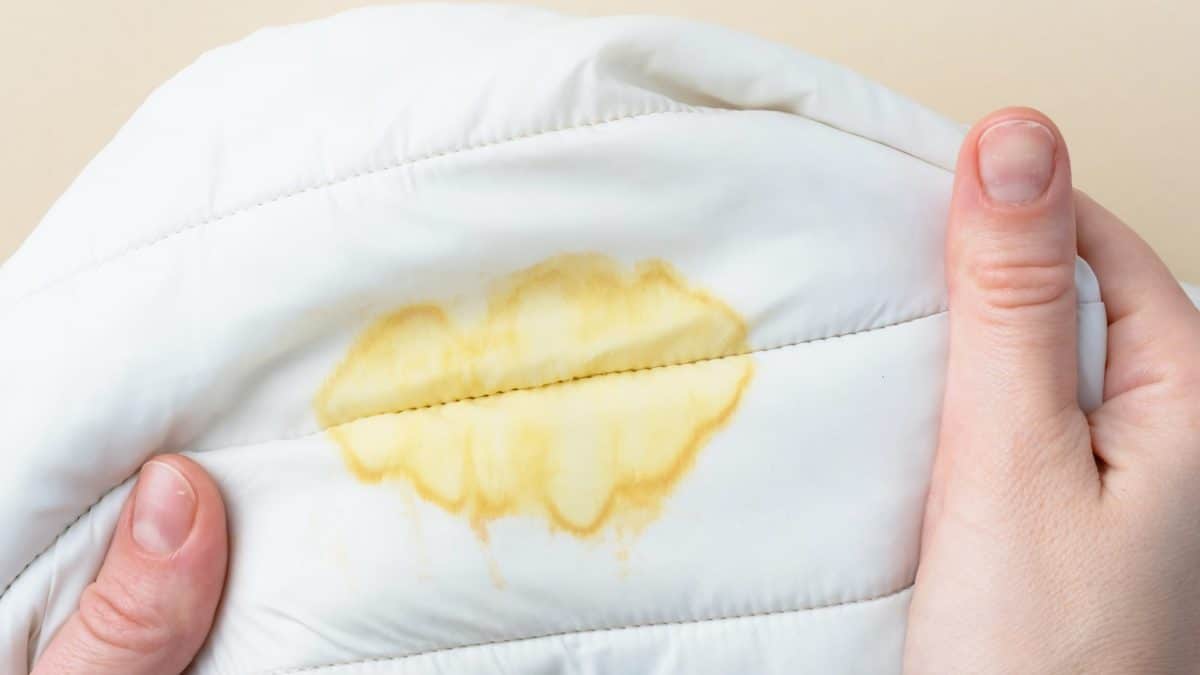
The yellow band that builds up on a pillowcase over months isn’t dirt, and washing with more detergent doesn’t fix it. It’s body oil and sweat residue that has oxidized against the fabric, the same chemistry behind the sweat stains on a mattress cover and behind the yellow marks deodorant leaves on shirts. The same thing happens on a much larger scale to the comforter above the sheets, which yellows on the top face where the neck and shoulders rest and nowhere else; how to clean a comforter covers the soak that lifts it. Detergent cleans dirt; oxidized oil needs an oxidizer.
Make a paste of hydrogen peroxide and baking soda
Roughly two parts baking soda to one part peroxide, mixed to a spreadable consistency.
Spread over the yellowed area and let it dry fully
The paste needs to dry completely for the oxidizing reaction to finish breaking down the residue, not just sit damp for a few minutes.
Brush off and wash on the warmest safe setting
Warm water, unlike cold, actually helps here because the stain is oily residue rather than fresh protein. Check the fabric wet after the cycle; repeat once on set-in cases before assuming it won’t lift further.
Urine
Bedding has the same advantage over a mattress with a urine stain that it has with every other stain: it can be fully saturated and rinsed, where a mattress can only be blotted from the surface. That makes urine on sheets easier to clear completely, as long as it’s caught before it dries into crystallized uric acid, which is far harder to break down than the fresh liquid.
Rinse in cold water as soon as possible
Cold water flushes out most of the urine before it has a chance to dry and crystallize in the fibers.
Soak in cold water with enzyme cleaner for dried spots
For a stain that’s already dried, a 30-minute soak with enzyme cleaner added gives the enzymes time to break down the crystallized uric acid that soap alone can’t touch.
Wash on the warmest setting the care label allows
Warm water helps rinse residue that cold water alone leaves behind, and most cotton and cotton-poly bedding tolerates it well. Check what the layer actually is before you set the dial, because an accident that soaks through a fitted sheet usually reaches the pad below it: a heated mattress pad or electric blanket takes cold water and a two minute wash, never the warmest setting, and the reason is mechanical rather than chemical (how to clean an electric blanket). Add a second rinse cycle if the mattress or pillow underneath was also affected, so nothing wicks back into the clean fabric.
Makeup, skincare, and body lotion transfer
This one is specific to pillowcases and doesn’t come up on a mattress at all: foundation, tinted moisturizer, retinol, and heavy night creams transfer from skin to fabric all night, leaving an oily stain with color mixed in. Detergent alone often just spreads it into a faint, wider smear instead of lifting it.
Apply a few drops of dish soap directly to the stain
Dish soap is built to cut oil, which is the base of nearly every makeup and skincare stain. Work it in gently with a fingertip or soft brush.
Let it sit for 10 minutes before rinsing
The soap needs contact time to break down the oil before rinsing carries it away.
Check for pigment, then treat as needed
Colored foundation or tinted product may leave a faint pigment stain even after the oil is gone. A small amount of hydrogen peroxide on white or light-colored fabric usually clears the rest; skip it on colored pillowcases and repeat the dish soap step instead.
Wash as usual and check before drying
Confirm the stain is gone wet, in good light, before the fabric goes in the dryer.
Bedding with an unidentified stain is safest treated as a protein stain by default, the same rule that applies to an unknown mattress stain: cold water and enzyme cleaner first, hydrogen peroxide if color remains. Avoid combining an enzyme cleaner and peroxide in the same treatment session; let one finish working and dry before trying the other.
Interactive
Label decoder
Tap a symbol from your care label. No guessing, no scrolling.
19 symbols. Pick one.
What ruins bed linens during stain removal
| Mistake | What happens | Fix |
|---|---|---|
| Drying before confirming the stain is gone | Dryer heat sets protein and oxidized residue permanently, the same mistake a hair dryer causes on a mattress | Check the fabric wet, in good light, before it goes in the dryer |
| Warm or hot water on a fresh blood or urine stain | Cooks the protein into the fibers before it’s even had a chance to lift | Cold water only until the stain is confirmed gone |
| Treating bedding as carefully as a mattress | Under-treating washable fabric with only surface blotting leaves a stain a full wash cycle would have finished | Pretreat, then run a normal wash cycle; bedding can take more than a mattress ever can |
| Mixing enzyme cleaner and peroxide in one pass | Peroxide is an oxidizer and interferes with how enzymes break down protein | Finish one method, let the fabric dry, then try the other only if needed |
| Scrubbing hard at a stain | Thins the weave over time and can push the stain deeper before pretreatment has a chance to work | Work product in gently with a soft brush, not fingernails or hard scrubbing |
Related guides
The same stain on a mattress instead of a sheet needs a different approach entirely, since the mattress can’t be washed: see how to clean a stained mattress for blood, vomit, and sweat, and how to clean urine out of a mattress for urine specifically. For another washable bed textile with its own drying risks, how to clean a down comforter covers the baffle-box channels that stay damp long after the surface looks dry. For a stain that isn’t protein-based at all, how to clean ink stains on clothes uses the same back-of-the-fabric technique on ballpoint, gel, and permanent marker ink. For the broader framework that sorts any stain into a category before you treat it, see how to clean stains from clothes. For the mattress underneath the sheets, the same kind of routine upkeep, vacuuming, deodorizing, and rotating, is covered in how to clean a mattress.
Questions
Can I put stained sheets straight in the washing machine without pretreating?
You can, but a normal wash cycle often isn’t strong enough to fully clear blood, sweat, or urine on its own. Pretreating first with cold water and, if needed, an enzyme cleaner or hydrogen peroxide gets the stain to a point where the wash can finish the job instead of just setting what’s left.
Is it safe to use hot water on bed linen stains?
Not on fresh protein stains like blood or urine; hot water cooks the protein into the fibers before it can lift. Sweat and oxidized yellowing are the exception, since warm water actually helps break down that oily residue once it’s been pretreated with peroxide and baking soda.
Why does a stain reappear after I thought it was gone?
Usually because it went into the dryer before it was fully lifted. Heat sets whatever protein or oxidized residue remains, which can look like a faint stain reappearing later even though nothing new happened, it was just fixed in place by the heat.
Do these methods work on colored sheets, not just white?
Cold water, enzyme cleaner, and dish soap are all safe on colored fabric. Hydrogen peroxide is a mild bleach and can lighten darker or dyed sheets, so spot test on a hidden seam or corner before applying it to a visible area.